



Tom Keating : VoIP & Gadgets Blog
Tom Keating
CTO
| VoIP & Gadgets blog - Latest news in VoIP & gadgets, wireless, mobile phones, reviews, & opinions

SIP

Zultys MX Release 7.0 Unified Communications Release Adds Android Support

January 31, 2012


At ITEXPO in Miami, Zultys today announced their latest UC software offering mobility features for Android, call center enhancements, and third-party CRM integrations. The latest major firmware release for the MX platform, MX Release 7.0 Unified Communications Software is a secure, all-in-one SIP-based IP phone system that is highly scalable and highly customizable. This version also includes enhancements to SIP security. 

Zultys introduced Zultys Mobile Communicator for iPhone and Blackberry users in MX Release 6.0.


Asterisk Hack Post-mortem

January 10, 2012


Having your production Asterisk-based phone system hacked is no fun, as I have learned from first-hand experience over the past few days. Even the best of IT administrators taking ever security precaution in the book dreads the day their critical server gets hacked. You hope you've done everything possible to stop your servers from being hacked, but you are never 100% sure. There is always some hacker smarter than you, but more importantly, smarter than the best security practices you put in place.

Fonality Names Former Microsoft Exec David Scult as CEO

January 10, 2012

Today, Fonality announced it has appointed former Microsoft Exec David Scult (image right) as Chief Executive Officer. This is the second CEO in just a couple years. Dean Mansfield replaced Chris Lyman CEO, the founder of Fonality. I'm a fan of Fonality's Asterisk-based products, especially their HUD client, so I'm hoping things are going well there.

Newfies-Dialer Offers Super-Scalable Cloud-based Auto-Dialer Using FreeSWITCH

December 29, 2011


I discovered a new, powerful, open source auto-dialer called Newfies-Dialer that is offered by Star2Billing S.L, and is distributed free of charge, with no ongoing licensing costs. Star2Billing also wrote CDR-Stats, a replacement for Asterisk Stat used in FreePBX, as well as A2Billing. Star2Billing S.L., based in Barcelona, was formed in 2009 to provide commercial support to their range of free and open source products specialising in telephony, billing, and telecoms software development. Freeswitch is often compared with Asterisk, though Freeswitch is more scalable, especially the number of concurrent SIP registrations.

Jonathan Roper emailed me to tell me about this new auto-dialer, which works in conjunction with FreeSWITCH.


Microsoft Lync 2010, Asterisk & Skype Integration Tutorial

December 28, 2011

I came across an excellent tutorial on installing and integrating Microsoft Lync 2010, Asterisk and Skype. The tutorial covers installing AsteriskNOW within a virtual machine on Windows, so you don't even have to have spare hardware lying around to install Linux + AsteriskNOW on. The tutorial mentions integrating with Skype using Skype for Asterisk (SFA), which unfortunately was killed earlier this year. You can of course use Skype Connect (formerly Skype for SIP) to create SIP trunks, but the integration isn't as "tight".

Sprint Nextel Throws Out 489 PBXs - Switches 100% to Microsoft Lync

December 16, 2011


Sprint Nextel thew out 489 PBXs and switched over their 39,000 employees to using Microsoft Lync, a unified commutations solution gaining in popularity. Sprint Nextel said their goal was to "reduce its environmental impact, improve employee productivity, and reduce costs and administration for its cumbersome telephony systems". Whether they truly "threw out" the 489 PBXs and they're sitting in a landfill somewhere or they sold off the PBXs is unknown, but I'm hoping for the latter or it would defeat Sprint Nextel's purpose of "reduced environmental impact".

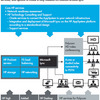
Here's what their Lync deployment / voice infrastructure looks like now:


Sprint Nextel claims that switching to Microsoft Lync has saved them nearly $13 million annually by reducing the TCO of maintaining hundreds of hardware-based PBXs, on-site maintenance fees, and annual upgrades. It went with Microsoft's software approach and leveraged Sprint's Global MPLS network and SIP trunking to connect their 39,000 employees together seamlessly allowing them to retire 489 PBXs scattered across the country.


Digium TE820 8-port T1/E1 Card Released

December 13, 2011

According to Digium, they just released their 8-port T1/E1 card designed for high density Asterisk deployments. The TE820 includes eight independently software-selectable digital telephony interfaces, supporting up to 192 channels (in T1/J1 mode) or 240 channels (in E1 mode).

In a Digium email announcement, Digium claims this is the highest single-card port density available for use with Asterisk - though Sangoma's A108 Octal 8-port T1/E1 card might have something to say about that.

Features/Specs of the TE820:
  • 8 T1 / E1 Spans using 4 RJ45 connectors (each supporting 2 circuits). Break out dongles included.
  • Up to to 192 (T1/J1) or 240 (E1) concurrent calls per card
  • PCI Express form factor / half-length, full-height card
  • Interfaces are software selectable (T1, E1, or J1 Mode)
  • Optional 128ms hardware echo cancellation module
The TE820 card supports industry standard telephony protocols, including multiple variants of Primary Rate ISDN.


Jabra PRO 900 Series Unveiled

December 6, 2011

Today, Jabra launched the Jabra PRO 900 series, which includes two headset models - the Jabra PRO 920 (base unit wired to desk phone + headset is wireless) and the Jabra PRO 930 (base unit wired to PC [USB] + wireless headset). Jabra stated these are entry-level wireless headsets with a retail price of $199 is aimed at companies that cannot afford typically expensive wireless headsets, so they designed these headsets for this market.

I'm not sure $199 is exactly inexpensive, but I'd have to see how much competing products from Plantronics and others cost. In any event, they are targeting the Jabra PRO 930 for companies implementing Unified Communications and leveraging PC-based telephony, i.e. a SIP softphone, Cisco softphone, etc. 

Polycom RealPresence Connects Non-standard TIP TelePresence Systems

November 16, 2011

I've written about Polycom supporting TIP (Telepresence Interoperability Protocol) and Cisco's response to Polycom supporting it. Well, today Polycom announced a new software update for Polycom RealPresence Platform designed to "free users locked into proprietary telepresence solutions."

This update will allow customers with standards-based video collaboration solutions, like Polycom, to join calls with non-standard based telepresence systems, like Cisco. The solution is made possible by Polycom's support for the Telepresence Interoperability Protocol (TIP), developed by Cisco and only implemented on Cisco TelePresence System suites. The latest RealPresence Platform software update, released today, also further extends interoperability across Microsoft and IBM UC environments.

Featured Events