











Jim Machi : Industry Insight
Jim Machi

10 Lessons from Volleyball, Part 2

Part 1 of the 10 Business Lessons from Volleyball can be found here. In volleyball, the only play you control yourself is...

Full Story »

CloudTC and N-Able Acquired

"Australian-owned IP PBX systems company, Vixtel, has completed the acquisition of Silicon Valley based glass phone developer, CloudTC, for an undisclosed figure,"...

Full Story »

ProfitBricks: Where InfiniBand Meets Cloud 2.0

In a recent meeting with William Toll and Pete Johnson of ProfitBricks, the pair were ecstatic to explain how their company has...

Full Story »

Proactive Care Puts Operators One Step Ahead

By Thomas Fuerst, Senior Director, Multimedia Solutions MarketingAlcatel-Lucent

Monitoring and analyzing network data proactively saves operators time, money, and customers.

When a network service fails, it makes headlines, ticks off customers, and costs that network operator money. When a failure is headed off in advance, on the other hand, there might not be praise-laden headlines, but it's newsworthy nonetheless.

The traditional approach to customer care has typically been: a disgruntled customer calls customer service and complains of a service interruption or problem; the rep, learning of it for the first time, sends out a technician the next day, and eventually finds a resolution. Often, customers are left feeling put out, and the operator has spent significant time and money resolving the problem. Even worse is the customer who doesn’t call and just feels this is ‘typical’ of their network experience.  That is a customer at risk of leaving.

Proactive care flips this dynamic on its head by using predictive analytics to identify potential outages or errors in the network and stop them before they occur. It consists of three main parts: one, constantly monitoring and measuring data on the network; two, real-time analysis of the data; and three, the most important, acting on that analysis to fix the problem.

Full Story »

10 Lessons from Volleyball

I've played volleyball for over 25 years. I have traveled around the US to watch the pros live - both indoor...

Full Story »

Emerging Threats Combats a Million Plus Pieces of New Malware a Week

There are 250,000 plus new pieces of malware being produced each day equating to one piece per person in the US in...

Full Story »

NFV-Based Software Telcos Need OSS/BSS Interoperability

One of the goals of ETSI NFV is to allow new entrants to provide solutions to carriers based on software instead of...

Full Story »

LTE / Diameter Interworking (Part 2 of 2)

April 11, 2013

Two days ago, I wrote a blog about Diameter Interworking use cases.  If you are a network operator, are these issues real? Well, they’re real enough that the 3GPP and GSMA have identified elements called Diameter Routing Agent (DRA),  Diameter Edge Agent (DEA), and Diameter Interworking Function (IWF), which is more closely aligned to the interworking described above.

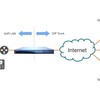
Given that these issues are real, how do you address them?  For starters, operators need a box that connects the carrier LTE/IMS and policy control environment to existing 2G/3G/Wi-Fi and back office environments.

LTE / Diameter Interworking (Part 1 of 2)

April 9, 2013

Last week, I wrote a blog about Diameter protocol and its application use cases.  Since LTE uses it as a signaling protocol, operators have a need to interwork Diameter with the signaling technologies used in other mobile networks. This has given rise to the Diameter Interworking Gateway function, which moved onto the center stage at Mobile World Congress this year. It’s a critical element to enable the successful rollout of LTE and a seamless user experience across different networks.

WebRTC Webinar Q&A #1 "Is WebRTC 10 years too late?"

April 4, 2013

“Is WebRTC 10 years too late?”

To properly answer this question, one needs to take a position.  One position is to assume that all the VoIP “stuff” that came before Web Real Time Communication (WebRTC) is kind of useless.  But moving to a world where SIP, G.711, and H.264 are the dominant real-time communication protocols and codecs over IP networks is not useless. 

Diameter Use Cases

April 2, 2013

Diameter is the key signaling protocol used in IMS and LTE networks that enable applications running on those networks to authenticate, authorize and charge. In other words, your mobile applications, when running on these networks, are using Diameter protocol in the background to enable you to utilize the many apps on your smartphone or tablet. This includes, for example, a location-based service type of application (such as Foursquare or Yelp), or mobile payment (such as Square), or an Internet purchase (from an app store online retailer like Amazon).

Given the huge amount of smartphones and tablets out there that are either now running on LTE networks are that are expected to be LTE-enabled in the future, I predict that will be a big increase in Diameter signaling traffic.

My Mobile Device History

March 26, 2013


As some of you readers know, I have been an avid Blackberry user for some time. That time has now past.  I am an equal opportunity device person, and have used Motorola, Nokia and Blackberry devices.  It was time for a new one.


The Contact Center's Continual Transition

March 19, 2013


The contact center is undergoing continual change as companies strive to make their operations more efficient and cost-effective.  This is one of the reasons the contact center has always been an innovator and a driver for new technologies, from VoIP to Web integration to speech recognition.  Now, contact centers are undergoing still further transformation because access to them is coming more and more from smartphones and smartdevices. Contact center operators must look at feasible ways to maximize investments while also integrating modern, media-rich communications that give customers more options.


The Contact Center's Continual Transition

March 19, 2013


The contact center is undergoing continual change as companies strive to make their operations more efficient and cost-effective.  This is one of the reasons the contact center has always been an innovator and a driver for new technologies, from VoIP to Web integration to speech recognition.  Now, contact centers are undergoing still further transformation because access to them is coming more and more from smartphones and smartdevices. Contact center operators must look at feasible ways to maximize investments while also integrating modern, media-rich communications that give customers more options.


Mobile Congestion and Radio Blogging and Podcasting

March 12, 2013

Over a month ago, I participated in a radio blog / podcast with Tech in Twenty.  The theme was mobile congestion.  Please listen to the 20 minute broadcast/podcast/radio interview since it was riveting! Seriously, it was fun, the interviewers Luis and Jennifer asked good questions and I think the interview is interesting. 

Mobile World Congress 2013 Recap

March 4, 2013


Last week, I posted a first day report about Mobile World Congress 2013.  Since that first hectic day they improved the efficiency of the trains to the MWC site, the show really got into full swing and I was able to walk around a little to see the show. 

Here are some key trends I picked up:

1.  


Mobile World Congress 2013 in Full Swing

February 26, 2013


I’m writing this blog after my first day at Mobile World Congress 2013.  While the new venue doesn’t really have the charm of the old place, and you now have to get on a hot sweaty train to get there (if you haven’t been to Tokyo and wanted to experience the trains, no need to do that now!) it is big, has the same food and food lines as the last place and once you are in the halls it all looks the same. And the flights in were the same as every single person on the plane was basically in Boarding Group 1.  Yep, definitely the same show.


Featured Events