<?xml version="1.0" encoding="UTF-8"?>
<feed xmlns="http://www.w3.org/2005/Atom">
    <title>VoIP Princess Blog</title>
    <link rel="alternate" type="text/html" href="http://blog.tmcnet.com/voip-princess/" />
    <link rel="self" type="application/atom+xml" href="http://blog.tmcnet.com/voip-princess/atom.xml" />
    <id>tag:blog.tmcnet.com,2008-11-21:/voip-princess//86</id>
    <updated>2009-01-30T23:30:15Z</updated>
    <subtitle>News and views on the world of IP communications from the VoIP Princess, Carolyn Schuk.

</subtitle>
    <generator uri="http://www.sixapart.com/movabletype/">Movable Type Pro 4.23-en</generator>

<entry>
    <title>Other computer makers following Apple into the smartphone market?</title>
    <link rel="alternate" type="text/html" href="http://blog.tmcnet.com/voip-princess/2009/01/other_computer_makers_following_apple_into_the_smartphone_market.html" />
    <id>tag:blog.tmcnet.com,2009:/voip-princess//86.39342</id>

    <published>2009-01-30T18:24:29Z</published>
    <updated>2009-01-30T23:30:15Z</updated>

    <summary>Imitation, as they say, is the best form of praise. So it&apos;s no surprise that following on the heels of Apple&apos;s iPhone triumph, other computer makers are eying the handset to boost their bottom lines. The buzz is that Acer...</summary>
    <author>
        <name>Carolyn Schuk</name>
        <uri>http://blog.tmcnet.com/mt/mt-cp.cgi?__mode=view&amp;blog_id=86&amp;id=514</uri>
    </author>
    
        <category term="handset" scheme="http://www.sixapart.com/ns/types#category" />
    
        <category term="iPhone" scheme="http://www.sixapart.com/ns/types#category" />
    
        <category term="smart phone" scheme="http://www.sixapart.com/ns/types#category" />
    
    
    <content type="html" xml:lang="en-us" xml:base="http://blog.tmcnet.com/voip-princess/">
        <![CDATA[Imitation, as they say, is the best form of praise. So it's no surprise that following on the heels of Apple's iPhone triumph, other computer makers are eying the handset to boost their bottom lines. The buzz is that Acer and Dell are working on high-end smartphones, according to Juniper Research's <a onclick="window.open(this.href,'','resizable=yes,location=no,menubar=no,scrollbars=no,status=no,toolbar=no,fullscreen=no,dependent=no,status'); return false" href="http://www.juniperresearch.com/analyst-xpress-blog/2009/01/30/computer-giants-eye-smartphone-market/">Analyst Xpress blog</a> today.&#160;<br /><br />The Wall Street Journal has a <a onclick="window.open(this.href,'','resizable=yes,location=no,menubar=no,scrollbars=no,status=no,toolbar=no,fullscreen=no,dependent=no,status'); return false" href="http://online.wsj.com/article/SB123327385680231133.html">story</a> on Dell, as well, saying that "people familiar with the matter" indicate that Dell may launch a smartphone "as early as next month."<br />I say, the more the merrier. Computer makers bring a different POV to the table, as we saw with the iPhone. And that can only be a good thing.&#160;]]>
        
    </content>
</entry>

<entry>
    <title>While You Were Making VoIP Calls on Your TV at CES, Mobile TV Was Calling Your Phone</title>
    <link rel="alternate" type="text/html" href="http://blog.tmcnet.com/voip-princess/2009/01/while_you_were_making_voip_calls_on_your_tv_at_ces_mobile_tv_was_calling_your_phone.html" />
    <id>tag:blog.tmcnet.com,2009:/voip-princess//86.39089</id>

    <published>2009-01-12T23:00:00Z</published>
    <updated>2009-01-14T05:26:16Z</updated>

    <summary>In his Fierce VoIP post on Monday, Doug Mohney reports that one of his takeaways from last week&apos;s CES is that your TV is morphing into a phone. Maybe so, but another - and potentially bigger - story at CES is how your phone is turning into a TV set.</summary>
    <author>
        <name>Carolyn Schuk</name>
        <uri>http://blog.tmcnet.com/mt/mt-cp.cgi?__mode=view&amp;blog_id=86&amp;id=514</uri>
    </author>
    
        <category term="CES 2009" scheme="http://www.sixapart.com/ns/types#category" />
    
        <category term="Mobile TV" scheme="http://www.sixapart.com/ns/types#category" />
    
    <category term="anneschelle" label="Anne Schelle" scheme="http://www.sixapart.com/ns/types#tag" />
    <category term="atsc" label="ATSC" scheme="http://www.sixapart.com/ns/types#tag" />
    <category term="broadcastmobiletv" label="broadcast mobile TV" scheme="http://www.sixapart.com/ns/types#tag" />
    <category term="ces2009" label="CES 2009" scheme="http://www.sixapart.com/ns/types#tag" />
    <category term="dougmohney" label="Doug Mohney" scheme="http://www.sixapart.com/ns/types#tag" />
    <category term="mobiletv" label="Mobile TV" scheme="http://www.sixapart.com/ns/types#tag" />
    <category term="omvc" label="OMVC" scheme="http://www.sixapart.com/ns/types#tag" />
    <category term="standard" label="standard" scheme="http://www.sixapart.com/ns/types#tag" />
    <category term="voip" label="VoIP" scheme="http://www.sixapart.com/ns/types#tag" />
    
    <content type="html" xml:lang="en-us" xml:base="http://blog.tmcnet.com/voip-princess/">
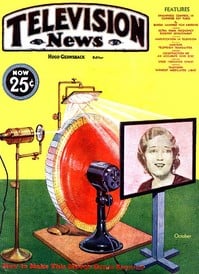
        <![CDATA[<p>In his Fierce VoIP <a onclick="window.open(this.href,'','resizable=yes,location=no,menubar=no,scrollbars=no,status=no,toolbar=no,fullscreen=no,dependent=no,status'); return false" href="http://www.fiercevoip.com/story/ces-voip-video-hdtv/2009-01-11">post</a> on Monday, Doug Mohney reports that one of his takeaways from last week's CES is that your TV is morphing into a phone. Maybe so, but another - and potentially bigger - story at CES is how your phone is turning into a TV set.</p>  <p>The Open Mobile Video Coalition (<a onclick="window.open(this.href,'','resizable=yes,location=no,menubar=no,scrollbars=no,status=no,toolbar=no,fullscreen=no,dependent=no,status'); return false" href="http://www.omvc.org">OMVC</a>) debuted the new ATSC candidate <a onclick="window.open(this.href,'','resizable=no,location=no,menubar=no,scrollbars=no,status=no,toolbar=no,fullscreen=no,dependent=no,status'); return false" href="http://www.atsc.org/communications/press/2008-12-01-atsc-approves-mobile-&amp;-handheld-candidate-standard.php">standard</a> for broadcast - free-to-air - mobile TV rolling toward final approval later this year. At CES, the OMVC was showing live broadcasts on prototype handsets, mobile video players, PCs, and in-vehicle video players.</p><p>This just could be more important even than making a videophone call via your 54-inch HD TV. It might even be - dare I say it? - even <i>more important </i><span>than Skype's announcement last month about the VoIP's demise; a discovery, let me add, that is hardly original - Jajah co-founder Roman Scharf famously tried <a onclick="window.open(this.href,'','resizable=no,location=no,menubar=no,scrollbars=no,status=no,toolbar=no,fullscreen=no,dependent=no,status'); return false" href="http://blog.jajah.com/index.php?/archives/147-VoIP-is-Dead.html">this</a> attention-attracting gimmick back in 2006.</span></p>  <p>Why is the OMVC's announcement important? Because it's a potential game-changer.</p>  <div>Consider the following historical footnote:</div>  <span class="mt-enclosure mt-enclosure-image" style="display: inline;"><img alt="Thumbnail image for Thumbnail image for 1932_Sept-Oct_TV_NEWS copy.JPG" width="200" height="274" class="mt-image-right" style="float: right; margin: 0 0 20px 20px;" src="http://blog.tmcnet.com/voip-princess/assets_c/2009/01/1932_Sept-Oct_TV_NEWS copy-thumb-492x675-5551-thumb-200x274-5552.jpg" /></span><p><span>Long, long ago, in a galaxy far, far way...in 1927, to be exact, American Telephone &amp; Telegraph and Bell Laboratories demo-ed what the New York Times called "the first practical demonstration of television," in which live picture and sound were transmitted from Washington, D.C. to New York City over phone lines.</span></p>  <p><span>The following year the Times heralded the dawn of the television age, writing, "Radio Pictures for the Home is Next Step in Broadcasting. Television - that is, seeing motion pictures on the radio - is approaching."</span></p>  <p>When was the last time you watched TV on your wired POTS phone? Contrary to high tech pundits' predications 80 years ago, television didn't conquer the world via either copper phone wires or electro-mechanical "photo-radio machines."</p>  <p>But when it comes to mobile TV, the U.S. perspective is just as primitive as that 1927 NY Times story.</p>  <p>We're stuck in a model where cell phone carriers decide if, and for how much, we can watch Daily Show clips on our handsets. Mobile TV here is dominated by businesses whose revenue model is selling minutes to people making phone calls, as opposed to broadcasters whose revenue model is selling audience access to advertisers. Which explains why mobile TV penetration is low in the U.S. compared to the rest of the world.</p>  <p>Mobile TV delivered by TV broadcasters is, well, so obvious it makes you want to bang your head against the wall.</p>  <p><span>"Broadcasters definitely have the edge in cost and effort over cell phone carriers - they're using the existing infrastructure that's already in the ground," explains OMVC Executive Director Anne Schelle.</span></p>  <p><span>"It's fairly inexpensive for a broadcaster to put up a mobile transmitter on an existing tower - as little as $50,000 and as little [installation time] as four hours. In the mobile industry it takes as much as a year to put up a single cell site."</span></p>  <p><span><span><span>Of course, it doesn't matter if it's cheap to build if no one wants to buy. But local broadcasters have much of what mobile viewers want, Schelle says. They have stuff you need to know <i>right now</i></span><span>&#160; - like when a hurricane is headed your way or a 15-car accident closes the freeway.</span></span></span></p>  <p><span>"If you look at broadcasters, they have the most highly watched shows," Schelle says. "If you look at [mobile] carriers, what they're offering is very limited. If you look at the two countries that have really deployed broadcast [free-to-air] mobile TV - Japan and [South] Korea, both have 50 percent penetration [for mobile TV viewing].</span></p>  <p><span>"When the iPhone was introduced there, consumers didn't flock to it because it didn't have mobile TV," she adds.</span></p>  <p><span>But Doug is right that TV will get smarter. The phone's return channel gives broadcasters a direct connection to viewers and opens opportunities for interactivity.</span></p>  <p><span>"At NAB there was a demo with mobile DTV on a tablet computer showing Dancing With the Stars and you could vote by touching your favorite contest," says Schelle. "Think American idol and being able to vote on your handset."</span></p>  <div>Which brings us back to - presto! - a phone call!</div>  <p>Put it all together and you get - dare I say it? - TV 2.0, propelling local broadcasters into become new media companies. The payoff potential is big. Research firm BIA predicts that by 2012, $1.1 billion in <i>additional </i><span>advertising revenue will flow to local TV stations from mobile TV services.</span></p><p><span>Right now there's a boatload of handsets that pick up broadcast TV - even analog TV. You wouldn't know that here in the U.S. because you can't buy them here.&#160;</span></p><p><span>Of course, these handsets don't support our broadcast standards, but, as evidenced by the OMVC's dog and pony show at CES, component makers are gearing up and Schelle expects devices equipped with ATSC-mobile TV receivers to be on retailers' shelves by 2010.</span></p><p><span>Of course, this seems like grim news for carriers. But don't write them out of the equation just yet. Carriers may just find a new and interesting use for that bandwidth. Remember that 1927 television broadcast over telephone lines? We call that broadband multimedia today.</span></p>  If you're interested in what you can watch on your phone - as opposed to whom you can call on your TV - check out Broadcast Engineering's <a onclick="window.open(this.href,'','resizable=no,location=no,menubar=no,scrollbars=no,status=no,toolbar=no,fullscreen=no,dependent=no,status'); return false" href="http://enews.penton.com/enews/broadcastengineering/mobiletvupdate/current">Mobile TV Update</a>. (In the interest of full disclosure, I'm the editor. And don't tell me that it's impolite to promote your own publications. It's a Brave New Media World and all bets are off.)&#160;&#160;<br /><br />Illustration courtesy of&#160;Tom Genova, owner of the online TV history museum, <a onclick="window.open(this.href,'','resizable=yes,location=no,menubar=no,scrollbars=no,status=no,toolbar=no,fullscreen=no,dependent=no,status'); return false" href="http://www.tvhistory.tv">Television History - The First 75 Years</a>.<br /> <!--StartFragment-->    <!--EndFragment-->   <br type="_moz" />]]>
        &#160;
    </content>
</entry>

<entry>
    <title>Obama&apos;s &quot;Scary&quot; Telecom Policy - We Used to Call it Public Policy</title>
    <link rel="alternate" type="text/html" href="http://blog.tmcnet.com/voip-princess/2008/12/obamas_scary_telecom_policy_-_we_used_to_call_it_public_policy.html" />
    <id>tag:blog.tmcnet.com,2008:/voip-princess//86.38594</id>

    <published>2008-12-02T07:14:28Z</published>
    <updated>2008-12-02T07:41:09Z</updated>

    <summary>I know it&apos;s a little late to be offering commentary on the recent election, but I just got back from the RealClearPolitics.com Recovery Center.So I have to crow a little - OK, more than a little - about being right...</summary>
    <author>
        <name>Carolyn Schuk</name>
        <uri>http://blog.tmcnet.com/mt/mt-cp.cgi?__mode=view&amp;blog_id=86&amp;id=514</uri>
    </author>
    
    <category term="politics" label="politics" scheme="http://www.sixapart.com/ns/types#tag" />
    <category term="telecommunicationspolicy" label="telecommunications policy" scheme="http://www.sixapart.com/ns/types#tag" />
    
    <content type="html" xml:lang="en-us" xml:base="http://blog.tmcnet.com/voip-princess/">
        <![CDATA[I know it's a little late to be offering commentary on the recent election, but I just got back from the RealClearPolitics.com Recovery Center.<br /><br />So I have to crow a little - OK, more than a little - about being right that Obama would win, and win big. And I do not think it was only because the financial system collapsed, turning everyone into a "socialist."<br /><br />I'm sticking to my guns that the pollsters' November surprise was due in part to the "cell phone effect" I <a onclick="window.open(this.href,'','resizable=yes,location=no,menubar=no,scrollbars=yes,status=no,toolbar=no,fullscreen=no,dependent=no,status'); return false" href="http://voipprincessblog.blogspot.com/2008/07/election-pollsters-making-wrong-phone.html">noted</a> last summer.&#160;Of course, it's hard to prove - after all, it's logically impossible to take a telephone poll of people who don't have telephones. Maybe the pollsters will cotton to that by 2012.<br /><br />But the fact of how communication has changed is indisputable - at least to those of us who know how to find the power switch on a computer.<br /><br />Barack Obama has been hailed for his brilliance in using new media. But as highly as I rate the president-elect's intelligence, this gives credit where none is due.&#160; It's the folks who think Obama's use of new media is breathtakingly clever who are out of the mainstream.<br /><br />Personally, I rejoice that actuarial tables say there is virtually zero probability that anyone who remembers when direct dialing was state-of-the-art will ever again be president.<br /><br />And speaking of guys who yearn for the bygone days of "Number please," the $50 transatlantic phone call, and the Bell System monopoly, Sprint Nextel CEO Dan Hesse told the Washington Post&#160;<a onclick="window.open(this.href,'','resizable=yes,location=no,menubar=no,scrollbars=yes,status=no,toolbar=no,fullscreen=no,dependent=no,status'); return false" href="http://www.washingtonpost.com/wp-dyn/content/article/2008/11/13/AR2008111303830.html?hpid=topnews">last month</a> that "his [Obama's] stated position on network management 'should scare' executives the most."&#160;<br /><br />Perhaps Hesse failed to notice that ominous warnings of <i>Stalinism on the March</i><span style="font-style:normal"> haven't been winners lately, or that we've recently nationalized the banking industry and the domestic automotive industry is asking for their turn at the public trough.<br /><br />The Post continues: "Industry observers and executives say they believe Obama will focus strongly on telecom issues such as network management, as well as bringing broadband service to rural and other underserved areas."<br /><br />Talk about scary. I mean, to suggest that a public resource - the airways - should be subject to considerations of public interest...why, the next step will be forced collectivization, Five Year Plans, and children spying on their parents.<br /><br />But now that the end of the Bush Imprisonment is in sight, let's try - just try - to clear the right-wing smog and return to reason as a guide for public policy instead of the <i>Left Behind </i><span style="font-style:normal">novels of that giant of modern letters and End Times theocrat Tim LaHaye.<br /><br /></span>For most of the history of telecommunications it was not considered outrageous to suggest that entities enjoying the benefits of doing business in the United States should, in return, be subject to considerations of the public interest.<br /><br />That's why I can publish this on the Internet where it can be read by anyone in the world instead of in some mimeographed newsletter read by all of six people in a Greenwich Village coffee house. In the 1968 Carterfone <a onclick="window.open(this.href,'','resizable=yes,location=no,menubar=no,scrollbars=yes,status=no,toolbar=no,fullscreen=no,dependent=no,status'); return false" href="http://arstechnica.com/articles/culture/carterfone-40-years.ars">decision&#160;</a>the FCC ruled that even if Bell Telephone had built the communications infrastructure, the company had enjoyed a long and profitable monopoly and it was in the public interest to open it up to any device that could "talk" over it.<br /><br />Only someone whose brain has been softened by the Great Reactionary Leap Backwards of the last 30 or so years can seriously suggest that expanding low-cost broadband to "rural and underserved areas" constitutes a clear and present danger to Mom, Apple Pie and The American Way of Life.&#160;</span>              <p>It's hardly radical to observe that when something becomes ubiquitous, those who don't have access to it become second-class citizens.<br /><br />When no one had indoor running water, living with an outhouse wasn't a hardship. However, when everyone has plumbing and you're so poor you can't afford to install it, an outhouse is a hardship. Likewise electricity, central heating, and the telephone.<br /><br />Today, if the only access you have to the Internet is through a very expensive satellite service that you can't afford, you're outside life's mainstream.&#160;<br /><br />So I would make a case that just like water, sewer - and in my hometown, Santa Clara, electricity - broadband should be provided as a matter of public good.<br /><br />I'm not saying that every municipality should get into the telecommunications business.&#160; There's more than one way to skin a cat. We can let a thousand flowers bloom and see which ones have staying power.<br /><br />However, using Santa Clara again as a model, public utility ownership works very well, allowing the city to make long-term investments and set rates without concern for Wall Street and CNBC's talking heads.<br /><br />Santa Clara started its own electric company in the early 1900s when the City Council got fed up with what the city was being charged for its street lights. Then, as now, there were naysayers promising that City would quickly become insolvent.<br /><br />Instead the City thrived.<br /><br />In the 1950s and 1960s PG&amp;E came a-wooing, offering to relieve the City of the headache of running an electric company. While neighboring cities were happy to sell out, Santa Clara's unusually forward-thinking city administration - a Democratic mayor and a Republican City Manager, both occupying the same left-wing ideological geography as the Eisenhower administration - resisted PG&amp;E's siren song.<br /><br />Not only did Santa Clara retain ownership of its distribution grid, the city instead grew its utility, becoming an energy producer, and investing in renewable power sources long before it was fashionable.<br /><br />These days, not only are our electric rates 30 percent less than our neighbors', we're also on our way to becoming self-sufficient in electricity, with power to contribute to the state grid during high usage periods.<br /><br />I've heard recently that Santa Clara is considering a citywide WiFi service. This follows now-defunct MetroFi's unsuccessful venture in delivering advertising-supported WiFi service. And I'm all in favor.<br /><br />MetroFi's failure indicates that an ad-supported revenue model isn't going to bring ubiquitous broadband. And we know that the subscription model hasn't. So it hardly seems unreasonable to suggest taking a different road.<br /><br />And maybe WiFi isn't the best way to go. Maybe we should use the power lines we own to deliver broadband over power line. Or maybe WiMax is where we should invest.<br /><br />The point is that we're in control of our own destiny. And come to think of it, if you're Dan Hesse, maybe you <i>should</i><span style="font-style:normal"> be afraid. A career of charging high rates for a commodity service probably won't get him a city job running Santa Clara's public broadband network. &#160;</span></p>]]>
        
    </content>
</entry>

</feed>