

Recently in Technology and Science Category

No, this isn't a political post, just some news from Information Security Corporation (ISC) who announced the immediate availability of SecretAgent 5.9, the latest version of its file encryption and digital signature utility. SecretAgent 5.9 adds four significant enhancements: the ability to replace recipients on existing encrypted archives, support for server-mediated decryption using SecretAgent Document Access Servlet (DAS), optional plaintext disposition controls, and support for Entrust profiles.

Widely recognized for its ease of use, scalability, interoperability, and platform independence, SecretAgent ensures the confidentiality and authenticity of sensitive files whether they are stored on a local hard drive or transmitted between systems, with or without a formal PKI. In an enterprise setting, SecretAgent supports centralized security policy and software updating, emergency key recovery, as well as state-of-the-art PKI and LDAP directory support. Support for DAS-mediated decryption allows sensitive documents to be easily shared among the members of one or more Communities of Interest.

“SecretAgent has helped our government and corporate customers protect their most sensitive data for over a decade.” said ISC President Thomas J. Venn.

“SecretAgent 5.9 represents the beginning of a transformation from simple file encryption and digital signature utilities to secure document sharing applications that allows users to seamlessly access data to which they’ve been granted access whether individually or as a member of a group. While many security companies focus on securing data in a particular place, ISC is committed to protecting the data wherever it goes.”

So my only question is... Mr. Karl Rove, any plans to out this secret agent? Hmmm?

Verizon Supportsoft Deal

July 26, 2005 1:51 PM | 0 Comments

Supportsoft is going to announce a major deal with Verizon aftermarket today in conjunction with the company’s second quarter 2005 earnings. Verizon has nearly 4 million high-speed data subscribers, and they have selected SupportSoft’s SmartAccess software to assist in automating the installation process for new data customers for their DSL and fiber-based high-speed data services.

SmartAccess, is a Web-based technology which automates installation of a high-speed connection by eliminating the need for an installation CD. The software lets Verizon subscribers determine if their computer system qualifies for a high-speed connection and, if so, speeds installation by automating the activation process. Everything needed for a successful installation can be managed online, reducing time-consuming expensive customer calls and truck rolls to the customer premises.


With minitiarized speech-recognition capability squeezed onto a single chip, it won't be long know before you can speak to your TV and command it to record a TV show, speak to your car and have it follow your commands (ala Knight Rider). Actually, I was recently in a Mercedes that featured speech-recognition for phone dialing. In any case, there are lots of possibilities for speech-recognition in smaller devices, which requires a lot of horsepower in a single chip..

Sensory, Inc., a leader in embedded speech technologies, today released the VR Stamp module, providing easy integration of voice recognition (VR) into consumer, industrial, automotive and medical electronics. The heart of the VR Stamp module is the RSC-4128 integrated circuit, the latest member of Sensory's RSC Family of mixed signal processors that provide speech recognition, synthesis and system control on a single chip. All of the additional components required for a functional speech recognition system are squeezed into the VR Stamp's ultra-compact footprint. With minor hardware interfacing additions, any electronic product can recognize and speak with the VR Stamp.

"The VR Stamp makes it quick and easy for a developer to incorporate voice recognition and speech synthesis into products such as set top boxes, medical instrumentation, industrial controls, and much more," notes Bill Teasley, Sensory's vice president of engineering. "This new product virtually eliminates system design obstacles, making it practical to add the exciting new option of speech input and output to any human interface.
Imagination is the only limitation."

Complete Speech Recognition System on Board
The VR Stamp module includes a fully functional system based on Sensory's
RSC-4128 mixed signal processor, a powerful 8-bit microcontroller inside a voice recognition system on a chip (including 16-bit ADC, DAC, digital filtering, RAM, ROM, output amplification, timers, comparators and more).

In addition, flash memory, serial EEPROM, main clock and real time clock crystals, along with power noise management components, are all densely packed into its standard 40-pin DIP footprint. The VR Stamp can act as a speech recognition slave, or be the primary host controller of the end product along with providing the speech recognition features. Sensory's
FluentChip(tm) software is included and provides high-accuracy speech recognition, speaker verification, speech compression and output, music synthesis, as well as diagnostic and utility programs. The VR Stamp modules sell for under $30 in volume, and can handle multi-level menus of speech recognition command sets and speech synthesis prompts.

According to their news release, "Not only does the VR Stamp significantly simplify hardware system design, the VR Stamp Toolkit makes the development of speech command sets, speech synthesis prompts, music, speech I/O application design and end product circuit design, a snap."

The VR Stamp Toolkit includes Quick T2SI - Lite(tm), a special edition of Sensory's highly-acclaimed Quick T2SI(tm) tool that allows speaker-independent vocabulary set development using simple text input to create the desired commands. Also included is Quick Synthesis(tm), which will compress digital recordings of speech prompts in seconds and supports easy scoring of MIDI-like music; a C-compiler for efficient programming; an Integrated Development Environment for easy project management; and a VR Stamp Programming Board, which connects to a PC, via USB, for downloading executable code to the VR Stamp module. Sample programs and circuit designs familiarize the developer with possible applications for Sensory's technologies and insure a quick product development cycle. International languages are supported by the Quick T2SI

- Lite tool, making manufactured goods, using the VR Stamp, accessible around the world. The complete VR Stamp Toolkit, with QuickT2SI - Lite, C-Compiler, Quick Synthesis, 2 VR stamps, a VR Stamp Programming Board, and more, retails for $495.

Download Movies at the Movies!

July 20, 2005 10:52 AM | 163 Comments

Looks like while your standing in line getting your popcorn and candy you can now download content, including movie trailers via Bluetooth. Hmmm, at the movies downloading movies? As a programmer, I can't help but think of recursion.

Twentieth Century Fox and Loews Theatres will be offering free content from Fox’s summer blockbusters, in select Loews theatres. Fox and Loews are utilizing WideRay's technology, a provider of on-location content distribution platforms, to provide the technology that will power the fast, free and simple in-theatre download stations and back-end content management system. Interestingly enough, TMC has used WideRay's technology in the past for our Internet Telephony Conference & Expo tradeshow.

Right now it's "free" trailers, but I suppose one day we may see movie
theaters offering a new kind of "double-feature" - that is you pay for
admission into the theater to view a movie in person, but you also can
optionally pay an additional fee to download a movie to your cellphone,
PDA, etc. which you can then view on the device later on - or perhaps even
download the movie to your home PC for a larger screen viewing experience. All of this would of course have to be encrypted. Here's one way movie theaters can make additional money - considering the dismal 2005 summer movie season so far - they need to do something. I think it's only going to get worse.

In addition to movie trailers, moviegoers will be able to download ringtones, wallpapers, and more from Fox’s blockbuster summer movies, directly to their mobile devices via Bluetooth.

The select Loews theaters include: Loews Lincoln Square in New York, the Loews Universal Citywalk in Los Angeles and the Loews Metreon in San Francisco, from May 27 through August 15. The Fox films featured during this pilot run include “Mr. and Mrs. Smith,” starring Brad Pitt and Angelina Jolie; “Fantastic Four,” based on the beloved Marvel Comics; and “Kingdom of Heaven,” starring Orlando Bloom.

“Twentieth Century Fox continues to push for new and innovative channels to reach our movie-goers, to give them ways to interact with our movies before and after they enjoy the films on the big screen,” said Pamela Levine, the studio’s co-president of marketing. “Loews Theatres is a like-minded partner, and we are both confident that this trial will be a stunning success, extending our films into the ever-growing mobile world.”

To get the free movie content, moviegoers simply need to walk by one of the Fox film standees with a Bluetooth mobile phone or device. If their Bluetooth connectivity is turned on, moviegoers will be notified automatically of the opportunity to receive the content from Fox and Loews. Downloading content is extremely fast - it takes less than 30 seconds to download a full-length movie trailer - and there is no extra fee from the phone’s service carrier. The stations work with a wide range of mobile devices from all major handset manufacturers.

John McCauley, Senior Vice President of Marketing for Loews Theatres, commented, “We chose WideRay’s technology because it offers our customers the easiest means to turn the devices they carry everywhere into an extension of their movie-going experience. The fact that customers get this content while they are in the theater environment makes it all the more relevant.”

WideRay’s on-location hardware, called the Jack Service Point, is a caching server for local-area wireless applications. The technology allows end users with Bluetooth or infrared-enabled mobile devices to access digital content and applications on location. The Jacks have built-in connectivity to leverage a global wireless network for remote management, and support a wide range of mobile devices running on all major mobile operating systems, including Windows Mobile, Palm, Symbian, UIQ, Java, and many gaming devices.

Google Maps Beats a Ticket

July 19, 2005 3:09 PM | 0 Comments

Google Maps came to the rescue of this guy in court and helped him beat the rap for “disobeying a steady red”, a.k.a. running a red light. The officer who issued the ticket told the judge that Edwin was driving down a one way street when he supposedly ran a red light. Edwin told the judge that this was incorrect - that it was in fact a two-way street. Who's a judge going to believe right?

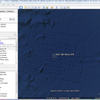
Well, as luck would have it, Edwin pulled out his notebook, found a weak but usable WiFi connection, fired up Firefox, and loaded the Google Map page of the intersection in question. (screenshot). As seen by the Google Maps screenshot, it was indeed a one-way. The officer then stated that there was probably an error in Google Map's equation. So what did Edwin do? He took her challenge by displaying one of the most complex intersections in the U.S. - namely Times Square. The Google Maps accurately depicted with arrows the one-way streets and accurately depicted 42nd street as the only two-way. Case dismissed! Check out the full story from the horses mouth:

Gear Live | How Google Maps Got Me Out Of A Traffic Ticket

Lacie Biggest S2S 2.5TB

July 19, 2005 1:45 PM | 1 Comment

LaCie unveiled its Biggest S2S 2.5TB SATA II RAID Tower, which is a whopping 2.5GB five-bay RAID tower capable of reaching interface speeds of 3Gb/s with next generation serial ATA (SATA) technology. You want storage for all your digital media files? This baby's got it. You want speed? Well, with sustained transfer rates of 187MB/s, this compact tower is ideal for fast real-time storage of uncompressed video files thanks to its true SATA II-to-SATA II connection. Biggest S2S is the second new RAID solution from LaCie in less than a year, offering an extraordinary combination of up to 2.5TB capacity, RAID security and fast throughput at a fraction of the cost for traditional RAID systems. Ironically, I just ordered the LaCie Biggest F800 1TB version yesterday, which was supposed to TMC's largest and fastest RAID 5 server with around 57MB/s. Now, we're so outdated - slower and less storage. <sigh>

Anyway, the Biggest S2S can be easily configured to Fast (RAID 0) in which disks are striped together for best performance without redundancy; Safe (RAID 1) in which all data is mirrored on duplicate disks for ultimate redundancy; Safe + Fast, (RAID 0+1) a combination of striping for speed and mirroring for redundancy; Big in which drives are strung together or concatenated and treated as one large volume for maximum storage; or JBOD in which each physical disk is independent and mapped completely to its logical volume.**

“With sustained transfer rates of 187MB/s, Biggest S2S offers the fast throughput needed by video editors,” says Emanuela Boila, LaCie Product Manager. “Biggest S2S is the most secure true SATA II-to-SATA II solution available at the lowest price imaginable. It’s simple to set up with easily identifiable RAID settings, and video editors or IT administrators can instantly get the extra headroom they need for real-time editing or fast backup.”

This all-in-one storage solution comes bundled with the LaCie SATA II 3Gb/s PCI-X Card 4E. Users simply plug the Biggest S2S into this next-generation SATA II 3Gb/s host to achieve sustained transfer rates of up to 187MB/s. Designed with video editors and IT administrators in mind, Biggest S2S satisfies the need for high-volume security and speed at a comparatively cost-effective price.

Features

  • Huge scalable capacities of up to 2.5TB
  • Supports uncompressed video editing
  • Easy setup - simply plug into a SATA host
  • Automatic on-line rebuilding
  • Comes with the LaCie SATA II 3Gb/s PCI-X Card 4E
  • Cross-platform for PC and Mac
As well as:
  • Five bays with hot-swappable drives up to 2.5TB
  • Next generation SATA II 3Gb/s interface and included SATA II PCI-X Card
  • Supports uncompressed video editing with 187MB/s throughput
  • Can be easily configured to RAID levels 0, 0+1, 1, JBOD
Availability
LaCie Biggest S2S will ship in the US beginning July and worldwide in September. All units ship with drives preconfigured to Fast (RAID 0) for immediate use. Biggest S2S comes with necessary cables and the LaCie SATA II 3GB/s PCI-X Card 4E. All Biggest S2S towers include a standard two-year warranty.

More information can be found at: http://www.lacie.com/products/family.htm?id=10007.
301030 LaCie Biggest S2S 1.25TB $1999
301032 LaCie Biggest S2S 2.5TB $3499

AIMFight Takes Flight

July 18, 2005 4:21 PM | 5 Comments

Even wonder how popular you really are? That is, how do you compare number-wise for the number of buddies you have on your AOL Buddy list vs. another person?

Well, AOL decided to let you know just how popular you are. Personally, I find this capability a bit intrusive. What if I don't want other people knowing how many buddies I have? I can see highschoolers picking on kids with too few buddies might force them to add fake buddies to their list just to be "cool". Anyway, here's AOL's news release about AIMFIGHT...

New www.AIMFIGHT.com Site Lets AOL® Members and AIM® Users Gauge Their Online Popularity, Compare Buddy List Ranking With Friends, Colleagues and AIM Users Everywhere

Dulles, VA July 18, 2005 Are you the social center of the online universe? Do you covet the pinging sound of popularity and importance? Today, American Online, Inc. and the AOL® Instant Messenger(TM) (AIM®) service unveiled a new Buddy List ranking feature and Web site that let users once and for all answer the burning question: "How Popular Am I?"

Live today, AIMFIGHT.com (www.AIMFIGHT.com) lets AOL® members and AIM® users see how connected they are to the online community at any given moment. By entering their AOL or AIM Screen Name, as well as that of a friend, users can square off against their buddies to see just how popular they really are, and compare Buddy List rank.

"For AIM users, the Buddy List feature is the most powerful social network of all and AIM Screen Names are an essential part of social identity. So the number of Buddy Lists they're on is a key indicator of their social prowess and people skills", said Chamath Palihapitiya, vice president and general manager for AIM and ICQ, America Online, Inc. "As one teenager recently told the Los Angeles Times, 'If you don't have AIM, you don't have friends.' "

When asked which musical artist they would most like to add to their AIM Buddy List and chat with in real time, members of the thriving AIM community picked recording artist Kelly Clarkson. Kelly Clarkson won the 'Best Musical Buddy' honor over a stellar list of performing artists who topped both the pop charts and AOL® Search's list of top musical queries.

The War on Spam

July 11, 2005 12:42 PM | 0 Comments

The war on spam is a battle that no doubt will be fought for years to come. As the spammers continue to send viruses packed with email zombie programs and terrorize unsuspecting victims who open their attachments, we have to wonder when the spamming wars will ever end. Make no mistake, it is a form of terrorism.

There are countless victims of identity fraud that are a result of keystroke loggers and other forms of viruses that send your personal information to the virus writer (aka terrorist). Even if their identity isn't stolen, just think of the panic and terror that victims feel when they open the attachment and their PC starts acting strange. The users may wonder "Did I just infect myself with spyware?" or "Did I just infect my PC with a virus?" or worse, they may wonder "Did I just give the 'keys' to all my confidential information, including all my passwords to the virus writer? Will they steal my identity and will I find strange activity on my credit report?"

The thought of identity theft is scary, indeed 'terrifying' if you think about it. It could be months of worrying if a simple double-click on an attachment resulted in the destruction of your bank account and good name/credit. Even if the virus is relatively harmless, you still may worry for months to come, especially if you aren't technically included to figure out exactly what the virus did to your PC. And if the unthinkable happens - not only will you have to spend time and money fixing your credit, but the stress itself is no picnic. Yes, spammers are terrorists - plain and simple.

I say whenever these spammer terrorists are caught, we skip the whole "due process" thing and ship them to Guantanamo (aka Gitmo) where all terrorists belong.

I bring this topic up because I just received an email (pasted below) discussing how terrorists are now using zombie PCs more often (62%) due to the "stricter" spam border patrols that for example Microsoft has put on its Hotmail servers to block illegal immigrants... err I mean 'spam' from entering Hotmail's servers. Instead, zombie PCs use legal netizen's PCs to send out the illegal terrorists spam since this bypasses Sender ID and Sender Policy Framework (SPF) email authentication spam-blocking techniques.

Where's the Minutemen Civil Defense Corp when you need them? We need Minutemen to patrol the Internet and block spam (especially foreign spam which for me is 90% of my spam) from entering our borders!

Anyway, here's the email I wanted to share...

MX LOGIC REPORTS SPAMMERS CONTINUE TO LEVERAGE SPF AND SENDER ID EMAIL AUTHENTICATION PROTOCOLS

--Zombie PCs Account for 62 Percent of Spam in June; 4 Percent of Unsolicited Commercial Email in 2005 Complies with Federal Anti-Spam Law--

DENVER July 11, 2005 MX Logic, Inc., a leading provider of innovative email defense solutions that ensure email protection and security for businesses, service providers, government organizations, resellers and their customers, today released its latest data on corporate email security. Among the key findings, the company reported that spammers continue to adopt Sender ID and Sender Policy Framework (SPF) email authentication protocols intended to help stop fraudulent email.

In a sample of more than 17.7 million unique email messages that passed through the MX Logic® Threat Center from June 19 through June 25, 2005, MX Logic found that:
9 percent were from domains that had published an SPF record, 84 percent of which were spam sending domains; and,
0.14 percent were from domains that had published a Sender ID record, 83 percent of which were spam sending domains.

Email authentication protocols including SPF, Sender ID, Domain Keys Internet Mail (DKIM) and others are intended to help verify the origins of email at the domain level, making it more difficult for spammers and phishers to stay in business.

"Spammers continue to leverage SPF and Sender ID with the intention of making their messages appear more legitimate and to possibly avoid having their messages delivered with an onscreen notification that a Sender ID record was not found, a method Microsoft recently announced it will use on Hotmail," said Scott Chasin, chief technology officer, MX Logic. "The strength of these protocols is further compromised by the fact that many legitimate senders have yet to adopt either Sender ID or SPF."

Chasin also noted that industry trials of both SPF and Sender ID have raised concerns about the protocols' effectiveness when email messages are forwarded or resent and in their ability to stop forgery of the most common user-visible mail headers. He pointed to a technical paper published by the Messaging Anti-Abuse Working Group, of which MX Logic is a member, which contains the results of more than six months of evaluation of SPF and Sender ID email authentication protocols.

"While we applaud industry efforts to develop email authentication protocols, no domain authentication protocol can guarantee that a message you receive really does come from who you think it comes from," said Chasin. "Additionally, for any domain-based email authentication protocol to be effective, it would have to be embraced by a critical mass of domain name holders. Imposing one protocol without mass adoption could result in the unfair treatment of a large number of senders of legitimate email."

In addition to data related to email authentication, MX Logic also issued the following findings:

Zombie Networks Account for Majority of Spam in June During June, spam sent through zombie PCs accounted for an average of 62 percent of all spam filtered by the MX Logic Threat Center. This compares with 55 percent in May and 44 percent in April.

"The continued proliferation of zombie PCs has levied a heavy cost on ISPs and email end users," Chasin said. "Compromised PCs have resulted in millions of email users being unknowingly blacklisted, often through no fault of their own."

Zombie PCs are neglected, "always-connected" broadband PCs that spammers hijack by installing a spam Trojan. Once infected, these zombie PCs provide worm authors with remote command-and-control spam-distribution capabilities, allowing them to create a legion of zombie computers that can pump out unwanted email and initiate Denial of Service (DoS) attacks.

"To make a real dent in the amount of spam sent globally, efforts must focus on helping service providers reduce outbound messaging abuse by identifying compromised PCs," Chasin said.

One such effort began in May, when the Federal Trade Commission (FTC), along with 35 government partners from over 20 countries, unveiled "Operation Spam Zombies." This international campaign is designed to educate Internet Service Providers (ISPs) and other Internet connectivity providers about hijacked, or zombie, computers that spammers use to flood inboxes.

Only 4 Percent of 2005 Unsolicited Commercial Email Complies with Federal Anti-Spam Law MX Logic also reported that monthly compliance with The Controlling the Assault of Non-Solicited Pornography and Marketing (CAN-SPAM) Act averaged 4 percent during the first six months of 2005. The findings are based on a survey conducted by the MX Logic Threat Center of more than 250,000 email messages since January.

MX Logic has tracked compliance with the CAN-SPAM Act since the law went into force on Jan. 1, 2004, by examining a random sample of 10,000 unsolicited commercial emails each week. On average, only 3 percent of unsolicited email has complied with CAN-SPAM since the law went into effect. Compliance hit a peak of 7 percent in December 2004 and reached an all-time low of 0.54 percent in July 2004.

"In terms of stopping spam, legislation is a blunt instrument," Chasin said. "Its real value is that it provides enforcement power to ISPs, the FTC, state attorneys general and other government agencies. Consistently low CAN-SPAM compliance underscores the need for further progress in industry cooperation and consensus on email authentication protocols, as well as end-user education."

Media and analysts interested in the latest CAN-SPAM compliance number can find it at http://www.mxlogic.com/news_events/.

Monitoring billions of messages per month for over 4,300 organizations worldwide, the MX Logic Threat Center combines advanced, accurate and up-to-the-minute email defense technology and human-messaging expertise to protect MX Logic customers from spam, viruses, worms, phishing attacks and other email threats.

Sandisk rescues valuable data

July 7, 2005 3:35 PM | 1 Comment

Memory cards, whether they're Secure Digital (SD), Compact Flash (CF), or another format have become an important part of most of our lives. Everything from digital camera to MP3 players use these memory cards. The thought of losing precious digital photos is not a pleasant thought. It happened to me once, although in my case it wasn't data corruption, but a stolen digital camera - with my wedding photos on it no less. Well, I came across this bit of news that I thought was worth sharing...

SANDISK RESCUES VALUABLE DATA FROM HIGH-ALTITUDE

WEATHER BALLOON THAT CRASHES INTO THE PACIFIC OCEAN

Immersed in Saltwater For Days, SanDisk Flash Memory Cards Survive To Tell a Tale

– And Bring Honors For UC-Santa Cruz Engineering Students

All Photographs Courtesy of UC-Santa Cruz

Photo 1 caption: Monterey Bay coast shot from research balloon at 25,000 feet

Photo 2 caption: SanDisk SD flash memory cards survived five days in the ocean

Photo 3 caption: Prof. John Vesecky, left, and Team BAT

Photo 4 caption: Bartolo Alvarado with damaged balloon electronics

SUNNYVALE, CA, JULY 7, 2005 – Engineers at SanDisk® Corporation (NASDAQ: SNDK) have salvaged valuable data from a high-flying atmospheric research balloon that plunged into the Pacific Ocean after it was launched by a team of university students off the central California coast.As a result, astronomical observatories that benefit from the project now have information that will help them focus more clearly on objects in outer space, and the students have been awarded special honors for their effort.

This remarkable chain of events began when the students, all engineering seniors at the University of California-Santa Cruz, released a helium-filled balloon with instruments that included atmosphere probes, a transmitter, a digital camera and a custom-built data recorder.Both the camera and the recorder used SanDisk SD

flash memory cards to capture images and continuous telemetry readings.

Calling themselves Team BAT (for Balloon Atmospheric Telemetry), the students launched their balloon in early March from a softball field in Watsonville, a coastal agricultural community south of Santa Cruz. Their intent was for it to rise 75,000 feet and continually record information on turbulence including wind velocity, temperature, humidity, pressure, altitude, longitude and latitude. These are parameters that help astronomers to measure light distortion in the atmosphere and adjust their telescopes for the clearest image.

With a GPS device giving the balloon’s position, the students were able to track its flight path for about two hours.They were expecting it to reach maximum elevation before deploying a parachute and settling gently back to earth.But things suddenly went haywire.A sudden shift in the wind pushed the balloon and its payload of electronics over the ocean, where it ultimately ruptured and splashed into the waves about two miles offshore from Pajaro Dunes, presumably never to be seen again.Team BAT was ready to scratch the mission as a failure after gleaning only erratic bits of data from the transmitter.

But fortune prevailed.Five days after the balloon disappeared, a beachgoer found the apparatus washed ashore about 20 miles north of where it had dropped into the ocean, and called the university. When the students arrived, they saw that the small padded lunch bag containing the circuit board for the telemetry equipment – and a SanDisk 1-gigabyte (GB) standard SD memory card – were thoroughly soaked by saltwater.Nearby were the shattered remains of the digital camera, which had been separated from the bag. Amazingly, the memory card, a SanDisk 128-megabyte (MB) standard SD card, was among the rubble.

Back at the UC-Santa Cruz lab, the excited students dried out the card from the camera, slipped it into a card reader on a PC, and observed a string of breathtaking, high-elevation photos, the last one shot at 40,000 feet.Not a single image was lost.But the SanDisk SD card from the data recording device was completely unreadable.So Dave Van Unen, engineering lab staff for the university’s Jack Baskin School of Engineering, sent the card to SanDisk as a last resort.

After a week of repeatedly scanning the card with a special reading device and getting intermittent errors, Ysabel Tran, a technician in SanDisk’s engineering lab, was finally able to extract all of the data on the card.She transferred it to another SD card, which was immediately relayed to Team BAT.

UCSC engineering student Roberto Menchaca said that although his group estimated a peak altitude of 60,000 feet for the balloon, in fact the card data recovered by SanDisk showed a maximum of 81,863 feet -- far above the original objective.And while the balloon transmitter radioed just 1,028 samples of data, the card yielded a whopping 53,406 samples.“This gave us more accurate data and, just as important, it was continuous, whereas the data we received by radio was full of gaps,” he said.

Elated at their now successful project, the students presented their report to their research sponsors.And when graduation ceremonies were held in early June, the university gave them both the Dean’s Award and the Chancellor’s Award – a rare double honor.Members of the team, apart from Menchaca, consisted of project leader Skye Vendt-Pearce, Bartolo Alvarado, Amanuel Mengistu and Kathy Phan.

“We’re delighted that we were able to assist these aspiring engineers and thus contribute to the space program,” said Nelson Chan, SanDisk’s executive vice president and general manager for consumer and handset business.“This amazing series of events once again demonstrates the durability of SanDisk’s flash memory cards.”

Dr. John Vesecky, professor of electrical engineering at UC-Santa Cruz and the faculty “mentor” of the student team (along with Prof. Don Wiberg, Cyrus Bazeghi and Stephen Petersen), said the overall project was supported by astronomers from the Palomar and Lick observatories in California and funded by Cal Space, a state grant program that promotes space-related education within the university system, and the Center for Adaptive Optics at UC-Santa Cruz.

“The students were measuring variations in atmospheric turbulence as indicated by wind shear and temperature changes,” said Vesecky. “These are little fluctuations in air temperature that occur in sizes of from 10 centimeters to a few hundred meters. They are like eddies in the atmosphere and they create distortion – the ‘twinkling’ in the stars that people see from earth – and generate fuzzy images for space telescopes. It’s like looking at lights through a swimming pool.”

By using the student balloon data, land-based astronomers can begin to profile the layers of turbulence and compensate for them, he added.This process is called “adaptive optics,” and the UC-Santa Cruz program in this field is nationally recognized.Another student balloon called the HASTE project was launched in June and a third may be released this fall, said Vesecky.

SanDisk is the original inventor of flash storage cards and is the world’s largest supplier of flash data storage card products, using its patented, high-density flash memory and controller technology. SanDisk is headquartered in Sunnyvale, CA and has operations worldwide, with more than half of its sales outside the U.S.

AOL and Plaxo

July 6, 2005 11:44 AM | 8 Comments

Plaxo
AOL and Plaxo are joining forces to make it easier to find your contacts. I personally get annoyed by all the Plaxo emails I get asking me to update my contact information. I get at least one or two a week from pubilic relations firms. It just seems a bit intrusive if you ask me. But apparently, a lot of people use Plaxo, so they will mostly likely approve of the news that AOL is joining forces with Plaxo. Hmmm, I wonder when AOL will purchase or make a deal with Classmates.com, yet another popular "personal information" aggregator? Lots of people enter in their high school information, birth date, year of graduation, current email address, etc. Imagine if AOL could "link" that information with their "buddy lists" so you could "instantly" find and Instant Message (IM) a long lost high school buddy?

Anyway, America Online, Inc. announced today that it is working with Plaxo, Inc., an industry leader in Web-based contact management, to help AOL members and AIM users keep their e-mail address books and Buddy List features up-to-date, and make it easy to access AOL services from other e-mail programs.

Under the agreement, AOL will integrate Plaxo(TM) services to enable AOL members and AIM users to easily import, export and synchronize contact information in their Microsoft® Outlook®, Outlook Express® and third party Web-based e-mail address books with their AOL Mail and AIM Mail Address Books. This will also enable AIM users to automatically pull contact information from third party address books to pre-populate, or build upon, their Buddy List features.

In addition, the agreement will enable AOL members, AIM users and Plaxo members to detect AIM presence information from within Plaxo and Plaxo-enabled platforms, such as Outlook and Outlook Express. A new AOL/AIM Screen Name field will be added to both Plaxo and Outlook 'v-cards' and the familiar AOL® Running Man icon will appear in contact lists and e-mail headers to let users know when AIM® buddies are online and available to chat.

The net result for all will be a universal and up-to-date address book that can be used at home, at work, and the road, and which provides the accurate contact and presence information necessary for all digital communications. This will enable the more than one million AIM users who have already adopted the new free AIM Mail service to easily import contact information from other e-mail applications to quickly bring their AIM Mail Address Book up to date.

"Together with Plaxo, we are making it easy for our members and users to create, update and maintain their e-mail address books and Buddy List features," said Chamath Palihapitiya, vice president and general manager for AIM and ICQ, America Online, Inc. "Through this agreement, we will also enable Plaxo users to detect AIM presence within the Plaxo service and Outlook, giving them instant access to their friends, family and colleagues."

Finally, Plaxo will integrate access to the AIM service into its software and AIM users will be given the opportunity to install the Plaxo plug-in for Outlook or Outlook Express while downloading or upgrading the AIM service. AOL members will be able to adopt Plaxo both within the AOL service and on the AOL.com® portal.

"We are excited to bring the popular AIM service into our offerings," said Ben Golub, president and CEO of Plaxo. "By combining highly accurate and available contact information with the ability to instantly see who is online and available to chat, we are providing a more integrated communication experience for our millions of customers. We are also extremely pleased to offer AOL members, AIM users and AIM Mail users our contact management services, enabling them to stay connected to friends, family, colleagues and customers."

The AOL / Plaxo Integration has been customized to let AOL members and AIM users easily consolidate, populate and update their existing address book entries on a case-by-case basis. The custom technology integration will enable AOL members and AIM users to:

- Import address books and automatically populate their AOL Mail or AIM Mail Address Books and AIM Buddy List from their Plaxo Contacts which contains contacts from Outlook and Outlook Express and third party Web-based e-mail;

- Stay in sync by automatically exchanging updated contact information with friends, colleagues, and customers;

- Determine which elements of their contact information will be public or private, and with whom the various elements will be shared; and

- Quickly configure open mail access (IMAP) integration between AOL Mail or AIM Mail and Outlook, Outlook Express.

The AOL / Plaxo Integration will enable Plaxo subscribers to:

- Add AIM presence information into their Plaxo, Outlook and Outlook Express accounts to easily see when friends, family, customers and colleagues are online and available to chat;

- Initiate an AOL instant messaging session from their Plaxo, Outlook and Outlook Express address books; and

- Access their universal address book from their chosen communication platform (home e-mail, work e-mail, mobile, phone or AIM), to easily connect with friends, family, colleagues and customers.

Pricing and Availability

Both AOL and Plaxo will make the integrated features available at no additional charge to their subscribers and registered users. A public beta of the joint technology will be available from America Online, Inc. later this year.

The new AIM Mail and AIM services will continue to be free, as will the basic Plaxo service.

Previous 1 2 3 4 5 6 7 8 9 10 11 12 13 14 15 16 17 18 19 Next

Subscribe to Blog

Category Archives