August 2008 Archives

Asterisk GUI 2.0 launches

August 26, 2008 11:08 AM | 0 Comments
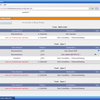
Yesterday, afternoon I mentioned Asterisk GUI 2.0. Later that evening, Digium "officially" announced Asterisk GUI 2.0 and included some screenshots, which you can check out here:

here's a few screenshots to wet your whistle:
asterisk-gui-20-voicemail-settings.png
asterisk-gui-20-conference-bridge.png

asterisk-gui-20-incoming-rules.png

Digium Headquarters Tour

August 26, 2008 10:36 AM | 1 Comment
During my tour of Digium's headquarters in Huntsville, Alabama I snapped quite a few photos that I thought I'd share. I'll just share a few here, but if you want to see them all, go check out the online photo album I created specifically for Digium:
http://blog.tmcnet.com/blog/tom-keating/photos/digium/

Be sure to check my other photo albums as well:
http://blog.tmcnet.com/blog/tom-keating/photos/


The new Digium headquarters is very impressive. I couldn't help but be in awe of what Mark Spencer created. Obviously, there is money to be made in open source, and seeing the fruits of Mark's and his team's labor in this state-of-the-art building was proof of that. I can't help but reminisce back to my November 2001 column titled "In Search Of A Linux-Based PBX" where I listed several "young" Linux-based PBX solutions. One such solution I discovered was Asterisk. Check out what I wrote back in November 2001 to see how far Asterisk has come:

As my search continued, I stumbled upon a company called Asterisk. According to their Web site, Asterisk is an open source PBX and general telephony toolkit that runs on the Linux operating system. Asterisk provides a set of APIs that essentially make it a type of middleware between Internet and telephony channels like VoIP, voice over frame relay, etc., and telephony and Internet applications like voice mail, phone directories, call parking, and so forth. Asterisk supports a flexible and extensible channel API, allowing any number of real hardware or software interfaces. It is purported to support ISDN, PRI, T1, and POTS through an Adtran Atlas. The Quicknet Internet PhoneJack and Quicknet Internet LineJack are both supported. Plans to support Lucent-based Winmodems also in the works. This product is not a turnkey out-of-the-box Linux-based PBX, and its still under development, but it does have several telephony functions working, such as call bridging, call transfer, call parking, and rudimentary voice mail. Check them out.
There was no Digium telephony cards back then. It ran on Adtran hardware and some Quicknet PhoneJack cards. Who knew that Asterisk would explode and become the dominant Linux-based IP-PBX solution?

Well, there is no better proof on how far Asterisk and Digium have come than to see their brand new building. Check out these photos:

digium-headquarters.jpg
Front side of the building


Digium front lobby - Nice cafe to get your morning caffeine fix (coffee) before you head off to do some Asterisk coding.wink


This is the Asterisk logo in the center of Digium's headquarters on the 1st floor taken from the 2nd or 3rd floor above. Doesn't this remind you of the Star Trek Enterprise's warp core? (Seen below from a side view. Couldn't find a top-view image which would be more similar)

star-trek-enterprise-warp-core.jpg


I count 6 fans and at least 4 heat sinks. Now that is some serious coolage! This might be the AA350 I snapped but not sure.


This is Rotary Dial Phone with an Ethernet Jack making it the world's only rotary IP phone!smile It was in one of the Digium offices I passed by.


Digium has many Collaboration Rooms. This is just one of them. Note the (almost) floor-to-ceiling whiteboard for plenty of collaboration space.


Just a shot of the hallway with the cabling system overhead. Hmm, I only see like 7 cables. What sort of magical networking is Digium doing that they only need 7 cables in a company of 150 people?


Digium has several Collaboration Rooms. Note the orange chairs to match the orange Asterisk logo.


Don't zoom in on the whiteboard. It contains top secret Digium information on how they plan on taking over the open source telephony world. Oh wait, they're already doing that.wink


Can't call yourself a software company without a foosball gaming table! Though I did notice Digium's vending machines only sold Dr. Pepper and not Diet Coke. Sacrilege I say!


Digium's training class room. Each student gets their own PC to install & configure Asterisk.


Digium and TMC having dinner
Left-to-right clockwise: Steve Sokol, John Todd, Russell Bryant, Dave Rodriguez (TMC), Greg Galitzine (TMC), Jane Brooks, Tom Keating (TMC), Bill Miller


There are several other pictures in the Digium photo album. Go check them out.
Front_Treo800w.gifThe first Treo device with built-in Wi-Fi connectivity is worth a look for companies running a Microsoft back-end infrastructure or for die-hard Treo users. Alas ...

Although the Treo 800w is likely the best Treo smart phone Palm has delivered to date, Palm's late adoption of technology now standard on many competing mobile devices leaves the Treo 800w as a middle-of-the-road option for many casual buyers.

At long last, Palm has added Wi-Fi connectivity to a Treo, as the 800w features an 802.11b/g radio in addition to a new integrated GPS receiver.

Given how astronomically long it has taken Palm to implement Wi-Fi in any of its devices, it is gratifying to see that the company gone the extra mile to improve upon the basic software functionality that comes with Windows Mobile

Get more at eWeek.
So much good news and now so much bad news.

The Apple rumor mill is churning, but this week it's about software fixes instead of new priphone_main_overview20080609.jpgoducts. News reports are raising expectations of yet another iPhone software fix next month.

Apparently software update 2.0.2 didn't fix connection problems -- in fact, it created new issues for some iPhone users even as others are wrestling with MobileMe foul-ups that make receiving e-mail on the handset sketchy.

The software fix Apple was reportedly related to a chip inside the iPhone. BusinessWeek reported last week that Apple was working on a remedy through a software upgrade. 

But applications are still crashing, crashing, crashing. 

Apple has set itself up for failure because it's vetting all of the applications on its App Store to ensure the software doesn't contain any bad code, according to Mike Disabato, a wireless analyst at the Burton Group.

"I've got three applications on my iPhone right now that don't work. Apple killed the Netshare application. Why did that do that? Is Apple enforcing AT&T's terms of service? I didn't sign a contract with Apple that allows them to do that," Disabato said. "Let me buy what I want and it's my problem if I run afoul of AT&T!" 

Check out Wired for more dirt.
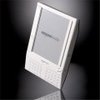
kindle.jpgAmazon will reportedly ship new versions of its Kindle e-book reader before year's end. The original reader launched last November sold out in its first week and had Amazon scrambling to fill holiday orders. While sales have been brisk, estimates vary.

A Seattle newspaper confirmed late last week that Amazon.com is in the late stages of rolling out two new versions of Kindle. Reports unconfirmed by Amazon indicate there will be at least two new devices -- one with a new user interface, but the same dimensions of the original paperback-sized reader, and another the size of an 8-by-11-inch sheet of paper. Other tantalizing details are that the new readers may sport color choices.

The original Kindle has been criticized for its bland appearance and somewhat clunky controls, so color and a new interface could help sales. Not that Amazon seems to be complaining.

Low estimates of current Kindle sales are pegged at around 230,000 units shipped in nine months, while others speculate that more than 380,00 have been sold.

Get more at NewsFactor.

And for another take, go here.
I've been playing around with fring for awhile now. I like fring which I like to call "the Swiss army knife of mobile VoIP and IM", since it works with Skype, SIP, MSN Messenger, Yahoo! Messenger, Google Talk, ICQ, and AIM. Because it supports SIP, I'm able to configure fring to work on Asterisk-based systems to be able to make and receive phone calls.

fring-make-call-types.JPG

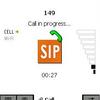
Receiving calls to my '149' SIP extension (see screenshot) works great on my Windows Mobile 6.1 Verizon XV6700 (Apache) phone. in fact, VoIP using fring even works over a cellular data connection, unlike the Apple iPhone which blocks VoIP over fring-sip-call-in-progress-over-cellular-connection.JPG cellular and I'm sure you heard about Nokia announcing they will no longer support VoIP. Om Malik wrote about this last week. As a gadget freak, people have been telling me I should dump my Windows Mobile for an iPhone. So let's see here, no VoIP on popular Nokia phones, no VoIP on the popular Apple iPhone (except over Wi-Fi). Further, you can't even run Skype on the iPhone. Tell me again why I should dump my Windows Mobile phone for an iPhone? Ok, I know, I know, it has a cool multi-touch interface and some other great apps. I'm getting an iPhone to test/play around with, but I already know I won't like it's VoIP capabilities.

Getting back to fring, my one complaint about it is that it doesn't support DMTF (touchtones) for traversing voicemail, ACDs/IVRs, etc. So it's useless if you want to call your credit card company, bank, etc. I'm shocked they don't support it yet. There are other VoIP apps for Windows Mobile that support DTMF, such as Talkonaut, so I'm not sure why this is such a technical hurdle for fring. It's the one thing that stops me from using fring more regularly. One other minor complaint is that it doesn't have a quick redial button. Other than that, fring works fantastic. I can make Skype VoIP calls, SIP-based calls, and of course the built-in IM support for the top IM providers. Take that iPhone!
Bill Miller commented I may have seen some yet-unreleased products during my tour. During my tour of Digium's headquarters, I snapped some photos, so I thought perhaps one of my photos might contain some top secret Digium product, so I planned to give them a closer look.

Sure enough two of my photos caught my eye. I zoomed in on the photos and noticed a Digium Asterisk Appliance with a model number printed that says "AA1080" or "AA1060". I can't be sure which model number is correct. Although my Canon Powershot G9 is 12.1 mexapixels, I was too far away when I snapped the photo to get a good resolution shot of the model name. I put on my best CSI and CIA photo enhancement techniques (aka Photoshop) to try and enhance the image, but I still can't make out if it's AA1080 or AA1060.

Nevertheless, it would appear Digium has a yet-unreleased 1U appliance called the AA1080 or AA1060. Today, Digium has only announced the Digium AA60, AA300, and AA350 appliances. So the AA1080/AA1060 could be the next iteration. Check out the two photos for yourself...


Click for Full Size
- zoom in by the Linux license plate.

Click for Full Size
- zoom in by the Linux license plate.

Update: 3:35pm
Bill Miller, VP of Product Management at Digium writes to tell me, "There are no plans at this time to launch what you saw, but those units you saw are the voice system of Interop for the second time as we are technology sponsors with Polycom."

Ah well, it was fun while it lasted, but it appears no AA1080 or AA1060 will be coming to market -- or maybe that's just want Bill wants me to believe.
digium-headquarters.jpg
As I hinted last week, I would have some "interesting" news to tell after my visit to Digium's brand new headquarters along with colleagues Greg Galitzine and Dave Rodriguez. Before I get into the MAJOR news being made by Digium, let me cover what else I learned on my trip. It had been 3 years since I last visited Digium down in Huntville, Alabama.

After getting a grand tour of the new Digium building we sat down in a state-of-art boardroom complete with a high-end Polycom IP conferencing unit, theater lighting, and a projector with motorized retractable screen. The boardroom was named the Mark C. Smith Boardroom to honor Mark Smith, who was the founder and chief executive officer of ADTRAN and Mark Spencer's mentor. A picture honoring Mark Smith sits on a table in the room. We all admire how Mark Spencer was able to transform open source telephony - myself included - but no doubt Mark Smith and his company ADTRAN played  a major role in making Asterisk the phenomenon it is today.

During our full-day meeting, Digium wanted to fill us in on the latest happenings going on and the future directions Digium was planning to take. One of the first takeaways I took was that their 1.5 year term CEO, Danny Windham believes strongly that Asterisk should be classified as an "engine". It's the "core guts" on which other software from third-parties can be added. For instance, Asterisk is not simply an IP-PBX, as of 1.6 it has an SS7 stack enabling Asterisk to be used in carrier and service provider applications. Another example they gave was how Asterisk can run just about any protocol, and were quick to point out that sipXecs, an open source alternative recently acquired by Nortel, can't even natively run Nortel's own digital phones while Asterisk works just fine with Nortel phones.
Another important takeaway was that Digium said flat out that claims Asterisk could not scale were false or at the very least were misleading since they were based on older versions of Asterisk. In fact, it seemed Digium took great personal umbrage that some of their competitors were making these claims. As evidence of scalability, they mentioned a particular service provider running thousands of ports and are currently writing a write paper case study on this customer. When they publish it, I'll be sure to include excerpts in my blog.

One last takeaway that is important to mention is that Digium considers themselves to be the "Benevolent Asterisk Project Sponsor and Maintainer". This is a key mantra that they want to reinforce. They have no plans to ever fork Asterisk into say an open source version and a premium closed source version. They know there are many companies that do add proprietary code on top of the Asterisk engine and don't give back to the community, but Digium has no plans on monetizing Asterisk that way. I should point out that corporations that purchase Asterisk Business Edition (ABE) do have the right under the dual licensing to add their own code without giving it back to the community, however, there are companies that have taken the Asterisk engine, didn't pay for ABE, added their own code, and didn't give the code to the community.

Some interesting statistics about Digium that they told me during the meeting that I thought I'd share. First, Digium currently has 150 employees and has had 26 consecutive growth quarters. The headquarters are now running on Switchvox, which Digium acquired in September of last year. This is the first year that Digium has been named to Gartner's renowned visionaries quadrant. One stat that I've always wonder about is what percentage of Asterisk code is developed by the open source community and what percentage by Digium. Well, the answer is 50% each, which was a little surprising. I would have expected the open source community to be higher, but this goes to show you how important Digium is to the future of Asterisk. They are obviously paying for developers and making an investment in improving Asterisk.

Some other interesting stats:
  • Over 1,000,000 downloads in 2007
  • Project 2008 downloads at over 1.54M
  • Over 4 million servers deployed with Asterisk
  • Over 56,000 active on forums
  • Over 17,700 on active Asterisk mailing lists
  • Over 7,248 on our Bug Tracker
  • Over 400 active contributors
  • Over 200 service providers worldwide using Asterisk
Further, the number of commits to Asterisk Trunk was 3,498 (mainly Asterisk 1.6 related) and the number of commits to Asterisk 1.4 was 1,401 (bug fixes). A staggering 132GB of bandwidth was consumed in 2008 YTD.

Here's an interesting photo I took from the 2nd or 3rd floor aimed at the Asterisk logo which I believe is the center of the 3 buildings. From what I'm told if you fly over Digium's building, the three buildings form the Asterisk logo. For some reason looking down at this circular area reminded me of the Star Trek Enterprise's warp core. Forget "Powered by Intel", this building is "Powered by Asterisk".


Digium recently hired Stephen Burcham, the Director of Quality who came from a company that designed controllers for anti-lock braking systems, which demand the most stringent quality control and reliability standards. Stephen has brought that same high standards mentality to Digium. Surprisingly, Digium's hardware production is done by two American companies, so it's Made in the U.S.A. Considering many electronics can be done more cheaply in China, I was happy to hear Digium was using American companies to manufacture their goods. In fact, Digium is using two local Alabama companies and they told me that they actually made in an investment in at least one of them to purchase a higher-end process manufacturing machine to meet Digium's stringent quality requirements.

One of the biggest challenges facing Digium has less to do with technology and more to do with market perception. Digium told us that they have to battle Cisco and their claims that Asterisk is not a business class solution. I found it fascinating that Cisco is still able to leverage their own name brand recognition to get (scare?) customer wins, but if anything that's great news for Digium and Asterisk. It isn't technical comparisons or feature-sets that Asterisk is losing customers to Cisco, it's name brand recognition. That'll improve with time and my guess is very quickly since Asterisk has a full head of steam.

Now for the interesting news. AsteriskNOW which previously ran on rPath will now be using the very popular CentOS (5.2) distribution. Now that it runs on CentOS it will support easy operating system updates (via .rpm files). Also new in AsteriskNOW will be a yum repository for easy updates of Asterisk itself. Just 'yum' the lastest version of Asterisk and it will upgrade your version of Asterisk without screwing up your customizations.

Also new is that the next release of AsteriskNOW (1.5) will bundle the very popular FreePBX front-end GUI. This is big news! FreePBX has become the defacto standard for web-based GUI administration of Asterisk, so now Asterisk fans can download AsteriskNOW, boot of the self-install CD and not only getting a working copy of AsteriskNOW, but FreePBX as well! This isn't to say Digium will stop developing their own GUI. In fact, when I asked that question, they said categorically they will continue to develop and improve their Asterisk GUI 2.0, which is currently installed on Asterisk Business Edition (ABE) and the Digium Asterisk Appliance 50 (AA50), as part of the 1.2 release I recently blogged about. Digium told me they expect the next release of AsteriskNOW to be available by Astricon.

Some other interesting news to talk about soon and I want to blog my grand tour of Digium's state-of-the-art facility, but I'll break that out into a separate blog post. Stay tuned...
s0213924_std.jpg It's just about prime time for back-to-school shopping so why not add a gadget to the list of pencils, Sharpies, three-ring binders, etc., that make up the usual back-to-school shopping list?

So I'm asking you: "What gadget are you buying today?"

And let's make it a lot more than a pencil sharpener (although that will come in very handy during the school year.)

Meeting with Digium

August 21, 2008 11:10 PM | 1 Comment
I had a very interesting meeting with Digium today in Huntsville, AL. Just got back to my hotel and fly back tomorrow. Stay tuned for more on what I learned.

Sent from my Windows Mobile� phone.

Moto Looks To Get Its Mojo Back

August 21, 2008 10:04 PM | 0 Comments
Motorola, the world's third-largest handset maker, has just unveiled two new low-end phones on that allow users to listen to songs and surf the Web.

Facing stiff competition from handsets such as Apple's iPhone and the Nokia line, Motorola has said it would launch 50 new devices this year, including advanced phones, trying to come up with a strong follow-up to its once-lauded Razr phone.

One new handset is a music-enabled camera phone -- the W388 -- that sells for under $100.

The second device is a low-end third-generation (3G) mobile phone -- the VE538 -- which goes for less than $250 and offers one-click mobile social networking, photo uploading and blogging at various websites.

The two new products will be shipped to Asia-Pacific markets first -- before being rolled out globally -- by September. 

More at Reuters.
industry.intel developer forum.jpgIntel has made progress in a technology that could lead to the wireless recharging of gadgets and the end of the power-cord spaghetti behind electronic devices. 

It says it has increased the efficiency of a technique for wirelessly powering consumer gadgets and computers, a development that could allow a person to place a notebook on a countertop to power it. This could bring the consumer electronics industry a step closer to a world without wires.

The chip maker plans to demonstrate the use of a magnetic field to broadcast up to 60 watts of power two to three feet. It says it can do that losing only 25 percent of the power in transmission.

The presentation is part of the company's Intel Developer Forum, a series of events here that the company uses to showcase new technologies in personal computing and related consumer technologies. 

Read all about it at the International Herald Tribune.

Seinfeld To Battle Mac Guy in Ads

August 21, 2008 9:02 PM | 0 Comments
Microsoft, weary of being cast as a stodgy oldster by Apple advertising, is turning for help to Jerry Seinfeld.

The software giant's new $300 million advertising campaign, devised by a newly hired ad agency, has been closely guarded.

But Mac-loving Seinfeld will be one of the key celebrity pitchmen, say people close to the situation. He will appear with Microsoft Chairman Bill Gates in ads and receive about $10 million for the work, they say. 

(If you offer enough money ...)

I say, "No soup for you!

See more at the Wall Street Journal.
image_thumb_1.pngMicrosoft is putting its touchy-feely side to the test at the Sheraton Hotel.

The software giant recently showed off its new Surface technology at five Sheraton hotels nationwide. The demonstration allowed the public to get a feel for Microsoft's first fully touch-screen computer.

The table-like Surface computer operates entirely through a 30-inch interactive screen, which works along the same lines as Apple's iPhone. But the Surface also recognizes and interacts with objects such as iPods and digital cameras that it comes in contact with, allowing users to edit photos or play music on the spot. The display, which rotates, can also recognize multiple hands or fingers. 

NewsFactor's got more.
gogoinflight_top.gif American Airlines began offering Internet access on long-haul domestic flights today, making American the first U.S. airline to offer full in-flight broadband, according to a Reuters report.

The world's largest airline said its passengers on Boeing 767-200 aircraft can pay $12.95 for Internet access on nonstop flights between New York and San Francisco, New York and Los Angeles, and New York and Miami. 

Airlines have been racing to get reliable Internet access on their flights in hopes of gaining a competitive edge in the troubled airline industry. (And making some money since the cost of fuel is sucking the life out of the industry.)

Other carriers like Southwest Airlines and JetBlue have made strides in that direction. (When you charge for everything -- why not?)

Delta said this month it soon will start rolling out broadband Wi-Fi access for its entire domestic mainline fleet of more than 330 planes.

Experts have said they expect in-flight Internet to become common in the industry.

American's mobile broadband service, which is called Gogo, is provided by AirCell. Each Gogo session includes full Internet access. Cell phone and VoIP are not available. (So you can't call the pilots directly ...)
Previous 1 2 3 4 5 Next

Subscribe to Blog

Monthly Archives