


Tom Keating : VoIP & Gadgets Blog
Tom Keating
CTO
| VoIP & Gadgets blog - Latest news in VoIP & gadgets, wireless, mobile phones, reviews, & opinions

Computer Hardware

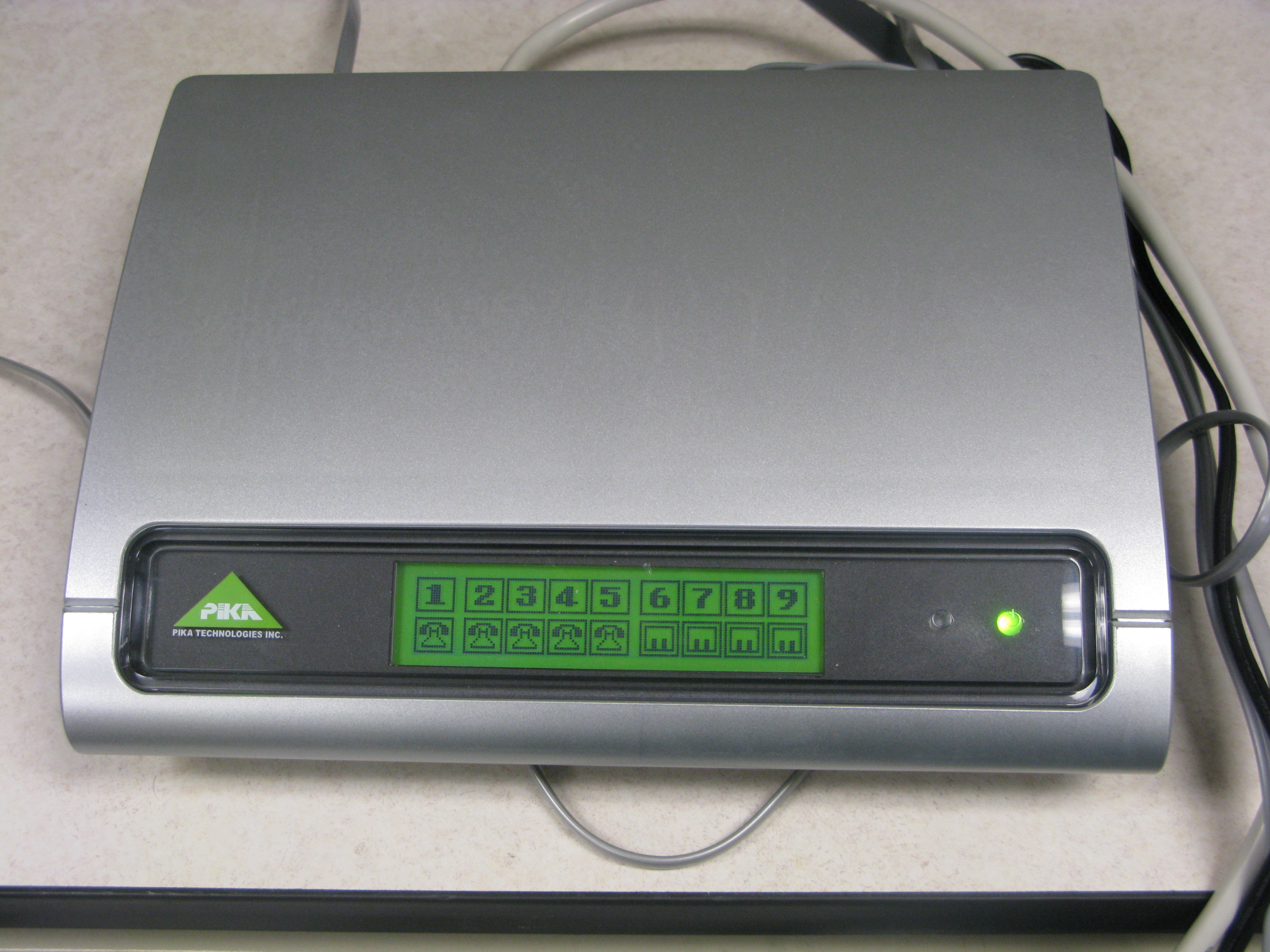
PIKA WARP Appliance for Asterisk Review

September 12, 2008


There is no doubt that open source Asterisk has taken IP telephony by storm resulting in many vendors offering solutions based on Asterisk. Because the "free" Asterisk software is open source, it has helped drive down the cost of installing an IP-PBX. Only one major cost factor remains - the hardware. If you install Asterisk on a traditional PC, you have several hardware components - the motherboard, the CPU, the memory, the hard drive, the power supply, CD/DVD drive, etc.

Sling Media SlingCatcher and Slingbox PRO-HD Available

September 10, 2008

The new Sling Media SlingCatcher and Slingbox PRO-HD (Sling Media Slingbox PRO-HD SB100-100) are now available for pre-order from Amazon and SlingMedia.com at $299.99 each. Just in time for the Christmas holiday season! Woot! Ok, Christmas is still 3 months away, so I'm getting a little ahead of myself.

Finally Some Good News about Notebook Batteries!

September 9, 2008

Seems like every blog about notebook computers and batteries is bad news -- recalls, fires and the like.

Well, how about some good news for a change!

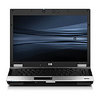
Hewlett-Packard (HP) will reportedly release a notebook next month that can run for to 24 hours using a high-capacity battery -- but only if it's running Microsoft's Windows XP operating system.

The long-lasting notebook will be a special configuration of the 6930p, part of HP's EliteBook line.

The allure of a battery that can last a day is incontestable, as anyone who has spent time in an airport searching for a power outlet knows. The secret to the 6930p's long battery life is new technology -- and some old technology, too.

To get the best battery performance, the 6930p will have to run Windows XP rather than Windows Vista. Vista has been criticized as being a power hog, although some of its flashy, power-draining features such as the translucent Aero windows can be turned off.

Read more about it at PC World here.


New e-Newspaper Reader Heats Up e-Reader Market

September 8, 2008

The electronic newspaper, a large portable screen that is constantly updated with the latest news, has been a prop in science fiction for ages. It also figures in the dreams of newspaper publishers struggling with rising production and delivery costs, lower circulation and decreased ad revenue from their paper product.

While the dream device remains on the drawing board, Plastic Logic is introducing its version of an electronic newspaper reader -- a lightweight plastic screen that mimics the look, but not the feel, of a printed newspaper.

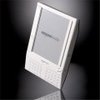
The device, which is unnamed, uses the same technology as the Sony eReader and Amazon's Kindle (photo above).

Both of those devices are intended primarily as book readers, but Plastic Logic's device has a screen that is more than twice as large. The size of a piece of copier paper, it can be continually updated via a wireless link and can store and display hundreds of pages of newspapers, books and documents.

The reader will go on sale in the first half of next year. Plastic Logic will not announce which news organization will display its articles on it until the International Consumer Electronics Show in January, when it will also reveal the price. 

Read more about it at the New York Times.


Sony Laptops Heading Back to Sony -- Oy VAIO!

September 4, 2008

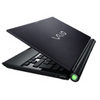
Sony has issued a recall for thousands of its VAIO laptops because of possible overheating or short-circuits.

(Didn't we blog about another similar Sony problem not all that long ago?) 

The U.S. Consumer Product Safety Commission (CPSC) said that the recall is voluntary, and it recommended that Vaio owners stop using the products unless otherwise instructed.

The recall affects 73,000 VAIO TZ-series computers in the U.S. and apparently 440,000 units worldwide.

The safety commission said the reason for the recall is because "irregularly positioned wires near the computer's hinge and/or a dislodged screw inside the hinge can cause a short-circuit and overheating."

It added that this hazard could result in burns to consumers. In fact, the commission reported that Sony has received 15 reports of overheating, including one person who received a minor burn.

The affected models are the VAIO VGN-TZ100 series, VGN-TZ200 series, VGN-TZ300 series, and VGN-TZ2000 series.


Dell Goes to Europe with Vodafone

September 4, 2008

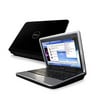
Vodafone and Dell have announced that Dell's Inspiron Mini 9 ultra-mobile notebook will be sold with built-in mobile broadband, exclusively through Vodafone stores and online, and directly from Dell, in key European markets.

Available in late September, the Inspiron Mini 9 is designed to deliver the utmost flexibility, reliability and speed for email and Internet browsing on-the-go without the need for an additional modem. (Or so they say.)

Digital nomads and avid web surfers alike (that's their wording, not mine) will be able to connect anytime, anywhere, whether on the road, or on-the-go, while surfing the Web, chatting with friends or enjoying their favorite online videos and music.

Wonder how long it will take for this to make its way to the U.S.?

And yes, there is a U.S. version that sounds pretty sweet -- reminds me of my old Compaq Contura Aero -- now there was a subnotebook (remember that category?)

There's lots more at Gizmodo.


Everything in the World's Going Wireless

August 27, 2008

In Singapore, the Dutch consumer electronics maker Philips is designing a multimedia server to stream audio and video through the air, from the Internet to any device in the home.

In Munich, a former unit of Siemens envisions a cordless phone that would double as a music player, wirelessly drawing music from home computers.

In Japan, members of Sony's global "digital home team" are redesigning 90% of the company's home electronics components to connect wirelessly to the Internet by 2011.

Across the consumer electronics industry, the leading players are revamping their audio and video equipment for a future centered around the Internet, a world in which televisions, stereos, computers -- even kitchen appliances like dishwashers and refrigerators -- can communicate with each other over a wireless home network.

Some industry executives say the new focus on Internet content and wireless networks reflects a fundamental shift in home entertainment. 

Expanded lines of "networked entertainment equipment" took center stage this week at the Internationale Funkausstellung in Berlin, the largest consumer electronics convention in Europe, with 1,200 exhibitors and 200,000 visitors.

Sony is introducing plug-in adapters to enable some of its Bravia television sets to connect to the Internet wirelessly. Philips is demonstrating a line of hard-disc stereo systems that can wirelessly read and play music stored on personal computers or laptops in other rooms, streaming music selectively through the house.

Pioneer, Samsung and Sharp are presenting flat-panel TVs that hook up to the Internet, some with wires, some without. Hewlett Packard's MediaSmart LCD TV will wirelessly stream high-definition video. 

More at the International Herald Tribune.


Woz: The Engineer Behind the Apple

August 26, 2008

At the 2008 Intel Developer Forum, Apple co-founder Steve Wozniak (right in photo) took the main stage to talk about his love of engineering and science, the process behind developing the Apple II personal computer, and what it's like to be "Employee No. 1" at Apple.

Wozniak also spoke of the impact Steve Jobs (left in photo) still has on Apple and its slew of successful products, from the iPod to the iPhone.

If he had his wish, he would have remained an engineer for life at Hewlett-Packard.

Instead, Steve Jobs encouraged Wozniak to leave the safe confines of HP and venture out into a new company -- Apple -- where the two would work to bring the Apple II personal computer into every household, school and business.

With some reluctance, Wozniak left HP and became--and still remains--"Employee No. 1" at Apple. In his partnership with Jobs, Wozniak would remain the engineer, and Jobs would sell what Wozniak would invent.

"A lot of times you become what you want to be in life, and I wanted to be an engineer," said Wozniak at the conclusion of the Forum.

"I never wanted to run a company. I didn't want to worry about money. I didn't want to move up the management chain," Wozniak said.


Intel's Third Tablet Ready for Back to School Ride

August 26, 2008

Intel has unveiled the third generation of its low-cost laptop for students, which branches out from the standard clamshell design with a tablet-style option and includes a touch screen.

Introduced at the recent Intel Developer Forum 2008 in San Francisco, the new Classmate PC -- slated for deployment by the end of this year -- is aimed primarily at students worldwide in grades 3-8.

"We spent a lot of time with ethnographers, building this Classmate with students in mind," said Jeff Galinovsky, regional manager for the Classmate PC. "We've been collecting over two years of research to help develop the best PC for students."

Since its initial release in 2007, Intel has developed two prior versions of the Classmate PC: the rugged, camera-equipped, first-generation Classmate, and the Atom processor Classmate introduced in June.

The Atom processor is Intel's smallest chip, built for low power consumption and designed specifically for a new wave of mobile internet devices and simple, low-cost PCs, Intel said.

Like Intel's previous laptops, the new Classmate's design concept will allow for local original equipment manufacturers (OEMs) to release versions of the computer with different colors or decorations. Examples of these OEM-branded Classmate PCs include the HCL MiLeap (India), Olidata's JumPC (Italy), FTEC's SmartBook (Malaysia), Neo's eXplore (Philippines), and CTL's 2Go PC (United States). 


Amazon To Re-Kindle Its Popular eBook Reader

August 25, 2008

Amazon will reportedly ship new versions of its Kindle e-book reader before year's end. The original reader launched last November sold out in its first week and had Amazon scrambling to fill holiday orders. While sales have been brisk, estimates vary.

A Seattle newspaper confirmed late last week that Amazon.com is in the late stages of rolling out two new versions of Kindle. Reports unconfirmed by Amazon indicate there will be at least two new devices -- one with a new user interface, but the same dimensions of the original paperback-sized reader, and another the size of an 8-by-11-inch sheet of paper.

Featured Events