
-thumb-autox90-10361.jpg)

Branch offices are the life blood for a wide range of businesses. Financial service companies, insurance, retail, education and government vertical markets depend heavily on having a physical presence in the neighborhood of their customers. However, having a physical office means you need a reliable means to communicate with both customers serviced by the office and the employees in the branch office. To date, most branch offices have low-cost stand-alone TDM telephone systems (aka Key Systems) and use the expensive legacy PSTN to make and receive telephone calls between offices and to their customers.
Meanwhile, most businesses today also have some form of IP connectivity for each branch office, whether a private MPLS network or use of the public internet. The IP services are needed for inventory systems, point of sale or email/web.
This situation leads to an opportunity to combine the two networks, leveraging VoIP and SIP to network the branch offices together and reduce operational costs.
Potential areas of savings:
- Reduction of trunk lines to branch offices
- Elimination of toll charges for inter-office calling
- Consolidation of trunking facilities
- Centralized applications (voice mail, IVR and ACD systems)
- Easier remote management and elimination of "truck rolls"
- Improved productivity with Unified Communications capabilities
With all these areas of potential savings, it should be easy to justify migration to an all SIP-based architecture for branch offices, but there are a few barriers that need to be resolved:
- Survivability - what happens at the branch if the wide-area network goes down or accidentally cut? An extreme example of this is the outage in San Jose, CA on April 8th, 2009 where a major fiber optic line was cut by vandals.
- Local Numbers - will you still have the same local numbers that long-established customers have on their prescription bottles or refrigerator magnets?
- E911 - if there is an emergency, will the first responders be directed to the right facility?
- Broadband Availability? - while quite common in urban and suburban areas, wireline broadband is either very difficult to get or very expensive in most of rural America. Common wireless technologies including EVDO, WiMax and satellite are not conducive to voice traffic and may insert significant latency or jitter.
The challenge is to find an architecture that balances the cost savings of SIP-based branch office communications with the needs for reliability and maintaining local access.
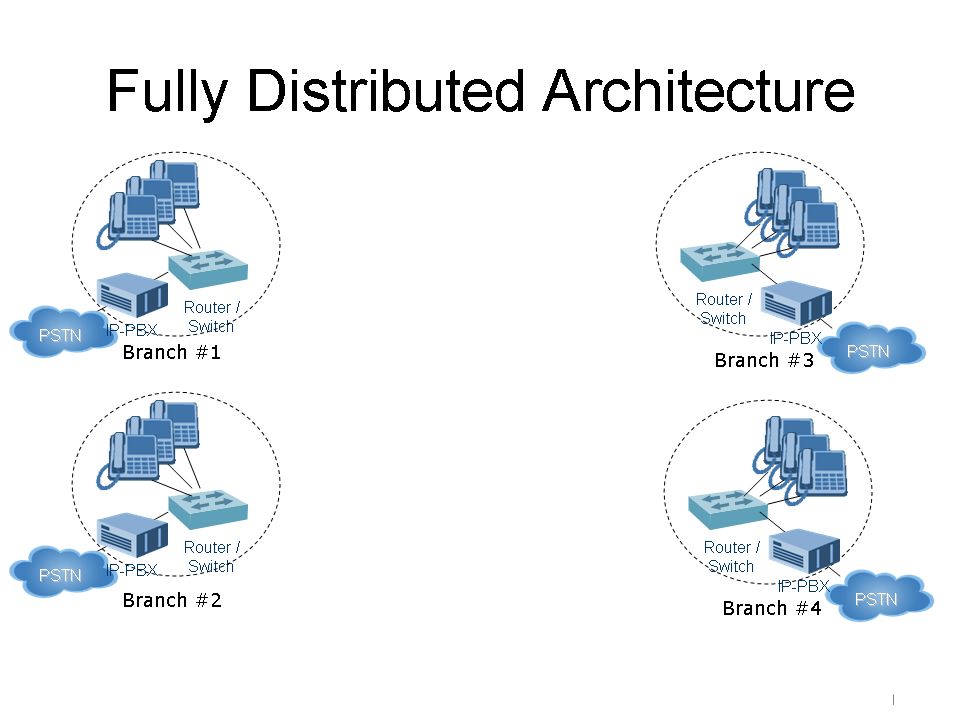
A Fully Distributed architecture with separate stand-alone equipment at each site pushes all the intelligence to the branch offices, but doesn't consolidate resources or save enough money to make it viable over the long haul. Many of the smaller IP-PBX or communications appliance vendors are touting this architecture, mostly because customers are used to this from the key system days.
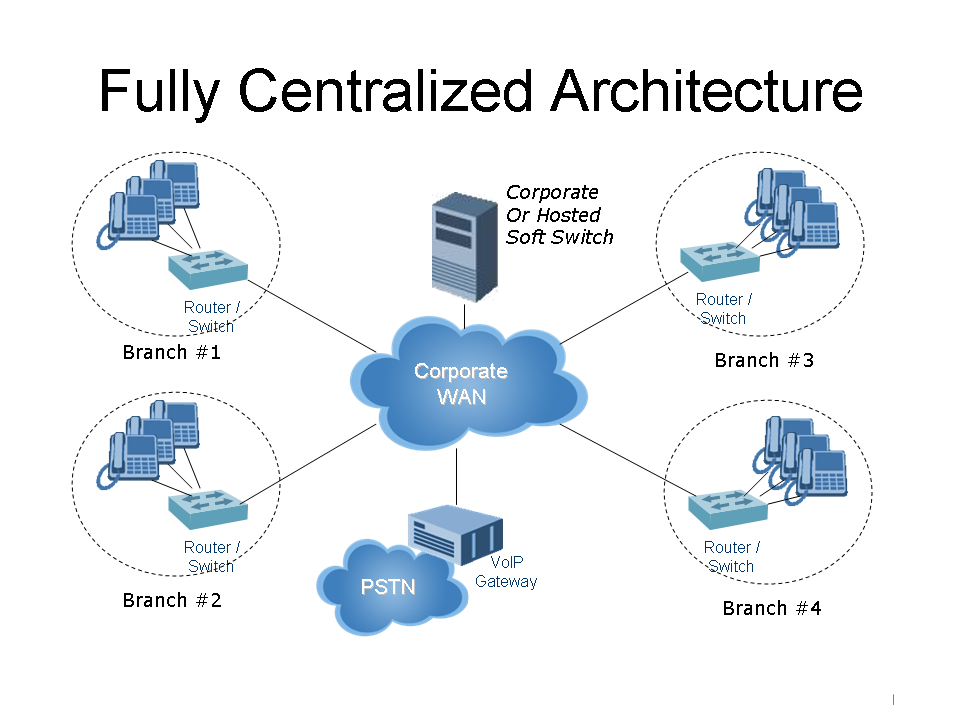
A Fully Centralized architecture moves all the intelligence to the core with a large IP-PBX or Softswitch at the headquarters or hosting site and just network equipment and IP phones at the branches. This architecture dramatically reduces costs of the equipment at the branches, but is highly dependent on the quality and stability of the WAN. Local number portability and E911 questions create other problems.
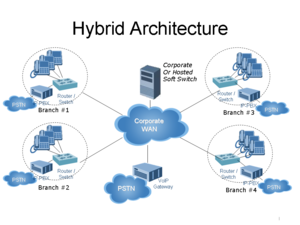
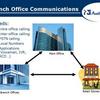
It seems that a hybrid architecture that combines the the best attributes of the fully distributed and fully centralized is much more realistic and is becoming the reference for most network designs going forward. This architecture puts some intelligence at the branch offices, which could include either a small IP-PBX or SIP Proxy to handle intra-office calls or emergency calling. The large centralized IP-PBX or Softswitch would manage inter-office traffic. Other application components including voice mail, local IVR and ACD at the branch offices off-load these services from the central site and allow them to operate with less expensive WAN services or in cases of a WAN failure.
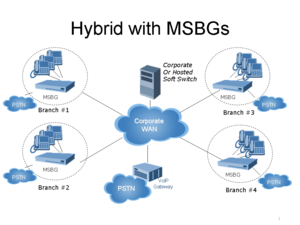
Where the dramatic cost savings of this architecture comes to fruition is when the data connectivity, routing, security and application features come together in a single appliance at the branch. A number of solution vendors (including AudioCodes) are starting to leverage Multi-Service Business Gateway (MSBG) devices to host a small version of their application, a SIP proxy or other intelligence for the branch office along with the data connectivity infrastructure. MSBGs are ideal for "greenfield" branch office deployments where new offices or complete network renovations are in process. Benefits to the enterprise include a dramatic simplification of installation and maintenance across a large number of remote sites.
So, getting back to the original question: "Can branch offices save money and be survivable?" The answer is "yes", consolidating voice and data traffic on to one network and reducing maintenance costs for older equipment can definitely reduce operating costs. However, it takes careful planning to choose an architecture and appropriate equipment that fits the particular enterprise's needs for survivability and cost savings. A pharmacy is a very different business from convenience stores. Since you know your business better than anyone, choosing the right balance between the centralized and distributed architectures is something that only you can decide upon.
-thumb-100x100-6241.jpg)









Leave a comment