




superbowl shuffle.pngRemember 1985?
 
 That summer, Butch Wynegar caught 102 games for the New York Yankees, backed up by Ron Hassey and Juan Espino.
 
The 1985 Topps baseball card set featured a baby fat-faced Mark McGwire on a special "USA Team" Olympics sub-set that also included Shane Mack and Oddibe McDowell.
 
In 1985, my sister Rachel and I used to watch "Family Ties" and we had no idea that the mom would come out of the closet a quarter-century later (the actress who played her, that is, though I never sensed a real closeness between Elyse Keaton and her wimpy husband Michael).
 
Back in 1985, Aunt Karen and Uncle Bill were still married and my brother and I looked forward to our family outings to their country home in Bangor, Maine, because it meant we would visit our cool cousins, Kit (who would become a big "Knight Rider" fan - shocker) and Morgan (now a snowboarding instructor).
 
It also meant that we'd have access to uncle Bill's considerable "Playboy" magazine collection.
                                                            
There were other fun things to do in the Bangor. In the early years at the house, there was a beautiful golden retriever named K.B. (Karen/Bill). Our grandparents (Aunt Karen is mom's sister) lived up there toward the very ends of their lives - and Pop-Pop, for a short while, had a handsome German shepherd dog called "Champ" who scared the life out of me. During visits to town, we always walked past Stephen King's Bangor home with its spider web fence. We also went roller skating at a place where each session ended with a roller-skating limbo contest that Morgan sometimes won. All of us would sneak into a local Howard Johnson's motel and swim in the little chlorinated pool in the courtyard, and we'd sit down afterwards for a family lunch at The Ground Round.
 
But as kids, at least for Terry and me, the fun really started and ended with the Playboys - especially those thick, anniversary issues that featured Marilyn Monroe and other starlets.
 
One time, after a week up there, as we prepared to go home, my brother tried to sneak a couple of Playboys back to New Canaan, Conn., but they fell out the back of his shirt as we were hugging everyone goodbye ...
 
* * *
 
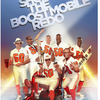
For sports fans, 1985 was very much about one of the all-time great football teams. The Chicago Bears had a team that not only could play football - with Walter Payton on one side of the ball and Mike Singletary on the other - but the players on that team were celebrities. These guys were good (this was before we found out about Mike Ditka's erectile dysfunction). Quarterback Jim McMahon was a wacky self-promoter, with his funky headbands and long hair. Steve Grogan flea-flicker notwithstanding, the '85 Bears rolled to the Super Bowl championship and did it in style.
 
Part of that style came to life in a new "art" form - the music video. The so-called "Super Bowl Shuffle" was an embarrassment to the crafts of dancing and singing. The lyrics were uninspired, but the guys in the video clearly had a great time, and everyone I knew could sing bits of the catchy tune, in what passed for popular rap music.
 
Now, we're hearing from part of the Sprint Prepaid Group that a bunch of the guys from that video have made a "Super Bowl Shuffle" parody that's set to air for 30 seconds during the first quarter of the Feb. 7 Super Bowl XLIV (that's 44, for those of you who didn't grow up in ancient Rome).
 
Officials at BoostMobile say "The Boost Mobile Shuffle" will include original shufflers McMahon, Singletary, Richard Dent, Willie Gault, Otis Wilson, Steve Fuller and Maury Buford.
 
"The centerpiece of the ad is an off-beat re-creation of the 1985 music video using most of the players, the editing techniques and the same look as the iconic original," company officials say. "Legendary coach Mike Ditka also makes a special cameo appearance in the spot."
 
According to Bob Stohrer, vice president of marketing at the Sprint Prepaid Group, fans of the original video "will be particularly delighted to see Boost Mobile bringing some of their favorite moments back to life."
 
Truth be told, I'm kind of looking forward to it. By that time, I imagine, the New York Jets will be at least one touchdown, if not 10 points, up on the Minnesota Vikings, having picked off at least two Brett Favre prayers.
 
Immediately after the commercial airs, officials say, Boost and Virgin Mobile customers will be able to exclusively download The Boost Mobile Shuffle ringtone directly from their wireless phones for $1.
 
The creative group behind the effort is 180LA. That company's executive creative director, William Gelner, promises that he's "bringing back all the thrusting, the bad rapping, the cowbell playing and the minute-long sax solo. But this time it's extra special since it's 25 years later."
 
***
 
Yes, it certainly is 25 years later.
 
Aunt Karen and Uncle Bill are divorced. K.B. is long buried, along with Champ and both my maternal grandparents. Meredith Baxter (nee Elyse Keaton) is out of the closet. Butch Wynegar is lost in a fog of Don Slaught, Bob Geren, Joel Skinner, Joe Girardi and Jorge Posada. Mark McGwire - well, let's just say the baby fat has burned off.
 
Some things stay the same though.
 
About seven years ago, my brother asked me to be his best man. I happily accepted.
 
I'm not a speech writer. I've always had more success being inspired by the moment and speaking my mind in front of crowds. But on Saturday, Oct. 18, 2003 - just two days after Brett Boone's home run off of Tim Wakefield, as the Yankees and Florida Marlins prepared to square off in the World Series - I probably could have used a cheat sheet.
 
My brother has a DVD somewhere of his wedding ceremony and reception, including what I am told was the worst best man speech in the history of matrimony (Steve Buscemi's performance in "The Wedding Singer" notwithstanding).
 
Terry threatens to bring out that DVD sometimes and show it to me, to show me how bad I was - but I can't bear it. I can't even stand to watch best man scenes in movies.
 
What happened was this: After the wedding, I didn't know I was supposed to stay at the church for pictures with the wedding party. I hopped in my car and drove one town over, from the church to a reception hall that had an open bar. I was very early, I came to find out, and very drunk by the time a short man with a microphone introduced me as the best man to a room full of hostile relatives and strangers.
 
The only part I do remember about my best man speech is that I thanked my new sister-in-law, Andrea, for marrying my brother, because he was headed down a lonely path of bachelorhood.
 
Something like: "Terry was just up there in his room all the time, living in Boston. Working a job he hated. Eating Kentucky Fried Chicken each night. Drinking Gatorade. Watching old movies. Stack of Playboys in the closet."
 
I also recall the audible cringe from everyone listening to me ... afterwards, my cousin Ashley assured me that it was the worst speech she had ever heard. Nobody congratulated me. They couldn't get the Yankees-Marlins game on the little TV inside the bar so I ended up listening to it on the radio of some relation from Andrea's side.
 
Not a great night for me, but it was the beginning of something beautiful for Terry and Andrea. Their two kids are healthy and happy, and my brother is pretty much the best dad I know.
 
Who knows but that those Playboys - and Uncle Bill's collection, from all those years ago - didn't help create that family in some strange way?
Henry hand ball.png 
Though each of them took place more than 25 years ago - before the rise digital television, Flip camcorders or the great Thierry Henry controversy that's still dominating international sports headlines - the two most important on-field events in my life require no instant replay.
 
I remember them perfectly well.
 
They involve two of the times that my dad, straight after his work at the auto shop and still wearing his grease-encrusted "Dinan Auto" work shirt and pants, rushed onto a playing field in our quiet Connecticut town to defend the honor of one of his sons.
 
The first time it was my older brother Terry's. The 10-year-old had become embroiled in an argument near second base at Gamble Field, one of two little league diamonds at Mead Park in New Canaan, Conn. I was sitting among the spectators in the little aluminum grandstands - among the well-to-do men in polo shirts, khakis and loafers and their long-haired wives, varicose vein embolisms giving courage to short shorts that, the way they were crossed on the open grandstands, led to exciting, confused thoughts in my own 8-year-old mind.
 
Among them and my dad. Marlboro Red dangling from his face (he would switch to Marlboro Lights in my teenage years, and finally, after re-marrying a Swedish woman whose idea of lunch was cucumber slices and yogurt, to a pipe), dad stood a little apart from the grandstand crowd, gazing intently at my brother, a natural shortstop who early in his career had a habit of "pushing" rather than throwing the ball to first base.
 
At some point in the game it happened - Rob Ardigo rounded second base and collided with my brother somewhere between second a third. A fight ensued, and one of the coaches emerged from the bench to where the two boys stood tussling. The coach grabbed my brother's arm and in an instant my dad's Marlboro Red fell to the grass and twisted in the wake of his sprint onto the field. More nimble than any other father I could remember (my dad remains one of the healthiest people I know, thanks in part to that Swedish woman, now his second ex-wife), dad was between the coach and my brother before many of the tawny women or sockless men in the grandstand knew it.
 
But I saw it all, because I knew my dad's intense gaze and what it could mean.
 
"You want to put your hands on someone?" he told the baffled coach. "You want to touch someone? Touch me. I dare you. I'm begging you to touch me."
 
When these kinds of things happened, dad's face twisted with rage and his mouth took on a tight frown that my brother, Terry, has since dubbed as "The Dad Face" (Terry pulls it out during road rage incidents).
 
Even before my dad dragged Terry off of the field, I was trudging around the backstop and toward the parking lot, where my brother would probably be crying in a few minutes, my dad furiously driving us back home, seatbelt-less, a new Marlboro Red dangling from his mouth.
 
The second most important sports event in my life happened around the same time, when I was playing soccer in a New Canaan recreational league one summer ...
 
* * *
 
The world of soccer - and this officially includes the United States, now, with the rise of David Beckham, who has weighed in on the controversy - is discussing the possibility of introducing instant replay. The talk is spurred by last week's hand ball from France's Thierry Henry, the handsome attacker whose transgression was missed by referees and led directly to a goal for the men in blue over Ireland in a World Cup qualifier.
 
It isn't clear where that controversy is going, but if the Europeans - or South Americans or anyone else, for that matter, whose national sport is soccer - go the way of the United States and our national pastime, then it's only a matter of time.
 
The National Football League ("Superbowl" not World Cup) already has instituted instant replay, and for the first time in its 133-year history, baseball allowed umpires to use instant replay in two instances (whether home runs clear an outfield wall, are fair or foul or were touched by a fan - so-called "boundary" calls) starting last summer.
 
None of that will appease Minnesota Twins fans or New York Yankees haters who are still smarting over a terrible call down the left field line off of Joe Mauer's bat, at a critical moment during the divisional series last month.
 
Nevertheless, we're told, instant replay will be a hot topic - due in part to the consistently poor umpiring during the baseball playoffs - during winter meetings and general manager get-togethers this offseason. Commissioner Bud Selig's major fear when replays were first allowed were psychological: What happens people start questioning an umpire's authority?
 
But it's difficult to reconcile any real concerns around that question when umpires themselves sheepishly sit before microphones after blowing calls during a game and do everything but apologize outright and beg for instant replay to be expanded.
 
Which brings us back to soccer in Europe - the "Old World," whose cross-jurisdictional bodies overseeing the sport yields an institutional inertia has an even greater foothold than in U.S. Congress. Will the next hand ball from the next Thierry stand? Will FIFA and UEFA and the rest of them take advantage of the technology that's now at their disposal?
 
* **
 
I was playing soccer at Waveny Field in New Canaan when I was about eight or nine years old. My father, who had played semi-professional soccer as a young man, stood on the sidelines in his auto shop clothes, face smeared with oil and grease from the underbellies of the cars he wrestled with every day, straggly, thinning hair shooting in all directions.
 
A kid one year older than me named Peter Hodgeman, a very good athlete who would go on to become a standout hockey player in his high school career (I believe he also would become a very good soccer player) stood nearby when a ball rolled out of bounds, off of the other team's foot.
 
I reached the ball first and prepared to throw it inbounds the way I was told, take a few steps toward the sideline while gripping the ball with both hands behind my head and throw it to the chest or feet of one of my teammates.
 
But Peter came racing to the sideline, grabbed the ball from my hands and threw it in instead.
 
Instantly my dad was on him and on the coach - on the field, screaming at what had just happened. It only took a minute or so, maybe less, then there I was, trailing him through a break in the crowd of parents looking on from the sidelines.
 
The only person who spoke to me on the way out was a kid named John Hofmann, a red-headed boy my age that I didn't know at all - we went to different elementary schools. (Years later, John and I would enter the University of Pennsylvania together, and it always struck me as strange that whenever he had to spell his name for someone, he would assure them that although it was the Jewish spelling, he himself was not Jewish.)
 
"Who is that man?" John asked me as I followed my father toward another parking lot.
 
"That's my dad," I said.
sugar ray.pngPuberty, a futile attempt at Rogaine, 150 pounds and three cavities ago - when I was 12 - my inability to awaken from a deep sleep led to one of the most traumatic events of my life.
 
It was Monday, April 6, 1987, and at Caesar's Palace in Las Vegas, Sugar Ray Leonard and Marvin Hagler were preparing to enter the ring for the World Middleweight Championship.
 
You remember the backstory: the beloved Leonard had been retired for a few years, and the shaved-headed Hagler was at the top of his game - a killer in boxing trunks.
 
At the Dinan household in New Canaan, Conn., the fight warranted a rare expenditure on Pay-Per-View - itself a technological marvel at the time. My father boxed as a middleweight in the Marines, and one of the early sporting lessons he taught my brother and me (also a traumatic event) came one summer afternoon out in the yard when he refereed a three-round bout between us. 

My mom had bought the boxing gloves at Schatzo's store in her hometown of Belmar, N.J., where we were all visiting her parents. Her own father was a boxer, a middleweight and champion of his barracks in the U.S. Army.
 
The fight with my brother was a draw. I took Round One, Terry took Round Two, and Round Three was even. I learned to move my feet, to jab and to keep my hands up. (My training that day came in handy in the fifth grade, when I gave Josh Carter a bloody nose on the East School playground. Sorry Josh.)
 
But I never woke up that night of the fight - and I've never forgiven my family for that, not my mother, father, brother or sister, who watched that classic unfold in our family room, together. My sister would claim that they "tried everything" to wake me up, but that I shouted at them from my sleep and turned over.
 
Days later, "Sports Illustrated" photos of the fight were released and they tormented me for days. Since then, of course, I've seen the fight replayed on TV, and realized what a sham it was to give it to Leonard. Back then, I'm pretty sure we were all rooting for Leonard in our house. My father, who is from the Parkchester neighborhood in the Bronx, inherited his mother's soft spot for "clean" underdogs (my grandmother apparently was disgusted by Jake LaMotta three decades before "The Raging Bull," based on his reputation alone).
 
Since then, I've become a greater fan of Hagler than Leonard, as I think any healthy American male should.
 
But my failure to wake up that day always reminds me how important it is, sometimes, to stay awake.
 
Which brings me to tonight, when the Yankees will host the Phillies for Game One of the 2009 World Series. These days, I'm getting to bed before 9 p.m. and waking up at about 5:45 a.m. Like my dad, I like to steal a pre-dawn hour for myself, my coffee - maybe a book or some stationery for letter-writing. The problem is: If I turn in at 9 p.m., I'll catch about three innings of baseball and no more.
 
That's not acceptable during the first World Series the Yankees have entered since 2003, the same weekend that my brother got married (to a woman who, like my wife, is a good sparring partner and could put his own boxing experience that long-ago afternoon to use). It's also not acceptable because, no matter what the score is after three innings - 10-1 or 1-10 - the Yanks and Phils have demonstrated the ability all through this postseason to come from behind late and dramatically.
 
Enter my precious DVR.
 
I know it's not a "sports technology" device, strictly speaking. My wife would probably describe it as a "Mad Men"-"Grey's Anatomy"-"True Blood"-"Brothers & Sisters" device. But in an age where East Coasters like me generally have to wait until 8 or 9 p.m. for any major U.S. sporting event to unfold, the digital TV recording is a trauma-saver - a way to control time itself.
 
I'm pretty sure that by the time C.C. Sabathia (hopefully) takes the mound for the fourth inning tonight, I'll be sleeping like a baby. But at 5:45 a.m. tomorrow, having avoided the radio, my cell phone and the Internet, I will slip quietly downstairs for my dark hour, upload Game One of the 2009 World Series and fast-forward through the commercials.
 
Here's to hoping Leonard doesn't beat Hagler again ...
reggie miller.jpg
 
New York Knicks fans like me - those of us who came of age in the 1990s - will always rank Reggie Miller of the Indiana Pacers at the top of our "clutch player" lists, as well as our "most antagonistic relationships with Spike Lee" lists.
 
Who could forget Game 1 of the 1995 Eastern Conference semis? The Knickerbockers cruising to a 105-99 lead with 18.7 seconds remaining . . . Miller hits a three-pointer with 16.4 seconds left . . . steals the inbounds pass, runs to the three point line . . . drains another one with 13.3 seconds left . . . now it's tied and nobody in Madison Square Garden is laughing . . . John Starks is fouled, then, but misses both free throws, and Patrick Ewing misses a 10-footer after rebounding the second of those misses and Miller grabs the board, is fouled . . . he makes both freebies . . . Pacers win 107-105.
 
It was horrifying.
 
But by then, 1995, I was a college student and my most rabid, die-hard days as a Knicks fan were behind me. Those were also the days that I used to have nightmares about what's now referred to as the United Center - home to the Chicago Bulls and Blackhawks (hockey).
 
It killed me was when I was in high school and the Bulls seemed to meet the Knicks every year in either the conference finals or semifinals, led by the great Michael Jordan.
 
We had great teams back then, too - we had the Pat Riley Knicks, the Doc Rivers Knicks, the Charles Oakley Knicks, the Anthony Mason Knicks. These guys were a lot better than the Johnny Newman-Gerald Wilkins-Trent Tucker Knicks.
 
The only time we could squeak past the Bulls was in Jordan's "comeback" year - a season essentially lost to the great player's mourning for his father, shockingly murdered in 1993. (Jordan started just 17 games for Chicago in the 1994-95 season.)
 
Jordan would retire from the Bulls in 1999 and make a brief comeback with another team, but certainly sales for Chicago's NBA team took a hit as soon as its franchise player left.
 
And even we non-Canadians (I admit I learned most everything I know about hockey from EA Sports and SEGA) are aware of what a hit hockey took when the NHL players went on strike for the 1994-95 season. The Chicago Blackhawks were no exception, with ticket sales and TV revenues plummeting.
 
So it's not surprising to hear today about a customer relationship management, or "CRM"-based initiative that's underway in the Windy City.
 
We're hearing that Sonoma Partners, a provider of Microsoft Dynamics CRM, is bringing new technology to the United Center, delivering the Bulls' and Blackhawks' corporate sponsorship and marketing departments the fourth phase of a customer relationship management project begun last year.
 
Starting last year, we're told, Sonoma deployed Microsoft Dynamics CRM for the United Center's "Prospecting and Premium Seating" departments to replace multiple existing Goldmine deployments.
 
"The goal of the initial CRM project to streamline sales processes and consolidate onto one Microsoft technology platform was an instant winner," we're told. "With the capability to reuse and easily update existing modules from one organization to another, the United Center saw immediate benefits from the cost effective and timely rollout."
 
Translation: the teams are using CRM to help bring in more customers and make more money, a win-win.
 
About 30 sales representatives from each department use Microsoft Dynamics CRM to manage prospect lists, customer information, track inventory data, manage contracts and follow up on activities with automated workflow processes. Users now have the ability to track sponsorship assets such as scoreboard and ribbonboard advertising, concourse signs, and TV and/or radio spots.
 
Robert Gorman, director of information systems at the United Center, said he chose Microsoft Dynamics CRM because his previous CRM solution was not scalable or flexible enough to accommodate separate businesses and existing technology platforms.
 
"Microsoft Dynamics CRM works much better for us because of its automated workflows, integration with Microsoft Office, SharePoint 2007 and other vertical market applications," he said.
 
Chicago's football team, da Bears, is now 2-1 after losing its first game of the young season and some key pieces. I have a lot of faith in emerging CRM technology, but is there anything that's going to help ticket sales more than a disappointing season in the city's other two major winter sports?
espn basketball fantasy.pngI'm planning next year to serve as commissioner in a fantasy baseball league whose owners will include relatives, friends, colleagues and my brother-in-law Bill, a guy I sometimes feel bad for.
 
Not that his wife isn't great. My little sister is what our mom would call "a great gal."
 
But Bill - like me - gets hooked on gadgets and computer games sometimes, and my sister has demonstrated little patience for that.
 
A few years back, I bought Bill a pocket-sized electronic chess game whose beeping drove my sister absolutely insane. She has since forbidden him to play any form of online chess. Even my nieces Baylor and Ava, ages seven and five, tattle-tale on their dad when they catch him playing chess at home. (My strong sense is that Bill is winning his battle with regular visits to the family's local library in Boston's North End.)
 
It is strange to watch your sister become a wife and berate her husband for what appears to be a minor vice. I imagine my own wife's brothers know the feeling. But that's a different blog entry.
 
What I can't help thinking about when I envision next season's fantasy baseball league is how much trouble Bill, who isn't a fantasy sports player yet, might get into with his iPod Touch.
 
I know that when I started playing fantasy baseball, I refreshed my Yahoo! StatTracker every few minutes in the hopes of leap-frogging the competition.
 
It's just as well Bill isn't a big Boston Celtics fan.
 
I'm hearing today that ESPN and NBA Digital (an NBA-Turner Sports venture to jointly manage the NBA's digital assets, which include NBA TV, NBA.com, NBA League Pass, NBADLeague.com and WNBA.com) are pursuing a plan to become the destination of choice for association fans who are fantasy players.
 
The new product will be called "ESPN NBA.com Fantasy Basketball."
 
ESPN knows what it's doing in this area. Last year's product led to a record-setting season for the free commissioner-style fantasy game on ESPN.com, with nearly 40 times the growth in participation from the previous season.
 
The new collaboration, the companies tell us, means that fantasy sports players on two of the leading NBA destinations online will now have a single, integrated game and access to the very best fantasy basketball content online and on mobile devices.
 
Here's what John Kosner, senior vice president and general manager of ESPN Digital Media, had to say: "Working together with NBA Digital on ESPN NBA.com Fantasy Basketball builds upon the great, multi-faceted relationship we have with the NBA and will provide fans with the very best fantasy basketball game and content available. Fans will benefit this season and in seasons ahead from new innovations and an enhanced interactive experience, while advertisers will get more value than ever before from their connection to a best-of-breed multi-platform game and content experience."
 
The game is available now on NBA.com and ESPN.com and on ESPN and NBA mobile Web sites.  
 
As you'd expect, participants will be able to manage their teams with the latest information on their players, check scores and set their lineups
 
Features include:
 
  • Integrated access to all the leading NBA Digital and ESPN Fantasy news, analysis and information including video, podcasts, columns, and features;
  • NBA TV and ESPN studio personalities competing in the game throughout the season;
  • Mobile companions allowing team management through the ESPN and NBA mobile Web sites, as well as a downloadable Draft Kit mobile application developed by ESPN;
  • A co-branded and cohesive marketing campaign featuring 2008 Olympic Gold Medalists Dwight Howard (Orlando Magic) and Deron Williams (Utah Jazz), three-time NBA All-Star Gilbert Arenas (Washington Wizards), and reigning NBA Rookie of the Year Derrick Rose (Chicago Bulls).
 
It's amazing how quickly the fantasy sports market has risen, and nobody doubts that technology - faster Internet speeds, mobile devices, social networking sites - is the driving force behind that growth.
 
Just try and explain that to my little sister, though. Sorry, Bill.
Thumbnail image for espnboston.png

I met my buddy David Fine nearly 25 years ago, when the two of us came up as swimmers at the New Canaan YMCA here in southwestern Connecticut.
 
Dave, more than I, would form part of a core group of guys that would emerge as one of the state's elite men's teams about a decade later, as a group of 16- to 18-year-olds - from New Canaan as well as surrounding towns - peaked late in high school under the direction of an insanely dedicated coach, Rich. The club would send more than one swimmer to what was popularly known as the "Junior Olympics," including a relay team.
 
We practiced from 5:20 to 7 a.m. every weekday morning, and then again from about 3 to 6 p.m. every week night, with a grueling 6 to 9 a.m. practice on Saturdays, for which Ludeman saved his most sinister set creations. That schedule held for all but a handful of weeks out of the year, with even more intense practices book-ending holidays.
 
We were, for our age and in our sport, an elite athletic team. We swam under the umbrella of the YMCA system - part of U.S.S. Swimming - rather than on a high school team, because the public schools' swimming program in our part of the state simply wasn't competitive.
 
Yet swimming was just swimming back then. The high school sports that drew the most interest from boosters and the press were football, lacrosse and hockey.
 
The local paper, the New Canaan Advertiser, did not cover our team, and it was difficult even to get a friend from school to come watch a meet. (My parents stopped going at some point, too.)
 
That's part of what made it so thrilling, last year, for me to attend a few high school swim meets - Dave is now an assistant coach of the team - and to see hundreds of spectators in the stands and dozens of athletes competing in the pool. For the first time in decades, New Canaan bested Greenwich, a town three times its size, for the county title, and then went on to dominate at the state level.
 
With a large demographic of kids coming up through the system, a swimming program poised for growth and infinitely more interest in the sport, news coverage of the team also increased exponentially.
 
Yet it isn't clear, as newspapers such as the Advertiser hemorrhage advertising dollars to the Web and the papers themselves become more "regionalized" - a pleasant word for the scaling back of editorial staff and local coverage - what the future holds for news coverage on town or even county levels.
 
An interesting article in today's Sports Business Journal looks at how one U.S. sports media behemoth - ESPN - is starting to address the shortfall.
 
The article, by Eric Fisher, tracks ESPN's pursuit of local sports coverage through sub-Web sites - first in Chicago and now in Boston, with ESPNBoston.com. ESPNNewYork.com is next on the list.
 
"The initiative in part seeks to exploit the gap in locally driven sports coverage created by the historic and ongoing economic woes of the newspaper industry and the resulting reduction of content," Fisher reports. "To that end, ESPNChicago.com has been greeted with some early success: Its tally of more than 700,000 unique visitors and 1.7 million minutes of time spent on the site in July was up 19 percent from June on both counts and up 87 percent in audience size from May, according to comScore."
 
Make no mistake - what ESPN is pursuing is designed to replace the "old" local newspaper coverage system, and it is.
 
According to comScore, the average number of unique visitors to the ESPN Chicago site for May, June and July (555,000) was more than the averages for the sports sites of the Chicago Tribune (424,000) or Chicago Sun-Times (256,000), Fisher reports.
 
Specifically, the "local" ESPN sites will offer a heavily localized "SportsCenter" airing, as well as locally driven social media functions - in addition to radio streaming from local ESPN affiliates and, as noted, a heavy emphasis on local pro, college and high school teams.
 
ESPN President George Bodenheimer recently described his company as "extremely bullish" on the effort.
 
"We've definitely been encouraged by the success in Chicago to date and see this as something really important going forward," he said.
 
The company has a sound business model.
 
As Fisher notes, revenue for the local sites has largely come through local and national brand ad sales.
 
"Typical of ESPN's sales strategy, most of the buys have had some type of integrated element, blending some mixture of radio, online display, audio and video insertion, podcasts, and, in some cases, on-site activation," he reports. "Local subscription offerings and other such premium-content elements are not currently in the mix."
 
And expenses are down, because ESPN isn't reinventing entirely new Web sites when it launches in a local market.
 
As someone whose roots in journalism are in newspapers, I fear for reporters who already are losing out in the local market to Internet coverage. But hopefully ESPN's model will succeed enough, and generate enough money in ad sales, to expand editorial staffs and hire the reporters who have been working local sports beats for years. The historical knowledge and contacts that those professionals make are unique.
 
Who knows, but that in a few years the sports media giant won't launch a Greater New York site that has a special tab for New Canaan swimmers.
al jazeera.pngOne of the auto mechanics who worked at my dad's repair shop here in Norwalk, Conn., moonlighted for a while as a Cablevision TV technician.
 
The technician - let's call him Timmy - had still another side-job where he'd get some pocket money "de-scrambling" signals through illegal set-top boxes, effectively giving basic package Cablevision subscribers access to premium channels for a one-time, cash fee. The Dinans participated in that program. (It was easier than pressing the old A and B buttons - A B A B A B A B - as fast as possible to get access to Playboy after 8 p.m.)
 
The art of stealing TV access - cable, IPTV or satellite - knows no international borders.
 
We hear today that the popular Arabic-language Al Jazeera Network's sports TV division - Al Jazeera Sport - has forged a deal with a Dutch company that helps companies protect access to their digital access.
 
Amsterdam-based Irdeto is set to protect the network's premium content with more than a half-million of its so-called "Smart Cards."
 
Specifically, the agreement is targeting the Gulf region's prolific illegal TV set-top boxes, which decrypt pay-TV channels - including pay-per-view and video-on-demand options.
 
Here's what David Canellos, senior vice president of sales and marketing for Irdeto, had to say: "Irdeto and Al Jazeera Sport have been successfully partnering in the Middle East for more than three years. We are very pleased to expand on this strong partnership and look forward to continuing to support the success of Al Jazeera Sport as a leading pay-tv operator in the region."
 
A glance at Al Jazeera Sport's Web site gives us a good idea of why the company's services are so desirable. The coverage - which serves nearly all of the Middle East as well as much of north Africa - is expansive, featuring all those sports that many of us U.S. citizens can't be bothered with: soccer, tennis, Formula One auto racing.
 
The company has more than two million subscribers in the region, and Al Jazeera Sport has an existing relationship with Irdeto, which encrypts its Nilesat satellite transmissions through the its Conditional Access System or "CAS."
 
The agreement announced today expands Irdeto's encryption services to two other satellites - Hotbird and Arabsat - so that content is protected for any subscriber accessing Al Jazeera Sport via any of the three satellites.
 
Games of TV-stealing cops and robbers have come a long way since my brother and I developed callous on our fingers from the A and B buttons on the old cable remotes, but the game essentially is still the same.
 
I wonder what kind of business Timmy would be able to generate in Morocco or Saudi Arabia?
nancy kerrigan.pngWe heard this week from iSuppli Corp. that the IPTV market is on track to see subscriber growth of more than 50 percent this year - from 21.3 million in 2008 to 33.3 million in 2009.
 
That's not surprising, given the mobility that IPTV services deliver and the ever-increasing strength of wireless networks that deliver video to more and more portable screens, in the form of smartphones, netbooks and other devices. When fourth-generation or "4G" wireless networks see deployment in earnest over the next few years, the rate of adoption for IPTV services surely will get another boost.
 
And that's great news for tech-savvy sports fans who demand live feeds of their favorite teams and real-time news updates. Imagine what it would be like to be a New York Yankees fan and iPhone user this afternoon, if Derek Jeter were poised to break Lou Gehrig's all-time hits record for the franchise and the captain came to bat during a day game? (He's not - the Yanks take the field versus Baltimore tomorrow at the new stadium tomorrow night.)
 
Much was made of the technological feat in Beijing last summer that saw Olympic Games organizers work with the IT world to deliver more sports to more screens in real-time than ever before. NBC's coverage of the Olympics in past years has been criticized - and rightly so, in my mind - for its limited area of interest to ultra-popular sports and sports figures from the United States alone. The options for people interested in viewing early-round volleyball or water polo matches, or even qualifying-round Michael Phelps performances, were limited - but IPTV services delivered around-the-clock, accommodating hungry enthusiasts as well as time differences.
 
So it's comforting to hear that the 2010 Winter Olympic games in Vancouver already are getting some attention from online content providers.
 
This week, we hear from STATS LLC and StarGames LLC that Nancy Kerrigan, a two-time medalist whose most famous TV moments show her crying out in pain, will provide video reports from the Maple Leaf Nation.
 
"Ms. Kerrigan's videos will bring home the atmosphere to viewers as she shares experiences from throughout the Olympic village," the companies say. "Concepts will cover a wide variety of topics, from 'woman on the street' reporting to lighthearted interviews with athletes as well as a unique feature called 'Lifestyle of Vancouver.' "
 
Though Tonya Harding is infinitely more compelling as a personality and ongoing tragedy, the ultra-clean Kerrigan, who has extraordinarily visible white teeth, should serve her new role well. She'll provide analysis and oversee previews on competition days and interview skaters after they've won - those often awkward, breathless moments when the tutu-bearers are draped in flowers.
 
STATS LLC, a sports technology, information and content provider will license this premium content package to select online and mobile clients. sports marketing, management and entertainment company that represents Kerrigan (as well as Ivan Lendl, who, it must be said, has a less friendly TV face).
 
Here's what Kerrigan had to say about her new role: "I am delighted to be working with STATS at the upcoming Olympic Games. Vancouver is an awesome location and I look forward to capturing the excitement of the Games by going behind the scenes. At the same time, the figure skating looks like it should produce fantastic competition in all four disciplines making it once again one of the premier attractions at the Olympics."
 
Here's what Greg Kirkorsky, STATS' vice president of sales, had to say: "STATS is very pleased to be working with StarGames and Nancy Kerrigan to provide this very unique content for the 2010 Winter Games. This is a premium offering that satisfies an enormous demand for Olympic coverage. Nancy's unique insider perspective will attract large audiences throughout the games."
 
For me, and I imagine this is true for many of us "big sports"-focused U.S. fans, the Olympics marks the only time that I watch certain sports, and figure skating falls in that category. Kerrigan is as good a face for the sport as we have, so my hat's off to STATS and StarGames for developing the concept. By 2010, millions more Olympics enthusiasts likely will have access to the service.
ortiz golfing.png
Like many Major League Baseball fans whose local cable coverage includes New York Mets and New York Yankees (in order of the number of times the team lost a heart-breaking game because of a dropped pop-up with two outs in the ninth inning), my introduction to cable and telecom giant Comcast as a sports network came with my subscription to the so-called "MLB Extra Innings" package.
 
That package, a $150 item that features virtually all out-of-market baseball games - a fact that provokes an argument each March with my wife (this is one of those battles I choose to fight) - includes games fed through Comcast in markets such as Baltimore and Chicago.
 
But the MLB package just features those games, so the TV screen essentially goes blank after the final out is recorded.
 
So it makes me smile today to read that Comcast is touting its "significant milestone" of 100,000 watched by Red Sox fans on its "Red Sox On Demand" schedule.
 
It's OK for the MLB Network itself to have an around-the-clock baseball channel, because there's enough material to draw from.
 
But it's amusing to see these networks built around a single team - even a storied team, like the Red Sox or Yankees - try to provide content at all times.
 
Here's a sample of the PR that came out of Comcast today:
 
"This week, Red Sox On Demand programming includes profiles of pitcher Justin Masterson and Red Sox legend Dom DiMaggio, a special on the history of the iconic Citgo sign overlooking Fenway Park and features of Mike Lowell playing monopoly with Red Sox Foundation supporters and David Ortiz golfing during his signature fundraiser in the Dominican Republic. Red Sox On Demand also gives fans a closer look at the Cape Cod League, the Salem Red Sox and the Greenville Drive."
 
Mike Lowell playing monopoly? The history of the Citgo sign?
 
David Ortiz golfing?
 
I know the reputation of Red Sox Nation is that it's hungry for anything to do with their baseball time - so I'm delighted, genuinely, to read that the Red Sox On Demand channel offers things like games of the team's minor league affiliates.
 
But I also imagine Sox fans could do without the monopoly and the "history" of things like that sign.
 
At the same time, how could a Yankees fan rag on Red Sox Nation, when our beloved Bronx Bombers persist with that "Yankeeography" show, batting practice and Michael Kay's "Centerstage" program?
 
We can't.
 
But I'll leave the team-specific "On Demand" channels alone. Give me something more comprehensive.
confed cup.pngI'd had a single bottle of light beer at Terri's Tavern in Port Chester, N.Y. that night 2002 - well under the legal limit - as my wife and I rode back home in my old beat up Saab, up the Boston Post Road toward Stamford, Conn.
 
After my parents' bitter divorce, my father, a Bronx-born auto mechanic, unfairly and venomously compared my mom to the Sweden-made Saab, saying something about how everything was great for the first 60,000 miles and then, bam.
 
He was wrong his ex-wife - a phenomenal woman, as Maya Angelou would say - but the Saab my wife and I drove home that night certainly was showing signs of wear. The floor panel from the rear driver's side seat was rusted out and had so many holes that you could see the pavement whizzing by underfoot. Sort of like Fred Flintstone but far more painful.
 
And the electrical system was in tatters, with brake lights and back-up lights and signal lights and head lights and high beams on the fritz almost constantly. Ultimately, that was what made the Greenwich, Conn. police pull us over, my wife and I, that night seven years ago.
 
"Do you know why I pulled you over?" asked a police officer whose kindness I would remember years later, when I became a newspaper reporter in Greenwich and covered cops on the weekends. "Your tail light is out."
 
I explained to him that the car was not in great shape and that I would have it looked into. He asked had I been drinking and I told him that I'd had a single beer back at Terri's during the United States-Mexico World Cup soccer match.
 
"Oh yeah? Did we win?"
 
I told him that we had, 2-0.
 
He nodded and told me to get my car looked at, he was letting me go with a warning.
 
. . .
 
Until yesterday, that was my favorite World Cup memory. A lot has changed since 2002, when I would take the tips from my well-paying bar job in Stamford to make dozens of high stakes wagers on the outcome of the international tournament.
 
I'm not nearly so careless these days. In fact, as I watched the U.S. squad play in its first FIFA event final yesterday - the Confederations Cup match versus Brazil - my wife and I sat on sofas with our two dogs in an apartment that's littered with moving boxes. (We bought our first house last week.)
 
U.S. soccer - despite the Brazilians' thrilling come-from-behind victory, 3-2, on the cold South African pitch yesterday - has also come a long way. As one of the most advanced and populous nation's in the world, the United States historically has fared poorly in the world's most important and popular sport. But then, during this tournament, the Yanks snuck through a qualifying round, then ousted the world's top-ranked team in Spain, and took a 2-0 lead over Brazil to halftime, until that superior force turned up the heat and blew by the Americans.
 
So it's interesting that today, we're reading about how an increasingly common technology - instant replay - is being shunned for the foreseeable future by FIFA itself, the governing body for much of soccer's (or football's, more properly) most important play.
 
The organization's president, Joseph Blatter, reported said that referees' decisions won't be second-guessed in soccer the way they are, say, in American football or the way they now are, in disputed home run and fair-or-foul calls, in baseball, or the way they are in tennis, when players can challenge a limited number of in-or-out calls by chair and line umpires.
 
"Football is not tennis," said Blatter. "There is a big difference between the two sports. In tennis, there is only one dimension, which is the line. Football has three dimensions. It has been tested in England that even with seven cameras, it still difficult to assess if the ball has crossed the line. Therefore, let us let football be football where human errors are part of the human sport."
 
Amen. Kind of. Given that there's so little scoring in soccer, I wouldn't mind seeing instant replay used when there are disputed goals.
 
But generally speaking, I feel as Blatter does about my own favorite sport: Baseball.
 
It irritates me that these virtual strike zones pop up on screen after close pitches or during close games now, as though some TV producer were testing the ability of an umpire to call balls and strikes.
 
And it's not about human error, either. It's part of baseball for an umpire to have his own sense of the strike zone, for a pitcher to work the corners and expand that zone, for a veteran to get the benefit of a close call before a rookie.
 
Having said that, I was glad, for a little while yesterday, when the United States was still holding off Brazil in the second half, after one would-be goal by the brilliant Brazilians was not counted, even though U.S. goalkeeper Tim Howard - a star with Everton, a football club in England's vaunted Premier League - clearly possessed the entire ball within the goal.
 
I guess that for me, as for Yankee fans who remember Derek Jeter's "home run" against the Baltimore Orioles in the 1996 playoffs, it was a case where a technology that improved the game could wait a little while longer.
monetize media.pngAs the founder and CTO of Zeugma Systems, Siegfried Luft, points out in an interesting article this week, the growth of unmanaged, data-heavy video on the Internet presents a major problem broadband service providers.
 
It's a trend that the head of the world's largest maker of computer networking gear - Cisco Systems Inc. CEO John Chambers - has been predicting for months, and one that's expected to push network capacity to the limits, even with advanced video compression technology.
 
Professional sports is emerging as one of major players in the online video space.
 
Consider that within the last week, reports emerged that the New York Yankees would become baseball's first team to have its games streamed live over the Internet within its home market (through Cablevision), and that an iPhone 3G application (which runs through WiFi) that's widely viewed as baseball's best now is adding live game streaming features.
 
Analysts say that video traffic over the Internet will grow at a rate of 28 percent annually, while some broadband service providers have suggested an even higher growth rate of 40 percent. Cisco recently suggested that video would represent 90 percent of all Internet traffic by 2013.
 
That may be challenging news for BSPs, but it's also good news for much of the IT and telecom industries, including an Anaheim, Calif.-based online video technology company that's developed a live streaming video platform.
 
This week, the director of sales and marketing at Monetize Media Inc., Brent Grablachoff - a guy who, like me, hails from what we call the "tri-state area" (New York, New Jersey, Connecticut) but now lives at works in sunny SoCal - contacted me about his company's offering, and it's both interesting and impressive.
 
It strikes me that there are two major things that this platform is designed to do: Help enterprising people create professional videos that can be uploaded quickly, and help them make money off of that work, whether it's through viewing, ad revenue or subscriptions or another form of membership.
 
The company's streaming solutions let users stream multiple live camera feeds while mixing in other media such as movies, images and sounds, minimizing annoying things (from a user's perspective) such as buffering delays.
 
And here's a peek into the future of this technology: The platform allows users to stream remotely using a mobile phone.
 
I had a chance to put some questions to Grablachoff (printed in full below), and discovered two things that jumped out at me. One is that he, like Chambers, wholeheartedly believes in the evolution of the Internet to a video-based space, and two is that the news about the Yankees' live streaming spurred an uptick in interest for his company's product.
 
Our exchange follows.
 
Michael Dinan: A lot of us read every day about how media outlets, such as newspapers, are struggling to find ways to make money off of content that's posted to the Web. Your product appears to be cloud-based. Exactly how does your product "monetize" video footage?
 
Brent Grablachoff: Yes, correct, we are utilizing cloud-computing and Tier 1 CDN partners. Many content owners are finding it difficult to monetize their Web sites, let alone their online video content. One of the easiest ways we help clients monetize their video content is through "paid premium online content" revenue streams. What I mean by that is, sports organizations can charge for access to their Friday night game of the week, tournaments, or playoff games.
 
Everyone wants to see the big game, but when championship games are played in other states it tends to limit the attendance. So with our platform you can stream live games to anyone with an Internet connection, with no geographic barrier. Using our online video platform, sports organizations can also increase their fan base, gain new viewership, promote merchandise, build a community around their league/team, partner with key sponsors, and also provide all the standard ad formats like in-stream video ads, pre-roll ads, banner advertisements, and overlay ads. In addition, we can integrate Web 2.0 features like chat, ratings, box scores, game summaries, and you can also tie in your play-by-play audio/radio broadcast with the video.
 
MD: How important to your business is the development of faster data rates on the Internet?
 
BG: Faster data rates and connection speeds will certainly make everyone happier! It's been amazing to see the evolution of the Internet over the past 10 years. I remember when I got my first IBM "Pentium" computer and it had a 28.8k modem, what a joke. The Internet has come a long way with broadband, DSL, cable, wireless N, and so on.
 
Implementing a faster connection speed will certainly help improve the online video experience for providers and end-users. However, we are already offering new technology to help combat the speed issue. Microsoft created "smooth streaming technology" and simply put, it allows the end user to watch a live broadcast or even on demand video with virtually no buffering, skipping, or delays in playback or streaming. We have successfully implemented "HD Streaming Technology" on our Tier 1 CDN networks and this will soon be rolled out to everyone. Here's an example of this technology at work: http://www.monetizemedia.com/HDdemo/Default.aspx
 
MD: We hear people like Cisco's John Chambers talk about the evolution of the Internet to a video-based space. What kinds of trends are you seeing, if any, from broadcasting professionals seeking your product?
 
BG: I believe that video will certainly dominate the Internet. If you look at the numbers and most analyst reports, it shows online video consumption is now greater than social media. When people search on Google or Bing, you now notice video taking higher precedent in search results. Video is great because it allows "visual learners" the ability to get the information they need without having to read through paragraphs of text. While I don't believe the text-based Web will become extinct, I do think that online video, particularly live video, will start taking priority on the Web and eventually become the standard. We agree with the views of John Chamber and our founder and chief executive officer, T.J. Modi, who said, "Online users today demand real-time Web and we're enabling it with live video."
 
MD: About what percent of Monetize Media's clients are sports organizations, as opposed to, say, governments, churches or corporations? Any big names there?
 
BG: Our current client portfolio consists of about 40 percent sports organizations. Many professional and amateur sports leagues are finding our platform quite useful for streaming live sports games and creating new revenue streams with the pay per view and subscription models we offer. Also we see several trainers and coaches showing interest in our platform to teach and instruct with how to videos as well as private sports instruction. With the rampantly increasing popularity and demand for live online video, we as a company are growing quite rapidly. In the past month alone, we've had a lot of interest from several football and baseball organizations looking to implement live streaming sports video. Ever since the New York Yankees announced they are offering live game broadcasts online, the interest for live streaming video has skyrocketed. Over the next few months we hope to capture some large "players" in the sports industry.
MLB at bat.png 
About two months ago, just as this year's baseball season got underway, I reviewed the $10 "MLB.com At Bat 2009" from Major League Baseball Advanced Media for the iPhone 3G and iPod Touch.
 
It's a very, very cool product - the best of its kind, despite the price tag - and one of its best features was the high-quality video highlights for each game (audio included) that came with any kind of WiFi connection.
 
Way, way back before MLB truly began leveraging cable and digital TV technology to deliver its wife-hating "Extra Innings" package for television viewers (basically every out of market game, each night), we baseball fanatics had to go to a sports bar to watch 15 games at once.
 
Even with the MLB At Bat application, the best we could do - and there's nothing wrong with this - was to tune into each game's radio broadcast (home or away team) for a live Internet stream, and the visual we had to accompany that broadcast was a Gamecast-like experience, which was only about 2 seconds behind the real-time action.
 
Now, we hear from MLB.com's Mark Newman, the At Bat application - at no additional cost to current subscribers (yeah me!) will also introduce live video streaming during games.
 
"Beginning with the White Sox-Cubs Interleague Play matchup from Wrigley Field at 2:20 p.m. ET, up to two live games per day, subject to blackout restrictions, will be included in MLB.com At Bat 2009," Newman reports. "The other game scheduled for Thursday is Detroit at St. Louis at 8:15 p.m. ET. These will be historic broadcasts, the first MLB games ever to be aired live in streaming video to a mobile device."
 
Wow.
 
In other words - though it isn't quite the MLB Extra Innings package (which MLB makes out on, as well, of course) - the screen-watching options for baseball fans just got a whole lot wider and a whole lot cheaper.
 
I don't know about you, but for us baseball fans in the New York City metro area, the Extra Innings package costs $170 per season for a full season, and a little more than half of that if you order it after the All-Star break. The price is worth it, of course, for people who follow a team whose network or broadcasts are not delivered through a regular cable TV package.
 
Now, as Chad Evans, mobile product manager at MLB Advanced Media, says, "It's hard to express how cool the new streaming technology really is."
 
"Being able to watch a live game on your phone for the first time - I think everyone here's really excited about that."
 
So am I, Chad.
red wings penguins.png
At 8 p.m. tonight, millions of viewers - including many people whose sentences end in the word "eh" - will turn their TVs, unless they've somehow missed the digital TV switchover, to NBC, for a decisive Game Seven of the Stanley Cup finals.
 
Here in the New York area, the attention of sports fans will be distracted by the so-called "Subway Series" between the New York Mets and Yankees, to get underway in the Bronx about an hour earlier. Many of us - even for an edge-of-your-seat seventh game in a major sport - would prefer to watch the baseball game over the hockey contest between - as Santiago from Hemingway's masterful "The Old Man and the Sea" would say - Red Wings of Detroit and Penguins of Pittsburgh.
 
Hockey has tried all kinds of ways to sway viewers its way, most recently, following 310-day lockout that started in September 2004, by tweaking the games rules to give it more flow and excitement.
 
It hasn't really worked, and the timing of tonight's final, coinciding with what Major League Baseball calls "Rivalry Week," is very bad news for the NHL.
 
More than a decade ago, some sports buffs might remember, Fox Sports made a bunch of people angry by creating its so-called "FoxTrax" puck, which used digital technology to track its often vision-blurring path on the ice.
 
The puck emitted a red trail whenever it passed the 75 mph mark. All Fox Sports did was cut the puck open, add some sensors and then put a signaling system atop the plexiglass that surrounds the rink. The puck spat out signals 30 times per second from its infrared emitters. At the time - more than a dozen years ago - it must have seemed like a very good idea.
 
But hockey purists didn't buy it, and today - this is purely opinion - the high definition available on increasingly inexpensive flat-screen and LCD TVs has made that kind of effort unnecessary.
 
My brother, a big sports fan, has one of those TVs and - unless he goes to tonight's Yanks-Mets game, as he's threatening to - I may head over to his place to watch the Stanley Cup final in comfort.
 
Baseball is a long season, after all.
burnett.png
Inking A.J. Burnett to a long-term deal may have been a good idea, Tuesday night's abysmal performance notwithstanding. Signing C.C. Sabathia was almost definitely a great idea and if Mark Teixeira keeps hitting and fielding the way he is, fans of the New York Yankees may finally get over the retirement of Tino Martinez.
 
But for those same fans - people who have spent the last two days, at least, wondering what Jedi mind trick the rival Boston Red Sox are using this season - the best deal of the 2009 MLB campaign may have been inked without anyone outside of the team's TV network, YES, and Cablevision, a triple-play provider for the New York-New Jersey-Connecticut region that also happens to own Long Island-based New York Newsday, longtime employer of the great Jimmy Breslin.
 
For it was in an unannounced deal this spring that the two regional media giants agreed to pursue a plan that would see the Yankees become baseball's first team to have its games streamed live over the Internet within its home market.
 
As John Ourand and Eric Fisher of the SportsBusiness Journal report, citing anonymous sources, the streamed games could start later this season for people who pay for Cablevision's TV and broadband services.
 
"The move is part of an overall renewal of Cablevision's YES Network affiliation deal that was signed earlier this spring but never officially announced," the reporters tell us.
 
Those of us who follow the Yankees - and their controlling PR team - know how the Yanks like to ("oh my goodness gracious") stage every major announcement involving the club.
 
This statement from Cablevision seems to confirm that approach: "We have nothing to announce at this time, and we typically would not comment on this kind of offering until it was in front of our customers."
 
So what does this mean for fans, the game, and service providers such as Cablevision?
 
It's the first time that there's been a major effort to actually try in-market Internet streaming of live games. Clubs have tried it in the past - mostly those that have a stake in networks that already broadcast their games on TV - but it's never worked out. Part of that's because it isn't clear how the streaming would affect MLB Commissioner Bud Selig's favorite euphemism for punishing the Bronx Bombers for their popularity - "revenue sharing" - and partly because of operational hurdles.
 
It's worth a mention here that - should this service come to fruition - it will dovetail with another new service from Cablevision that meshes nicely with Internet video streaming, which requires high data-processing rates to be worthwhile. It was just over a month ago that Cablevision unveiled its new high-speed Internet and WiFi services.
 
Officials at the Bethpage, New York-based company on May 11 began offering the nation's first 101 megabits per second high-speed Internet service. The service - which leverages DOCSIS 3.0 technology and will be called "Optimum Online Ultra" - serves  both wired and wireless customers, for a fee of $100 per month.
 
Think SlingBox on speed.
 
Of course, if the Yankees don't figure out a way to beat the Sawx (0-7 so far this season against the Beantown club), it won't matter to New York fans whether they can watch their team on an iPhone, BlackBerry smartphone, laptop, netbook or LCD TV.
 
One (not so) bold prediction: Sabathia restores order versus Brad Penny tonight.
strasburg.pngTwo interesting pieces of information emerged today about Twitter - that San Francisco-based micro-blogging site that made headlines last week when St. Louis Cardinals filed a lawsuit against it, for publishing an unauthorized page that makes light of a tragedies involving a pair of Cardinals players and an embarrassing incident for La Russa himself.
 
First, Cambridge, Mass.-based Internet marketing software provider HubSpot, Inc. reported - based on a study of 4.5 million Twitter accounts over nine months - more than 9 percent of all accounts are inactive. HubSpot also found that - despite reports that Twitter accounts have grown from 1.6 million to 32.1 million in the past year or so - more than half (56 percent) of users don't "follow" anyone, have never tweeted (55 percent) and have no followers (53 percent).
 
Despite that, Twitter apparently figured largely in coverage and communications about a 34-year-old event that last night got unprecedented coverage by sports media outlets, due mostly to a phenomenal baseball player who's developing under the watchful eye of Hall of Famer Tony Gwynn.
 
 
Mark Newman, enterprise editor at MLB.com, reports that this year's MLB draft - formally called the "2009 First-Year Player Draft" - saw not only unheard-of TV coverage (ESPN has been pushing the thing for months, mostly riding on the back of San Diego State University phenom Stephen Strasburg), but also through a running commentary on MLB.com through Twitter.
 
Here's how popular fans' "tweeting" about the draft was: the term "mlbdraft" rose as high as No. 5 on the list of most popular trending topics for the micro-blogging site.
 
According to Newman's report, Ben Cook, a Cardinals fan who with an "MLB rumors" blog, said the draft was "a breakthrough event" as far as the sports technology went.
 
"Broadcasting the Draft on MLB.com was a nice step to open it up to new fans like myself who hadn't paid much attention to the Draft in previous years," Cook reportedly said. "But incorporating Twitter took fan interaction to an all new level, allowing instant feedback and some great conversations to happen. The NFL Draft may be more popular, but it's a purely spectator event. MLB figured out a way to bring fans into the process and let us feel like we're part of the event."
1 2 Next
The opinions and views expressed in comments, blogs, etc. are those of the authors alone and not necessarily those of TMC, TMCnet, or its editors. TMCnet reserves the right to edit, delete, or otherwise make changes to the content that appears on these pages at its own discretion and as it deems necessary.

Blogroll

Find recent content on the main index or look in the archives to find all content.

Around TMCnet Blogs

  • Communications and Technology Blog - Tehrani.com:
    Apple Antitrust Issues
  • On Rad's Radar?:
    Endstream Plans
  • VoIP & Gadgets Blog:
    Moving a Data Center
  • Communications and Technology Blog - Tehrani.com:
    IfByPhone Interview ITEXPO East 2010 Miami
  • First Coffee:
    Frost & Sullivan Webcast, LCEC and ENERGYprism, IDC for
  • On Rad's Radar?:
    Freeside's new CEO
  • The Readerboard:
    Tune In, Call in (And Donate), 'Hope for Haiti
  • VoIP & Gadgets Blog:
    No, Gremlins Didn't Eat TMCNet's Web Servers
  • Latest Whitepapers

    TMCnet Videos