





700mhz
alert
apple
att
auction
battery
bid
bidder
billhughes
blackberry
business
callwave
camera
carnegimellon
cellphone
centro
computer
consumer
craigsettles
ctia
digital
discontinue
dongmeili
emergency
engadget
enterprise
eyefi
fax
fcc
financing
fixedmobileconvergence
fmc
foleo
freespeech
google
gphone
handheld
health
ieee
intel
internet
inventory
iphone
ipod
itunes
journalist
laptop
launch
lawsuit
mac
macbookair
macworld
microsoft
minneapolis
mobile
mobilephone
mobility
motorola
mp3
nextgeneration
node
nokia
orange
palm
pda
phone
photo
provider
quiznos
radar
rfid
rim
roundb
rumor
sales
sell
service
sharing
smartcard
smartphone
socialnetworking
spectrum
sprint
starbucks
stevejobs
strategyanalytics
subway
surf
tinypictures
tmobile
touchscreen
venturecapital
video
virginiatech
visualvoicemail
voicemail
web20
wifi
wimax
wireless
Use GPS 'Trackstick' to Record Your Travels, Create Free Google Earth Maps
April 24, 2008
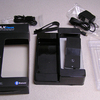
Now here’s a cool wireless gadget: the Trackstick II Personal GPS Tracker. This little device uses GPS to track its own location, time, data, speed, heading and altitude at present intervals. Since you can pop it in your pocket or purse, that means it also can track your location — or the location of anything that moves. That’s great, but what do you do with the location data gathered? Simple: play it back using Google Earth. This seamless (and free) integration with Google Earth means it’s a snap to bring information gathered in the real, physical world to the online realm.
“Use it for recording the exact routes you take when hiking, biking or vacationing,” DavesGadgetWorld.com, where you can buy this nifty gadget, suggests. “Record the location of everywhere you went, import pictures and other information into Google Earth to offer an entirely new perspective of your journey.”
The Trackstick has more than 1 Mb of memory, which DavesGadgetWorld.com claims “can store months of travel information.” It also includes GPX photo stamping so you can add pictures to the maps you create in Google Earth.
The Trackstick II Personal GPS Tracker has a suggested retail price of $199.
- mobility » Use GPS 'Trackstick' to Record Your Travels, Create Free Google Earth Maps
- wireless » Use GPS 'Trackstick' to Record Your Travels, Create Free Google Earth Maps
CTIA Wireless 2008 News Roundup
April 3, 2008This week (April 1-3) was the CTIA Wireless 2008 show in Las Vegas. All week TMCnet has been reporting on news from the show, which is put on (as the name suggests) by CTIA, an organization whose acronym formerly stood for “Cellular Telecommunications & Internet Assocation,” but now simply goes by CTIA — The Wireless Association.
The show’s Web site has a full roster of news highlights from this week, but here are a few that caught my eye from TMCnet’s coverage.
For even more coverage of the show, check out the blogs for Rich Tehrani and Greg Galitzine.
Tags: CTIA, Greg Galitzine, Las Vegas, mobile, Rich Tehrani, wireless
Search Technorati: CTIA, Greg Galitzine, Las Vegas, mobile, Rich Tehrani, wireless
Related Tags: Wireless, wireless, mobile, Mobile, coverage
- cellular » CTIA Wireless 2008 News Roundup
- mobility » CTIA Wireless 2008 News Roundup
- wireless » CTIA Wireless 2008 News Roundup
Eye-Fi with My Little Eye... Wireless Photo Uploads
March 24, 2008Uploading digital photos from a camera to a computer is a task that lots of people (myself included) tend to put off since it takes time and requires digging for the USB cable. (Which drawer did I put it in again?) Wouldn’t it be great if there was an easier way to get photos from camera to computer hard drive—or better yet, directly to a bogging or social networking site?
A startup called Eye-Fi thought so, too. And they did something about it: developed the Eye-Fi wireless SD card. This is a 2B SD card that pops into a digital camera just a like a regular card. Only difference is, it’s got a built-in wireless transmitter. So instead of plugging in a cable, all you have to do is turn on the camera within range of your home WiFi network and grab the photos.


The Eye-Fi card is also compatible with a variety of printing and sharing Web sites, including: Costco.com, dotphoto, facebook, flickr, Fotki, Gallery2, Kodak Gallery, phanfare, photobucket, Picasa Web Albums, RitzPix, Sharpcast, Shutterfly, SmugMug, snapfish, TypePad, VOX, Wal-Mart, webshots, and Windows Live.
Here are a few technical specs: static WEP security, 90+ feet range outdoors (45+ feet indoors), compatible with 802.11g, b and backwards-compatible 802.11n networks.
I haven’t tried the Eye-Fi card myself (waiting till they come out with a version in xD format for my camera). If you do give it a try, let me know what you think.
Tags: camera, digital, Eye-Fi, photo, sharing, social network, upload, WiFi, wireless
Search Technorati: camera, digital, Eye-Fi, photo, sharing, social network, upload, WiFi, wireless
Related Tags: camera, compatible, wireless, photos
- WiFi » Eye-Fi with My Little Eye... Wireless Photo Uploads
- mobility » Eye-Fi with My Little Eye... Wireless Photo Uploads
- wireless » Eye-Fi with My Little Eye... Wireless Photo Uploads
Research Confirms That Even Use of Hands-free Phones Distracts Drivers
March 11, 2008I’ve long held the belief that driving while talking on a cell phone is dangerous, even if one is using a headset or switching on the speakerphone function. (Although I’m as guilty as the next person of talking while driving anyway.) Now some recent research adds more backing to that argument.
Marcel Just, director at Carnegie Mellon University’s Center for Cognitive Brain Imaging, decided to find out the extend to which non-driving activities distract drivers from their primary task of steering a vehicle down the road.
In a March 9 report that’s been making the rounds online, USA Today explained what happened when 29 volunteer subjects were hooked up to an MRI brain scanner while engaging in a simulated driving exercise. Some of the volunteers were left alone to engage only in the driving exercise. Some were asked to decide, at the same time, whether a sentence they heard was true or false.
Results? The MRI scan recorded a 37 percent decrease in parietal lobe activity in the volunteers who were multi-tasking, USA Today said. (This part of the brain is associated with special processing.) There was also less activity in the occipital lobe, associated with processing visual information. Not surprisingly given the MRI results, the “drivers” who were multitasking veered off the virtual road more often than their single-minded counterparts.
“Certain activities in life are inherently multitasking, but driving and cellphone use isn't something Mother Nature thought about when she was designing our brains,” Just was quoted as saying in the USA Today report.
Just admitted that, while the results clearly indicate that driving and talking on the phone don’t mix, banning all use of cell phones in vehicles is too draconian a measure. It might work better, USA Today said, to instead cut down on accidents by forbidding cell phone use in certain situations—like rush hour or inclement weather—that require a fairly high level of concentration for safe driving.
The report noted that seven parts of the U.S. forbid the use of handheld phones when driving: Connecticut, New York, California, New Jersey, the District of Columbia and the Virgin Islands. No jurisdiction, however, forbids using hands-free devices.
Jonathan Adkins, spokesperson for the Governors Highway Safety Association, thinks hands-free devices lure people into a false sense of security. In the USA Today report, he said there is no evidence that bans on handheld phones have helped prevent accidents.
Where do you stand on this issue?
Tags: Carnegi Mellon, cellphone, cell phone, hands-free, headset, Marcel Just, mobile phone, USA Today
Search Technorati: Carnegi Mellon, cellphone, cell phone, hands-free, headset, Marcel Just, mobile phone, USA Today
Related Tags: driving, today, Today, while, phones, report
- Bluetooth » Research Confirms That Even Use of Hands-free Phones Distracts Drivers
- cellular » Research Confirms That Even Use of Hands-free Phones Distracts Drivers
- mobility » Research Confirms That Even Use of Hands-free Phones Distracts Drivers
- wireless » Research Confirms That Even Use of Hands-free Phones Distracts Drivers
Infonetics Report Highlights 2007 WiMAX Growth
March 6, 2008WiMAX is hot and getting hotter. That’s essentially the conclusion reached by Infonetics in its recent WiMAX and Mesh Network Equipment and Devices report.
Just how hot? During 2007, the WiMAX market grew sequentially 46 percent (for the year), with worldwide sales (fixed and mobile) just shy of $800 million. That number was reached thanks to deployments in more than 80 countries around the world.
Infonetics predicted that commercial WiMAX network deployments will continue growing during 2008 and beyond—with market value projected at $7 billion by 2011.
What’s driving the WiMAX market? Here is Infonetics analyst Richard Webb: “Among the most significant developments: Cisco's acquisition of mobile WiMAX vendor Navini Networks, the market entrance of specialist ASN gateway vendor WiChorus, the launch of WiMAX phones and Ultra Mobile PCs, and the new Open WiMAX initiative, which promotes disruptive, all-IP open WiMAX architecture, and should lead to best-of-breed solutions with inter-vendor interoperability.”
Attaching vendor names to WiMAX market growth, Infonetics reported that, for 2007, Alvarion led the worldwide fixed WiMAX equipment market in terms of revenue, followed by Airspan. In the mobile arena, the number one and two spots were held by Motorola and Samsung, respectively.
Tags: Infonetics, mobile, WiMAX, wireline
Search Technorati: Infonetics, mobile, WiMAX, wireline
Related Tags: wimax market, wimax, WiMAX, market, Infonetics, infonetics
- WiMAX » Infonetics Report Highlights 2007 WiMAX Growth
- mobility » Infonetics Report Highlights 2007 WiMAX Growth
Tiny Pictures Pulls in $7.2 Million Financing for Radar Photo/Video Sharing Service
February 26, 2008Yesterday I blogged about a company called Radar Networks that just completed Round B of its financing series. Well, it turns out that Radar must be a winning name. Another company, Tiny Pictures—which offers a mobile photo and video sharing service called Radar—also just completed Round B of its financing series, pulling in $7.2 million from Draper Fisher Jurvetson and Mohr Davidow Ventures.
Previously, Tiny Pictures raised $4 million from Mohr Davidow Ventures and “angel invetors” Reid Hoffman and Joichi Ito. Funds raised during Round B, the company said, will be used for international growth and development of its recently launched ad platform.
Radar from Tiny Pictures enables real-time sharing of photos and videos between cameraphone users. It can be accessed on wireless devices, on PC browsers and through a series of mobile applications.
Tiny Pictures was founded in 2005 by John Poisson, who formerly headed up the mobile media research and design groups at Sony in Tokyo, Japan. The startup company is based out of San Francisco, California.
For more about Tiny Pictures and its Radar service, see:
Tags: Draper Fisher Jurvetson, financing, mobile, Mohr Davidow Ventures, photo, Radar, Round B, sharing, Tiny Pictures, venture capital, video
Search Technorati: Draper Fisher Jurvetson, financing, mobile, Mohr Davidow Ventures, photo, Radar, Round B, sharing, Tiny Pictures, venture capital, video
Related Tags: photo video, video sharing, Radar, Pictures, radar, pictures
- mobility » Tiny Pictures Pulls in $7.2 Million Financing for Radar Photo/Video Sharing Service
- wireless » Tiny Pictures Pulls in $7.2 Million Financing for Radar Photo/Video Sharing Service
Radar Networks Pulls in $13 Million Venture Capital During Round B of Financing Series
February 25, 2008Radar Networks is on a role. The company announced Monday completion of Round B financing series, during which it brought in $13 million from several venture capital firms. This brings total venture capital funding for the company to $18 million, including Round B and Round A (which closed in April, 2006).
What’s drawing venture capital firms to invest in Radar? The company offers an online service called Twine, which the company describes as a “Web 3.0” application, part of the “Semantic Web.”
Twine lets users organize, share and discover information that correlates to their interests, and connect with networks of like-minded people. In this sense, it is similar to a lot other “social network” services on the Web. But Radar is taking this idea to a new level what the company calls “semantic understanding,” a method of automatically organizing information using algorithms that learns from users’ interests and uses its conclusions to make connection and recommendations.
Given the trend toward social networking services being used not only on desktop computers but on mobile devices as well, it seems likely that Twine will prove useful to computer-based surfers and on-the-go social networkers alike.
Round B of Radar’s financing series was led by Velocity Interactive Group. Draper Fisher Jurvetson and Vulcan Capital also participated.
Tags: financing, Radar Networks, Round B, semantic Web, social networking, Twine, Venture Capital, Web 3.0
Search Technorati: financing, Radar Networks, Round B, semantic Web, social networking, Twine, Venture Capital, Web 3.0
Related Tags: venture capital, financing series, round, Round, Radar, company
- misc » Radar Networks Pulls in $13 Million Venture Capital During Round B of Financing Series
- mobility » Radar Networks Pulls in $13 Million Venture Capital During Round B of Financing Series
Architecture Redundancy Would Help RIM Avoid Future BlackBerry Outages
February 14, 2008The power of Google’s ability to perform fast and accurate Web searches comes in large part from the its distributed nature—using a geographically dispersed network of computing power to deliver results to users quickly. Distributed systems like Google’s have another advantage, too: they inherently protect against any single point of failure since if equipment in one location goes down the slack can be picked up somewhere else.
In a Thursday post, ZDNet MobileTech blogger Eric Everson suggested that, in light of two major outages within a year, RIM might want to consider a more distributed type of architecture to provide service for its BlackBerry devices, rather than feeding everything through a centralized system.
Everson quoted a Canadian Press report as pointing out that, “The concentration of RIM's BlackBerry service at a single network operation centre in the Ontario city of Waterloo, through which traffic such as e-mails are routed, exacerbates such problems and leaves it open to more crashes.”
Everson added in his post, “If at a network level everything is routed through a bottleneck configuration it likely doesn’t take the Founder of MyMobiSafe.com to point out that there may be some mobile security issues users should consider.”
In other words, there is power in numbers and RIM might do well to consider adopting a distributed network architecture to avoid such a major outage again in the future.
Tags: architecture, BlackBerry, Eric Everson, Google, network, outage, RIM, service, ZDNet
Search Technorati: architecture, BlackBerry, Eric Everson, Google, network, outage, RIM, service, ZDNet
Related Tags: network, distributed, power, blackberry, Everson, consider
- cellular » Architecture Redundancy Would Help RIM Avoid Future BlackBerry Outages
- mobility » Architecture Redundancy Would Help RIM Avoid Future BlackBerry Outages
- wireless » Architecture Redundancy Would Help RIM Avoid Future BlackBerry Outages
Rumor Mill: AT&T to Launch Centro Smartphone on Feb. 19
The rumor mill is in full gear this week suggesting that AT&T will be introducing its own “branded” model of Palm’s Centro smartphone, till now available exclusively through Sprint.
The PalmAddicts blog said Sprint’s exclusive hold on the Centro, which began shipping in early October, was rumored to be a three-month deal, so now’s about the time you’d expect to see it start being offered by other carriers.
Engadget seemed very confident in a Thursday post that AT&T’s Centro is set being shipping on February 19. The price likely will be $99, and the color probably white.
Tags: AT&T, Centro, Engadget, Palm, PalmAddicts, smartpone, Sprint
Search Technorati: AT&T, Centro, Engadget, Palm, PalmAddicts, smartpone, Sprint
Related Tags: centro, Centro
- cellular » Rumor Mill: AT&T to Launch Centro Smartphone on Feb. 19
- mobility » Rumor Mill: AT&T to Launch Centro Smartphone on Feb. 19
- wireless » Rumor Mill: AT&T to Launch Centro Smartphone on Feb. 19
A Closer Look at Apple's MacBook Air Laptop
February 4, 2008If you’re among those considering whether or not to buy Apple’s new MacBook Air laptop, there are now some pretty thorough reviews available to help with the decision. One of those is from Engadget.
Engadget’s review examines all aspects of the new laptop, including hardware (processor, battery life, display, keyboard, audio, wireless connectivity, ports, etc.) and software (OS, multi-touch gestures, Remote Disc, etc.).
The review is quite thorough, and concludes that although MacBook Air is supposed to appeal to road warriors, it compromises on some of the things such users most need (like ability to swap out a second battery). Given the laptop’s limitations, Engadget thinks it’s unlikely road warriors will pick the Air to replace their primary computer (which may very well be a laptop with more connectivity options), and as such Apple might be more successful if it lowered the price to roughly $1500 and included an Ethernet dongle and SuperDrive into the package.
“The Air isn't supposed to be everything for everyone,” Engadget said in its review. “For those in need of a machine that masters basics in a super thin, light form-factor, and who have the coin to pay for that ultraportability, the Air absolutely nails it like few others.”
What do you think—would you consider or are you planning to buy a MacBook Air?
Tags: Apple, Engadget, laptop, MacBook Air, review
Search Technorati: Apple, Engadget, laptop, MacBook Air, review
Related Tags: laptop, engadget, MacBook, Engadget, macbook, Apple
FCC 700MHz Auction Update
February 1, 2008Update as of 5:10 p.m. on Friday, February 1, 2008: after 25 rounds of bidding, the FCC’s 700MHz auction has pulled in just over $18 billion.
Earlier in the day, after 24 rounds of bidding, RCR Wireless News noted that the bidding had slowed, with only 1.8 billion coming in during the first three rounds Friday morning (compared with $4 billion for all round on Thursday).
The eight C Block licenses did not receive any new bids, RCR Wireless noted, which means bidding on this block may be done. (If so, will Google emerge as not only the white night that rescued open access but also as the owner of the spectrum?)
How do you see the rest of the auction playing out?
Tags: 700MHz, auction, bid, FCC, Google, spectrum
Search Technorati: 700MHz, auction, bid, FCC, Google, spectrum
Related Tags: bidding, auction, rounds, billion
How Many iPhones Has Apple Really Sold?
It just doesn’t add up. During Steve Jobs’ Macworld keynote, he reported that Apple shipped four million iPhones so far. But AT&T says it had only about two million iPhone customers at the end of 2007. Even taking into account the fact that Apple now has service agreements with carriers in countries other than the U.S., it appears there is a discrepancy.
InformationWeek offers information from analysts at Sanford Bernstein that attempts to explain the mismatch between Apple’s and AT&T’s numbers. The analyst firm estimated that Apple’s total iPhone shipments are actually 3.75 million, not 4 million. The firm also estimated that carriers have activated 2.35 million iPhones.
“Assuming that 20% of the unactivated phones may have been unlocked to work on other networks, that still leaves 670,000 iPhones unaccounted for,” InformationWeek noted in its report.
That means that there is a pile of not-yet-activated iPhones in the hands of carriers. The question remains: can Apple still hit its target of selling 10 million iPhones by the end of 2008? What do you think?
On a somewhat related note, Rich Tehrani blogged yesterday that Motorola may be considering spinning off its handset business. He asked whether this is really a smart move, given how big mobility is these days. The company has operations in 44 countries/regions and describes itself as “a global communications leader” that’s all about seamless mobility, broadband embedded systems and wireless networks.
Tags: Apple, AT&T, cell phone, handset, iPhone, mobile phone, mobility, Motorola, sales, sell
Search Technorati: Apple, AT&T, cell phone, handset, iPhone, mobile phone, mobility, Motorola, sales, sell
Related Tags: million iphones, million, iphones, Apple, iPhones, apple
- cellular » How Many iPhones Has Apple Really Sold?
- mobility » How Many iPhones Has Apple Really Sold?
- wireless » How Many iPhones Has Apple Really Sold?
MacBook Air: Heart or Head?
January 31, 2008There has been time now for industry analysts to really take a good look at Apple’s new MacBook Air laptop computer. The initial infatuation with the world’s thinnest laptop has worn off, and some people are now willing to note its drawbacks as well as its advantages.
For example, BusinessWeek reporter Stephen Wildstrom said that MacBook Air “set off an intense struggle” between his heart and his head. On the heart side: this computer is really sexy, one might even say a work of art. It also crams more into a very slim package than probably seemed possible before Steve Jobs’ latest Macworld keynote.
But, on the head side, Wildstrom said his practical, business-oriented self thinks the lack of built-in disc drive, Ethernet port and broadband card slot could be deal-breaker. He pointed out, for example, that WiFi (which is built into the MacBook Air) is not ubiquitous in places like hotel rooms, requiring the business user to hook up an external Ethernet port for Internet connectivity.
For the small subset of users who put a premium on mobility, Wildstrom said, the inability to swap out the battery also poses a problem; he said he got four hours of heavy use on a single charge, but when traveling there are times when he needs more than that.
“Ultimately, the Air presents potential buyers with a tough choice,” Wildstrom wrote in the Newsweek report. “It is lovely to look at and delightful to hold. The screen may be the best I've seen, and the keyboard is better than the MacBook Pro's. Even after prolonged use, the case stays fairly cool to the touch. Against that, you need to we

Technorati
Del.icio.us
Slashdot
Digg