October 2008 Archives

Sears Wants Your Old Gadgets

October 27, 2008 6:53 PM | 0 Comments
master_nin_home.jpgSears is offering VenJuvo's Trade4Credit program to Sears.com shoppers that will allow you to earn Sears store credit in exchange for trading in pre-owned gadgets that have been determined to still hold value.

The program, which offers free recycling and shipping, will accept a variety of gadgets, including iPhones, digital cameras and camcorders, MP3 players, GPS systems and gaming systems.

To use the service, simply have to log onto www.sears.trade4credit.com, select your gadget and then enter the specifics about it so the system can calculate an estimated trade-in value. Once the value is established, the user can print out the prepaid mailing label and send the device to VenJuvo.

After the device is received, VenJuvo will validate the value and within three days you will be able to collect a Sears gift card for that value. 

A quick look at the site tells me the product categories are narrow and the prices low.  Now, wouldn't eBay be a better choice in some cases?

More at TWICE.
you-are-stupid-tee-shirt.jpgToo bad, but Best Buy really blew it with the launch of Guitar Hero World Tour.

We were very excited to be notified that we could pre-order the little ditty a few weeks ago, but were not happy that we were not given the option to pick it up in the store.

Instead, we shelled out some more money so they could send it to us directly. And not a bad idea to save a trip to the store with the price of gas ...

Anyway, was in the neighborhood of Best Buy yesterday so decided to pick up The Shining DVD -- one of my all time best movies -- and still scary after all these years.

So what do I see when I'm checking out? Boxes and boxes of Guitar Hero World Tour.  Not happy that I've preordered this when I could have just walked in and bought it, I got really unhappy when the Best Buy email arrived today to say that shipping of my preordered one would be delayed one to two weeks, but I could call about store pickup instead. 

So I called? And guess what, it's sold out in all of my local stores -- what a surprise! And of course there is nothing they can do about it.    

Talk about stupid!

So now I'm waiting longer and I've gone from a happy customer to an unhappy customer to a fumin' mad customer ...

(Thanks to Gamingmmo.com for the image.)


Wow! A Quick Boot PC -- About Time!

October 27, 2008 4:50 PM | 1 Comment
It is the black hole of the digital age -- the three minutes it can take for your computer to boot up, when there is nothing to do but wait, and wait, and wait some more before you can log on and begin doing anything at all.

Now the computer industry says it wants to give back some of those precious seconds. In coming months, the world's major PC makers plan to introduce a new generation of quick-start computers, spotting a marketing opportunity in society's short attention span.

Hewlett-Packard, Dell and Lenovo are rolling out machines that give people access to basic functions like e-mail and a Web browser in 30 seconds or less.

Now, can you remember back when you'd boot up the PC and then head to make a pot of coffee ... 

Asus, a Taiwanese company that is the world's largest maker of the circuit boards at the center of every PC, has begun building faster-booting software into its entire product line.

Even Microsoft, whose bloated Windows software is often blamed for sluggish start times, has pledged to do its part in the next version of the operating system, saying on a company blog that "a very good system is one that boots in under 15 seconds."

Today only 35% of machines running Windows Vista, boot in 30 seconds or less, the blog notes.

Apple Macs tend to boot more quickly than comparable Windows machines, but still feel glacially slow to most users.

Now, if we could just solve global warming ...

More at the New York Times.
analog-devices-blackfin.jpgAnalog Devices unveiled the new Blackfin BF51x series, the newest members of their convergent-processor family. Blackfin processors are very popular when building Asterisk-based appliances, including the Digium Asterisk Appliance AA50 and Astfin. The Blackfin convergent-processor architecture offers reduced cost, power consumption, and software complexity. Although the processor is popular in creating Asterisk appliances, it can be used for a variety of low-cost, low-power consumption required applications.

The new Blackfin processors are the BF512, BF514, BF516 and BF518. According to Analog Devices, "All are single-core convergent processors that surpass outdated, heterogenous MCU+DSP approaches in reducing part-count, system cost, board space, and power consumption. Like traditional DSPs, the BF51x processors feature high clock rates and low power dissipation per unit of processing (MMACs/mW), and like traditional MCUs, these convergent processors are OS and compiler-friendly."

All four of the new 16-/32-bit BF51x processors are available at clock speeds up to 400 MHz (800 MMACS) and include 116 kBytes of RAM plus an optional 4 Mbits of serial (SPI) flash memory. Each also integrates Lockbox™ security for code and content protection.

The Blackfin processors on-chip integration assures easy connection to a variety of audio, video, imaging and communications peripherals and memory types. Integrated features include support for sixteen stereo I2S digital-audio channels, twelve peripheral DMA channels, and an advanced memory controller for glueless connection to multiple banks of external SDRAM, SRAM, Flash, or ROM. Each processor includes two dual-channel synchronous serial communication ports (SPORTs), a high-speed parallel peripheral interface (PPI), an I2C compatible two-wire interface (TWI), dual PC-compatible UARTs, and 2 SPI-compatible serial peripheral interface ports.

"System solutions ultimately determine how much power any particular application will consume," said Jerry McGuire, vice president, General Purpose DSP, Analog Devices, Inc. "It's quite intuitive that a single convergent processor with the right mix of integrated peripherals is always going to lead to lower BOM costs and power consumption than an inelegant combination of disparate processors and parts can possibly achieve. Many companies today talk about the lowest power or the highest performance. But what is important for today's applications is the highest levels of performance at low power."

All of the new Blackfin processors, delivering 8.5 MMACs/mW (100 MHz), include dynamic power management (DPM) functionality that lets developers match the processor's power consumption to processing requirements during program execution. ADI pioneered the application of DPM more than seven years ago with the release of the first Blackfin processors.

The BF512 is the new low-cost entry point in the Blackfin processor family. The device balances performance, peripheral integration, and price, and is well suited for the most cost-sensitive applications including portable test equipment, embedded modems, biometrics, and consumer audio. All members of the BF51x family also include a new 3-phase PWM generation unit for inductive motor control applications and a quadrature interface for rotary encoders.

The BF514, BF516, and BF518 all extend the convergent processor family further into the portable application space with on-chip removable-storage interfaces. All three devices include Secure Digital Input Output (SDIO) for connectivity to standard flash memory and Wi-Fi cards; a power-optimized CE-ATA storage interface for small form-factor handheld and consumer electronics applications; and an embedded multimedia card (eMMC) interface for integrating mass-storage flash memory in a wide range of consumer electronics, wireless, navigation, and industrial applications.

For developers of network-connected industrial and instrumentation applications, the BF516 adds an Ethernet 10/100 MAC with Media Independent Interface (MII) and Reduced Media Independent Interface (RMII). Highly integrated for industrial, portable and VoIP applications, the BF518 Ethernet MAC supports the IEEE-1588 clock synchronization protocol for networked measurement and control systems.

An increasingly wide variety of applications are viewing the contemporary convergent-processor approach as the soundest choice for cost- and power-sensitive designs. For example, some voice-over-IP (VoIP) telephony system developers have designed in separate DSP and microcontroller chips to implement the required media and control functionality. With BF51x Blackfin processors, however, a single architecture enables full VoIP telephony functionality in a unified software development environment with faster system debugging and deployment, lower overall system cost, and the lowest possible system power demand.

"GIPS VoiceEngine media processing capabilities meet the highest requirements of VoIP equipment manufacturers and paired with Analog Devices' Blackfin processors we can assure customers a consistently high quality VoIP experience. The performance, power and functionality profile of Blackfin is a superb fit for VoIP technology," said Larry Golob, Senior Director Business Development, Global IP Solutions.

With the Global IP Solutions (GIPS) VoiceEngine package of VoIP software components available for Blackfin processors, and a VoIP reference platform available on uClinux, the feature-rich Blackfin family has driven down the price required to easily design and deploy a fully scalable range of VoIP telephony designs across multiple market spaces.

Pricing and Availability
The BF51x family includes the BF512 at $4.95, the BF514 at $7.75, the BF516 at $8.75 and the BF518 at $11.85. Processors are sampling immediately. All prices are based on 25,000-unit quantities.

HD Radio Increasingly Goin' Mobile

October 24, 2008 6:17 PM | 1 Comment
people.Par.0033.Image.jpgAudi of America joined a growing list of car makers that will offer HD Radio as standard equipment in new cars.

Audi will include HD Radio on many of its vehicles starting in calendar 2010 for the 2011 model year, it said. Other companies offering HD Radio as a standard feature in at least one model include Hyundai, Ford and Volvo.

Other luxury car makers who offer HD Radio as an option include Mercedes Benz, BMW and Jaguar.

Currently approximately 1,800 AM/FM stations broadcast in HD Radio and there are now 900 multicast (extra) HD Radio channels on the FM dial.

Now let's make sure we fill all that air time with some really good music or slice the many different genres so thin that we have individual channels for individual groups -- why not?

Why not indeed!

More at TWICE.

HDTVs Sales Single End to STVs

October 24, 2008 5:30 PM | 0 Comments
8828637_sc.jpg Shipments of High-Definition televisions this year surpassed that of standard TVs, according to iSuppli, a leading market researcher.

Significant price reductions and the increasing availability of content over multiple distribution channels are the key drivers behind HDTV sales. 

And don't all sports events look better in HD? 

As a result, HDTV shipments are expected to increase at a compound annual growth rate of 20% from 97.1 million units last year to 241.2 million by 2012. In 2008, HDTV shipments will reach 124.2 million units, while non-HDTV shipments fall to 86.6 million.

With the technology everywhere these days -- on broadcast television, cable, satellite and the Internet, you can't escape hearing about something being broadcast in HD or getting the most out of your HD receiver or the most HD channels available.

Shipments of standard definition TVs (STVs), on the other hand, are expected to decline at a rate of 27% from 114.8 million units in 2007 to 23.1 million units by 2012, iSuppli said.

More at InformationWeek.

Is Halo the New RuneScape?

October 24, 2008 4:08 PM | 0 Comments
runescape head_image_clanwars.jpg It wasn't all that long ago that the gaming world was crazy, crazy, crazy about RuneScape, with thousands of players simultaneously online and with all kinds of personal things that needed attention.

When I last looked, 146,523 players were online playing RuneScape -- that's the size of a large city in most states!

Doesn't sound much different than what's happening with Halo, don't you think?

Online game playing, virtual teams shooting up virtual worlds and all kinds of personal things that need attention -- now Halo is what I'm talking about.

How many out there have moved from RuneScape to Halo?

Come on! Don't be shy to admit it ...
fring, just released fring's latest version 3.36 for all Symbian 9 devices. fring, the "Swiss Army knife" of mobile VoIP/IM apps supports MSN Messenger, Skype, Yahoo! Messenger, ICQ, SIP, and more.

fring's blog writes, "Having upgraded the GUI (the way it looks to you and me) fring is now better looking (as if that were possible) and more user friendly with an upgraded menu structure, and all of your favorite online communities and cool new fring Add-ons available in one easy place, making it simpler than ever to find what you need."


They also explained the new version now supports FAXL 3 Add-on development language.

Point your Symbian phone to www.fring.com/downloadand download it now!

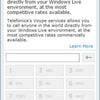
windows-live-call.jpgJust saw a news release put out today that Telefonica and Microsoft have teamed up for Live Messenger VoIP. CNet also picked up this news. Only one problem - on October 2nd, I discovered Microsoft had added something called "Voype" (a service by Telefonica) to Live Messenger. The article was title "Windows Live Messenger Back in the VoIP game!". In the article I wrote:
Ok, now my head is getting dizzy from the number of times Microsoft Windows Live Messenger/MSN Messenger has had outbound VoIP-to-PSTN calling (2006), then pulling outbound VoIP calling (early 2008), and then putting it back in. Also, I believe it was 2004 when the Messenger client used Net2Phone before they pulled the plug. Well, apparently outbound PSTN dialing using VoIP is back in!

Windows Live Messenger has now teamed up with Telefónica to offer VoIP services. Previously Net2Phone and Verizon have had exclusive deals with Microsoft's Messenger client.
So I already wrote about Microsoft and Telefónica teaming up over 3 weeks ago. Apparently, it was an undisclosed partnership at the time. Guess it took them awhile to "officially" break the news about the partnership. But my loyal blog readers already knew this. Score another one for the blogosphere!

Rovio Wi-Fi VoIP Robotic Webcam

October 24, 2008 11:32 AM | 1 Comment
wowee-rovio-robot-voip.jpg The WowWee Rovio is a cool Wi-Fi enabled robotic webcam. I like to call Rovio a remote-controlled VoIP webcam sentry robot.

The Rovio is pretty futuristic looking. It looks like it belongs on some sci-fi TV show or movie. Reminds me of some vehicle I saw on Terminator 2. The Rovio can move in any direction and can be controlled remotely. Simply view and interact with Rovio's environment through its streaming video and audio from its built in camera using a browser. You can even control the Rovio from an iPhone and the Nintendo DS.
merry-christmas.jpgHow do save money in this worldwide tight economy so that you can have a Merry Christmas with lots of gift giving? (Not that gift giving is the main point of Christmas) Well, one way is by using VoIP to telecommute. Research done by Aastra found that commuters driving into the UK's largest cities could potentially save enough money by Christmas to buy more than half a kilometer of wrapping paper if they worked from home just one day a week. Based on commuters with 50-mile round trips, the average transit time soars in London to 111 hours - almost fourteen working days a year. Researchers found that London was the most expensive and time-consuming city to commute into, followed by Leeds and Bristol.
Thumbnail image for aastra-57i-ct-desk.jpg
                                                    Aastra 57i CT phone

Telecommuting just once per week could save on average, could save £19.36 per day of telecommuting or £174 ($271 U.S. dollars) in the nine weeks running up 'til Christmas - enough to buy 17 turkey crowns, with change to spare for cranberry sauce - if they were equipped to work from home one day a week. In London, this figure soars to £41.90 a day - more than twice the national average due to parking costs, traffic delays, and petrol.

I wonder if this study was done since the recent petrol/oil price jobs? In any event, the research commissioned by Aastra revealed that commuters making 50-mile round trips by car, on average, could save £19.36 per day by working from home. In London, this figure soars to £41.90 a day - more than twice the national average.

I have an Aastra 57i (see review) at home that I use to telecommute myself. One nice thing about the Aastra VoIP phones is that they licensed Packet8's NAT technology for their firmware, which solves those pesky VoIP-over-NAT issues.

Working from home one day a week could also save penny-pinching parents with young children more than £460 in day care (£286) and travel costs (£174) in the build-up to Christmas - enough to buy all of this year's top 5 most wanted presents, as predicted by the Toy Retailers Association, with change to spare for more than 130 bags of chocolate coins for their Christmas stockings.

According to Aastra, as Christmas looms and inflation hits a decade high, more people are looking to home working as a means to enjoy a better work/life balance and save money.

Michael Calvert, UK General Manager of Aastra, who commissioned the research, said: "Commuting to work everyday can be a major strain on people's finances, and considering the current economic climate it's not surprising that the mood of the country is more credit crunch than Christmas lunch. Commuters equipped with the right, readily-available technology, could save money and lower their stress levels by taking advantage of flexible working practices. With many workers able to do their job equally well, if not better, from home, it's a wonder why more companies are not encouraging home working."

"It's not just commuters that could see real economic benefits from flexible working practices, many companies could benefit from lower real estate and energy costs, higher morale, and increased staff retention. Flexible working technologies such as Voice over Internet Protocol phones can even reduce the cost of calls, while making corporate communications more effective."

If commuters with 50-mile round trips by car worked from home one day a week they could save enough money in time for Christmas to buy:
  • 1 Xbox 360
  • 3/4 of a Playstation 3
  • 3,400 fairy lights
  • 1,560 migraine tablets
  • 828 Christmas crackers
  • 207 mini Christmas puddings
  • 58 pairs of men's novelty socks

iSkoot for Skype on Google Android

October 23, 2008 1:25 PM | 0 Comments
iskoot_logo.gifiSkoot announced that its mobile application, iSkoot for Skype, is launching in the Android Market, Google's new mobile application store. iSkoot for Skype is the first VoIP solution available in Google's Android Market and of course making it the first VoIP app for the Google Android phone.

I should point out that iSkoot for Skype isn't VoIP over the data 3G connection. It actually uses the GSM voice connection for the voice and uses the 3G data stream for chat, presence, etc. So you'll be using your bucket of voice minutes when making/receiving Skype calls.

It's available immediately for download in Google's Android Market, iSkoot for Skype also runs on nearly all major mobile platforms, including J2ME, S60v3, UIQ, Palm, Windows Mobile and BlackBerry.

Analysis of a VoIP Attack

October 23, 2008 11:00 AM | 4 Comments
VoIP security is often overlooked by IT administrators as well as VARs and resellers that deploy VoIP in the enterprise. They do so at their own peril, however. One of the main factors behind using VoIP is to save money. Well imagine your IP-PBX has been hacked and you don't notice anything wrong until you receive the next phone bill with hundreds or thousands of dollars in phone charges. There goes all the savings you anticipated when you decided to install VoIP!

star-trek-deflector-shields-borg.jpg

This laissez faire towards defensive security reminds me of Star Trek, where for whatever reason the Enterprise flies through space with danger lurking around every corner but they keep their defensive deflector shields off and often turn them on when it's too late. The Enterprise has a fusion reactor with nearly limitless power, so why not keep the deflector shields on all the time? Maybe they're just being "green" and shooting for five nines (99.999%)  of efficiency.

In any event, security in general is often overlooked, whether it's securing your web server or your email server, or confidential database servers. But in most cases when these particular systems are hacked it's usually just an inconvenience (defaced web pages, spamming through your email server) with minimal financial impact. Not so when it comes to VoIP. The financial impacts of a hacked SIP server or VoIP gateway could be tremendous. This is especially true for larger organizations which already have hundreds or thousands of calls per month, including international business calls. How does accounting find the fraudulent calls in the phone bills which are 4 inches thick? It's like finding the proverbial needle in a haystack.

If the hackers are smart, they will limit the amount of traffic they route through a hacked gateway as not to set off any red flags. It could be months or possibly even years before anyone notices anything is amiss. I'm reminded of an old PBX technology called DISA (Dialed In Switch Access) which was one of hackers first tricks to get free calling. DISA was designed to allow employees to remotely call into the PBX and get second dial-tone. With this second dial-tone using touchtones they could logon to ACD queues, monitor agents calls, and of course initiate outbound calls.

In fact, many years ago, TMC was hit with a DISA-like attack on our Comdial PBX resulting in quite a few international calls. If I recall, there was a vulnerability in the Keyvoice voicemail system which allowed someone to make outbound calls. Needless to say, I was able to shut it down pretty quickly.

Part of the attack also involved using a scripted dialer which accessed the voicemail system by automatically sending the # key, then sending a chosen extension (say 100), and then iterating through all the various PINs (0000 - 9999). Since TMC has a toll-free 800 number, the attacker only has to make at most 10,000 calls to find a PIN to a particular extension. Obviously, chances are they'd find the script in much less than 10,000 calls and you get 3 tries before the voicemail hangs up. Once the PIN is found, not only does the attacker have access to the the user's voicemail, they also have access to any DISA capabilities of the voicemail system. More reason why IP-PBXs today need to have a PIN expiration feature just like Active Directory supports password expiration. No matter how many times IT staff reminds employees to change their passwords/PINs, they just don't do it unless the system forces them to. I don't believe any of the Asterisk systems I've tested have password expiration - so my open source Asterisk fans, if you're listening, add it to the code, will ya?

With all this in mind, I was fascinated to read an article by an Austrian company IPCom titled "Analysis of a VoIP Attack". It's an excellent read. Let me give you the abstract:
Recently, several IT news websites reported VoIP attacks against home users, containing lots of myths and incorrect statements. Unfortunately, they also give wrong security advices. This article analyzes the attacks and describes the motivations behind. Further, it shows simple workarounds how "insecure" software can be used in a secure way.
Here's a teaser:

1 The Attack
1.1 Analysis
On 23.09.2008, heise.de reported an attack against VoIP devices of German VoIP users [heise]. This article references a thread in the IP-Phone-Forum [ipphone] in which people report that their VoIP phones started ringing in the middle of the night and displayed incoming calls from the phone number 5199362832664. One of the users presented a log file of a Patton SIP device which captured the suspect INVITE request:

02:12:42 SIP_TR> [GW] < Stack: from 213.130.74.70:3808
INVITE sip:810525551690000@1.2.3.4;transport=udp SIP/2.0
Via: SIP/2.0/UDP 213.130.74.70:3808;branch=100100101101011111101110
00100213.130.74.701.2.3.41863480914;rport
Max-Forwards: 100
From: <sip:5199362832664@1.2.3.4>;tag=21671132663-
4985269162167113266321671132663213.130.74.70
To: <sip:810525551690000@1.2.3.4>
Call-ID: 83764811100011101110010010110101101100111001001011
0101111110111000100213.130.74.701.2.3.41863480914f
df23881052555169000021671132663-
4509759162167113266321671132663213.130.74.70174046 6380
CSeq: 1 INVITE
Contact: <sip:fdf238@213.130.74.70:3808;transport=udp>
Content-Type: application/sdp
Allow: ACK, BYE, CANCEL, INFO, INVITE, MESSAGE, NOTIFY, OPTIONS, PRACK, REFER, REGISTER, SUBSCRIBE, UPDATE, PUBLISH
User-Agent: X-Lite release 1006e stamp 34025
Content-Length: 394


Let's have a look at this SIP message. The funny thing is that absolutely nothing in this SIP message is trustworthy: Probably the SIP message has been received via UDP and the source IP address could be easily spoofed. Further, every data in the SIP message is user generated (in this case by the attacker) and does not necessarily reflect real data. Nevertheless, let us try to analyze the message:
  • Source IP address 213.130.74.70 and source port 3808: Although the IP address could be easily spoofed, in this case it may be the real address of the attacker as the IP address is also present in the Via: header (used for sending back responses). Further, if the attacker wants to know the result of the attack, he has to receive the SIP responses meaning that he has to provide his real IP address.
  • The Call-ID looks like a random string and contains the source IP address. As the Call-ID is invalid (per RFC 3261 the Call-ID must not contain spaces), it can be assumed that the attacker did not use a fullfledged SIP stack, but some scripts to generate the request.
  • The User-Agent header displays "X-Lite" as client. However, if you compare the above request with an INVITE request sent by X-Lite you will find out that the random strings (call-id, tags, branch
Ok, you've been thoroughly 'teased', now go read the full article (PDF). Good stuff!
crusecom-logo.jpg
Fonality's CEO Chris Lyman spoke with me earlier today to talk about the strong inroads Fonality has been making in the call center market. Chris said, "Fonality has become a big player in what I like to call the micro call center market. We launched our call center product in 2005 and we have almost 3,000 deployed call centers now."

When asked to define "call center" since many people have a different definition, Chris responded, "Anybody who purchases Call Center Edition plus HUD Agent. We can't imagine someone buying barging, monitoring, recording, and queue reporting if you weren't doing call center activity. Since these products effectively add in some cases double the costs to the phone system, you're pretty serious if you're buying those."

When asked what percentage were call center deployments versus regular enterprise deployments, Chris said that 40-50% of all their solutions sold are Call Center Edition.

Chris stated that there is a vastly under served and untapped call center market when he explained, "The 5-50 agent market where I have a regular business with 50 employees, but I've got 10 sales people who work the queues. And so there is this micro call center that has been ignored by Genesys and the expensive players out there for all these years because you cannot afford a $100,000 drop-in, bolt-on Avaya call center system. I think the low end of the market hasn't been able to afford that and we're enabling the micro call center market."

Chris explained that Fonality PBXtra Call Center saved Crusecom, a Michigan-based outsourcing call center, more than $250,000 annually. Art Cruse CEO at Crusecom explained he'd have to hire a full-time Avaya engineer on-site at $140,000 - $160,000 per year plus maintenance costs of the Avaya system. He also explained Avaya call center phones are more expensive than regular Avaya phones. They also have 94% call completion rate or an amazing 6% abandonment rate. Other call centers are coming to look at how they've achieved such a phenomenally low abandonment rate. Fonality's call center system has helped Crusecom attain rapid growth. The $250,000 savings enabled Crusecom to invest in a new 14,000 square foot call center facility that will house up to 150 call center agents.

"Fonality and PBXtra Call Center made our whole business model of providing cost effective, outsourced onshore call centers possible. They have delivered remarkable business benefits to our company," said Art Cruse CEO at Crusecom. "When we bought our Fonality system, it was 75 percent less than a comparable Avaya system. With Avaya, we would easily be paying an extra $250,000 per year in support, maintenance and hardware costs, which would directly impact our bottom line and limit our growth capabilities."

Crusecom provides 24x7x365 call center operations to state agencies and companies that want to keep call center operations in the U.S. but cannot afford the high costs of urban call centers. Since deploying PBXtra Call Center in 2007, the company has expanded its customer base, added 50 new call center agents and increased inbound call volumes.

"PBXtra Call Center is amazing - the more calls we get the more we save," Cruse continued. "We've been able to reinvest these cost savings in our company and grow our business very rapidly."

By leveraging web-based reporting capabilities in PBXtra Call Center and other technology developed in-house, Crusecom is the only electronic benefits transfer (EBT) call center in the country that is offering customers real-time, web-based service level agreement reporting. In addition to the $250,000 he is already saving with Fonality, Crusecom estimates that this real-time, self-service reporting functionality saves his company eight to 16 man hours every day, or $50,000 to $100,000 annually, while providing customers with better service and support.

"Gone are the days of the cumbersome, big-iron call center oligopoly. Crusecom is a perfect example of why there is a changing of the guard in the call center market as companies rapidly adopt more agile technologies like PBXtra Call Center," said Chris Lyman CEO of Fonality. "Small and mid-size call centers need affordable, flexible phone systems with solid service agreements that allow them to grow rapidly. Fonality is delivering on these requirements and is constantly innovating with newer advanced technologies."

Chris also explained that Fonality's flat rate support was also a key advantage over other call center IP-PBX competitors. Lastly, he explained the hybrid-hosted approach enables call centers to have home agents without the need for VPNs. The hybrid-hosted approach resolves pesky VoIP over NAT firewall issues making telecommuting a much easier approach with lower TCO.
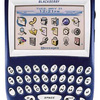
Apple's rivals are making moves to match the runaway success of its iPhone platform with their own versions of its store for applications and games from outside developers.

Research in Motion (RIM) has announced that it would launch an "application storefront" in March next year. 

TIme to fill up that screen with lots of icons! 

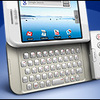
Google is also revamping its Android Market and adding new applications this week to coincide with availability of the first phone built on the new operating system, the HTC G1.

Both are trailing Apple's App Store, which launched on July 10 for the second-generation iPhone. 

The increasing sophistication of smartphones and the growth in size of their screen interfaces is turning them into PC-like platforms. Following the Apple example, handset makers are exploring how consumers can be drawn to phones by the number and variety of applications available on them.

RIM said that developers could set their own prices for applications but, at 20%, it is taking a smaller piece from them than the 30% Apple bites off. 

More from The Financial Times.
Previous 1 2 3 4 5 6 7 Next

Subscribe to Blog

Archives