



Steve Wozniak to Keynote ITEXPO Las Vegas
We are extremely proud to announce Steve Wozniak is a keynoter at ITEXPO in Las Vegas, Thursday, August 29 at 10am....
Full Story »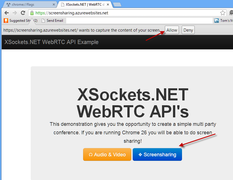
WebRTC Screen Sharing Demo!
In a recent post WebRTC Test Demo Fun, I gave some real world "working" examples of WebRTC. One of the demos I...
Full Story »
Thank You Amazon, Retailers May Now Merge at Will
When reports surfaced regarding Office Depot merging with OfficeMax, the first thing which may have occurred to many, is regulators wouldn’t let...
Full Story »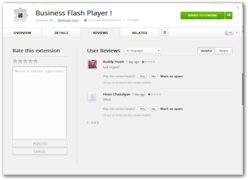
Scam Users, Accumulate Facebook Likes, Buy a Ferrari
Bitdefender Labs recently reported that a site showing kittens and unicorns suggested users download a “business flash” plugin in order to see...
Full Story »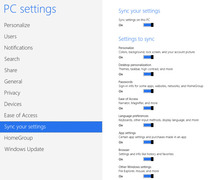
Windows 8 Sync Settings - Security Hole
Windows 8 has a cool new feature that lets you login with your cloud-based Microsoft account (@hotmail.com, @live.com, @outlook.com) and it will...
Full Story »
Is Apple Too Sexy for MWC?
In deciding not to exhibit at the Macworld events, CES and MWC, Apple has shown the world that it doesn’t need...
Full Story »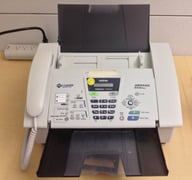
Japan Goes the Way of the Dodo & Still Supports Fax
I've admired Japan for their innovations since the mid 1970s, including the Sony Walkman, the Sony portable CD player, and how their...
Full Story »
Backup DNS, The New Yellow Pages Scam
If you have ever registered a domain name you have no doubt been solicited by a number of companies you never heard...
Full Story »
Cisco Strengthens Products For Midmarket
Cisco today announced a series of news surrounding their midmarket product line and their partners that sell Cisco products in this space....
Full Story »
John Sculley Mesmerizes Audience at ITEXPO (Video)
John Sculley gave an amazing keynote at StartupCamp7 located at ITEXPO Miami where he discussed his career, his relationship with Pepsi,...
Full Story »
Verizon MiFi and Boingo Indispensable
Some time back Verizon Wireless sent me a MiFi device to test and I have used it as a long-term review unit...
Full Story »
Thoughts on Alcatel-Lucent
One of the greatest challenges incumbent companies face is the ambivalence and corporate politics incumbency breeds and it only gets worse...
Full Story »
Sheldon Adelson Continues to Give Back
Sheldon Adelson was the founder of the COMDEX trade show and early in my career his team was gracious enough to work...
Full Story »
Divoom Bluetune Solo Speaker Review
At CES 2013 I had a chance to check out the Divoom Bluetune Solo speaker, a pint-sized gadget which packs a...
Full Story »
Do Physical Digital Libraries Make Sense?
Bexar County in Texas will be home to one of the world’s first digital libraries which contains just e-readers and lots of...
Full Story »
It's the Tablet Size Niches!
The original 2010 iPad diagonal screen size was 9.7" (9.5" width). Three years later, the fourth generation iPad is still 9.7". Amazon...
Full Story »
Telefonica Looking for Channel Partners to Crack U.S. Market
I met with Telefónica along with some other media analysts at ITEXPO just a few moments ago. At ITEXPO Telefónica is announcing...
Full Story »
ITEXPO Future of Cloud Panel Pic
The Future of Cloud Computing panel was a big hit at ITEXPO Miami 2013 - lots of great information. Thanks to all...
Full Story »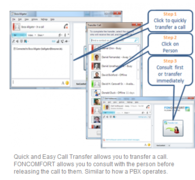
Add-on Makes Microsoft Lync Feature-Complete to Compete with PBXs
Yesterday, at ITEXPO I met with some representatives from Bressner, a German-based company with some interesting add-ons for Microsoft Lync. Now targeting...
Full Story »
New Blackberry on Display at ITEXPO
Blackberry is showing Blackberry 10 OS and the Z10 at ITEXPO Miami 2013. Lots of interest here at the show. What...
Full Story »Interactive Intelligence's 'Interactions 2011' Attracts Record Attendance
I just wrapped up Day Two of Interactive Intelligence's annual user's forum, Interactions 2011, and I must say this event keeps getting better every year -- and I've covered it now three years in a row. This year's User's Forum reportedly attracted a record crowd of nearly 700 attendees -- that's double from last year's event which attracted about 350. I think one reason attendance keeps going up is because the quality of the sessions keeps improving every year plus there are other ways that Interactive Intelligence demonstrates its commitment to its customers through this educational and entertaining event. Besides being an ideal launching pad for the introduction of new products, the three-day event offers in-depth educational sessions designed to help Interactive Intelligence customers make better and more effective use of the company’s products, including its flagship all-software, all-IP contact center platform, Customer Interaction Center -- version 4.0 of which is due out next month. It also provides users with networking opportunities, so that they can learn from each other -- as well as the opportunity to talk with Interactive’s top software developers, support engineers, product management team and technical sales consultants. It also gives attendee's a chance to provide feedback directly to Interactive Intelligence about its products and support -- and this is a company that really listens to its customers. Because Interactive Intelligence has widened its offerings as a contact center solutions provider in the past two years, with the acquisitions of accounts receivable management solutions provider Latitude Software and insurance solutions provider Acrosoft, the User Forum is also becoming more diverse in nature, not just in terms of the the make-up of the sessions being offered but also the professionals its attracts. For example the Forum now features sessions geared specifically for companies operating in the Accounts Receivable Management (debt collections) and Insurance industries, which means some of the sessions tend to be more industry-focused.

Contact Center Market Update 2010
This is the continuation of my live blog from Interactive Intelligence's Annual Global Partner Conference, currently underway in San Antonio, Texas. This morning I'm attending a session about the state of the contact center industry, presented by analyst Sheila McGee Smith. The fear that people have is "viral" -- if something goes viral what do I do? She points to a viral video United Smashed My Guitars -- famous country musician's instruments were smashed while he was flying on United Airlines. The point is, this video went viral and is still receiving a ton of hits a year later in 2010. She discusses Cisco Quad, its new social media platform -- they have now brought this into the contact center through a new "customer collaboration platform" It's a contact center version of the enterprise edition. The product, however, won't be available until 2011. She says Cisco has a demo online "but they still don't have a product." "What is being done here is no different than what Buzzeant can do." Genesys' new G8 platform also promises social media integration -- the goal is that they want the "entire stream of communications" can be tracked and known to the agent when a customer calls in -- in other words, knowing what they wrote on Facebook before they even call in. She points out that Genesys, which is owned by Alcatel-Lucent, is no longer a company brand, but rather a product brand. The two companies are now merged -- they now share sales and marketing and the people who sold Genesys technology are now selling ALU technology as well. As far as social monitoring goes, Genesys wants to be able to take any social media stream and get that to the agents using the Genesys platform. "How they are doing that specifically, don't know." Avaya is also getting into social media monitoring. Their solution, however, is "going to be simply called a gateway." "They are not specific - no partner - no Cisco Quad - nothing to really hang your hat on," McGee Smith says. She says there are a lot contact center vendors out there that are getting into the social networking integration that still haven't gone multichannel -- they have no integration with email or web chat -- so how are they going to do it? A lot of companies are saying they're going to do it -- just so they can say they are doing it. Buzzient however provides tight integration with CIC.
A Review of Interactive Intelligence's CaaS Offering
This is the continuation of my live blog coming from Interactive Intelligence's Partner Conference in San Antonio: Roe Jones, Product Manager for Interactive Intelligence, presents on the company's new Communications as a Service (CaaS) offering. He goes over what CaaS is -- and what it isn't. It isn't traditional "hosted" as per the traditional ASP model, which required client side software, this is a pure web-based model. They've taken their robust CIC platform and totally rewritten it in .NET to make it fully web-based and highly scalable. They're already seeing strong uptake for this new offering -- not just from existing customers but particularly from new ones. Interactive's CaaS revenue increased 59 percent in 2009 and most of this was from new business. The trend continues: They got one CaaS order for more than $1 million and three for more than $250,000 in 1Q 2010. Jones says they're CaaS offering offers a broad set of mature applications The SIP based offering is now being used by more than 3,500 customers. The unique local contral capabilities of this offering allows them to maintain full control of their phone lines senstive data and adminisatrative changes. Also unique about this offering is that each customer runs on a dedicated virtualized server. This allows for superior security, up time and disaster recovery through virtualization. Also unique to the service is the fact that they can quickly and easily transition a customer to an on-premises system -- they just simply take that virtualized server and bring it over to the customer's premises. They use Savvis for colocation.
Interactive Intelligence to Unveil CIC Version 4.0 at Partner Event
Hi I'm reporting live from the 2010 Interactive Intelligence Global Partner Conference in San Antonio, which is about to Kick Off shortly. The company, which makes contact center, business process automation and enterprise unified communications solutions, is expected to announce the next version of its Customer Interaction Center (CIC) platform, the common platform upon which all of its applications are built. I'll be updating this blog post periodically as we move through the event, which is scheduled to begin at 8:15 a.m. CT with a presentation from Chief Marketing Officer Joe Staples, followed by the unveiling of CIC Version 4.0 introduced by company founder and CEO Don Brown. According to the program brochure, the next version of CIC "pushes scalability to a new level -- opening up even larger opportunities; introduces a new .NET Supervisor -- improving administration; adds a new .NET Reporting interface and cradle-to-grave audit trail; reaches the goal of moving all media processing onto the Interaction Media server;" and more. Joe Staples Says this year's conference has more than 400 attendees This year they are doing something different : Streaming live to colleagues, Not everyone could come so they opened this up to select partners. For the "social media moguls, they have made tweaks to the program... They've also created a Twitter feed for the show, where people can post and share comments. This year's show includes six tracks, 84 sessions. He discusses Interactive's recent acquisition of debt collections solutions provider Latitude Software -- there will be a special session dedicated to covering Latatiude's solutions and how they will be integrated with CIC. Other cool sessions include: --The Successful Multichannel Contact Center --Communications-as-a-Service Product Overview --Successfully Selling into the Enterprise with CIC --Introduction to the Web portal All presentations this year are being recorded so that its not just the PPT slides. To "bribe" attendees to submit feedback forms, they offering Apple TV set-top box. Staples admits that during past events "very few forms were turned in." They will do a random drawing of one form to select the winner. Attendees will attend a special awards reception dinner at Knibbe Ranch this evening -- buses will take attendees off-site. A mechanical bull will be featured at this event. The event also features a Technology Fair with 17 different vendors exhibiting. This will also feature opportunity for attendees to win "a number of high tech gadgets." Staples says it takes them about 6 months to put the event together, and they really want attendee feedback, so he encourages everyone to submit comments.
The Value of Agent Supervisor Portals in Resolving Scheduling Disputes
My wife works in the restaurant business and the other day she brought up a scheduling scenario that made me further realize the value of workforce management software -- and in particular agent-supervisor portals -- not only for the restaurant business but also for the call center. What happened was this: Waitress A needed a Monday night off from work so she asked Waitress B to take her shift for her. Waitress B volunteered. It was a verbal agreement done with verbal supervisor approval on premises and the scheduling change was reflected in the (printed) schedule posted on the kitchen wall. But on the Tuesday night after Waitress B worked the shift, she announced to Waitress A: "Now you're going to work my Friday night shift in return!" Waitress A was stunned: She had already made plans to see her young daughter's school recital that evening. When Waitress A said she could not work the Friday shift, Waitress B replied: "Too bad - you said you'd swap shifts with me. You're working it." Unfortunately management didn't fully understand the situation and sided with Waitress B - but the point is this: Had there been a piece of software acting as the "mediator" for this "transaction" there would have been in infallible audit trail that would have protected Waitress A from an unfair management decision. It's important to note that Waitress A did not AGREE to take waitress B's Friday shift in exchange, when the verbal agreement took place. The date and time of the shift that was to be swapped was left open ended. Had the two waitresses been required to use a Web-based online supervisor portal, integrated with workforce management software, to swap, bid on, or cancel shifts, Waitress A would have been required to indicate which shift she would work in exchange for Waitress B and there would be no dispute in terms of which two shifts had been swapped. The important thing with these agent-supervisor (or employee-supervisor) portals is that they have to be extremely user friendly.
On Pocket Knives, Baristas and Passion
One of the things I noticed during Interactive Intelligence's Interactions '10 user's conference in Indianapolis last week is the high level of passion the company's employees have for its products. At every session I attended - whether it was about the company's newly-updated communications-as-a-service (CaaS) offering; or its flagship platform, Customer Interaction Center (CIC); or its new business process automation product, Interaction Process Automation (IPA); or its hardware offerings (yes, Interactive makes hardware!), including its new Interaction SIP Station, the presenter was enthusiastic and, for lack of better term, "passionate." During one session I attended -- I believe it was "AcroSoft Insurance User Focus" (AcroSoft, which Interactive Intelligence acquired last year, makes a content management system geared for insurance companies which is now integrated with the CIC platform) -- the attendees started discussing in detail how they were having occasional trouble carrying a particular operation (I think involving the transfer of data from one system to another) due to some integration issue - and the level of interest and helpful input from session presenter Chuck Wilson, who now heads up Interactive Intelligence's new Insurance Services Group, which is run out of AcroSoft's headquarters in Columbia, North Carolina, was phenomenal in that he really dug into the problem with his own questions and showed a genuine concern in wanting to get the issue resolved. By the way this year's user's conference included a new Insurance track consisting of about eight sessions, most of which were focused on AcroSoft's solutions (which, to be honest I'm still not that familiar with). While I was able to easily follow along with the call center, customer self-service and "communications-side" of things during these sessions, there were times when they dove into back office side of insurance operations and I found myself a little bewildered. Let's just say it's a very process-driven industry with a lot of little rules and regulations on the way you have to do things -- which makes Interactive Intelligence's contact center, business process automation and insurance software ideal for this industry.
Passage of Caller ID Spoofing Bill May Raise Issues for Call Centers
Last week I wrote about a recent customer survey performed by caller ID management company DipFees.com which reveals the importance of having accurate CNAM caller ID for outbound call centers. DipFees claims that it is common for outbound call centers to be unaware of which caller ID is being displayed when they carry out their campaigns and customer support calls. Personally I've heard of instances where they forget to update the outbound caller ID, so it displays the wrong one. Or worse yet it displays no number at all. This lowers connection rates, as call recipients -- with their own caller ID -- are less likely to pick up a call from an unfamiliar name and number. Well here's something new to place an even stronger emphasis on the need for accurate caller ID: Yesterday TMCnet reported that the House of Representatives has passed an amendment to the Telecommunications Act prohibiting the use of caller ID spoofing software, which allows callers to change the number and name that is displayed to one other than their own. This new rule could have serious ramifications for the call center industry because by stating that callers cannot "misrepresent" it is implied that the caller ID they use must be accurate. In essence what outbound call centers use to control the ID displayed on a recipient's phone is the same software used for caller ID spoofing: They have control over the ID that is displayed on the recipient's phone (or TV). So if they make a mistake and "misrepresent," I would assume that they could be cited (fined?), however, I'm not sure yet how this law will be enforced or if it will even have any teeth. Which raises a whole other topic - how will they catch the people who "spoof" their calls - and what will their punishment be? And whose job will that be anyway?
IBM, Assurant Team on Call Center Analytics Solution
IBM and insurance management solutions provider Assurant Solutions recently announced their new Real-Time Analytics Matching Platform (RAMP), which uses advanced analytics to match a caller with the "optimal CSR" in real-time. As per an article by TMCnet's Susan Campbell, "RAMP relies on techniques invented and patented by Assurant to combine data about individual customers with each contact center agent's specific skills, expertise and past performance. IBM Global Business Services consultants then designed a 'matching-engine' to leverage this combination of customer insight, agent profiles and real-time analytics. The result is an 'individual-level' decisioning and assignment of calls not available in most contact center applications." Think about that for a minute: "'individual-level' decisioning." Or "agent-customer "matchmaking" if you will. The purpose of this solution is to "match" customers to agents who are the most familiar with their cases, or profiles - which in some cases, depending on the size of the center, will be the same agent. This has always struck me as ironic -- the fact that these centers are employing advanced call routing ("skills based routing") and analytics solutions that cost a fortune and complicate their systems - but in the end the goal is simply to connect customers to the same agent they spoke to last time. So if the industry has figured out that customers want to speak with the same agent they spoke with last time, why not just provide customers with a direct number to the agent they should be dealing with - and skip all that other expensive intelligent call routing stuff? (I say this in jest, of course.) I find it amusing and ironic that the software vendors have developed intelligent call routing solutions that "decide" on behalf of customers to connect them to the same agent they spoke with last time. Sort of like a giant whacky machine with a million moving parts that takes up an entire kitchen and carries out a dozen impressive operations, but in the end all it does is drop an egg into boiling water. Of course I'm not so naive as to not see the purpose - I realize that obviously you can't have the same agents available to customers 24/7.
Call Center Industry Appears to be Rebounding
As I mentioned in one of my earlier blog posts, TMCnet does not know of any reliable or accurate measure of the size or growth rate of the call center industry. With so many companies operating so many call centers in so many locations all over the globe - plus the fact that they do not need to disclose the size of their call center operations, with regard to the number of seats or even call volume - it's really an almost impossible industry to measure. Several of the leading market research firms do a good job of trying to measure the industry based on available data and their own research efforts, but the results of such studies sometimes have to be taken with a grain of salt. For the past several months we've seen several market research reports which predict that the call center industry will continue to see significant growth over the next several years - this regardless of the recession and the ever-growing trend toward customer-self-service and automation.
Call Center Agents Stand Ready as the Catalogs Come Flooding In
We've been getting flooded with catalogs at my house during the past couple of weeks. It seems like some merchants are doing a little more prospecting this year: Although I didn't take an official count, I would say we definitely received more catalogs so far this year than we did in 2008, which is surprising. Every time I get a catalog in the mail, I think about the call center agents that are somewhere out there in the proverbial call center services "cloud" (I use that term because let's face it, with today's virtualized call centers, it might as well be a "cloud," as far as the consumer is concerned, since they don't know where the agent is located), all fired up a ready to take a flood of calls. I also think about how those agents fit in with the long chain of events that makes up every merchant transaction: The manufacturing of the products; the sourcing of the products; the merchandising; the development of marketing campaigns, both around the brand and the products; the advertising; the mailing of the catalogs and building of Web sites and new Web pages; the handling of orders in the call center and the rest of the fulfillment process - it's all a rather intricate and fascinating process, the way consumers buy all this "stuff" every holiday season. I also think about call center managers pacing wildly up and down the aisles as the clock ticks down -- as the agents sit idly, waiting for contacts to come in. This is the point where it becomes like a game of "cat and mouse" between the merchant and the customer - a game the merchant wins when the mouse is "caught," "cross-selled" and "upselled," the interaction is completed, the transaction is closed, and the wrap-up is, well, "wrapped up." On the other hand, if the holiday season turns out to be better than these merchants expected, and they already cut their call center staffing to the bone, there will be customer service hell to pay on both ends of the wire. By the way, the topic of whether or not the call center industry is ready to handle an unexpected spike in volume due to the start of an economic rebound this holiday season was explored during day one of the Frost & Sullivan Customer Contact Philippines summit 2009, being held Nov. 25-26 in Manila. During the event, regional thought leaders convene and discuss the challenges that the contact center industry faces in delivering exceptional customer experience whilst reducing costs. The overall consensus at the event, according to a release, is that as economic conditions begin to improve "the contact center industry will need to increase its focus on customer acquisition and delivering exceptional customer experience with people, processes and technology." "The recession shifted the focus in the contact center industry towards efficiency such as cost reduction and optimizing resources," said Shivanu Shukla, industry manager, ICT practice at Frost & Sullivan, in the release. "As the economy begins to revive, efficiency will continue to be a driving factor; however focus on effectiveness will return and re-assign importance on customer satisfaction, customer acquisition and revenue generation activities The Asian contact center industry is expected to see steady growth driven by increased investments by enterprises on beefing up their customer service infrastructure, as well as increased levels of outsourcing expected in 2010." Regional thought leaders at the summit included representatives from Thomson Reuters, SAP, Genesys Labs, NICE, DSM Manila LLC, Hong Kong Call Center Association, Western Union Financial Services, Gulf Bank of Kuwait, e-LOAN Division of Banco Popular, Business Processing Association of Philippines (BPAP) and Salesforce.com, amongst Frost & Sullivan senior analysts. For more information, check out the release.

