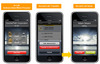
So Apple finally launched their long-awaited 3G iPhone on Monday.  And as impressive as the new phone was, of course there were a string of complaints for wish list items that did not make it into the iPhone v2. 

Chief among the complaints was a lack of video calling and a second front-facing camera.  I've written about this topic before questioning why the US is so far behind the rest of the world on this but still have not gotten a satisfactory answer.  If 2 of the 4 US operators use the GSM standard and have 3G networks, and use many of the same phones from the same vendors around the world, then why can't they use the same phones with video calling as a features.

There was an article on this today in one of Australia's leading newspapers asking the same question I've been asking -- why is the US so far behind in this particular area when it is so far ahead in so many others:

http://www.itwire.com/content/view/18711/1103/1/2/

If you have ideas on the subject (or if you are from AT&T mobility or T-Mobile and have the answer), please let me know.   Still stumped on this question...
For years, telecom insiders have derided flat rate billing as "fad" that was not practical and going away.  As recently as 4 years ago, I moderated a panel at the VON conference with leading industry analysts who unanimously said that that flat rate billing for voice would never take hold. 

We all know that in the US, flat rate calling for both local and so-called long distance calling is now the norm.  And in the last year, some of the independent residential VoIP players made International calling part of their flat rate packages (e.g., Lingo, BroadVoice, and more recently Vonage).

Skype took this to a whole new level last week by introducing a package of flat rate, unlimited international calling for $9.95.  Now granted this is only to 1/3rd of the world's population (most of the developed world) and mostly to fixed lines (calls to mobile phones in most of Europe and Asia cost extra). 

But let there be no doubt that this is just a matter of time before all calls of any distance are included as part of a flat rate plan.  The marginal cost of completing a call to China cost little to no more than to one to Chicago.  Watch for these international calling plans to be expanded over the next few years to the point where today's young generation will drop the term "expensive international call" just like today's adults no longer think about the cost of "long distance". 

About Me

February 21, 2008 11:42 AM | 0 Comments
Hello TMC Readers!

This is my first posting to introduce myself.  So here it goes:

I've been in the VoIP for more than a dozen years starting with VocalTec in 1995 -- the pioneering company in the industry.  During the past 9 years, I've led the marketing efforts at BroadSoft - the leading VoIP applications software company.

I've been fortunate to see the entire lifecycle of voice over IP (once called "Internet Telephony" and "IP Telephony").  I've primarily focused on the marketing aspect of VoIP but in a lot of capacities.  I started out in the consumer space with the first VoIP softphone, Internet Phone ("Talk for FREE over the Internet!).  Later, I helped with the launches of the first gateway and gatekeepers (a.k.a. softswitches) to market in addition to enterprise collaboration software (pre-NetMeeting) and Call Center software ("Surf&Call"). 

At BroadSoft, my focus has been on launching the VoIP applications layer, explaining on what this is, why this is important, and why BroadSoft had the best products and vision for how this would evolve.  In 9 years, we went from an idea and a dream to dominating the market with operations in 60 countries on 6 continents with nearly 300 service providers embracing BroadSoft as the standard.  It's an accomplishment I've very proud to have been a part of.

Some may say "so what?" - that and a few dollars will get you on the New York Subway (it's probably more than 2 bucks since I moved away 9 years ago now...).

I hope to share with the TMC readers my perspective on where the VoIP and the next-generation of telecom is going by leveraging my experience from the past 13 years of eating/sleeping/breathing where it has been.

And as the title of this blog suggests, I'll try to buck the conventional wisdom, going against the grain to provide a different perspective from the rest.

Since this is my first blog post, let me share some news with the community:  I'm leaving BroadSoft to start my own company.  The new venture is a service provider offering video telephony to consumers. 

I've watched the video market spit into 2 distinct camps: high-quality, high-priced video conferencing for the large enterprise market with large budgets and IT staffs; and lower-quality, free PC-based video calling that works fine but requires a bit of technical knowledge and inconvenience to make work.  I believe there is a big void in the middle for consumers to spend a modest amount but get easy-to-use, good quality video calling.

Here is an article I wrote with more detail on why I think the time is now for video calling:

http://www.ipbusinessmag.com/articles.php?issue_id=53&article_id=329

I've been using this technology for the past year and it works really well.  And after getting asked 20 times from observers how they could buy this service only to tell them that "they can't", I decided to put my money where my mouth is and try my hand at making it happen.

BroadSoft has been an absolutely wonderful experience for me.  But the start-up bug infected me again and as many of you know, there ain't no cure. 

So thanks for reading and I hope you enjoy the posts to come.  If you have any opinions on video calling, I would love to hear all about it.

Regards,

Scott
The opinions and views expressed in comments, blogs, etc. are those of the authors alone and not necessarily those of TMC, TMCnet, or its editors. TMCnet reserves the right to edit, delete, or otherwise make changes to the content that appears on these pages at its own discretion and as it deems necessary.

Subscribe to Blog

Categories

Blogroll

Recent Entry Images

Around TMCnet Blogs

Latest Whitepapers

TMCnet Videos