
February 2007 Archives

Second Life Trials Voice Chat

February 28, 2007 8:06 PM | 1 Comment

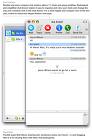
second_life_logo.jpg The popular, virtual reality site "Second Life", run by Linden Labs, will shortly unveil a new limited service beta trial in which they will give users the option of chatting up other avatars with voice instead of text.

Prior to this announcement, Second Life users wanting to communicate with one another have had two basic choices: text chat (either personal or in a group setting) or the use of third-party voice applications like Skype.

Linden Labs  has teamed up with VoIP technology partners Vivox and DiamondWare to engineer the service, which goes live on March 6 for a limited group of users. By the end of the month, Linden Labs hopes to extend the feature to all Second Life inhabitants.

Second Life's new integrated voice chat feature will offer a group mode that lets users hear voice conversations in their immediate proximity, and personal and regular group voice chat, where users don't need to be near each other to have a conversation.

After There.com added voice chat to its site in late 2003, many Second Life users have been clamoring for the same feature.  And after seeing users add Skype and other applications like TeamSpeak or Ventrilo into the site, Linden Labs apparently got serious about development.

The plan is to initially provide voice free of charge during the beta. Down the road, Linden Labs is considering limiting the offering to mainland property owners and island owners who pay a $295 monthly maintenance fee, and charging users living on the wrong side of the virtual train tracks an additional fee or making them upgrade to the current plan.

It's clear the site is at the very early stages of incorporating real-time voice chat, and it will be interesting to see what emerges from the user community and how people incorporate it into their virtual business and personal lives.

Since Second Life has become a bona fide marketplace, where buy/sell transactions occur on a constant basis -- and we're talking real money made here, not Monopoly currency -- I'm particularly interested to see what intrepid developers come up with.

How about virtual phone companies, including virtual payphone, mobile and landline services. Or community-wide news and radio "channels".

Just as long as it's not some virtual telemarketing business that calls me during virtual dinnertime...


GE%20logo.jpg GE has just introduced new incandescent light bulbs that supposedly match the new compact fluorescent type in efficiency and energy savings.
See this post from the Green Tech blog on this announcement. I agree with some of the comments that this appears to be taking two steps back, one step forward, but if the energy savings (and consequent reduction in carbon dioxide) rival fluorescents -- and the prices are right -- then we are still far better off going with either option than doing nothing at all.

Also of note, check out a new Yahoo! site -- 18seconds.org -- designed to encourage people to change to compact fluorescent bulbs -- a task that supposedly takes 18 seconds. The site, sponsored by Wal-Mart, shows a running tally of dollars saved and amount of carbon dioxide reduced as a result of replaced bulbs.

Costco Amends TV Return Policy

February 27, 2007 2:12 PM | 0 Comments

Costco.jpg I was sorry to hear that Costco recently ended their amazing 2-year, no-questions-asked return policy for a bunch of electronics products, including TVs, computers, cameras, camcorders, cell phones, MP3 players and iPods, It was a wildly popular, if occasionally abused, policy -- and helped make Costco the go-to place to snag a great deal on a new flat screen HDTV.

Now, customers have 90 days to return these products for a full refund (although Costco will extend manufacturers warranties up to two years and offer free phone-based tech support).

Apparently, the company was experiencing a noticeable financial hit from its largesse, and the bean counters couldn't allow it to continue.


twist%20CF.gif When I first blogged about the amazing energy savings -- and competitive pricing -- of new compact fluorescent light bulbs, I wrote about 2 common versions of the twist type bulb -- 60 and 100 watt incandescent replacements. Easily found at Costco or Walmart on the cheap.

  I've basically replaced every standard bulb in my house with a fluorescent one -- except for the more "specialty" bulbs, like chandelier bulbs, globe bulbs (for bathroom vanities), reflector and spot bulbs, outdoor bulbs, dimmer bulbs, 3-way bulbs, bug bulbs, grow bulbs, blue light bulbs, red light bulbs, and very very bright bulbs. In fact, any light bulb you can think of has a fluorescent replacement.

In other words, we're still talking a heck of a lot of incandescent light bulbs still burning in my house.

Why aren't they more readily available, and at more reasonable pricing? If you surf around, you can see little chandelier bulbs priced at $9 at piece -- and globes even higher -- and that's not including shipping charges! I'm sorry, but $15+/ bulb just ain't gonna cut it for me -- Not chand%20CF.gifwhen we're talking dozens and dozens of bulbs.

Someone needs to convince a forward thinking company -- like the venerable U.S bulb company Feit Electric -- to bring prices down to competitive levels to goose their wholesale adoption. 

And I smell opportunity for folks who can figure out a way to make them easily available at a reasonable price.


Telepresence and Visa Hassles

February 26, 2007 2:58 PM | 0 Comments

visas.jpgI just absorbed some sobering statistics, courtesy of Fareed Zakaria's excellent column "Hassle and Humilation" in the February 26 issue of Newsweek magazine,  about the state of our International visitor visa process and the negative impact it is having on business travel and tourism.
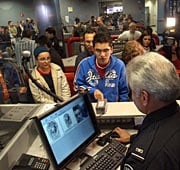
Apparently, the situation is getting so bad that many important meetings scheduled to be held in America are being passed up by International business travelers due to an "increasingly demeaning process for visa applications."

Prepare to sober up: According to the piece, a group of Arab leaders recently landed at John F. Kennedy airport to attend a meeting of the Arab and American Action Forum, launched last September at the Clinton (as in Bill Clinton) Global Initiative meeting in New York: The idea: to bring together 100 young Arab leaders from all walks of life and introduce them to a similar group of Americans. The Arab backers are all pro-American, pro-business individuals who have attended American universities and who have spent extensive time in the U.S.

According to Fareed: "the first group of participants, mostly CEOs of large companies, were pulled out of the regular immigration lines...made to stand for two to five hours as Department of Homeland Security officials grilled them {about} why they had come to America, and whether they had any experience using weapons, what they thought of the Iraq war, and other such questions."

customs-inside.jpg And if you think this is just an Arab issue, when "Discover America, a group set up by the tourism industry to encourage travel to America, polled 2,000 randomly selected international travelers and asked them "'which one location on the map is the worst'" in terms of visa hassles and nasty immigration officials, the United States topped the list by far."  If you're thinking they were probably anti-American to begin with, 72% still had a overall favorable view of the United States when asked.

The impact of all this hassle: "Total international arrivals into the United States declined 10 percent between 2000 and 2004, and business travel has declined 10% in the last 2 years...Once No. 1, the United States has dropped to third as a travel destination."

What's more:  "Over the last 14 years, global tourism has been thriving, having increased by 52 percent. But America's share has been declining, down 36 percent in the same time frame...with travel and tourism...employing 17 million people and generating $105 billion in tax revenues."

DHS%20logo.jpg So, what are we to do while we wait and wait and wait for our State Department to significantly improve the situation? It seems to me that technology often comes to the rescue and saves us from damage caused by inefficient and ineffective processes and situations -- and perhaps this sad state of immigration affairs will ironically provide a boost to the nascent telepresence industry.
Telepresence technology -- high-end, somewhat costly (but rapidly dropping in price) IP-based audio/video conferencing equipment designed to provide a high-def, high-quality conferencing experience -- is poised to benefit from the unwillingness of a large and growing global group of professionals to subject themselves to the trials and tribulations of a system slipping into irrationality -- but still desiring to make contact with each other for business, academic and other peaceful and beneficial purposes. My partner, Jon Arnold, is also hot on this technology, as his numerous blog posts attest.

telepresence.JPG On the Telepresence newsfront, a number of companies are working hard to mainstream the technology, including Cisco, Tandberg and Polycom.

One telepresence solutions provider, Telanetix, recently announced plans to offer a new interoperable digital presence platform that gives users the ability to initiate a video conference between a high-end telepresence system and a standard video conferencing solution (such as those offered by Polycom and Tandberg).

According to Telanetix, up to now, a major barrier preventing businesses from expanding their video conferencing capabilities is that traditional video room conferencing systems were extremely costly. Because of Telanetix’s interoperable IP platform, businesses can keep their existing hardware-based systems and still install an IP telepresence solution that will operate seamlessly with it. According to the company, this is an industry first.

The text of the full release follows:

TELANETIX ANNOUNCES INTEROPERABILITY BETWEEN ITS DIGITAL PRESENCE SYSTEM AND EXISTING VIDEO CONFERENCING SYSTEMS

Company’s New Platform Eases Customer Transition To Telepresence

San Diego, California, February 15, 2007 -- Telanetix, Inc. (OTCBB: TNXI), a leading developer of Telepresence technology, announced today its plans to offer a new interoperable digital presence platform by the end of the first quarter of 2007. The new platform will give Telanetix users the option to participate in Telepresence meetings with standard H.263 and H.264 SIP enabled video conferencing systems currently being offered by video conferencing providers such as Polycom, Inc. and Tandberg.

"The Telepresence market currently has a large number of organizations that are using a mixed suite of conferencing products and services," stated Rick Ono, Telanetix Chief Operating Officer. "In an effort to offer our users the most advanced digital presence solution, Telanetix has created one of the first truly interoperable platforms for Telepresence. As video conferencing continues to become a mainstream application for businesses, our powerful solution offers all the benefits of Telepresence without requiring our customers to abandon existing systems. Our interoperability platform shifts the market in a new direction and will have significant impact on the Telepresence industry for years to come."

The interoperable platform will be offered as an option to Telanetix’s popular Digital Presence System. The platform is a combination of hardware and software components that facilitate seamless connectivity directly with the core of the Telanetix System.

“There are several methods that we could have used to accomplish interoperability,” said Rob Arnold, CTO of Telanetix, Inc. “While we have always supported room interoperability through integration of existing legacy systems, we found many people were looking for a more elegant solution. Based on that feedback from our customers and potential customers, we opted for a fully integrated solution that does not involve the use of a third party system, which enables us to ensure the installation, management and maintenance of our system remains seamless and hassle free.”

The interoperable platform will be available on all Telanetix Digital Presence products. Existing installations are easily field upgradeable.

About Telanetix, Inc.

Telanetix, Inc. has developed a unique technology which creates a fully immersive and interactive environment that integrates audio, video, and data from multiple locations into a single environment regardless of geographic boundaries. The company's Digital Presence Technology delivers full size, face-to-face images of real-time video, audio, and data in high quality resolution at 30 frames per second which is so profoundly real that users feel as if they are all present in the same room. Using Telanetix developed Codecs and advanced MPEG-4 compression on a Linux platform, the Company has effectively replaced the central videoconferencing bridge of legacy systems with high quality decentralized IP multicasting which provides speed and resolution which is significantly greater than those found in most existing technologies.


I've been noticing that prices are starting to drop for a range of consumer VoIP devices, particularly for phones and kits that support Skype that have been around for a while.

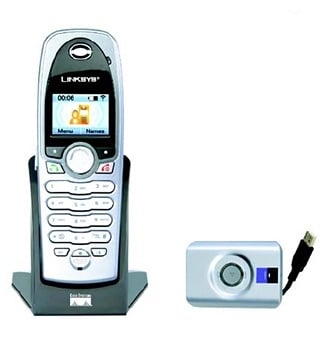
Linksys-CIT200.jpg Case in point: the Linksys CIT200 handset, first introduced in late 2005. Although the device lists for @$100, I've seen it priced for $50-60 on places like buy.com and newegg.com. There are also rebates available that knock the price down even further.

In fact, when I found it available on buy.com at a total price of $50 with free shipping, I jumped. And I'm glad I did. The phone works flawlessly, and sounds incomparably better than the headset I was using before. And I love the fact I can wander far away from my PC and enjoy crystal clear calls (honestly, they sound better than my mobile and are indistinguishable from a POTS call).

I won't go into a full review here since it's already been covered before -- see this review by Jim Crane of the Associated Press, or this comprehensive testdrive by gadget king Tom Keating.


According to a piece by Thomas Claburn of Information Week, Microsoft and BT are offering  prizes for telecom mashups.

Here's the text from the writeup:

At the 3GSM World Congress 2007 in Barcelona this week, Microsoft and British Telecom announced a series of telecom service mashup competitions. The two companies are seeking applications that merge mobile phone services such as voice communication and text messaging with Internet applications like mapping and search.

The Connected Services Sandbox competition offers prizes ranging from $2,500 to $25,000 and will be managed by TopCoder, a company that administers online programming competitions.

Microsoft launched the Connected Services Sandbox in December 2006 as an online development community for independent software vendors, systems integrators, network equipment providers, and telecommunications service providers. To date, it has produced more than 50 registered services and mashups.

"We believe the Connected Services Sandbox will play a critical role in making Telco 2.0 a reality," said Michael O'Hara, general manager for the Communications Sector at Microsoft.

Freelance developers who register and Sandbox member organizations can review the competitions and rules online. The competitions consist of several usage scenarios defined by Microsoft and BT and typically require the combination of services like e-mail or document collaboration with Web services provided by the likes of Amazon, eBay, Google, Microsoft, and Yahoo.

Microsoft plans to announce the winners at NXTcomm in Chicago this June 18-21, and to demonstrate the winning entry at its booth at the conference.

Are You An Alexaholic?

February 20, 2007 11:48 AM | 0 Comments

I was joking with Rich Tehrani the other day, when I sent him an email telling him I was sure he hadn't completed the 12-step Alexaholic program

Alexaholic.com is a mini-mashup of sorts, where you can enter in up to 5 URLs and the site will then create a graph on the fly that shows each of the sites comparative Alexa rankings.

Apparently Alexaholic.com is so hot that it made it into the ranks of the top 2000 most heavily trafficked sites on the Web. And this with only 12 unique visitors, including Rich....Just kidding!

Radvision's New IMS Diameter Toolkit

February 20, 2007 11:36 AM | 0 Comments

RADVISION, a provider of video network infrastructure and developer tools for unified visual communications over IP, 3G, and emerging next-generation IMS networks, just released it's new Multimedia Subsystem (IMS) DIAMETER Toolkit.

The IMS DIAMETER Toolkit, as it's called, is a software tool designed for the development of IMS DIAMETER-compliant network elements. The IMS DIAMETER Toolkit is standards-based (3GPP and TISPAN) and allows seamless integration with IMS based IP networks.

The IMS DIAMETER Toolkit is part of RADVISION’s IMS Developer Suite, which includes all the signaling and media protocol toolkits, development frameworks, and testing tools needed to easily and cost-effectively meet the IMS challenge. The DIAMETER Toolkit works seamlessly with all RADVISION signaling protocol tools and enables the development of all IMS network entities. These include I-CSCF, S-CSCF, Application Servers, HSSs, and offline and online charging functions.

The IMS DIAMETER Toolkit is available for all common operating systems, and is coded in ANSI C and is cross-platform compatible. An open, object-oriented architecture delivers a programmer-friendly and highly flexible platform, and provides multiple API layers.

In addition to the IMS DIAMETER Toolkit, the RADVISION IMS Development Suite includes the IMS SIP Toolkit, the IMS SIP Server, MEGACO and RTP Toolkits, the IMS Client Developer Suite and the ProLab™ IMS Testing & Analysis Suite.

For more information on IMS, RADVISION has published a white paper that can be downloaded from the company’s Website.

The Seven Laws of Converged Billing

February 20, 2007 11:24 AM | 0 Comments

I recently received an email from Redknee, a leading provider of infrastructure software that monetizes and personalizes services and content for mobile users, that listed the Seven Laws of Converged Billing. According to the company, these laws highlight how operators can use real-time, converged rating and billing to reduce churn and improve subscriber offerings.

The Seven Laws of Converged Billing includes best practices and tips for operators worldwide, as they seek to improve their offerings and reduce operational costs. I thought they were worth running in their entirety:

1. A Firm Foundation for the Future: The communications industry will be embarking on a transformation characterized by ubiquitous broadband access, mobility, and low power multimedia/computational capabilities. In the classic paradigm, the network operator had direct control over the entire value chain where a limited set of well defined services were offered from a "walled garden" and paid for via established pre/post paid account structures. The new paradigm will consist of fragmented and shifting value chains consisting of a wide variety of 3rd-party service/content providers, chronologically and demographically specific services, and a wide variety of payment mechanisms. The implementation of a carrier-grade real-time rating and charging platform that can accrue a charge on a transactional level independent of access technology (e.g. Triple-Play, Quad-Play, fixed-mobile convergence and WiMAX) while integrating with existing pre-IMS or IMS compliant infrastructure is critical to the long-term viability and success of wireless services and to the development and implementation of emerging data services.

2. Name Your Value-Based Price:  ­ A real-time rating platform creates new revenue streams with individualized rating plans that reflect the pricing requirements of individual geographic regions as well as specific demographic groups. Network operators require a robust and open infrastructure in order to offer innovative pricing plans. As wireless data networks expand to enable many different types of new services, network operators require the flexibility to price according to content type, events, time, location, traffic type, and delivered quality of service.

Next generation value added services are founded on value-based pricing models, and include new business models that subsidize or reallocate service costs to other entities (e.g. advertisers and sponsors). Value-based pricing must eliminate "double charging" for the use of transport as well as a given value added service. Value-based pricing must support context oriented mass customization where subscriber centric services will be rapidly generated and priced on demand according to the subscriber¹s preferences including whether the service should be subsidized by one or more sponsors.

3. Show Me the Money ­:  A heterogeneous rating architecture where independent rating silos are used for different services (e.g. IP vs. voice) or billing scenarios (e.g. prepaid vs. postpaid) results in inherent cost-prohibitive inefficiencies as well as a lack in a consistent service-rating model. A unified real-time rating architecture allows for: (i) the support of standardized rating, charging, billing and invoicing practices across markets and services; (ii) the support of streamlined processes that allows the automation of inputs into financial systems; and (iii) the improvement of fraud management through transaction traceability across the network operator¹s organization. In addition, customer care representatives and
subscribers can be provided with consistent and clear online presentation of invoices and transaction histories while eliminating administrative overhead and operational expenditures. Operators may be able to reduce ongoing operating expenses by up to 42 percent when they remove multiple legacy billing systems, in favor of a real-time platform.

4. Instant and Effortless Gratification:  ­ Real-time converged billing solutions allow network operators to activate and extend new services upon request as well as verify usage limits and view account balance status in real-time prior to providing a service. Operators can also complement the customer-relationship-management experience by proactively offering notifications of depleted account balances or incentives to encourage subscribers to top up their accounts before the funds run out. Cohesive and unified account structures provided by real-time converged billing solutions, as complemented by open APIs, enable network operators to easily provide a number of innovative capabilities including cross-bundling across technologies or services (e.g. combined wireless and wireline service plans), support of m-commerce services, and subscriber-centric promotions and loyalty programs.

5. You are Unique and Special! Mobile operators must attract new customers and retain existing ones with differentiated services and relevant pricing plans. To remain competitive, network providers must be able to differentiate their service offerings by delivering compelling features (e.g. rating based on delivered quality of service and location) and capabilities (e.g. access to groups of subscribers who share a given
characteristic) quickly and efficiently. Network operators that are able to deliver the best convenience and value will attract the best content providers and the most loyal and profitable customers. An operator¹s
ability to create and enhance value essentially consists of their ability to both distil and apply accumulated knowledge with respect to their customers.

This knowledge constitutes a key asset that can be monetized by providing suitably filtered information to third party content and service providers (e.g. to optimize offered mobile TV streams based on established patterns of behavior).

6. Prepaid ­ Postpaid -- Deal or No Deal? ­ The traditional siloed approach to deploying services will not sustain the next phase of user sophistication. Subscribers are not willing to accept a reduced suite of services in the context of acquiring a degree of cost control that is normally associated with pre-paid accounts. Concurrently, postpaid users have realized that they need better and more timely information to manage their spending on new services. As new services continue to proliferate and homegrown content becomes the norm, users want to have control and visibility over spend limits and service packages ­ and will want to explore other billing options including hybrid prepaid/postpaid accounts and pay per use options. Payment method is only a form of convenience!

7. The World is Flat: ­ Network operators are consolidating operations in order to stimulate revenues, increase operational efficiencies across access technologies, increase economies of scale, and to increase the market power of a given brand over a broader geographic region. Operators are also initiating and joining partnerships to collectively expand the reach of a common brand for the purpose of deriving similar benefits. A real-time convergent monetization solution must necessarily accommodate for the expanding reach of network operators as they seek to provide for consistent features and capabilities which are simultaneously adapted to meet local considerations (e.g. services and currencies that are specific to a given region).


Skype Spam

February 16, 2007 2:17 PM | 2 Comments

Skype%20chat.jpg I've recently noticed an alarming trend: I've been receiving a growing number of spam Skype chat messages recently -- a sign that people are farming the Skype database to send promos and other distracting stuff.

Here's the latest one I received today:

[1:26:48 PM] Best Wishes says:smile Hi,
I’m Sarah, a volunteer at the New Tang Dynasty Television (NTDTV). In the spirit of celebrating the upcoming Chinese New Year, I would like to invite you, your family and friends to join us on a journey across oceans and centuries to the world of China’s legendary golden age- the Tang Dynasty (618-907 AD). The 2007 NTDTV Chinese New Year Spectacular at Radio City will bring you world-class vocalists, a live pit orchestra, and large-scale traditional folk dances along with fantastic scenery and beautiful costumes.

This Spectacular event will be held in NYC at the Radio City Music Hall on Feb 14th, 15th, 16th and 17th of 2007. Whether it’s to experience Chinese New Year in classic Chinese style, or simply spend a special night out, this grand show is a breath-taking cultural extravaganza you will definitely enjoy! Come witness the divine beauty of an ancient civilization as it will be brought to life like never before.

Please visit NTDTV website for more details:
[1:26:48 PM] Best Wishes says: http://ticket.ntdtv.com

Check out photos and video highlights of past NTDTV shows:
http://newyeargala.ntdtv.com/2006/en/index.html

You can also find more video clips on Youtube!
http://www.youtube.com/watch?v=IyxI-cj-29c

In the past 3 years, NTDTV’s Chinese New Year Spectacular has received great success as it was performed in cities throughout North America, Europe, Asia, and Australia. It has even been rated as the 7th best performance in 2006 by the Billboard magazine. The 2007 Spectacular will expand to be performed in 29 major cities around the globe.

From my own personal experiences, I guarantee this show will be one of a kind celebration event that will dazzle your heart and will leave you and your family the memory of a lifetime!

Hope to see you there!

Wish you and your family a very HAPPY NEW YEAR!

I know there's a way to restrict Skype contact to only your approved contacts, but that severely restricts the usefulness of it, in my opinion. Perhaps this is something we just have to live with, just like telemarketers calling at dinnertime?

But hold on: Now that I think of it, there is a "Do-Not-Call" registry in effect that prohibits telemarketers from calling registrants (if they do, they can be heavily fined). I signed up to this, and it has had a marked impact on the number of telemarketer calls I receive (although they occasionally do happen...)

Perhaps Skype should consider instituting similar measures: Send spam and lose your account, or some such penalty.

How many of you have received Skype Spam? And what do you think Skype should do about it?

Great New Web 2.0 Mashup

February 14, 2007 1:22 PM | 1 Comment

Rafe Needleman, who contributes to the excellent Webware blog from cnet.com, recently posted a review about a new Web 2.0 mashup site called FindNearby.net.

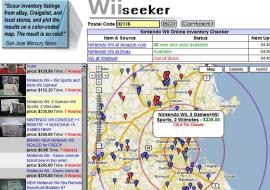
wiifindnearby.jpg In a nutshell, the site mashes up Google Maps, Amazon, eBay, Craiglist, and WalMart.com. Once you enter in your location and an item you are looking to purchase, the site locates the items for sale that are nearby. A cool feature is the color coding of pins on the map that identifies whether the item is being auctioned off, sold at a retail store, or put up for sale by a private party.

There are also a number of related "spinoff" sites including wii.findnearby.net (image above) and ps3.findnearby.net to search for game consoles, and new ones on the horizon including datesnearby.net.

Now, all that's needed is some click-to-talk and other real-time communications functionality to put the proverbial cherry on the sundae! Highly recommended!

My Vista Experience, Part One

February 13, 2007 1:11 PM | 2 Comments

Vista%20screen.jpg In dire need of a new laptop, I decided to make the plunge into Vistaland. I shopped around for "the best value for the buck" deal and after  much debate -- and after discovering a 20% off coupon on Dealcatcher.com -- I ordered a new Dell Inspiron E1505.

Actually, when I went looking for a new system, I was going to stick with Windows XP, since it's working for me and I saw no compelling reason to change. But when I placed the order for the E1505 about a week ago, Dell gave me a choice of Vista Premium or Vista Business -- no sign of XP on the configuration screen. I suppose if you call in your order and insist on XP, Dell might cave in. But on their Web site, XP has simply disappeared.

dell%20E1505.jpg Being adventurous, I decided what the heck and went with the flow. I paid a tad over $1120 for a system with the following main components (a package that packs quite a big bang for the bucks in my opinion):

-- Core 2 Duo T5200 (2MB cache/1.6GHz/533MHz FSB)
-- 15.4 WXGA screen with Trulife (glossy finish) at 1280 x 800
-- 2 GB DDR2 533MHz RAM
-- 256MB ATI Radeob X1400
-- 120GB 5400RPM hard drive
-- 8X DVD+/-RW Optical Drive
-- Integrated 802.11 b/g card
-- 85 WHr 9-cell battery
-- Integrated Bluetooth module
-- 1 Year At Home Warranty

The laptop arrived yesterday, and I forged ahead with a little bit of trepidation mixed in with the excitement of setting up a virgin PC. Things went smoothly -- no glitches or hiccups during the initial setup, and the subtle Vista enhancements were compelling (more on these to come in Part 2 of my Vista Experience).

As soon as I connected to my WiFi network, a process that seems much improved over XP Media Center edition -- and gleefully noting no issues connecting to my security-laden router sporting a hidden SSID -- a big problem with the Zero Configuration utility in Media Center -- Vista wanted to perform a few updates.

That's when a little bit of fun started. Apparently, one of the patches caused one of the Sonic Solutions DLA drivers (an audio driver) in the system to suddenly become incompatible, and after a bit of research I discovered hundreds of posts about this issue. Apparently, the Vista updates render the driver unusable, and as of this post there is no update available from the device manufacturer. The only "fix" is to remove the Vista patch or live with this relatively minor issue until Sonic comes out with new code.

What I find interesting is that there are already driver incompatibility issues, and this on a brand new, virgin system! In fact, I'm starting to hear about numerous other driver issues as it seems that Microsoft rushed Vista to market before hardware vendors had a chance to catch up. I wonder how many other new Vista users are experiencing similar issues.

Otherwise, I must say I'm impressed overall by the performance of the new machine. I haven't noticed any perceptible Vista "lag" due to the OS overhead, and I'm having fun discovering all of the new features. I'll report on my favorites in the next installment of My Vista Experience. Stay tuned!


comcast%20logo.jpg time%20warner%20cable%20logo.jpg Word on the street is that two of the country's largest cable companies, Time Warner Cable and Comcast, are gearing up to introduce new SMB VoIP packages in the next few months.

After winning large numbers of residential customers in their respective markets (Comcast has signed up over 2 million and Time Warner over 1.9 million), they're now setting their sights on the "commercial" VoIP market.

Comcast will be upgrading its network to the tune of $250 million this year to ready it for business class services, and estimates that there are 3-5 million prospect companies throughout the region it serves -- a legion of SMBs with 20 employees or less that represents a $12-15 billion revenue opportunity.

The cable MSOs have been formidable competitors in the markets they play in, and the plans by these two players follow in the footsteps by Cox Communications, Cablevision Systems, Charter Communications and Videotron Telecom -- all of which have started to dip their toes into the SMB space.

I expect the going will be slow throughout the year, as these companies get the wrinkles ironed out of their offerings. But the handwriting is on the wall: look out all ye incumbents -- the cable cos are a' comin to take your customers away...

Brilliant Telecommunications Inc., a developer of ultra-precise Network Timing Protocol (NTP) server technology, has secured $7.1 million in a Series A funding round led by ONSET Ventures. Also investing in the round were Asset Management, Draper Associates, Draper Richards, and Intellect Capital Ventures, LLC.  Brilliant plans to use this financing to accelerate product development, streamline operations, and fund commercial deployments.

Brilliant has developed an intelligent platform for packet-based networks that addresses the growing need for highly accurate timestamps across broad markets. Many industries, including telecommunications, finance, health, legal and manufacturing, need highly accurate chronological data archived to be compliant with existing and emerging regulations, such as Sarbanes Oxley, HIPAA, and NASD Rule 132.

Brilliant’s hardware-based timestamp technology has been well received in the market place due to its ability to easily integrate into existing networks while addressing strict regulatory demands for accurate and legally traceable time.


1 2 Next

Recent Comments

  • JuddyB: I agree with you 110% ! I was at Crown read more
  • Meridian Electric: it will be very much useful for all. read more
  • adapter: If you need a new battery or adaper, I suggest read more
  • VoIPMan: hey, I like your profile. Please check out my blog read more
  • Jason: I found your post when googling for Skype Spam (looks read more
  • AG: Very complete. I kind of like that. Its nice to read more
  • Elij: Hi its interesting to go through your site which really read more
  • B: Currently running Vista on 2 PC's, my development laptop at read more
  • Michael Caspar: Couldn't agree with you more about the CFL pricing for read more
  • Helpful Guy: You will find reasonably priced ones at IKEA read more

Subscribe to Blog

Blogroll

Recent Entry Images

Around TMCnet Blogs

  • Communications and Technology Blog - Tehrani.com:
    Apple Antitrust Issues
  • On Rad's Radar?:
    Endstream Plans
  • VoIP & Gadgets Blog:
    Moving a Data Center
  • Communications and Technology Blog - Tehrani.com:
    IfByPhone Interview ITEXPO East 2010 Miami
  • First Coffee:
    Frost & Sullivan Webcast, LCEC and ENERGYprism, IDC for
  • On Rad's Radar?:
    Freeside's new CEO
  • The Readerboard:
    Tune In, Call in (And Donate), 'Hope for Haiti
  • VoIP & Gadgets Blog:
    No, Gremlins Didn't Eat TMCNet's Web Servers
  • Latest Whitepapers

    TMCnet Videos