









Some of the biggest challenges slowing down the adoption of IoT are security, efficient battery usage and optimized wireless communications.One company has...
Full Story »
In an effort to boost margins, companies often push more users to automated solutions such as FAQs, chatbots, voice bots and anything...
Full Story »
Huawei recently completed the world's first voice over NR (VoNR) call. The voice and video call service was made using two Huawei...
Full Story »
IGEL is a provider of a next-gen edge OS for cloud workspaces. The company’s software products include IGEL OS, IGEL UD Pocket (UDP) and Universal...
Full Story »
Tata Communications and Cisco have extended their partnership to enable enterprises to transform their legacy network to a customized and secure multi-cloud...
Full Story »
Today and this week in-fact is historic - the left and right in the U.S. agree that we have a major trade...
Full Story »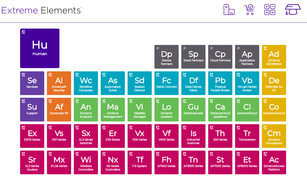
Extreme Networks just announced Extreme Elements which in-turn enables the autonomous network and subsequently the autonomous enterprise. In a dynamic webinar, Dan...
Full Story »The operator personal cloud imperative has shifted.
The main drivers for operators to have a personal cloud used to be revenue and user retention.
While some operators achieved these, others did not. In simple terms, it was due to a shortfall of users converting from free cloud storage to premium, as there are good free alternatives, coupled with a lack of a compelling reason to upgrade.

It should barely be a surprise that many consumers expect personal clouds to be free. They can often get enough free storage and there is little reason to upgrade simply for more. Many consumers view personal clouds like a free usb drive in the sky, it’s there when they need to store or get a file. If they run out of space, they can delete something in their sky drive or switch to another service.
Recently, I was home, the sun was shining, there were fluffy white clouds in a deep blue sky (really), birds were chirping, neighbor children were in backyards whooping it up and having fun, it’s a safe place. For a moment, though, I thought about how easy it would be for someone who was motivated to break in to our house or others on our block, particularly when people weren’t around. Fwiw, we have home security, we lock doors and keep windows shut, police patrol the area and neighbors look out for each other, yet break-ins are a fact of life.
Security is a state of mind, something many people take for granted.
This may seem like a trick question, but in a sea of clickbait and nano-attention spans where there is a raging battle for eyeballs for a split second lest your mind wander, this corny yet serious riddle hopefully does the trick.
Let’s start with explanations. A “phony” (phone-y) is a smartphone user. A “cloudy”, in contrast to being overcast and glum, is a smartphone user who improves their life via the cloud – er, what?
Here is an open letter to marketers of operator personal cloud services. Although this might seem to be of interest to a limited audience, it contains insights that could be valuable to people who want to better understand the intricacies of the personal cloud market or of marketing mobile services via carriers.
Say you work for a mobile operator that offers a white-label personal cloud service. To start with, it is important to understand why your organization is doing this, and there are several reasons.
“The more things change, the more they stay the same.” (from a French proverb)
As personal cloud services evolve, it is worthwhile to periodically look at the financial model behind self-branded (white-label) solutions.
This is relevant as personal cloud services offer more free storage as well as more storage for paying users. This makes it a better value for users, while raising questions about how providers make money.
As the dust settles on the halfway mark of 2015, the personal cloud market continues to surge. Here are important events that occurred in the first half of the year and predictions for the second half.
Major industry milestones in the first half of 2015 include:
When I show our personal cloud app to people, they sometimes think it is just a glorified media gallery or camera roll on their phone as it has all of their phone’s pictures and videos. But a closer look shows it has ALL of their pictures and videos, not just from their phone but from everywhere they want, such as their PC or social site. It also has their important digital files and music in one place.
There are several reasons to use a good personal cloud app in addition to the gallery/camera roll - consider:
Google recently announced that its new Photos service provides unlimited* cloud storage. The asterisk? Google Photos provides ‘good enough’ quality; high-res pictures and videos might see a drop in quality. For users concerned about quality, they can pay to retain the original resolution.
This post is not about insurance or the meaning of life, digital or otherwise. Rather, it is an attempt to help people understand the importance of securing their personal content in the cloud. Disclaimer: I work for a company that provides personal cloud solutions. Despite this, I firmly believe that almost anyone who uses smartphones, laptops and other mobile devices can greatly benefit from doing this.