






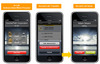



To unravel the mystery, visit our ShoreTel Blog and read more about the iPhone 4S battery mystery!
-
CounterPath Hosted Service Delivers Over-the-Top Fixed Mobile ServicesFeel the Nostalgia! Turn Rotary Phone into a VoIPITW and an iPad AppFacebook's Zuckerberg, Closed App Stores and HTML5
-
Fix for Skype Sign In ProblemSkype for Asterisk Killed - The LowdownOpen Source + JAIN SLEE: Mobicents Makes SenseStop Organizing your Emails into Folders! It's Less Efficient
-
CounterPath Partner Program for ITSPs Aims to Simplify MobileFamily Plans Coming to VerizonTDCloud Joins the FrayDisney World Vacation Trip Report
To unravel the mystery, visit our ShoreTel Blog and read more about the iPhone 4S battery mystery!
Read the entire post on ShoreTel SIP Trunks a Snap with Ingate SIParator! including a video on our ShoreTel blog! Continue Reading...
Read the entire post on ShoreTel Chat including a video on our shoretel blog. Continue Reading...
Read the rest of this article on ShoreTel Cisco Comparison on DrVoIP Blog
Continue Reading...
Adding Users in ShoreTel is among the most common tasks a system administrator will be expected to perform. We suspect once the ShoreTel solution is fully deployed, you will generally not have to tweak Trunks, Switches and Application Servers, but you will always be handling requests from USERS to make changes. These changes will run from adding New Users to changing the feature access of existing Users. Most User options can actually be changed by the Users themselves but often they will call System Administration or the “help desk” and expect your assistance. ShoreTel Users have wide range of very rich features that they can configure to meet operating business goals. The list of features ranges form “twinning” to “find me follow me”, call handling modes, and “personal operators”. There is also a range of options for customizing ring tones, wall paper, Communicator Tool Bars, and phone buttons. Adding users is easy! Understanding feature configuration options and how they interact with the ShoreTel system requires a bit more study.
Generally, ShoreTel phone extensions to not exist without an associated User. This is a cultural issue as much as an architectural issue.Read the entire post on shoretel 12 configuring users.
Continue Reading...
Read the entire article including other videos on many other VoIP articles on drvoip blog
WATCH VIDEO ON SHORETEL 12 FROM DRVOIP NOW
Read the entire article including a video on: drvoip blog
Software development is a process, not an event. Having said that, from time to time, we have an event. The release of a new version of software is such an event. The software development process, however, continues. The decision as to where to draw the line to separate one release from another is a complex interaction of competing goals. The Marketing folks are trying to keep up with the competitive feature package from another vendor. The support team desperately needs a patch for a nasty unforeseen system configuration that introduces an undesirable result and the software team has an aggressive agenda of its own making.
The list of new feature demands is unending. Driven in part by user requests, marketing objectives and the pressures of other vendor releases. If your product is built on Microsoft, clearly you are under pressure to stay compatible with any new releases they might make available to the market. In fact, as it relates to ShoreTel, many people were seeking Windows 7 support when what they really want is Microsoft Office 2010 support! Was it 64 bit desktop computers or 64 bit server software that the market demanded? Do we do the Apple IPhone? Is that web based Communicator really needed in this release or can it wait? Fixing the release of new features is one of the most challenging business decisions that companies have to make.
Generally companies try for two DOT releases per year and one major new release every year. For ShoreTel, we generally expect a DOT one and a DOT two release. For example we might have a Version 10.1 in general availability (GA) while we are beta testing a major release like 11.0. We move to a GA release with the DOT and 11.0 becomes 11.1 available to all. Currently, as of this post, ShoreTel is in GA on Version 11.1 while beta testing Version 12.0. The GA Version of ShoreTel 11.1 has a host of exciting new features, but architecturally we are most interest in 64 bit server support; virtualization, Windows 7 Support, browser based Communicator and distributed Databases. Version 12 completes the Microsoft compatibility by supporting Outlook 2010.
Distributed Workgroups was made available in Version 10, which enables the continued operation of Workgroups on a distributed voice mail server (DVM) even if the HQ server failed. This has some attractive options, but having an operating workgroup might be limited by an inability to have users log in or out of the workgroup. Version 11 enables distributed database capability. This means that in the absence of a HQ (e.g. read/write database) server, a user on a DVM could change their call handling mode; or a change in schedule from Off-Hours to On-Hours could be effected. You have to chose one over the other and I would encourage you to choose the distributed database. Best practice dictates that a Workgroup should be backed up by a Hunt Group that contains all the agents who make up the Workgroup. In this way a failure of the Workgroup, still provides a call flow that reaches all Agents. A distributed database, in my humble opinion, has higher impact. IN a multi-site deployment, you will want to change call handling modes even if the HQ server is down. Continue Reading...
Virtualization is an emerging area that is making a significant change in enterprise infrastructure planning, implementation and operation. The pressure comes from several areas. First, the operating costs of even a small business can be dramatically impacted with Virtualization. Secondly, even a small enterprise is planning for “disaster recovery” and “business continuity” in the event of an emergency that renders existing systems unavailable. Virtualization offers clear solutions to each of these issues. Voice is now regularly deployed as an application, running over existing data networks and usually requiring one or more dedicated servers.
Lets tackle the issue of operating costs first. Assume that you have a typical server deployment that includes an Active Directory server, an Exchange Server, a File server and a Call Manager Voice server for your VoIP over IP system. Each of these servers requires at least one AC outlet. Each server has a Network Interface Card that will eat up at least one switch port on your Ethernet switch. How much heat does a server throw off? Air conditioning a server room is not cheap. If you could reduce this server configuration down to a single AC outlet and one Ethernet switch port, would that be an example of “green”?
We wanted to experiment with ShoreTel as a virtualized solution. Version 11 of ShoreTel now supports virtualization. We wanted to kill several birds with one lab study. The birds we were interested in learning about were CISCO/ShoreTel competitive analysis; ShoreTel as a Virtualized solution and VSphere Converter for a Physical to Virtual (P2V) clone!. Currently we are running VMware Sphere as a VMXi solution for our virtualization platform. We have successfully brought up an complete CISCO Unified communications solution, including the CISCO UCCX Contact Center, CUPS the CISCO presence server and CISCO Unity Connector for Voice Mail. It is interesting to note that as of version 7 of CUCM, CISCO does not yet support virtualization. It runs, but you will not be able to get CISCO support on the product.
We then compared a similar ShoreTel configuration. We set up a ShoreTel HQ server, with a ShoreTel DVM and an ECC running on the DVM. To deal with presence we implemented Microsoft OCS as a virtualized server as well. In future blogs, given your feed back and expression of interest, we plan to show CISCO and ShoreTel implementations of similar enterprise requirements. In this way you can see how the ShoreTel and CISCO configurations would be implemented to achieve the desired implementation.
Lastly, we wanted to experience the process of cloning a physical machine. Arthur C Clarke, developed three laws of prediction. Law number three is applicable here: “Any sufficiently advanced technology is indistinguishable from magic”. The process of converting a real, physical, still running server into a virtual “clone” is absolutely magic! We download a copy of VMware ‘s VCenter converter. This software is astonishing. Once installed you basically say through command line instructions: “go to my ShoreTel HQ server and copy it to my VMXi server”. It took approximately 1 hour and 45 minutes, but the process completed flawlessly. The VMXi server had a complete clone of the ShoreTel HQ server and with modest modification it ran immediately. Clearly, you don’t want two HQ servers running on your network, so be careful to deal with this issue and the issue of conflicting IP addresses.
Ethics, Digital Rights, licensing and Copy write law issues aside, it is very possible to clone your ShoreTel server and run it in a virtualized environment. In fact we have taken to backing up our ShoreTel system as a Snapshot on a DVD. As a virtual machine, you can either Snapshot the machine, or suspend your running machine. Thanks to the magic of VMWi you can actually “move” your running machine to a new site while it is still in operation! Basically, we can bring up an entire ShoreTel server in approximately 3 minutes, the time it takes to load the Virtual machine image. There is a video that accompanies this blog (http://blog.DrVoIP.com) and in it we show you the process of bringing up ShoreTel as a Virtual Machine and how to clone an existing machine using P2V software. As always, send your comments to DrVoIP[at]DrVoIP.com and we will do what we can to respond to your questions and comments!
Continue Reading...

