














Jim Machi : Industry Insight
Jim Machi

Proactive Care Puts Operators One Step Ahead

By Thomas Fuerst, Senior Director, Multimedia Solutions MarketingAlcatel-Lucent

Monitoring and analyzing network data proactively saves operators time, money, and customers.

When a network service fails, it makes headlines, ticks off customers, and costs that network operator money. When a failure is headed off in advance, on the other hand, there might not be praise-laden headlines, but it's newsworthy nonetheless.

The traditional approach to customer care has typically been: a disgruntled customer calls customer service and complains of a service interruption or problem; the rep, learning of it for the first time, sends out a technician the next day, and eventually finds a resolution. Often, customers are left feeling put out, and the operator has spent significant time and money resolving the problem. Even worse is the customer who doesn’t call and just feels this is ‘typical’ of their network experience.  That is a customer at risk of leaving.

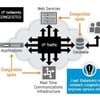
Proactive care flips this dynamic on its head by using predictive analytics to identify potential outages or errors in the network and stop them before they occur. It consists of three main parts: one, constantly monitoring and measuring data on the network; two, real-time analysis of the data; and three, the most important, acting on that analysis to fix the problem.

Full Story »

10 Lessons from Volleyball

I've played volleyball for over 25 years. I have traveled around the US to watch the pros live - both indoor...

Full Story »

Emerging Threats Combats a Million Plus Pieces of New Malware a Week

There are 250,000 plus new pieces of malware being produced each day equating to one piece per person in the US in...

Full Story »

NFV-Based Software Telcos Need OSS/BSS Interoperability

One of the goals of ETSI NFV is to allow new entrants to provide solutions to carriers based on software instead of...

Full Story »

SysAid's Lifshitz: The Cloud Will Dominate ITSM Market

Cloud computing has really become a household word with mainstream media outlets running stories on television about the growth in the space...

Full Story »

Avaya Takes Networking Lead in SPB

At Interop Las Vegas 2013 Avaya was demonstrating their real-world Shortest Path Bridging (SPB) solutions and while interoperating with Spirent, HP and...

Full Story »

Alianza Wants to Host Your Software Telco

The software telco(r)evolution representing the move from hardware to software is perhaps the biggest trend in the world of carrier telecom this...

Full Story »

ITW and an iPad App

May 31, 2011

Last week, I attended the International Telecoms Week (ITW) in Washington, DC.  It’s a very interesting and unique show for the global wholesale telecommunications community to essentially trade minutes.  They do this at what they call “bilateral tables,” which are, well, tables where one party sits on one side and the other party sits on the other side.  And there are rows and rows of these bilateral tables throughout the venue.

Open Source + JAIN SLEE: Mobicents Makes Sense

May 24, 2011

Service Logic Execution Environments (SLEE) play an important role in the telecommunications network, especially when creating applications that marry the web and mobile experience.

Now, you don’t have to use SLEE and you don’t have to use Open Source to create applications that marry the web and mobile experience, but if you are apt to use Open Source as your development philosophy and are interested in an Open Source platform, then Mobicents is the way to go, since it’s the world’s only Open Source JAIN SLEE platform.  Mobicents was acquired by RedHat in 2007, and is part of the JBOSS Communications Platform, also part of RedHat, so they have a great track record in the Open Source telecoms world. 

The African Telecommunications Opportunity

May 17, 2011

I was in Accra, Ghana last week for a customer and prospect event.  Africa is on the cusp of incredible internet and mobile growth.  Submarine cables are coming in, which means more bandwidth.  And fiber is coming in to interconnect the continent, which means more bandwidth. 

Parallels Between the Music Industry and the Telecom Industry

May 10, 2011

When I was in Singapore in April for the Telecom Asia Awards and Conference 2011, one of the most interesting talks was given by Sandy Monteiro of Universal Music.   Here is a link to an interview he did with TelecomAsia back in January which is also interesting. 

His talk was mainly about the revenue/ARPU parallels between the music industry and the telecom industry.  Revenue in the music industry has fallen from all time highs from over 10 years ago to half of that revenue today, due mainly to digitized music.

From Opportunity to Reality!

May 5, 2011

If you read my last three blogs, then you know that there are a number of ways that mobile networks can be monetized, and this provides a tremendous opportunity for service providers.  However, we must all play a role in the monetization of these networks and the entire ecosystem in order for them to fully reach their potential.

How can Dialogic help, you ask?

As I’ve mentioned, mobile networks are delivering entertainment and information to an ever-widening world eager to connect quickly and seamlessly. Dialogic focuses on the promise of this technology and today, networks using Dialogic technology carry more than fifteen billion minutes of traffic per month, and services built on Dialogic products are used by an estimated two billion mobile subscribers worldwide! 


More Ways to Make Money: Mobile VAS, QoE and Advertising

May 3, 2011

In my last two blogs, I talked about ways that service providers can monetize their mobile networks.  In this blog, I’ll explore a few more: mobile value-added services, quality of experience and advertising.

Mobile Value-Added Services

Mobile value-added services are a key element in optimizing networks. According to Infonetics, mobile operators now get 66% of their revenue from voice and 20% from SMS/MMS, with broadband services making up the rest. 

A Few of the Ways Mobile Networks can be Monetized: Usage, Tiered Pricing and Optimization

April 28, 2011

In my last blog, I talked about how monetizing mobile networks is a complex process that involves quite a few different strategies.  In this blog, I’m going explain more what I mean by:

  • Increasing Usage, and revenue from the usage, of the mobile network
  • Tiered Pricing so that heavy users pay for their usage
  • Optimization of the existing network 

Usage

As we all know, more and more subscribers worldwide are coming to the mobile networks, and they are using the mobile networks with increasing frequency.  According to the Cisco Virtual Network published this past February, mobile traffic is expected to grow at almost 100% CAGR through 2015.  

Monetizing Mobile Networks: It's Not as Easy as it Sounds

April 26, 2011

The amount of money spent on mobile spectrum by mobile service providers is enormous. In 2000, European mobile service providers spent $129 billion on 3G licenses, and in 2010 mobile service providers in India alone spent a staggering $14.5 billion on these licenses.  Now, LTE/4G licenses are starting to be awarded.  In Germany in 2010, the spectrum for LTE/4G cost $5.5 billion. 

Everyone on the Planet has a Mobile Phone? Possibly. Italy has an Insight.

April 19, 2011

When I read analyst reports, and I tend to read a lot of them (even when I’m not trying to get to sleep), I keep seeing that at some point in the near future, mobile phone / connected device penetration will surpass the amount of people on the planet.  That’s a lot of devices. What’s behind that?

When is the Bus Coming and How Does that Relate to Innovation?

April 12, 2011

When I travel into New York City, I typically take the bus.  Since I don’t memorize the schedule, I go online to get it and show up around the time it’s scheduled to come to my stop.  The last time I went to New York though, the bus was late.  And I was getting nervous I was going to miss my meeting. 

Featured Events