
Key Takeaways:
• AI-powered tractors, drones, and robots are replacing manual farm labor across planting, monitoring, and harvesting
• Tree-fruit orchards and specialty crop fields are seeing a rise in robotic pickers and drone pollinators
• Automation is easing pressure from labor shortages and improving operational efficiency
• New questions around data ownership, equity, and farm labor displacement are emerging
• Industry is moving beyond semi-autonomous systems to integrated, full-stack AI-driven farms
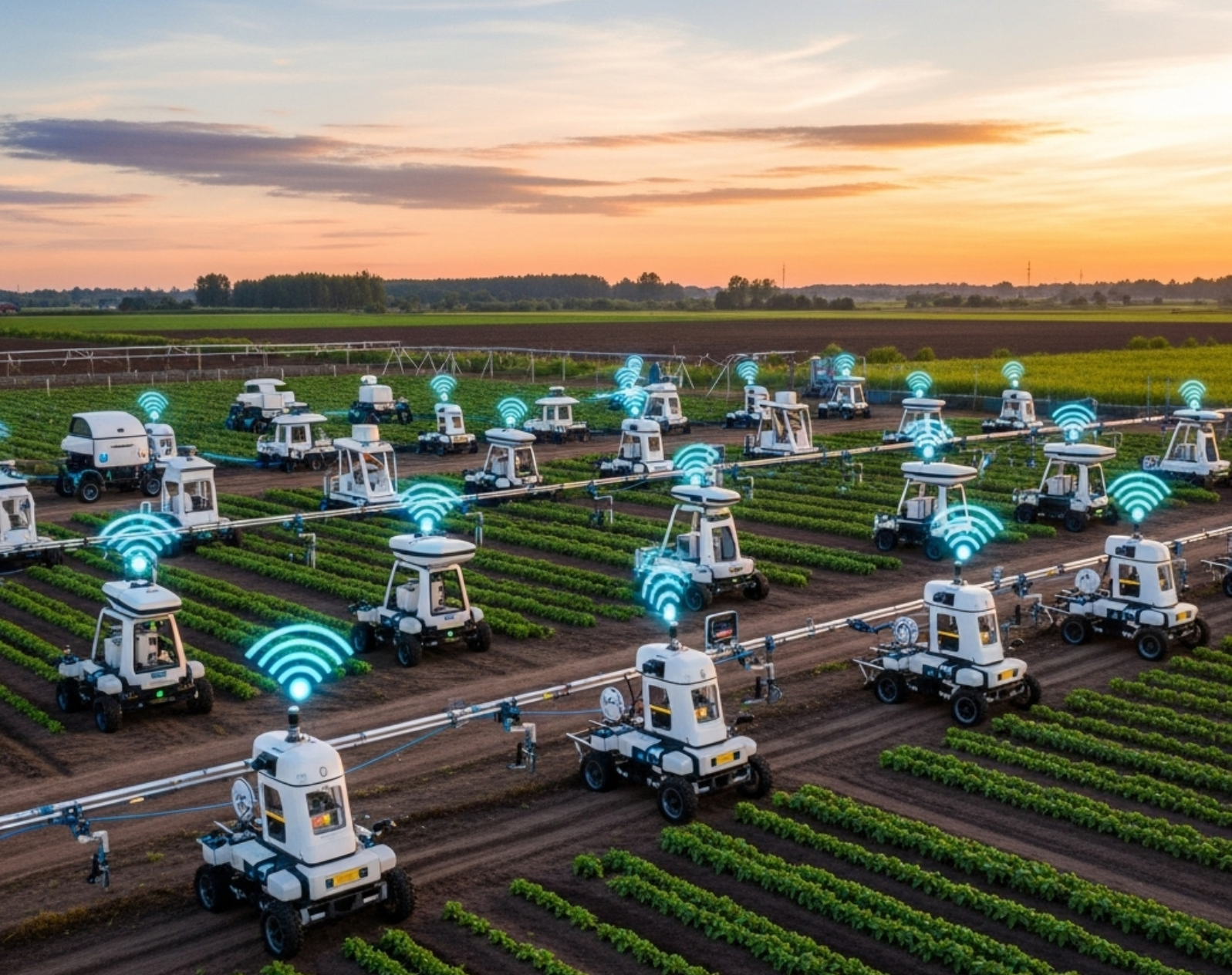
On a California orchard, robots now roam between rows of trees, delicately picking fruit with mechanical arms guided by vision and motion sensors. High above, drones fly autonomous paths to monitor soil moisture, detect pests, and even pollinate blossoms. In nearby fields, AI-powered tractors handle planting, spraying, and harvesting without a driver in sight. This isn’t a tech demo. It’s the modern farm as outlined in an article by the Wall Street Journal titled, Drones, AI and Robot Pickers: Meet the Fully Autonomous Farm.
The agriculture industry is entering an era of automation that stretches far beyond GPS-guided tractors and automated irrigation systems. A new generation of startups and tech-forward growers are testing and deploying end-to-end autonomous systems—robotics, sensors, and artificial intelligence—designed to manage nearly every aspect of crop production with little to no human oversight.
According to this recent piece, the shift toward fully autonomous farming is accelerating, especially in regions struggling with labor shortages and rising operational costs. With nearly 20 billion connected devices globally and increasing demand for high-efficiency food systems, agriculture is emerging as a high-stakes proving ground for AI, robotics, and edge computing.
While it may seem revolutionary, newer farming techniques, coupled with technology have allowed a global workforce almost entirely working on farms to in many cases, single digit percentages. As you can see from the chart below, the number oof people involved in farming activity has absolutely plummeted in the developed world.
From Assisted to Autonomous
While many farms have used semi-automated equipment for years, such as auto-steer tractors or irrigation systems controlled remotely, the latest wave of technology is about full autonomy. These systems are designed not only to execute tasks, but also to assess conditions and make real-time decisions on their own.
Companies like Bonsai Robotics, John Deere, and Blue River Technology are developing AI-powered machines that can identify and spray weeds with pinpoint accuracy, drive along preprogrammed paths while navigating around obstacles, and even harvest delicate crops like strawberries or apples without bruising them. Tree-fruit orchards—traditionally resistant to automation due to irregular layouts and the variability of crops—are now testing robotic pickers, some developed by Agrobot or Tevel Aerobotics, that use suction arms and 3D imaging to pluck ripe fruit individually.
Drones have also matured far beyond their early scouting roles. In addition to capturing high-resolution images for crop analysis, some drones are now capable of pollinating plants, delivering fertilizers in ultra-targeted doses, and relaying real-time field conditions to cloud-based AI models.
Solving the Farm Labor Challenge
One of the key drivers of this automation wave is labor scarcity. U.S. agriculture has long relied on seasonal labor—much of it migrant—and the available workforce has declined over the past decade due to immigration restrictions, rising costs, and increasingly difficult working conditions.
The cost of labor has become a limiting factor, especially in specialty crop production where delicate handling is required. Tasks like fruit picking, vine pruning, and selective harvesting are difficult to mechanize and expensive to staff. In this context, automation offers both a cost-reduction tool and a reliability upgrade.
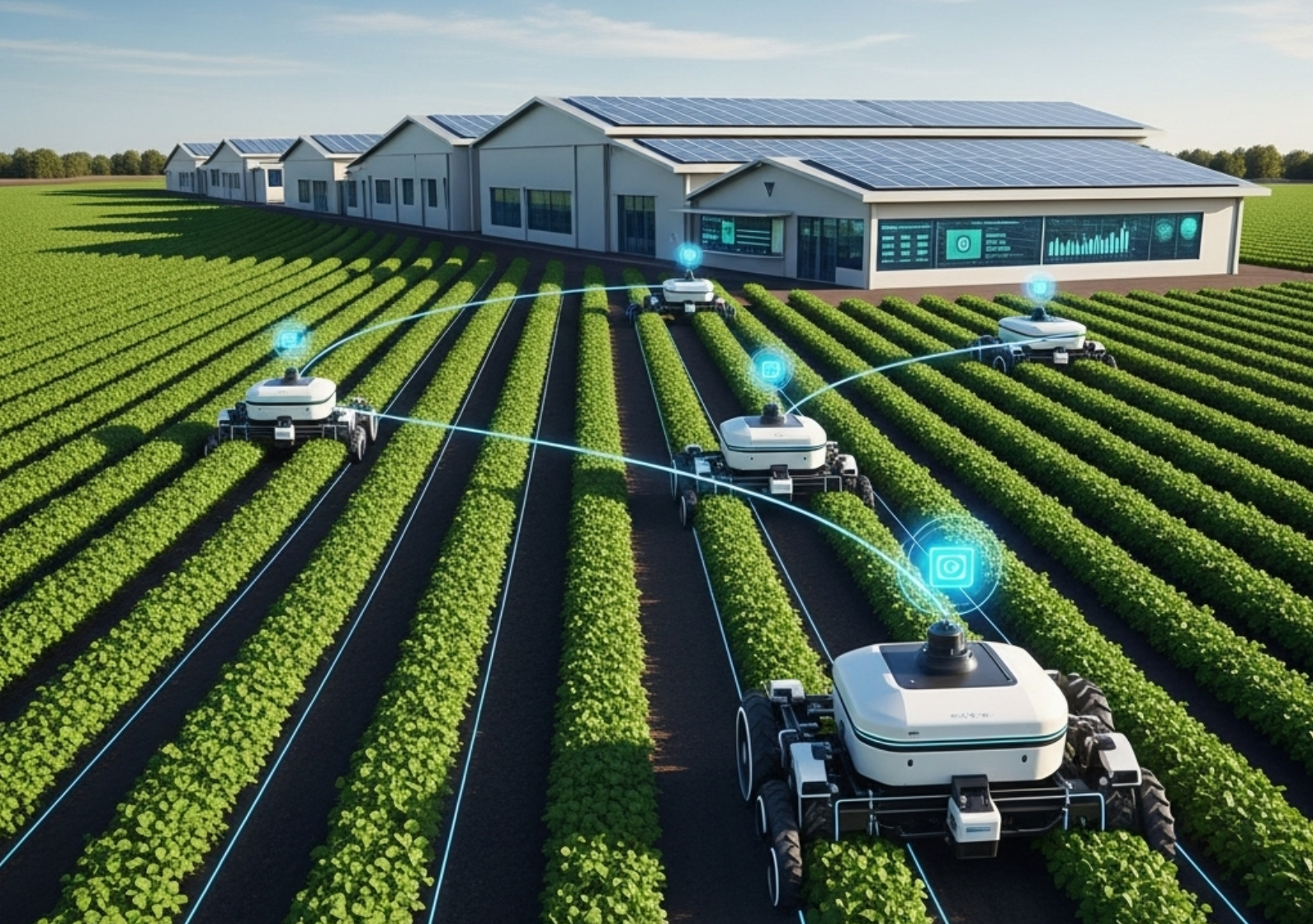
Bonsai Robotics, for example, recently raised $15 million to scale its autonomous navigation platform, which helps self-driving farm equipment operate in dusty or low-visibility conditions—common challenges in nut orchards and row crop fields. The company’s systems combine LIDAR, stereo cameras, and onboard AI to allow machines to “see” and respond to real-world farming variables with minimal human oversight.
Toward the Fully Autonomous Farm
The vision now extends beyond individual machines to integrated systems. Startups and larger players are building platforms where autonomous tractors, drones, and pickers coordinate across planting, fertilization, monitoring, and harvesting cycles. These platforms use centralized AI to optimize resources, anticipate crop risks, and guide the actions of autonomous units on the ground and in the air.
This full-stack autonomy could redefine what it means to be a farmer. Instead of spending hours behind the wheel or in the field, future farmers might oversee fleets of machines from a digital dashboard, tuning AI parameters and monitoring yields via satellite imagery and machine learning predictions.
In some pilot projects, farms have been able to extend their operating hours by deploying machines 24/7—something impossible with a human labor force. That constant availability not only increases productivity but also makes it easier to respond quickly to weather changes or disease outbreaks.
New Ethical and Operational Challenges
While the promise of autonomous agriculture is significant, it comes with new risks and uncertainties.
First is the question of data ownership. As machines collect massive volumes of soil, weather, crop, and equipment data, questions arise around who controls it—the farmers, the technology providers, or the platforms that analyze it? Without clear policies, farmers risk ceding control over their most valuable operational insights.
Second is the labor impact. Though automation solves critical workforce gaps, it also threatens to displace already precarious farm labor jobs. Some experts warn that without parallel investments in reskilling and rural job creation, communities that depend on seasonal farm work may suffer unintended consequences.
Third, there are infrastructure and access challenges. Many of the most advanced tools rely on reliable connectivity, robust power sources, and technical expertise—resources that may be harder to come by for small or remote farms. If the industry isn’t careful, automation could widen the gap between well-capitalized operations and smaller family-run farms.
A Generational Shift
Still, for many in the industry, the direction is clear. Just as the smartphone redefined personal computing, embedded AI and robotics may redefine agriculture. Chris Davison, head of an autonomous equipment initiative cited in the report, called the shift “a Symbian to iPhone moment” for the farm sector—a generational transition from legacy mechanical systems to intelligent, adaptive machines.
The potential gains—from improved yield forecasting and resource efficiency to 24/7 operations—make this one of the most transformative periods in the history of agriculture. But whether the benefits of that transformation are shared broadly will depend on how technology is deployed, regulated, and governed in the years ahead.
Learn how AI Agents can supercharge your company’s profits and productivity at TMC’s AI Agent Event, Sept 29-30, 2025 in DC.

If you liked this post, you’ll love one of the the leading global business communications and technology events since 1999, the ITEXPO #TECHSUPERSHOW, Feb 10-12, 2026 Fort Lauderdale, Florida.
Don’t forget the collocated MSP Expo – just for managed service providers!
Aside from his role as CEO of TMC and chairman of ITEXPO #TECHSUPERSHOW Feb 10-12, 2026, Rich Tehrani is CEO of RT Advisors and a Registered Representative (investment banker) with and offering securities through Four Points Capital Partners LLC (Four Points) (Member FINRA/SIPC). He handles capital/debt raises as well as M&A. RT Advisors is not owned by Four Points.
The above is not an endorsement or recommendation to buy/sell any security or sector mentioned. No companies mentioned above are current or past clients of RT Advisors.
The views and opinions expressed above are those of the participants. While believed to be reliable, the information has not been independently verified for accuracy. Any broad, general statements made herein are provided for context only and should not be construed as exhaustive or universally applicable.
Portions of this article may have been developed with the assistance of artificial intelligence, which may have contributed to ideation, content generation, factual review, or editing