
Key Takeaways
- A leak points to OpenAI’s Chromium-based browser integrating its ChatGPT Agent directly, allowing local execution in addition to the current cloud option.
- The change could create a smoother, more capable browsing experience, but it also introduces new security and privacy concerns.
- The integration aligns with OpenAI’s ongoing move to consolidate its browsing and automation tools under the ChatGPT Agent framework.
OpenAI’s ChatGPT currently uses a cloud-based virtual machine to perform web browsing tasks. When users ask it to navigate sites or fill out forms, the agent operates inside a Linux environment hosted on Azure. This setup is intentionally isolated from the user’s device to limit security exposure, but it also means the experience can feel slower and less integrated than a native browser.
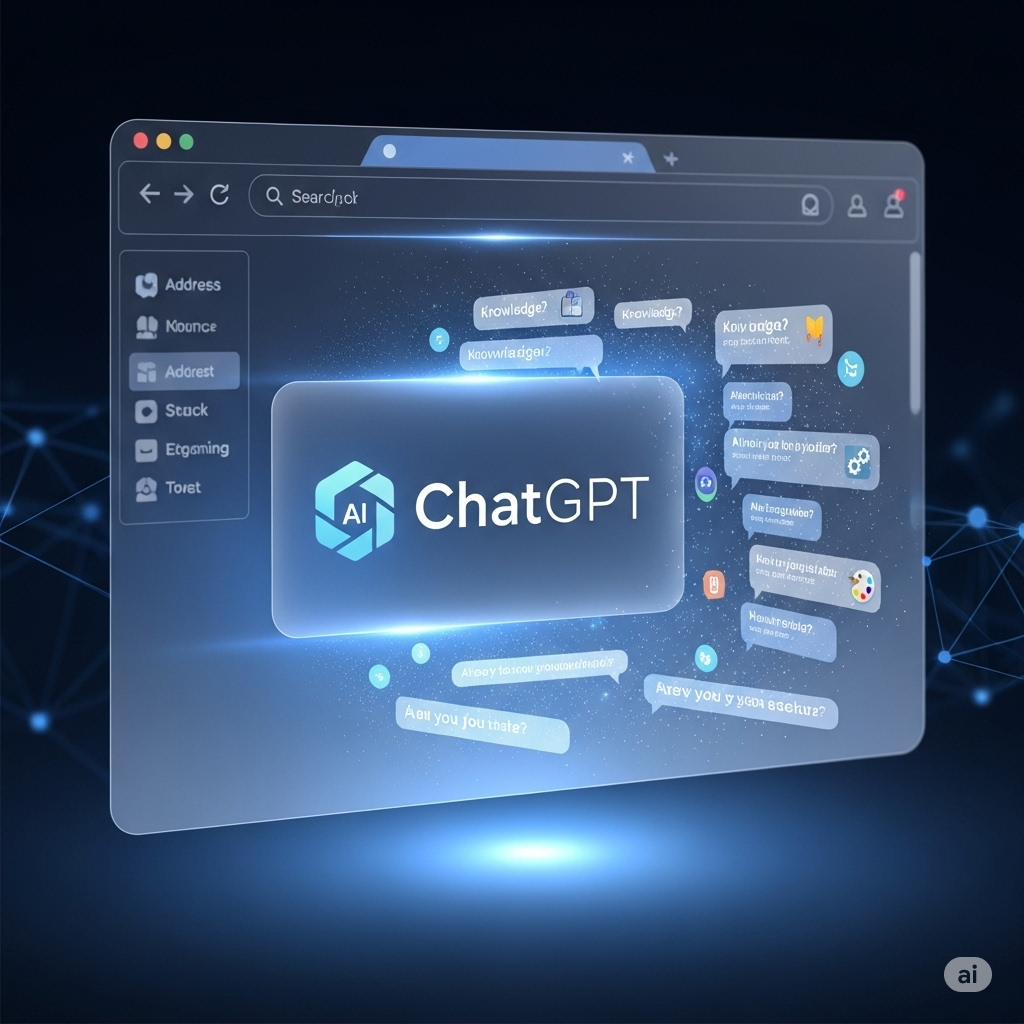
According to reporting from BleepingComputer, a recent leak indicates that OpenAI is adding a toggle inside the agent’s settings to let it choose between using this cloud environment or a “first-party local browser.” That local option appears to be designed for OpenAI’s upcoming Chromium-based browser, which has not yet been officially released. The leaked details also show that the feature could be triggered only when the agent detects it is running in OpenAI’s own Mac app or browser.
This points to a broader strategy in which OpenAI would own the full stack of the browsing experience, from the interface to the automation layer. By embedding the agent directly, OpenAI could enable it to carry out actions more seamlessly, without the latency and limitations of a remote virtual machine. For example, instead of watching a simulated pointer click through pages in a sandbox, users might see the agent navigate and act directly within their own browser tabs.
The ChatGPT Agent was launched in July 2025 as an evolution of earlier tools like Operator and Deep Research. Operator, introduced earlier in the year, let Pro-tier U.S. users automate repetitive web tasks from a cloud-hosted environment. Deep Research, announced in February 2025, gave ChatGPT the ability to autonomously search the web and compile multi-step research reports. The new agent framework combines these abilities and adds reasoning and coding capabilities to complete tasks end-to-end.
If the leak is accurate, the local integration could make the agent feel far more natural to use. Instead of switching between environments, the agent could fill out forms, manage workflows, and gather data entirely within the same window the user is already working in. This could open the door for more complex multi-tab workflows, deeper integration with web applications, and potentially even persistent browsing sessions that carry over between tasks.
However, running an AI agent locally in a browser also comes with significant security implications. Security researchers have warned that agents with high-privilege capabilities—such as manipulating the DOM, running scripts, or navigating multiple tabs—are vulnerable to malicious input. In controlled tests, some agents were tricked into downloading harmful files, activating cameras, or exposing sensitive information. These risks are amplified when an agent operates in the same environment as a user’s personal browsing activity.
Prompt injection attacks remain a particularly challenging vector. These occur when seemingly harmless content on a webpage contains hidden instructions that manipulate the agent’s behavior. For example, a page could quietly tell the agent to navigate to a different site, download a file, or reveal private information. While OpenAI has been adding safety checks and offering manual override controls, these measures have not eliminated the risk entirely.
Privacy is another concern. A local browser agent could potentially have broader access to user activity, depending on how permissions are implemented. OpenAI would need to be transparent about what data is collected, how it is stored, and whether it is used for training or other purposes. Comparisons will inevitably be drawn to Google’s use of Chrome data for ad targeting, and users may demand stronger assurances.
OpenAI has not confirmed the details of the leak, but the move would align with its recent product strategy. The company has been steadily integrating more capabilities into the ChatGPT environment, reducing reliance on separate tools and third-party services. A native browser could give OpenAI tighter control over performance, security, and feature development, while also deepening user engagement with its ecosystem.
From a competitive perspective, an OpenAI browser with built-in agent capabilities could challenge existing incumbents like Chrome and Edge, especially among users who already rely heavily on ChatGPT for research, planning, and automation. It could also compete with emerging AI-native browsers such as Arc, which are experimenting with integrated assistants and automated browsing features.
If OpenAI proceeds with the rollout, the success of the browser will likely depend on balancing convenience with security. Users may embrace the productivity benefits of a fully integrated agent, but only if they trust that it will not compromise their privacy or safety. This will require both technical safeguards and clear, verifiable communication about how the browser and agent handle data.
Whether the leak represents a near-term launch or a longer-term experiment, it signals that AI agents are moving from cloud-only environments into local, user-facing applications. This transition could redefine how people interact with the web, shifting from manual navigation toward more automated, goal-driven sessions. As with past technology shifts, the benefits will come with tradeoffs, and how those tradeoffs are managed will shape adoption.
Learn how AI Agents can supercharge your company’s profits and productivity at TMC’s AI Agent Event in Sept 29-30, 2025 in DC.
Rich Tehrani serves as CEO of TMC and chairman of ITEXPO #TECHSUPERSHOW Feb 10-12, 2026 and is CEO of RT Advisors and is a Registered Representative (investment banker) with and offering securities through Four Points Capital Partners LLC (Four Points) (Member FINRA/SIPC). He handles capital/debt raises as well as M&A. RT Advisors is not owned by Four Points.
The above is not an endorsement or recommendation to buy/sell any security or sector mentioned. No companies mentioned above are current or past clients of RT Advisors.
The views and opinions expressed above are those of the participants. While believed to be reliable, the information has not been independently verified for accuracy. Any broad, general statements made herein are provided for context only and should not be construed as exhaustive or universally applicable.
Portions of this article may have been developed with the assistance of artificial intelligence, which may have contributed to ideation, content generation, factual review, or editing.