
Key Takeaways
- Nvidia is pivoting its hardware strategy to address the growing demand for efficient AI inference workloads alongside its traditional training dominance.
- The move comes as competitors like Groq demonstrate the low latency advantages of specialized architectures like Language Processing Units.
- Hyperscalers and model developers are increasingly focused on the cost and scalability of deployment rather than just model training.
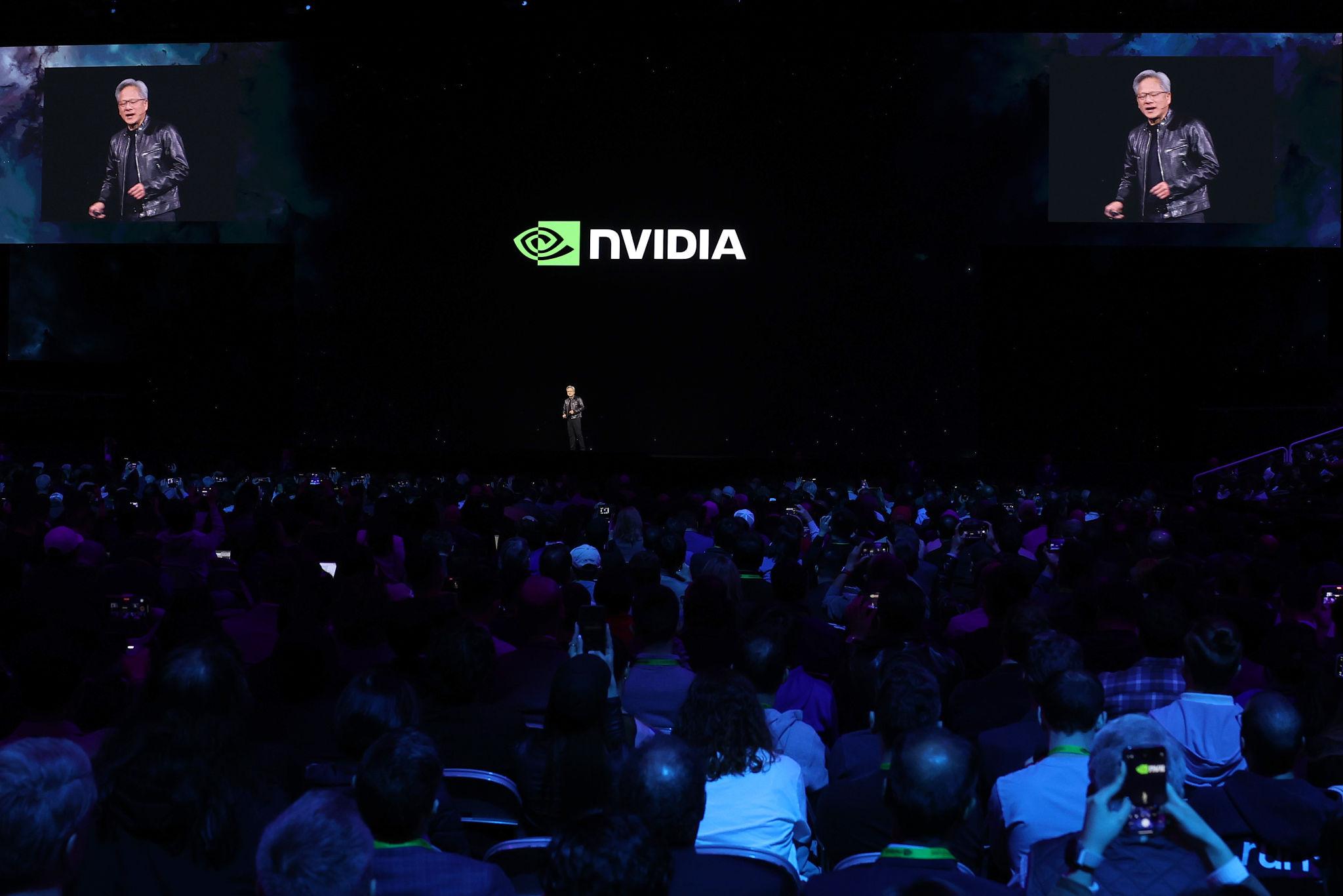
At its recent GTC conference in San Jose, Nvidia made something clear. The next phase of AI will not be defined purely by who trains the biggest model. It will be defined by who can run it most efficiently.
That is a subtle but meaningful shift.
For years, Nvidia’s growth has been powered by massive training clusters. Enterprises and hyperscalers raced to build larger and more sophisticated models, and GPUs became the foundation of that expansion. But training, by its nature, is episodic. You train, retrain, refine. Then you deploy.
Deployment is different. It runs constantly. It must respond instantly. And it has to make economic sense at scale.
That is where inference comes in.
Inference refers to the process of generating outputs from trained models. Every chatbot reply, every generated image, every recommendation engine result depends on inference. And here is the thing: inference workloads are multiplying far faster than training cycles. Once an application goes live, usage does not stop. It compounds.
Nvidia appears to recognize that dynamic. Its new chip strategy is designed to optimize performance for inference tasks, particularly those tied to generative models that operate on token based responses. Latency matters more here. So does cost per query. Power efficiency becomes a frontline concern.
Hyperscalers and model developers are increasingly focused on the cost and scalability of deployment rather than just model training.
TMC Insight
Meanwhile, competitors are not standing still.
Groq has drawn attention for its Language Processing Unit architecture, built specifically for low latency token generation. Unlike traditional GPUs, which were engineered for highly parallel training operations, LPUs are purpose built for predictable, sequential inference tasks. That architectural difference can translate into faster response times under certain workloads.
Nvidia has not licensed Groq’s technology. Instead, it is adjusting its own roadmap to deliver comparable inference gains within its broader ecosystem. That ecosystem matters. Developers rely heavily on Nvidia’s CUDA platform, and switching hardware often introduces friction.
And friction slows adoption.
Across the cloud landscape, hyperscalers are investing in custom silicon. Google continues advancing its TPU line. Amazon has expanded its Inferentia offerings. Microsoft has introduced Maia. Each initiative is centered on improving efficiency and lowering cost per inference operation.
Why? Because inference is where margins are tested.
Training clusters are capital intensive, but they are finite events. Inference workloads run continuously. Enterprises building AI driven products care deeply about predictable operating expenses. Power budgets are no longer abstract considerations. They are board level topics.
Even OpenAI sits at the center of this equation. As one of the heaviest inference operators globally, its hardware strategies often signal broader market direction. If major model developers diversify their inference stack across different architectures, downstream infrastructure decisions will follow.
That ripple effect is real.
From a market standpoint, the competitive pressure on Nvidia is less about headline performance and more about retention. Developers, startups, and enterprises have built around Nvidia’s tooling. CUDA compatibility, library support, and ecosystem depth represent structural advantages. Nvidia’s strategy appears to integrate inference optimizations directly into that stack rather than forcing customers to migrate to unfamiliar environments.
Still, the landscape is fragmenting.
Specialized processors designed exclusively for inference are gaining attention. Some promise lower latency. Others emphasize deterministic performance. And some focus primarily on energy efficiency. The appeal is straightforward. If inference demand ultimately exceeds training demand, purpose built hardware may offer compelling economics.
Analysts increasingly suggest that inference workloads will dwarf training over time. Applications endure for years. Models may be retrained periodically, but inference runs daily. Sometimes millions or billions of times per day.
This feels familiar, does it not?
Earlier compute cycles followed a similar arc. Breakthrough phases prioritized capability. Later phases prioritized optimization. Once the novelty stabilizes, cost and scale take center stage. AI infrastructure appears to be entering that second chapter.
For enterprise buyers, the implications are strategic. Should they continue building around general purpose GPU clusters for inference? Or should they prepare for a heterogeneous environment that includes GPUs, inference optimized accelerators, and custom silicon?
There is no universal answer. Workload profile, latency requirements, regulatory constraints, and internal engineering capacity all factor into the equation.
What seems clear is that Nvidia understands the stakes. Its inference focused chip development signals an acknowledgment that dominance in training does not automatically guarantee dominance in deployment. Maintaining leadership requires adapting to how AI is actually used in production environments.
And production environments are unforgiving. Latency targets are measured in milliseconds. Power constraints shape architectural decisions. Customers notice performance fluctuations instantly.
In that sense, the battle for inference hardware is not theoretical. It is practical. It touches everyday applications. It determines whether AI driven services feel seamless or sluggish.
Nvidia retains considerable advantages. Its ecosystem depth, developer loyalty, and integration across data center infrastructure create a formidable moat. But markets mature. Segmentation increases. Specialized competitors emerge.
The question is not whether inference will grow. It already is. The question is how quickly deployment centric infrastructure reshapes competitive hierarchies in silicon.
For now, Nvidia is adjusting course rather than surrendering ground. By embedding inference optimization into its existing architecture and software stack, the company aims to preserve continuity while improving efficiency. That strategy may help stabilize its leadership position as the AI economy transitions from experimentation to sustained, large scale utilization.
The AI boom is evolving. Training built the wave. Inference is what keeps it moving.

If you liked this post, you’ll love one of the the leading global business communications and technology events since 1999, the ITEXPO #TECHSUPERSHOW, Feb 9-11 2027 Fort Lauderdale, Florida.
Don’t forget the collocated MSP Expo – just for managed service providers!
Aside from his role as CEO of TMC and chairman of ITEXPO #TECHSUPERSHOW Feb 10-12, 2026, Rich Tehrani is CEO of RT Advisors and a Registered Representative (investment banker) with and offering securities through Four Points Capital Partners LLC (Four Points) (Member FINRA/SIPC). He handles capital/debt raises as well as M&A. RT Advisors is not owned by Four Points.
The above is not an endorsement or recommendation to buy/sell any security or sector mentioned. No companies mentioned above are current or past clients of RT Advisors.
The views and opinions expressed above are those of the participants. While believed to be reliable, the information has not been independently verified for accuracy. Any broad, general statements made herein are provided for context only and should not be construed as exhaustive or universally applicable.
Portions of this article may have been developed with the assistance of artificial intelligence, which may have contributed to ideation, content generation, factual review, or editing