Key Takeaways:
- Professionals prefer AI agents for repetitive, low-stakes tasks but resist handing off judgment-heavy responsibilities.
- A disconnect exists between what AI experts say can be automated and what workers feel comfortable delegating.
- Respect for human agency and clarity around AI’s role may be essential for sustainable adoption in the workplace.
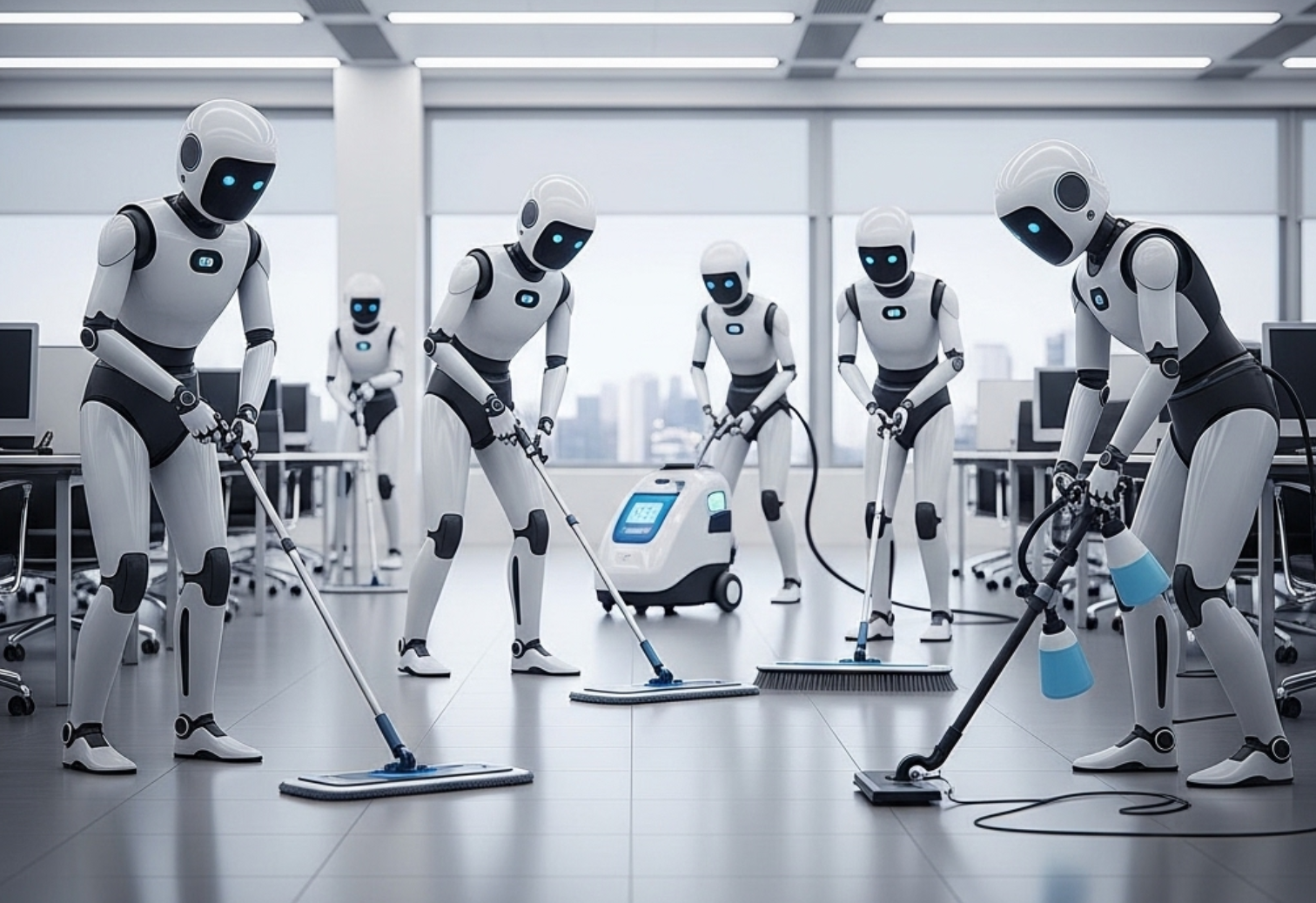
Artificial intelligence agents continue to advance, capable of writing code, summarizing reports, and responding to customer requests in real time. But according to a recent Stanford study, workers aren’t eager to let AI take the wheel on everything. The message is clear: AI is welcome—as long as it sticks to the boring stuff.
What the Study Found
The study surveyed over 1,500 professionals from various industries, asking which tasks they were open to automating and which they preferred to retain control over. The researchers also asked AI experts to rate which tasks they believed could technically be handled by autonomous systems.
The contrast was stark. Most professionals supported using AI agents for low-complexity tasks:
- Drafting routine emails
- Taking meeting notes
- Sorting documents
- Collecting structured data
But they were far less comfortable handing over tasks that involve human judgment, context, or creativity. That included decision-making in strategy, client communication, hiring, or legal analysis.
The study found that while experts see greater automation potential, workers prefer to maintain authority in areas where nuance or accountability matter most.
Introducing the Human Agency Scale
To better understand the root of these preferences, researchers created a “Human Agency Scale.” It measured how much control workers wanted to retain, even when tasks could be automated.
In many cases, participants opted for more control than technically necessary. Even if an AI system could perform a task with high accuracy, workers still wanted final review or involvement.
This suggests a strong emotional or professional connection to certain kinds of work—especially those tied to expertise, responsibility, or reputation. And it reinforces a recurring theme: automation that undermines a worker’s sense of agency is more likely to face resistance, regardless of performance gains.
A Use Case Divide
The results illustrate a practical way forward for companies building or adopting AI agents.
Tasks with a clear structure, defined outcomes, and minimal human variability are ideal candidates for AI automation. These include:
- Scheduling logistics
- Inbox management
- Document classification
- Internal knowledge retrieval
In contrast, professionals want human oversight on tasks involving:
- Strategic decisions
- Conflict resolution
- Client relationship management
- Personnel evaluation
This divide doesn’t mean AI is unwelcome—it means its usefulness is task-specific. And understanding where workers draw the line is critical for adoption.
Implications for AI Builders and Buyers
The Stanford study has real implications for product designers, managers, and technology providers rolling out AI in the enterprise.
- Start with the tasks people want help with. Instead of forcing agents into decision-making roles, focus on the tasks employees willingly offload. This improves adoption and trust.
- Design for oversight. AI systems should enable human review—not obscure it. Transparency and reversibility help users stay in control.
- Support—not replace—judgment. The goal should be augmented intelligence, not autonomy for its own sake. Where judgment is involved, AI should be an assistant, not a substitute.
- Manage expectations. Just because a model can technically perform a task doesn’t mean it should—especially in sensitive areas like healthcare, legal, or finance.
A Measured Approach to Adoption
This study also reinforces a broader pattern emerging in AI deployment: early gains come from automating repetitive work, not replacing high-value expertise. It’s a reminder that usefulness and acceptance are not the same.
While AI agents have demonstrated impressive capabilities in lab settings, their integration into real work environments depends on social and organizational dynamics—not just raw performance.
Professionals aren’t necessarily anti-AI. They’re cautious, practical, and motivated by control, quality, and accountability. When AI helps them save time without sacrificing judgment, they embrace it. When it pushes into areas they consider core to their role, they pull back.
Conclusion
AI agents are advancing rapidly—but the pace of workplace adoption will be shaped more by human preference than technical ability.
The Stanford study underscores an important truth: people want help with the tedious parts of their jobs, not to be displaced from the meaningful ones. That means builders, leaders, and adopters of AI should focus first on the mundane—automating grunt work while safeguarding the decisions, relationships, and creativity that people value most.
Learn how AI Agents can supercharge your company’s profits and productivity at TMC’s AI Agent Event in Sept 29-30, 2025 in DC.

Rich Tehrani serves as CEO of TMC and chairman of ITEXPO #TECHSUPERSHOW Feb 10-12, 2026 and is CEO of RT Advisors and is a Registered Representative (investment banker) with and offering securities through Four Points Capital Partners LLC (Four Points) (Member FINRA/SIPC). He handles capital/debt raises as well as M&A. RT Advisors is not owned by Four Points.
The above is not an endorsement or recommendation to buy/sell any security or sector mentioned. No companies mentioned above are current or past clients of RT Advisors.
The views and opinions expressed above are those of the participants. While believed to be reliable, the information has not been independently verified for accuracy. Any broad, general statements made herein are provided for context only and should not be construed as exhaustive or universally applicable.
Portions of this article may have been developed with the assistance of artificial intelligence, which may have contributed to ideation, content generation, factual review, or editing.
Striking this balance isn’t just good user experience. It’s the foundation for long-term trust and success in human-AI collaboration.