
Agents Are Now Building the Databases
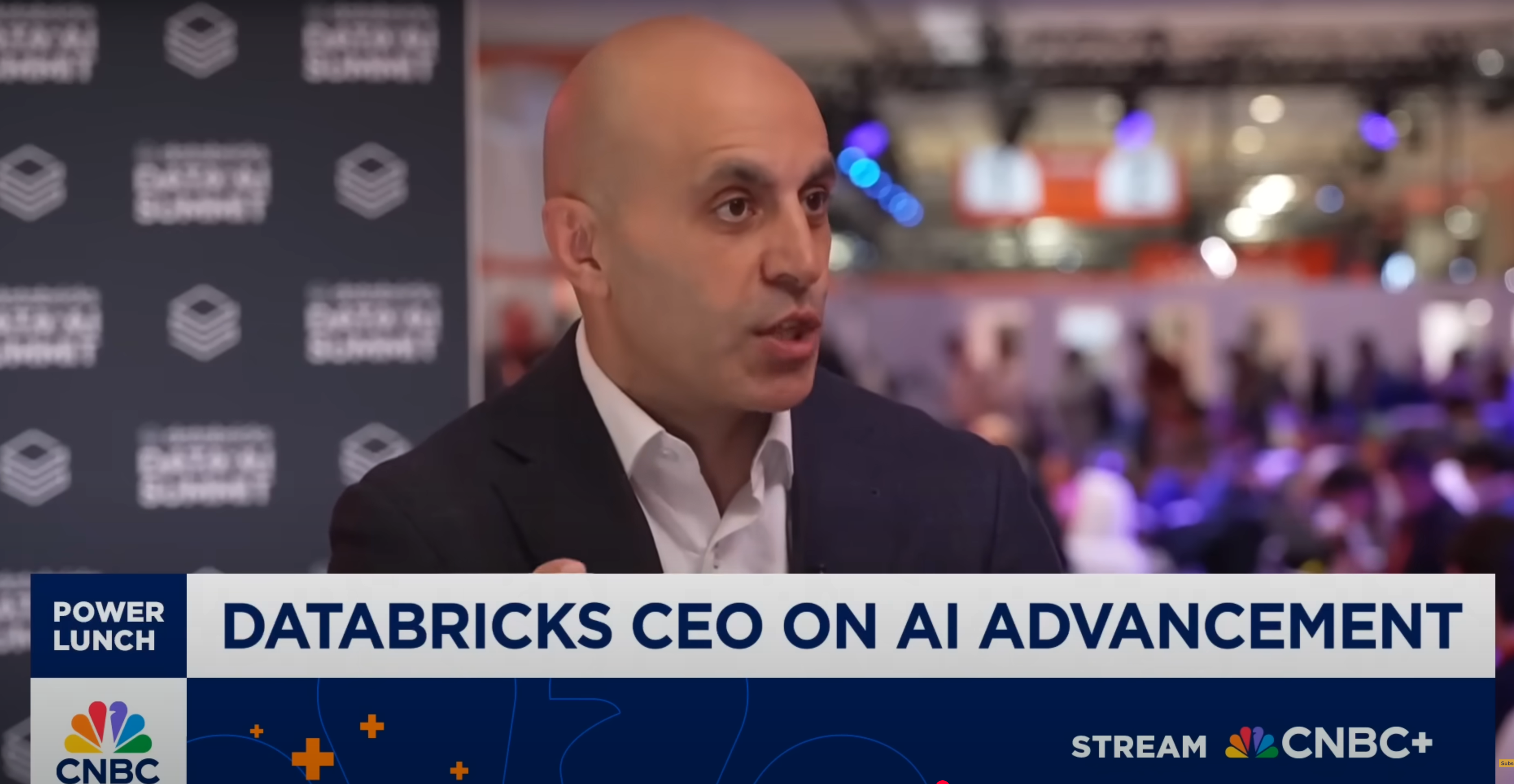
Ali Ghodsi, CEO of Databricks, sees a future where AI agents—not humans—do most of the work in building and managing databases. Speaking about recent industry trends on a CNBC interview, he cited a startling shift: in 2024, only about 30% of newly created databases were the product of AI agents. This year, that figure has already climbed to 80%.
And he expects it to go further.
“I think it’ll be 99% next year,” Ghodsi said, describing a near-future where agentic infrastructure becomes the default. The implications are profound: for decades, the database industry has relied on human-led schema design, data ingestion planning, and system tuning. With autonomous agents taking over those tasks, the role of database architects may fundamentally change.
The 40-Year Disruption
What’s being disrupted, according to Ghodsi, isn’t just a set of tools—it’s a decades-old architecture that has remained largely unchanged. Core database technology, he notes, has been “locked in” for over 40 years. Systems like Oracle, Microsoft SQL Server, and even modern cloud-native solutions follow the same general design principles they always have.
But AI agents don’t need to follow that model. They’re not constrained by traditional data workflows or governance habits. They can spin up new databases in seconds, build schemas on the fly, and update systems continuously based on real-time application needs. In effect, the entire definition of a “database” begins to shift from a static system to a dynamic service.
Databricks’ Strategic Moves
To prepare for this shift, Databricks has made several bold moves. One of them is the launch of Lakehouse-centric infrastructure designed to make data more accessible to AI models and agents. Another is the acquisition of Neon, a company focused on serverless PostgreSQL.
Both investments align with a clear vision: create a backend that’s optimized for agent-native interactions. These systems aren’t just cloud-hosted—they’re built to support the constant flux that comes from autonomous systems managing data in real time.
But the infrastructure isn’t the only part of the equation. Ghodsi emphasized the importance of visibility and evaluation. Without the ability to understand what agents are doing, organizations risk handing over critical systems to software they can’t monitor or measure.
The Bottleneck No One Talks About
Ghodsi was blunt when discussing what he sees as the current bottleneck in AI agent adoption: lack of evaluation standards.
“It doesn’t matter if an agent can ace a programming contest,” he said. “We want it to do a specific job at the company. But how do we know how it’s doing?”
He believes the answer lies in rigorous benchmarking and self-assessment—capabilities Databricks is actively building through its Agent Bricks initiative. The concept is straightforward: before deploying AI agents into enterprise workflows, businesses need to be able to score, audit, and improve their performance continuously.
Otherwise, agents will act—sometimes correctly, sometimes not—and enterprises won’t know the difference until it’s too late.
The Talent Wars Are Heating Up
Another major theme Ghodsi addressed was the race for AI talent. As demand grows, he described a “chaotic” marketplace in which researchers and engineers move quickly between firms—often in response to shifting internal dynamics and leadership struggles.
This volatility creates both challenge and opportunity. For a company like Databricks, which doesn’t have the brand gravity of Big Tech incumbents, timing and agility become key advantages. The company has repeatedly been able to recruit high performers during moments of transition elsewhere.
“It’s very dynamic,” he said. “We just try to pick the best we can during those windows.”
What This Means for the Industry
The shift to agent-driven infrastructure is still in its early days, but the signals are strong. Companies like Databricks are not only adapting to the new model—they’re helping define it. That has consequences across multiple dimensions:
- Technology vendors will need to rethink their offerings. Static tools won’t serve dynamic systems.
- CIOs and CTOs must prepare for data pipelines and system architectures that evolve autonomously.
- Data teams may shift from builders to supervisors—reviewing agent decisions, rather than writing schemas from scratch.
- Security and compliance teams will need new frameworks to evaluate agent behavior, performance, and governance.
Final Thoughts: Data Will Be Built by Agents—But Must Be Governed by Humans
Databricks’ vision of agent-created databases isn’t science fiction. It’s already here—and accelerating. But autonomy without accountability is a recipe for trouble.
The core message from Ghodsi is this: infrastructure must evolve, but so must oversight. As agents take on more of the work, humans must still define the goals, constraints, and performance metrics. Done right, the agentic AI era won’t just optimize databases—it will redefine how data drives decisions.
But only if we can measure what these systems are actually doing.
Learn how AI Agents can supercharge your company’s profits and productivity at TMC’s AI Agent Event in Sept 29-30, 2025 in DC.

Rich Tehrani serves as CEO of TMC and chairman of ITEXPO #TECHSUPERSHOW Feb 10-12, 2026 and is CEO of RT Advisors and is a Registered Representative (investment banker) with and offering securities through Four Points Capital Partners LLC (Four Points) (Member FINRA/SIPC). He handles capital/debt raises as well as M&A. RT Advisors is not owned by Four Points.
The above is not an endorsement or recommendation to buy/sell any security or sector mentioned. No companies mentioned above are current or past clients of RT Advisors.
The views and opinions expressed above are those of the participants. While believed to be reliable, the information has not been independently verified for accuracy. Any broad, general statements made herein are provided for context only and should not be construed as exhaustive or universally applicable.
Portions of this article may have been developed with the assistance of artificial intelligence, which may have contributed to ideation, content generation, factual review, or editing.