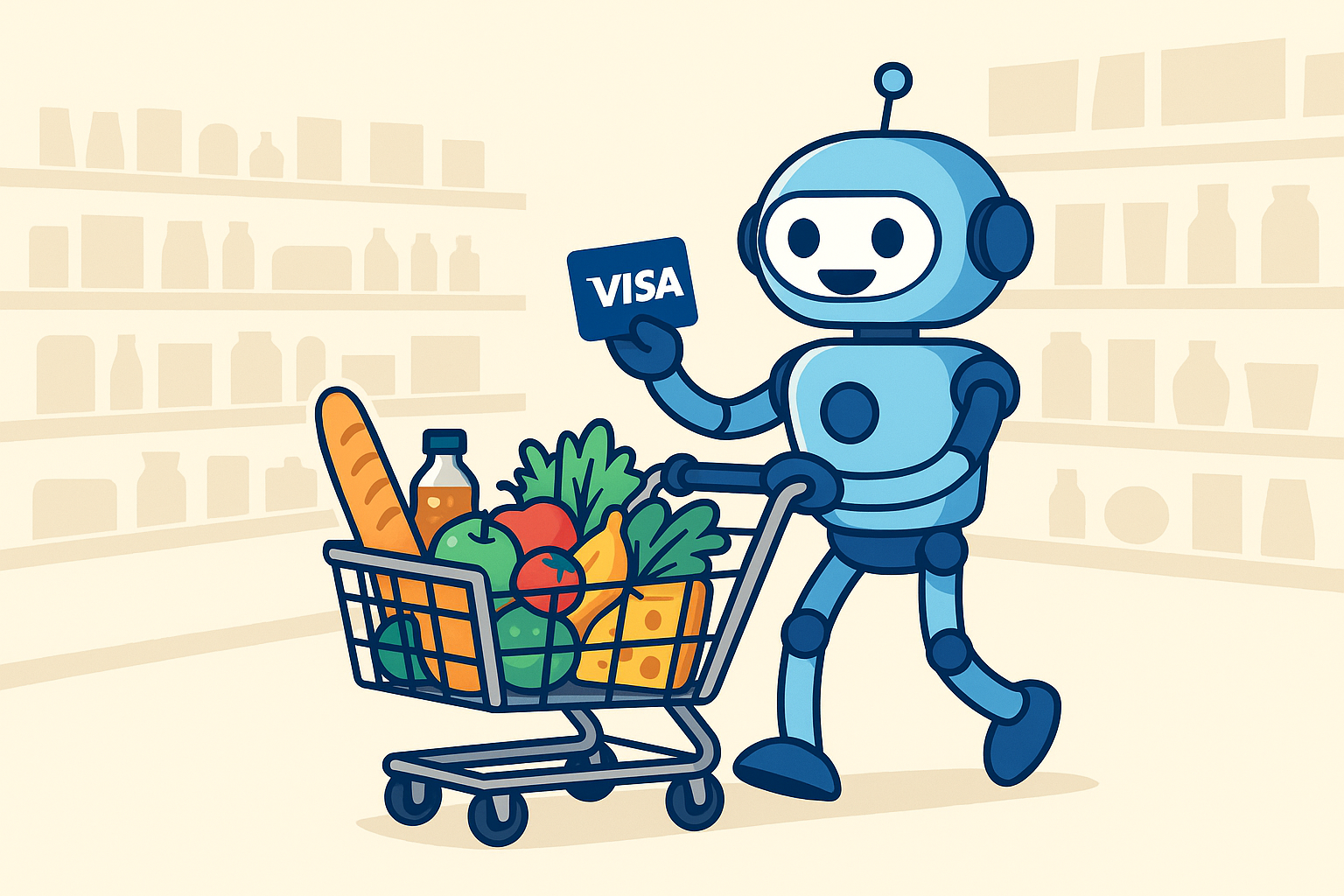
The moment autonomous software agents begin taking charge of everyday choices—what toothpaste to reorder, which hotel to book, even which video to stream—commerce slides into a quieter, more automated rhythm. The loudest voices in marketing no longer speak to people first; they speak to code. Agents weigh price, performance metrics, real-time reviews, and user-defined constraints in milliseconds, then act without waiting for a human nudge. Convenience soars, but the traditional dance between brands and consumers distorts, raising urgent questions about loyalty, discovery, and the very texture of impulse.
When machines judge on rational criteria alone, the emotional hooks that once fueled brand devotion lose leverage. A slogan, a jingle, the warm familiarity of a logo—none of these resonate with a recommender engine that is optimized to maximize objective utility for its owner. Loyalty, in this setting, migrates from brand affinity to algorithmic trust: shoppers trust the agent, the agent trusts the data, and the data crowns whichever product best satisfies the chosen parameters. Ironically, the brand that secures “preferred default” status in an agent’s model may enjoy stronger lock-in than any billboard ever delivered, but the route to that lock-in is statistical performance, not storytelling.
“As new ways to pay emerge, they need to run on a network that is always on – that is safe, secure, scalable and relentlessly innovating. We are taking the power of our network and our decades-long expertise to bring new products and solutions that will transform commerce and bring trust and security to AI-enabled payments.”
Visa CEO Ryan McInerney
For large incumbents, that paradigm is double-edged. On one hand, they possess vast troves of performance data, robust supply chains, and the resources to ensure that their SKUs always meet the specs agents rank highly. On the other, their expensive investments in mass-market branding lose marginal value if human attention dwindles. Meanwhile, smaller or niche suppliers face a new filter—one that hides them if they cannot feed structured data into the same decision pipelines. The barrier is no longer shelf space; it is dataset completeness, API compatibility, and demonstrable reliability. Those who clear that bar may punch far above their weight because agents, unlike humans, do not factor in name recognition. A startup’s unknown protein bar could outcompete the legacy favorite if its nutritional profile, price, and delivery reliability score higher in the model.
Discovery, once fueled by browsing and serendipity, also transforms. In physical stores people stumble upon items they never planned to buy; online, banner ads interrupt the scroll; on social media, influencers spotlight novelties. But agents tasked with “optimize my grocery basket for cost and health goals” will rarely insert surprises unless programmed to allow a curiosity factor. Merchants may respond by embedding exploration parameters—“recommend one new snack each week”—into agent integrations, effectively gamifying novelty. In the absence of such heuristics, shelf attention shrinks and long-tail items struggle.
Impulse purchasing, too, is curbed. The candy aisle exists because humans are distractible; digital agents are not. However, impulses may migrate rather than vanish. Micro-transactions inside games or metaverse environments could trigger agent-approved spending caps, while dynamic bundles (“buy now before stock runs out”) might prod the agent to negotiate a slightly higher price ceiling on the spot. Brands will experiment with limited-time data feeds—think surge-priced exclusives—to influence agent logic the way clearance tags move shoppers today.
Is this shift beneficial? Consumers benefit from efficiency, reduced cognitive load, and potentially better pricing as automated haggling platforms pit suppliers against one another. Fraud and counterfeit risk drop because trust scores become machine-auditable. Yet concentrating choice within opaque algorithms invites bias, lock-in, and gatekeeping. An agent that silently receives incentives from certain manufacturers could skew recommendations without the end user realizing it—a digital echo of pay-to-play shelf positioning. Regulators will face pressure to demand transparency reports, fairness audits, and opt-out clauses that return final say to humans.
From a societal lens, the significance of brand storytelling may not disappear but reinvent itself. Narratives will migrate upstream: instead of persuading end buyers, they persuade the developers who set default weightings in large retail agents, the open-source communities that curate model benchmarks, and the specialized curators who sell “taste packs” of pre-vetted products that plug into personal assistants. Content marketing morphs into metadata marketing—crafting machine-readable claims, third-party certifications, and rich context that algorithms can parse.
Smaller firms can exploit agility. They can embrace agent-native design—publishing granular product specs, real-time inventory, and verified sustainability metrics—faster than legacy players hemmed in by legacy ERP systems. Micro-brands already built on direct-to-consumer logistics may find themselves preferred by agents seeking rapid fulfillment in specific ZIP codes, whereas behemoths tied to centralized warehouses lag on delivery latency scores. Conversely, unknown names still shoulder a credibility gap; until they log enough successful transactions to earn high trust scores, default recommendations may exclude them. Collaborative data pools, shared QA networks, and industry-wide open badges could help them climb the reputation ladder.
Marketers accustomed to broad awareness spending must pivot toward performance data engineering. The next “advertising” budget funds richer product graphs, synthetic test-drive simulations, continual A/B testing against agent ranking algorithms, and perhaps paid inclusion in curated discovery layers inside assistant ecosystems. Expect a renaissance in referral networks: if my personal agent trusts your agent, and your agent endorses a product, trust propagates like social proof—only automated.
At the macro level, the economy may see flatter demand curves for mid-tier brands that once thrived on casual loyalty. Premium labels able to document verifiable craftsmanship, ethical sourcing, or superior durability may hold ground because those attributes translate into quantifiable lifetime value the agent can detect. Ultra-low-cost generics also fare well. It is the vast middle reliant on habit and shelf positioning that stands exposed.
The coming decade will therefore feature a tug-of-war between consumer welfare gains and competitive choke points. If openness wins—standardized APIs, portable preference profiles, transparent ranking criteria—agents could democratize commerce, surfacing the best-fit option from any supplier. If walled gardens dominate, decision authority shifts to a handful of platform owners, and the invisible hand becomes an invisible algorithmic fist. The outcome will hinge on design choices made today: who controls the knobs, who audits the data, and how easily humans can reclaim the wheel when intuition or curiosity makes them want to drive.
Ultimately, a world in which autonomous agents make most purchase decisions compresses friction but also compresses human spontaneity. The smell of a new book in a shop, the accidental discovery of a local chocolatier, the thrill of a flea-market find—these cultural textures risk fading unless individuals consciously reserve space for wander. Whether that trade-off feels liberating or impoverishing will vary by person, but the commercial stakes are universal: brands, big and small, must now learn to captivate not just hearts and minds, but lines of code.
Learn how AI Agents can supercharge your company’s profits and productivity at TMC’s AI Agent Event in Sept 29-30, 2025 in DC.
If you liked this post, you’ll love one of the the leading global business communications and technology events since 1999, the ITEXPO #TECHSUPERSHOW, Feb 10-12, 2026 Fort Lauderdale, Florida.
Don’t forget the collocated MSP Expo – just for managed service providers!

Aside from his role as CEO of TMC and chairman of ITEXPO #TECHSUPERSHOW Feb 10-12, 2026, Rich Tehrani is CEO of RT Advisors and a Registered Representative (investment banker) with and offering securities through Four Points Capital Partners LLC (Four Points) (Member FINRA/SIPC). He handles capital/debt raises as well as M&A. RT Advisors is not owned by Four Points.
The above is not an endorsement or recommendation to buy/sell any security or sector mentioned. No companies mentioned above are current or past clients of RT Advisors.
The views and opinions expressed above are those of the participants. While believed to be reliable, the information has not been independently verified for accuracy. Any broad, general statements made herein are provided for context only and should not be construed as exhaustive or universally applicable.