
Key Takeaways:
- Apple has postponed its major Siri AI upgrade to spring 2026, targeting the iOS 26.4 update.
- Reliability issues and internal leadership changes contributed to the delay.
- The planned upgrade includes a new generative AI model that supports more conversational and task-oriented interactions.
Apple’s long-anticipated overhaul of Siri, built on generative AI, has been pushed back from its original launch window in late 2025 to spring 2026. The upgrade, which was expected to be a centerpiece of the next major iPhone release, is now planned for release with iOS 26.4, a version that typically arrives around March.
The delay reflects both the technical complexity of overhauling Apple’s voice assistant and the company’s preference for stability and privacy over speed. Unlike other tech giants racing to embed AI assistants into everything from browsers to productivity tools, Apple is taking a more cautious route. But that strategy is now facing internal and market pressure.
Technical and Organizational Setbacks
At the center of the delay are technical reliability concerns. Early internal versions of the upgraded Siri reportedly failed to meet Apple’s performance benchmarks, with error rates approaching 30 percent in some contexts. These failures were seen during tasks that required multi-step reasoning, integration with on-screen content, or proactive behavior—capabilities that the upgraded Siri is supposed to handle fluently.
The setback prompted internal restructuring. Leadership of the Siri AI project has shifted, with Craig Federighi, Apple’s senior vice president of software engineering, taking on more oversight. Mike Rockwell, who led the company’s mixed reality efforts, has also been brought in to help streamline the initiative. Meanwhile, John Giannandrea, formerly responsible for Siri and machine learning, has reportedly transitioned to a new role.
Apple previewed a portion of the new Siri at its 2025 developer conference, but the company was transparent about the limitations of its current AI. Executives indicated the product was not ready to roll out broadly and needed more time to meet Apple’s standards for user experience and trust.
What the New Siri Will Offer
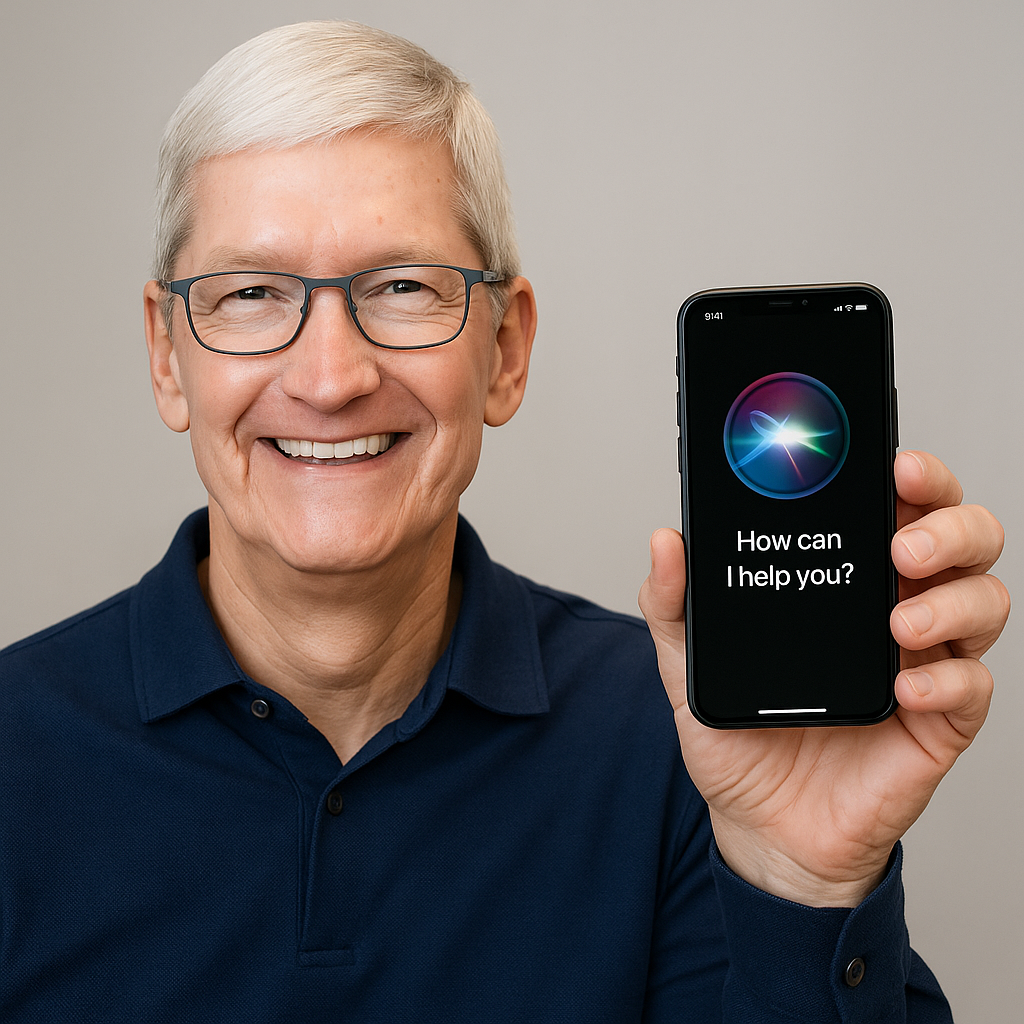
When it eventually launches, the upgraded Siri is expected to be far more capable than today’s version. It will be powered by Apple’s own large language model and will integrate deeply with device context, allowing for more advanced interactions. For example, Siri will be able to understand what’s on a user’s screen and take action accordingly—like composing messages, summarizing emails, or executing commands across multiple apps in a single voice request.
The assistant will also handle more proactive tasks. If users miss a calendar invite or need to follow up on a message, Siri may suggest next steps or complete them automatically. These capabilities will be anchored in Apple’s privacy-first architecture, running many tasks directly on-device to minimize data sharing.
Importantly, this is not just a smarter version of today’s Siri—it represents a new architecture designed around generative models, natural conversation, and autonomous task execution. Apple is reportedly training these systems in multiple languages to ensure broad usability, with a focus on accuracy and reducing hallucinations.
Market and Strategic Impact
The timing shift may have strategic consequences. Apple had planned to roll out the new Siri alongside major hardware updates, potentially including next-generation iPhones and AI-integrated devices such as smart glasses or Vision Pro enhancements. By moving the Siri release to the spring, Apple loses a cohesive narrative for a unified fall product launch.
Apple appears to be playing a long game. Its commitment to a high-quality, deeply integrated, and privacy-conscious AI assistant stands in contrast to more experimental releases from others. But that also means Apple will need to prove its approach pays off—not just in polish, but in utility.
Siri’s Role in Apple’s AI Ecosystem
The delayed Siri rollout is only part of a broader AI strategy. Apple is also releasing developer tools that allow apps to integrate with its large language models and context engine. These tools will be available ahead of Siri’s public upgrade, meaning some AI enhancements will arrive earlier in 2025.
Internally, the company is continuing work on new AI-powered devices. Smart glasses and other ambient computing tools are being developed with generative assistants at the center. These new hardware platforms may ultimately become the primary interface for Apple’s AI, and Siri’s evolution is key to that transition.
Looking Ahead
By delaying Siri’s AI upgrade until spring 2026, Apple is signaling that it is unwilling to compromise on the reliability and user trust that have become central to its brand. Whether users and investors remain patient is another matter.
The success of this upgrade will likely hinge on whether Siri can not only understand and respond, but truly assist—handling complex tasks, anticipating needs, and doing so with the speed and security users expect. If Apple delivers on that vision, the extra time may prove worth it. But for now, the clock is ticking.
Learn how AI Agents can supercharge your company’s profits and productivity at TMC’s AI Agent Event in Sept 29-30, 2025 in DC.

Rich Tehrani serves as CEO of TMC and chairman of ITEXPO #TECHSUPERSHOW Feb 10-12, 2026 and is CEO of RT Advisors and is a Registered Representative (investment banker) with and offering securities through Four Points Capital Partners LLC (Four Points) (Member FINRA/SIPC). He handles capital/debt raises as well as M&A. RT Advisors is not owned by Four Points.
The above is not an endorsement or recommendation to buy/sell any security or sector mentioned. No companies mentioned above are current or past clients of RT Advisors.
The views and opinions expressed above are those of the participants. While believed to be reliable, the information has not been independently verified for accuracy. Any broad, general statements made herein are provided for context only and should not be construed as exhaustive or universally applicable.
Portions of this article may have been developed with the assistance of artificial intelligence, which may have contributed to ideation, content generation, factual review, or editing.