Key Takeaways:
- Nuance Audio has launched FDA-cleared glasses that double as open-ear hearing aids for people with mild to moderate hearing loss.
- The design eliminates traditional stigma by embedding hearing technology within standard-looking eyeglass frames.
- These glasses are available through retailers like LensCrafters and Target Optical, with a companion app offering personalized sound settings.
- Priced around $1,200, the glasses support all-day wear and deliver subtle amplification without covering the ears.
- With future enhancements planned, Nuance Audio’s glasses represent a new category of fashionable, functional assistive technology.
We think of hearing technology as going in the direction of invisible earbuds but the launch of Nuance Audio’s hearing-glasses represents an innovative pivot—combining vision correction with discreet hearing assistance to support people with mild to moderate hearing loss. This product, cleared by the FDA in early 2025, addresses core complaints around stigma, comfort, and cost. What we like best perhaps is the designation of the device… They aren’t hearing aids – which might conjure up images of an old-age home or senior community community in Florida. Instead, they are hearing glasses which almost has a hidden hipness attached to it.

Rethinking Hearing Aid Design
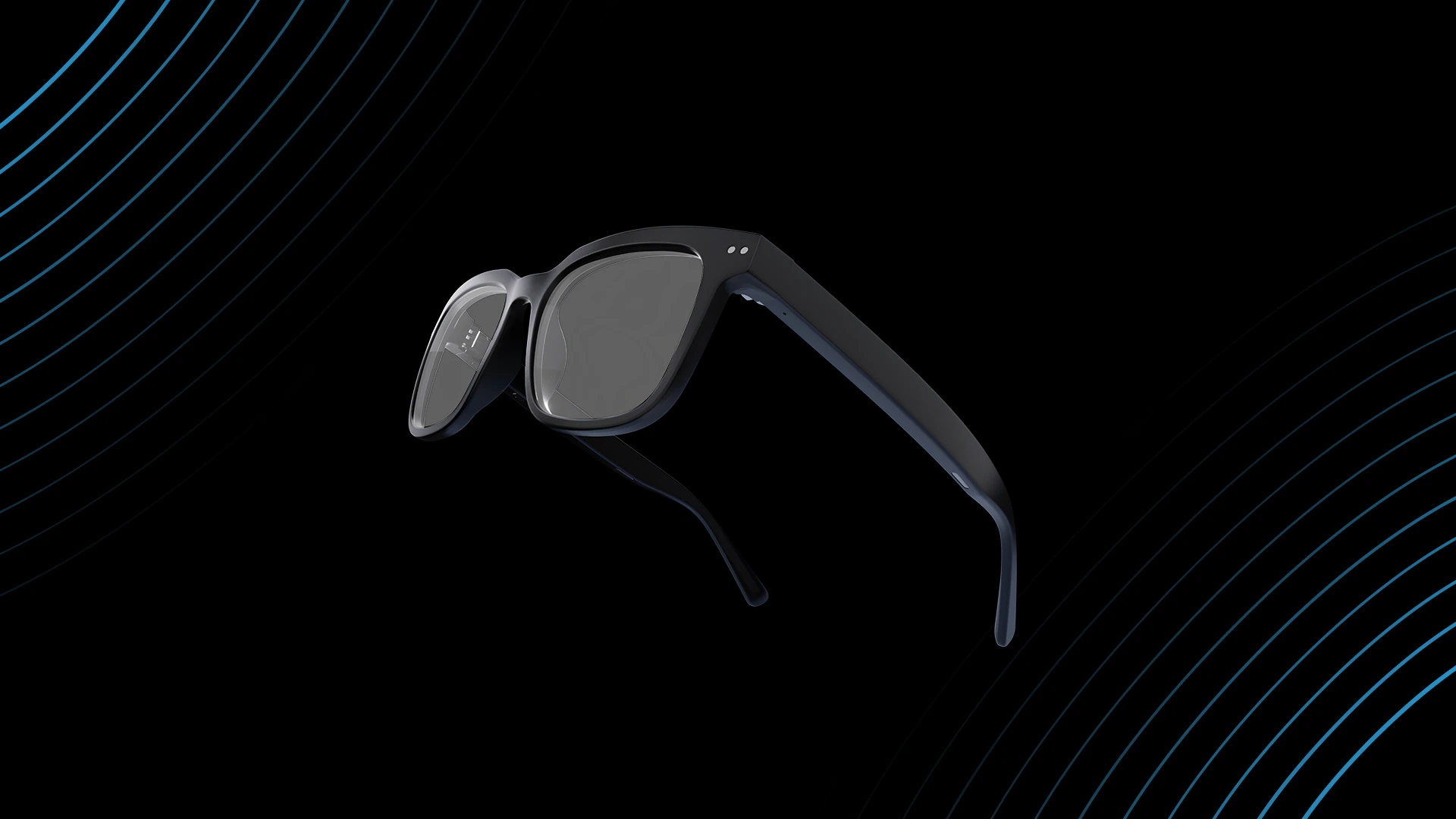
Nuance Audio glasses look and feel like ordinary prescription eyewear, with tiny open-ear speakers built into the arms and directional microphones embedded around the front. Costing around $1,200 (excluding prescription lenses), they’re now available at retailers like LensCrafters and Target Optical. Users can try them out with a free in-store hearing test.
Unlike traditional in-ear or behind-the-ear aids, these glasses leave the ear canal open and avoid visible electronics—addressing both user comfort and social stigma. One early reviewer said they helped pick up subtle speech in noisy spaces like coffee shops, with sound described as “clear and smooth.” Another user noted, “far superior” performance compared to AirPods Pro in conversation-heavy settings.
The Tech in Focus
The experience is powered by a companion app offering four preset hearing profiles—ranging from mild to moderate loss—and settings that control volume and directional focus (front-facing or all-around). Battery life runs approximately 8–10 hours per charge, and the glasses charge via a wireless tray using USB-C. If not handled carefully, charging alignment and feedback hiss were reported by some users.
While TV journalist reviewers noted occasional audio echo and hiss, they also praised the integration of vision and audio support. The frames weigh about 40 grams—noticeably heavier than minimalistic frames, but still wearable for hours.
Who Stands to Benefit Most
These glasses offer compelling advantages for:
- Eyeglass wearers: No need to juggle glasses and separate hearing aids.
- Non-in-ear users: Ideal for those uncomfortable with devices in their ears or those with ear canal sensitivities.
- Social settings: Gentle amplification supports ease in noisy group conversations.
- Technology-savvy consumers: Early adopters comfortable with app interfaces and wearables.
That said, these glasses aren’t aimed at severe hearing loss, and they’re not designed for streaming music or phone calls. Battery longevity and frame styles are still limited—but expanding.
A Growing Alternative Market
The Nuance Audio launch mirrors a broader trend in affordable, over-the-counter hearing solutions. In the U.S., more than 30 million people experience hearing loss, yet only one in five use hearing aids. Nuance and devices like the AirPods Pro (with hearing-support features) are helping reduce cost and stigma.
EssilorLuxottica—the parent company behind Ray-Ban—reports FDA clearance and aims to extend availability beyond the U.S. into European markets including Italy, France, Germany, and the U.K. The company estimates that 1.25 billion people worldwide could benefit from accessible hearing technology.
Still, the path to broader adoption hinges on taste, technical ease, and long-term durability—particularly for older users who may find multiple settings or touchless controls challenging.
What Comes Next?
Future iterations may bring:
- Smaller, lighter frames to improve comfort
- Enhanced battery life or replaceable options
- Streaming capabilities for music and calls
- Expanded styles beyond the initial two models—Square and Panthos
- Improved app UI and setup assistance for novice users
The Bottom Line
Nuance Audio glasses signal a subtle but significant shift in assistive hearing design: integrating technology into daily life without calling attention to it. Blending vision and hearing function offers a practical solution to common barriers around stigma and convenience.
For those with mild to moderate hearing needs who already wear glasses, these stylish, discreet frames may offer the boost needed to stay connected and engaged—without the hassle of traditional aids.
Learn how AI Agents can supercharge your company’s profits and productivity at TMC’s AI Agent Event, Sept 29-30, 2025 in DC.

If you liked this post, you’ll love one of the the leading global business communications and technology events since 1999, the ITEXPO #TECHSUPERSHOW, Feb 10-12, 2026 Fort Lauderdale, Florida.
Don’t forget the collocated MSP Expo – just for managed service providers!
Aside from his role as CEO of TMC and chairman of ITEXPO #TECHSUPERSHOW Feb 10-12, 2026, Rich Tehrani is CEO of RT Advisors and a Registered Representative (investment banker) with and offering securities through Four Points Capital Partners LLC (Four Points) (Member FINRA/SIPC). He handles capital/debt raises as well as M&A. RT Advisors is not owned by Four Points.
The above is not an endorsement or recommendation to buy/sell any security or sector mentioned. No companies mentioned above are current or past clients of RT Advisors.
The views and opinions expressed above are those of the participants. While believed to be reliable, the information has not been independently verified for accuracy. Any broad, general statements made herein are provided for context only and should not be construed as exhaustive or universally applicable.
Portions of this article may have been developed with the assistance of artificial intelligence, which may have contributed to ideation, content generation, factual review, or editing