

Key Takeaways:
- Barracuda’s 2025 global survey reveals 73% of organizations with up to 2,000 employees currently use an MSP for security, while 96% are using or considering one.
- Mid-sized businesses (1,000–2,000 employees) show the highest MSP reliance at 85%, compared to 61% among smaller firms (50–100 employees).
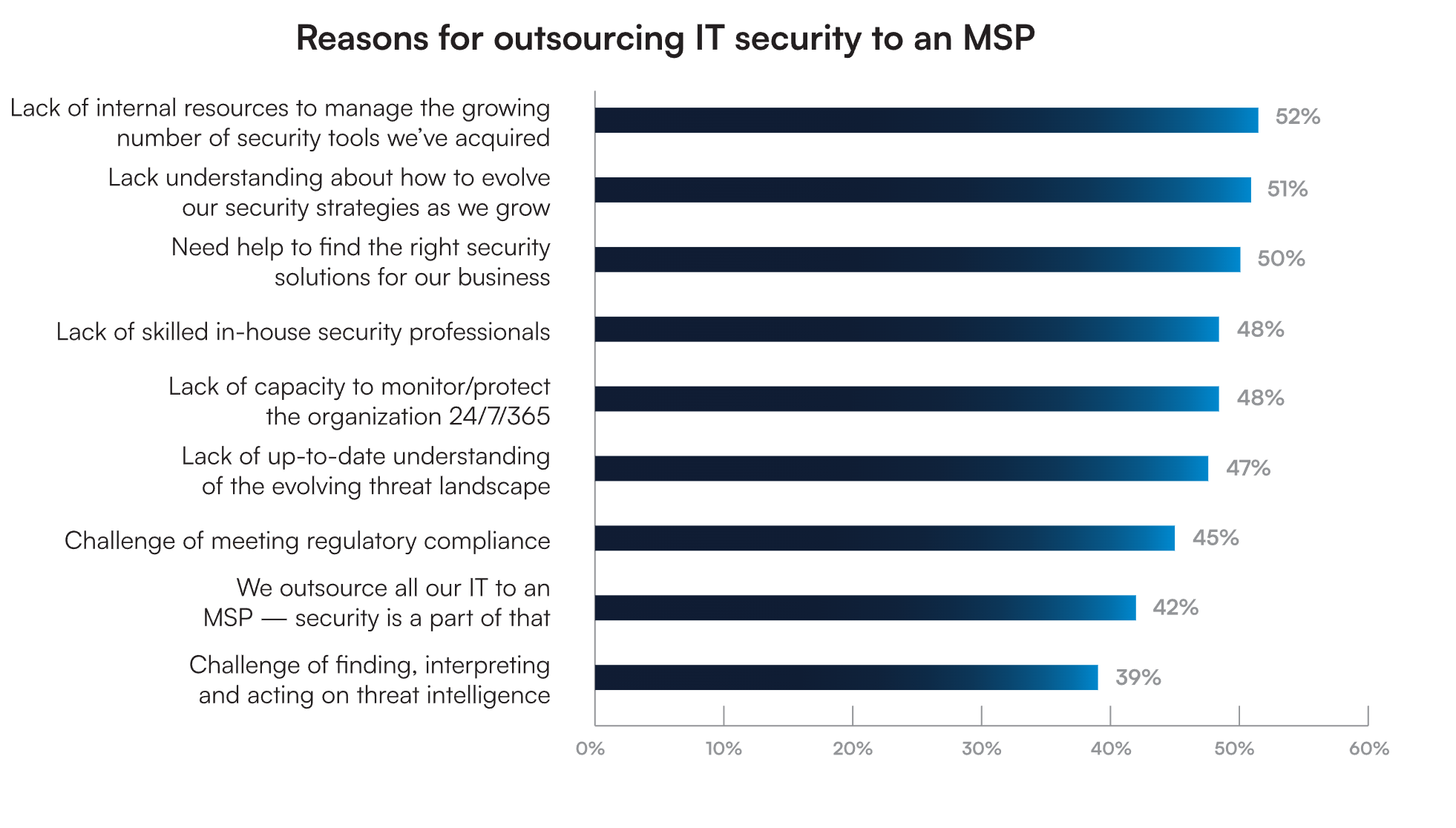
- Companies increasingly turn to MSPs for more than basic IT management—52% depend on them to simplify complex tool stacks, 51% for security strategy, and 48% for round-the-clock coverage.
- 92% of respondents said they’d pay up to 25% more for MSPs offering advanced integration and support.
- Top future priorities include MSP guidance on AI/ML tools, zero-trust architectures, and managed Security Operations Centers (SOCs).

Small and midsize businesses are facing a security crunch. As IT complexity grows, they’re turning to managed service providers (MSPs) not just for technical support but to lead security strategy. A new report commissioned by Barracuda and conducted by Vanson Bourne shows that nearly three-quarters of companies with up to 2,000 employees already rely on MSPs for cybersecurity—and that number is climbing.
The global survey, which sampled 2,000 IT decision-makers, shows 73% of organizations in the target size range are actively using MSPs for security. When factoring in companies currently evaluating MSPs or planning to engage them, that number rises to 96%.
As companies grow, so does their reliance on external security experts. Among firms with 1,000 to 2,000 employees, 85% already depend on MSPs for cybersecurity. By contrast, just 61% of smaller organizations (50–100 employees) are doing the same.
The reasons go beyond convenience. Fifty-two percent of businesses said they turn to MSPs to manage complex and fragmented tool ecosystems—an increasingly common issue as organizations add new cloud, endpoint, and identity platforms. Another 51% cited help with navigating cybersecurity strategy, while 48% need MSPs to provide 24/7 monitoring and response.
These roles are elevating the MSP from vendor to partner. Barracuda’s VP of Product Management, Brian Downey, noted that MSPs are now expected to operate as co-managed security advisors—aligning with internal IT teams to meet the organization’s growing needs.
Cost remains a factor, but the findings suggest value is winning. Nearly all organizations surveyed (92%) said they would pay up to 25% more for an MSP that can provide comprehensive integration and deeper support. That’s especially relevant in environments where threat complexity demands more than out-of-the-box tools.
Looking ahead, demand is rising for MSP-led capabilities in zero-trust frameworks, managed SOCs, and AI- or ML-powered defenses. These are areas where internal resources often lack the bandwidth or expertise to scale effectively, making the role of the MSP even more critical.
The survey results reflect a significant shift in how smaller and mid-sized organizations view managed service providers. No longer just IT troubleshooters, MSPs are being trusted to help companies reduce cyber risk, plan long-term strategy, and unify disjointed tools into cohesive protection layers.
This evolution means MSPs need to continue investing in their own capabilities—whether through staff training, technology partnerships, or specialized services. For customers, the message is clear: as digital growth accelerates, having a knowledgeable, integrated, and proactive security partner isn’t optional—it’s essential.

Did someone say MSPs?? If you liked this post, you’ll love MSP Expo, part of the ITEXPO #TECHSUPERSHOW, Feb 10-12, 2026 Fort Lauderdale, Florida.
Aside from his role as CEO of TMC and chairman of ITEXPO #TECHSUPERSHOW Feb 10-12, 2026, Rich Tehrani is CEO of RT Advisors and a Registered Representative (investment banker) with and offering securities through Four Points Capital Partners LLC (Four Points) (Member FINRA/SIPC). He handles capital/debt raises as well as M&A. RT Advisors is not owned by Four Points.
The above is not an endorsement or recommendation to buy/sell any security or sector mentioned. No companies mentioned above are current or past clients of RT Advisors.
The views and opinions expressed above are those of the participants. While believed to be reliable, the information has not been independently verified for accuracy. Any broad, general statements made herein are provided for context only and should not be construed as exhaustive or universally applicable.
Portions of this article may have been developed with the assistance of artificial intelligence, which may have contributed to ideation, content generation, factual review, or editing