
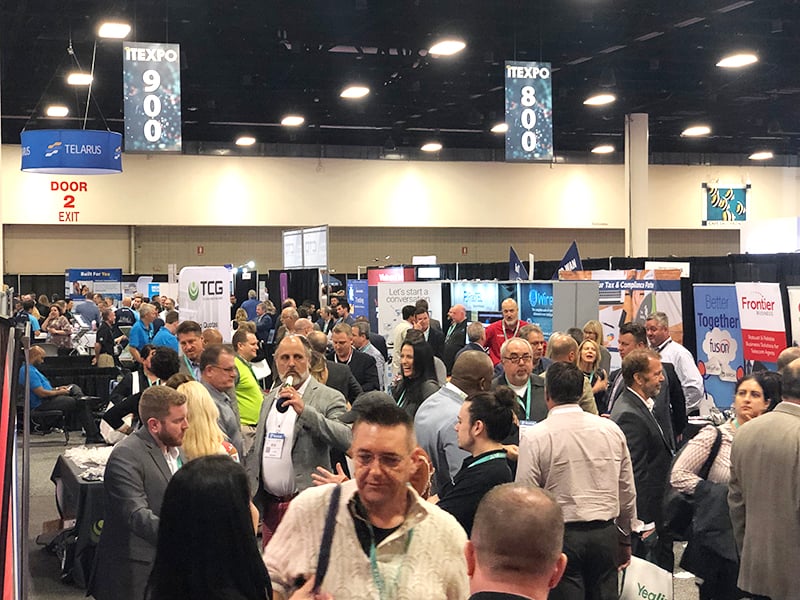
For MSP executives thinking seriously about growth, liquidity, or succession, timing matters. So does access to the right information. And just as important, access to people who have actually been in the room when deals get done.
That’s the context behind the expanded MSP M&A Master Class taking place at MSP Expo, a session designed specifically for owners and senior leaders navigating the realities of buying, selling, or positioning an MSP for a future transaction. This is not a high-level overview meant to skim the surface. It is built to get into the mechanics, the trade-offs, and the decisions that directly influence valuation and deal outcomes.
M&A activity in the MSP space has not slowed in terms of interest, even as market conditions have shifted. Buyers remain active, but expectations are more precise. Sellers, meanwhile, are asking better questions. What really drives value today? Which adjustments are legitimate, and which ones raise eyebrows during diligence? How early is too early to prepare, and how late is too late?
Those are the kinds of questions this master class is structured to address.
The session is led by Rick Murphy and Bruce Teichman of Cogent Growth Partners, with moderation by Yours Truly. Between them, they bring decades of direct MSP transaction experience, with a focus on hands-on deal execution rather than theoretical models. That distinction matters. A lot.
Here’s the thing. Many MSP owners consume M&A content in fragments. A podcast episode here. A blog post there. A conversation with a peer who sold last year under very different conditions. What’s harder to find is a structured environment where buyers and sellers’ realities are discussed side by side, with room for nuance and follow-up.
That’s where this class is aiming to land.
Rick’s session focuses on addbacks and synergies, two concepts that are often referenced casually but applied inconsistently. As he explains, “Addbacks and Synergies in M&A are not created equal. Some are universal, others are highly specialized and not always applied. First step is to know what an addback is (and is not) to not dramatically over or underrepresent your company free cash flow or EBITDA.”
That sentence alone captures why this topic resonates with MSP executives. Overstating adjustments can undermine credibility. Understating them can leave money on the table. Understanding how buyers actually interpret addbacks, and how synergies factor into post-deal economics, can materially change how an owner prepares for a transaction.
Bruce’s presentation takes a complementary angle, focusing on practical actions MSPs can take now, not someday, to improve M&A outcomes. His session, titled “The 5 Best Ways MSPs Can Increase Their M&A Value – Starting Right Now,” is rooted in the idea that exit planning is not a single event. It is an operating discipline.
As Bruce puts it, “As you think about the future of your business, selling it should be part of your planning too, since you never know when the right opportunity might come along.” He goes on to outline five areas that tend to matter most to buyers, while also helping owners improve profitability and operational clarity in the meantime.
That dual benefit is a recurring theme throughout the master class. The strategies discussed are not just about optimizing for a sale. They are about building a healthier, more resilient MSP, whether a transaction happens in twelve months or five years.
Another element that sets this session apart is its interactive structure. Rather than a single lecture, the format blends focused presentations with panel discussion and real-world scenarios drawn from recent MSP transactions. Some common industry myths are addressed directly. Others are quietly dismantled through examples and data.
There’s also an honest discussion around the human side of M&A. Transaction readiness is not just financial. It’s emotional. Owners wrestle with control, legacy, and timing. The concept of “transaction therapy,” discussed during planning conversations for the class, reflects how often these factors influence deal decisions, sometimes more than spreadsheets do.
Is this session only for MSPs actively selling? Not at all. In fact, some of the most valuable takeaways tend to land with owners who are still several years out. They leave with a clearer sense of how buyers evaluate risk, what signals matter, and which operational habits compound value over time.
And for MSPs considering acquisitions themselves, the buy-side perspective woven throughout the discussion offers insight into how disciplined buyers think about integration, reinvestment, and long-term returns.
There are plenty of conferences where M&A is discussed at a high level. Far fewer where MSP executives can sit in a room with advisors who specialize in this sector and ask pointed questions without getting a rehearsed answer. That difference shows up quickly.
For executives weighing growth options, succession planning, or a potential exit, this master class is positioned as a concentrated dose of relevance. Not theory. Not hype. Just experience, applied to the realities MSPs are facing right now.
The special session has been expanded to four hours, taking place Thursday, February 12, from 8:30am-12:3pm. at the Broward County Convention Center in Fort Lauderdale, Florida. MSP Expo takes place February 10-12, 2026.
Aside from his role as CEO of TMC and chairman of ITEXPO #TECHSUPERSHOW (MSP Expo is collocated), Feb 10-12, 2026, Rich Tehrani is CEO of RT Advisors and a Registered Representative (investment banker) with and offering securities through Four Points Capital Partners LLC (Four Points) (Member FINRA/SIPC). He handles capital/debt raises as well as M&A. RT Advisors is not owned by Four Points.
The above is not an endorsement or recommendation to buy/sell any security or sector mentioned. No companies mentioned above are current or past clients of RT Advisors.
The views and opinions expressed above are those of the participants. While believed to be reliable, the information has not been independently verified for accuracy. Any broad, general statements made herein are provided for context only and should not be construed as exhaustive or universally applicable.
Portions of this article may have been developed with the assistance of artificial intelligence, which may have contributed to ideation, content generation, factual review, or editing