
Work is changing, and not in subtle ways. Pressure is up. Expectations are higher. The pace feels relentless in many organizations, even those that have already invested heavily in technology. It is not just a perception problem. Data backs it up.
Recent Gallup research points to a continued rise in frequent workplace burnout, with employees citing heavy workloads, constant change, and unclear priorities as key contributors. Productivity tools are everywhere, yet many teams still feel like they are running uphill. That tension is becoming one of the defining management challenges of the moment.
Here is the thing. Most companies are not short on software. They are short on systems that actually work together in a way that reduces friction rather than adding to it.
This is where the idea of the autonomous enterprise starts to matter.
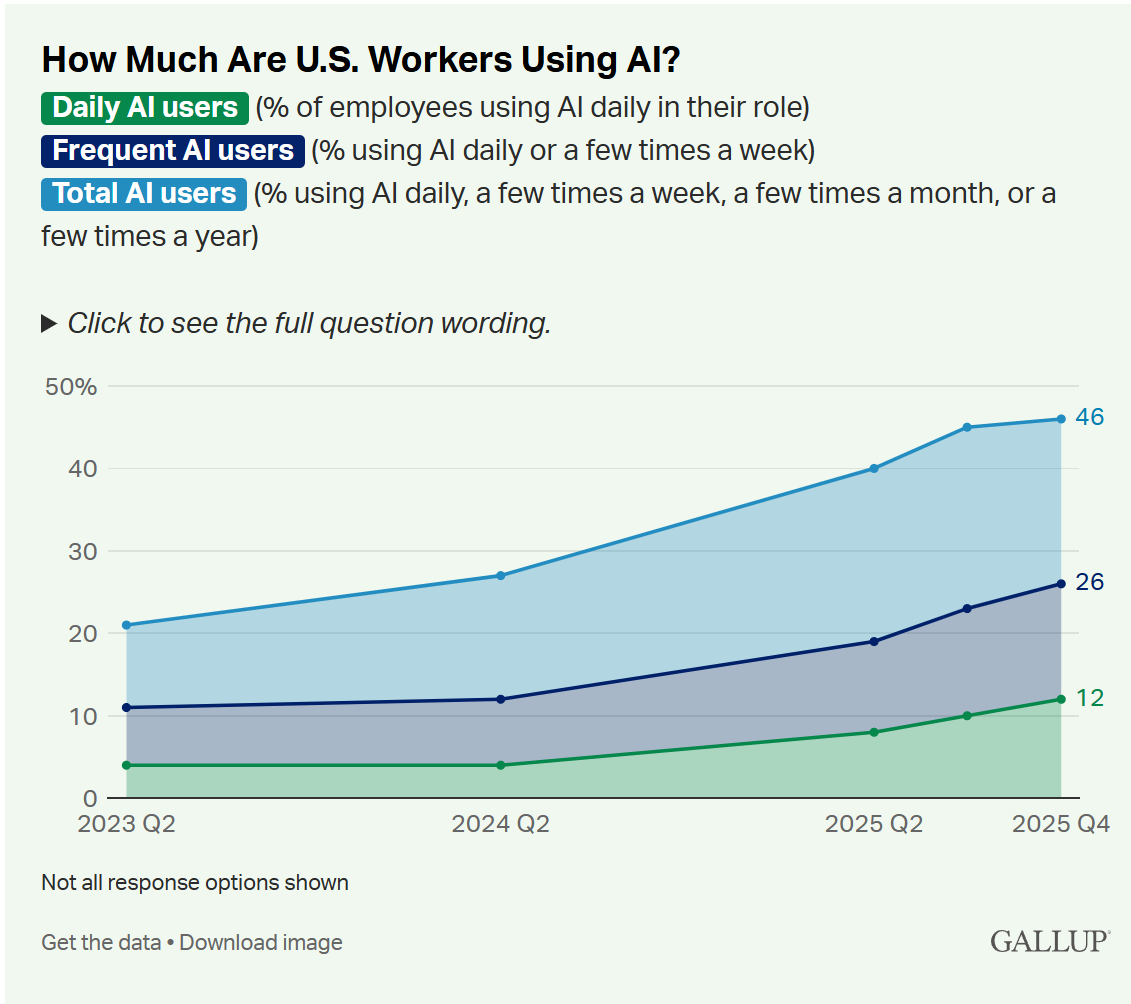
At a high level, autonomy in the enterprise is not about replacing people. It is about removing the low-value tasks that drain attention and energy. Scheduling. Monitoring. Reporting. First-pass analysis. Repetitive workflows that quietly eat hours every week. When those functions begin to run intelligently in the background, people get time back. And time, right now, may be the most valuable asset inside any organization.
That shift is not theoretical anymore. It is already underway.
Across industries, companies are experimenting with AI agents that can observe systems, make recommendations, and in some cases take action within defined guardrails. Generative AI is being applied to everything from customer interactions to internal documentation, accelerating work that once required multiple handoffs. In manufacturing, logistics, healthcare, and smart cities, AI and connected devices are beginning to close the loop between insight and execution.
But adoption is uneven. And understanding what actually works, versus what sounds good in a slide deck, is not always obvious.
This is part of why being in the same room with practitioners matters more than ever.
Events still play a role that webinars and whitepapers cannot fully replicate. Conversations happen in hallways. Demos lead to unexpected questions. You see patterns across vendors, customers, and industries that do not show up when everything is consumed in isolation.
That context is central to the positioning of ITEXPO #TECHSUPERSHOW.
This year, ITEXPO is co-located with the AI Agent Event, Generative AI Expo, and AIoT World, bringing several threads of the autonomy conversation together under one roof. The tagline ties it all together: the autonomous enterprise starts here. It is not just a marketing phrase. It reflects a convergence that is already happening in the market.
AI agents are no longer confined to experiments. Generative AI is moving beyond novelty into operational use. Connected devices are feeding real-time data into systems that can act on it immediately. When these pieces come together, the result is not just faster output. It is a different way of working.
Consider the burnout problem again. Gallup’s findings suggest that stress is not only about long hours. It is about inefficiency, constant context switching, and work that feels reactive rather than purposeful. Automation alone does not solve that. Poorly implemented automation can make it worse.
What helps is intelligent automation. Systems that understand intent. Tools that reduce decision fatigue instead of increasing it. AI that assists quietly until it is needed, rather than demanding constant supervision.
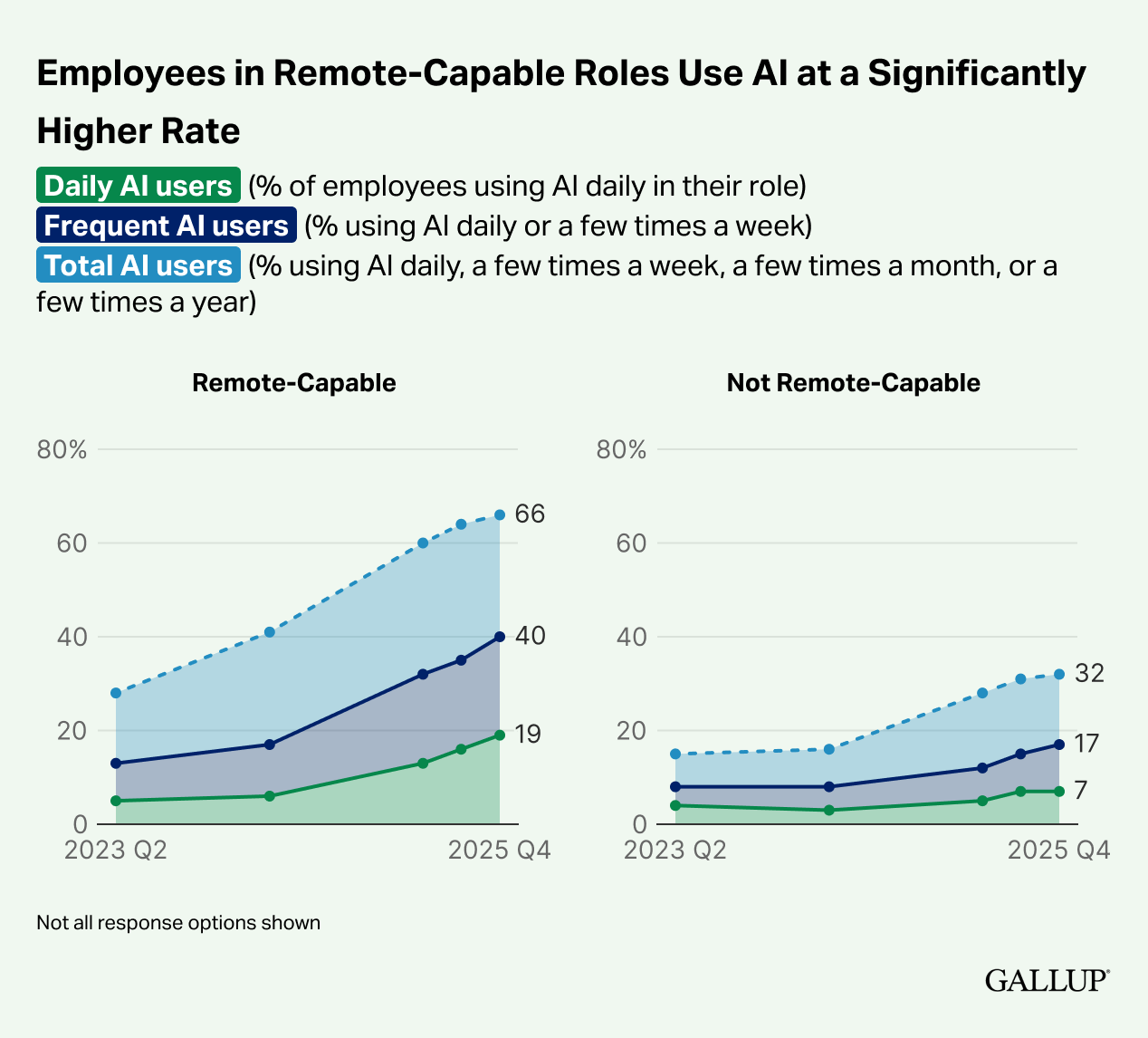
That is where many of the conversations at ITEXPO tend to land. Not on hype, but on practical questions. Where does autonomy actually deliver value today? Where are the risks? How do you introduce AI into workflows without breaking trust or accountability?
Some of the most interesting discussions happen at the intersection of disciplines. A networking professional listening to an AI agent architect. A security leader comparing notes with an IoT developer. A business executive realizing that productivity gains do not come from one tool, but from alignment across many.
There is also a timing element that should not be ignored.
Organizations are being asked to do more with roughly the same headcount. Hiring is cautious in many sectors. Budgets are scrutinized. At the same time, customer expectations continue to rise. Faster responses. More personalization. Fewer errors. That combination creates pressure, but it also creates opportunity.
Autonomous systems, when implemented thoughtfully, can help absorb that pressure. They can take on the work that scales poorly with human effort. They can surface insights that would otherwise be missed. And they can create space for people to focus on strategy, creativity, and relationships, the areas where humans still outperform machines.
Of course, none of this happens automatically. Governance matters. Security matters. Ethics matter. Integration matters. These are not side issues. They are core to whether autonomy becomes an advantage or a liability.
That is another reason why live events still earn their place. You hear what went wrong, not just what went right. You learn how others are setting boundaries, measuring outcomes, and iterating when something does not work as expected. You see how vendors are responding to customer demands for transparency and control.
ITEXPO’s co-located format makes those cross-cutting conversations easier. AI agents do not exist in a vacuum. Generative AI does not operate independently of networks, data, and devices. IoT does not deliver value without analytics and automation layered on top. Putting these communities together accelerates understanding.
And that matters for leaders who are trying to make decisions now, not in five years.
What should you pilot this quarter? What should wait? Where is the real bottleneck in your organization? Is it technology, or is it process? Is it skills, or is it trust?
Those are not questions that can be answered by a single keynote or product demo. They require exposure to multiple perspectives. They benefit from informal debate. They improve when you can test assumptions against real-world experience.
So when the event tagline says the autonomous enterprise starts here, it is pointing to a starting point, not a finish line. A place to see how AI-driven productivity, efficiency, and resilience are being built in practice. A place to separate signal from noise.
In a moment where burnout is rising and efficiency is under scrutiny, that starting point feels increasingly relevant.

Aside from his role as CEO of TMC and chairman of ITEXPO #TECHSUPERSHOW Feb 10-12, 2026, Rich Tehrani is CEO of RT Advisors and a Registered Representative (investment banker) with and offering securities through Four Points Capital Partners LLC (Four Points) (Member FINRA/SIPC). He handles capital/debt raises as well as M&A. RT Advisors is not owned by Four Points.
The above is not an endorsement or recommendation to buy/sell any security or sector mentioned. No companies mentioned above are current or past clients of RT Advisors.
The views and opinions expressed above are those of the participants. While believed to be reliable, the information has not been independently verified for accuracy. Any broad, general statements made herein are provided for context only and should not be construed as exhaustive or universally applicable.
Portions of this article may have been developed with the assistance of artificial intelligence, which may have contributed to ideation, content generation, factual review, or editing