Key Takeaways:
- Heedify has launched an AI Receptionist for Microsoft Teams designed to answer, understand, and route inbound calls inside the Teams environment.
- The solution is aimed at organizations that need more than basic auto attendants but may not require a full contact center platform.
- Heedify AIR uses Teams presence, caller intent, message capture, and transcripts to help reduce missed calls and improve follow-up.
- The launch reflects a broader shift toward AI-assisted business communications, where automation supports staff rather than replacing the entire customer interaction model.
For many organizations, Microsoft Teams has become the place where everyday business communication already happens. Employees chat, meet, collaborate, share files, and increasingly handle voice calls through Teams Phone. But one part of business communications has remained stubbornly difficult: what happens when someone calls and the right person is not available?
That sounds simple. It rarely is.
A caller may need sales, support, billing, an executive assistant, a branch office, or a specific employee. The employee may be on another call, in a meeting, away from their desk, or unavailable after hours. Traditional auto attendants can help direct calls, but they often depend on rigid menus and predefined paths. Full contact center platforms can solve more complex routing problems, but not every organization wants or needs that level of cost, setup, or operational change.
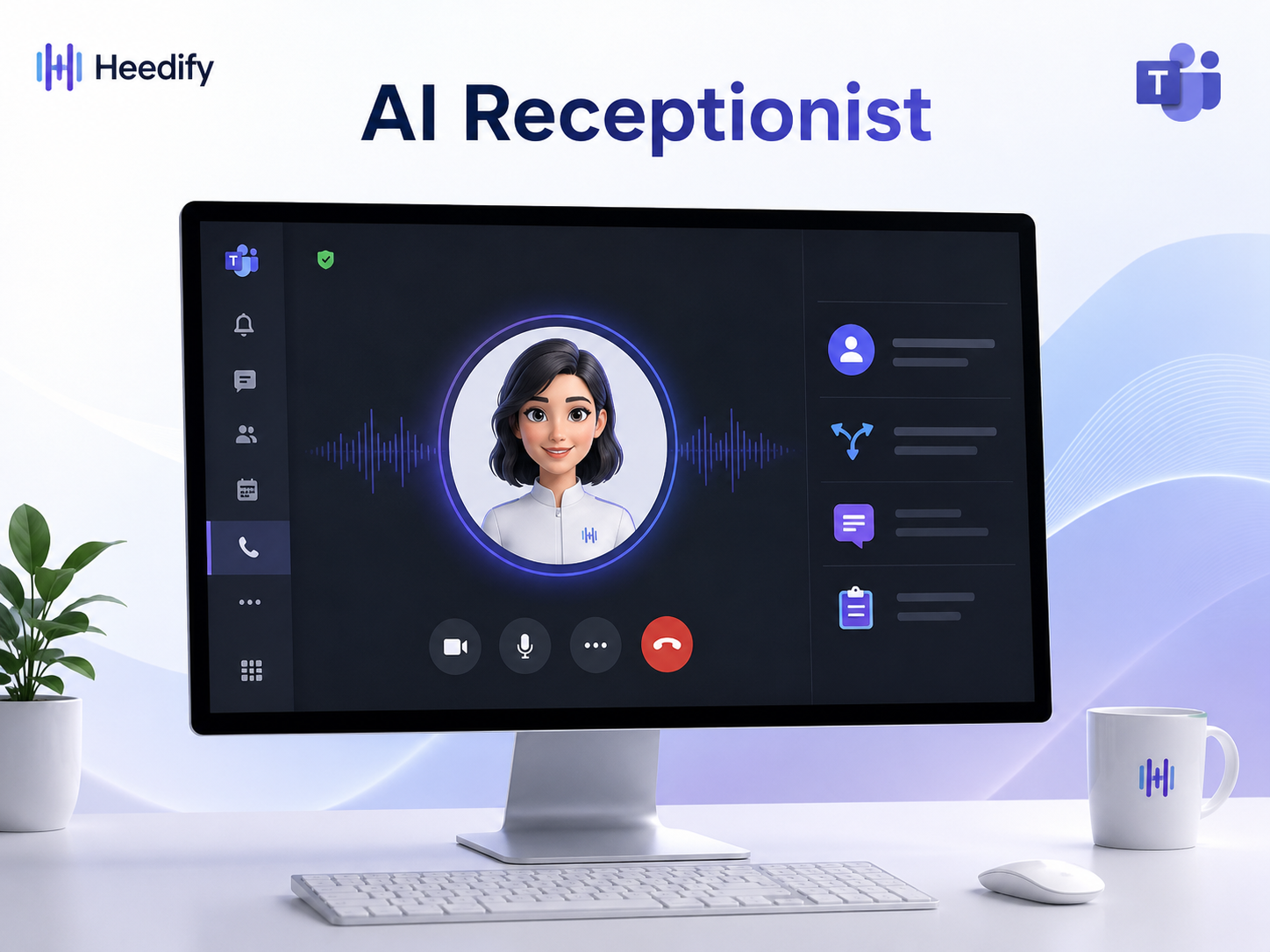
Heedify is now targeting that gap with the launch of its AI Receptionist for Microsoft Teams, also called AIR. The company says the new solution is designed to ensure every inbound call is answered, understood, and routed correctly within the Teams environment.
The launch is notable because it does not position AI call handling as a separate communications island. Instead, Heedify is building around Microsoft Teams, where many businesses already manage internal collaboration and voice workflows. The company says AIR is built on Microsoft Teams and Azure Communication Services, adding a conversational AI layer to existing call handling.
“Every missed call is a missed opportunity,” said Mefteh Werghemmi, CEO of Heedify. “Teams is where business communication already happens, but call handling still depends on availability. We built AIR to make sure every call is handled properly, even when teams are busy.”
That comment captures the practical issue well. A missed call is not always just a missed conversation. It can be a lost sales lead, a frustrated customer, a delayed appointment, a missed supplier update, or a support issue that escalates because nobody captured the details at the right time.
Heedify AIR is designed to answer calls instantly, understand what the caller needs, and apply business rules to determine what should happen next. If the right person or department is available, the call can be routed accordingly. If not, the system can capture a structured message, including the caller’s name, number, and reason for calling. It can then deliver a summary and transcript directly within Microsoft Teams.
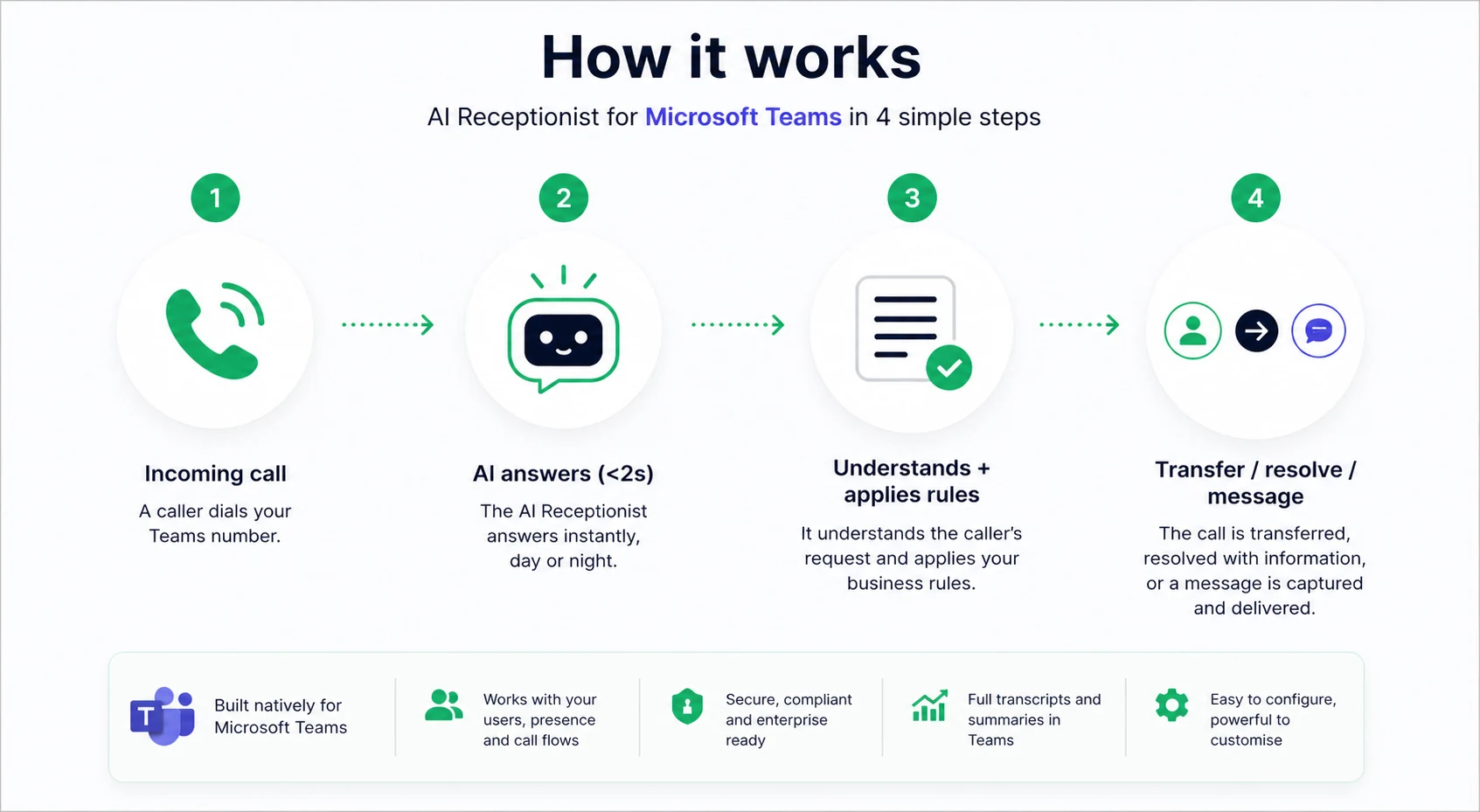
That last point matters. Many AI voice tools can take a message or produce a transcript, but the operational value depends heavily on where that information goes next. If the transcript sits in another portal, another inbox, or another dashboard, employees may not use it consistently. By keeping the workflow inside Teams, Heedify is betting that adoption becomes easier because the information appears where users already work.
The solution also uses presence-based routing, which is a natural extension of Teams. Rather than blindly transferring a caller to someone who is already busy or unavailable, the AI can use availability signals to make a more informed decision. This could help reduce one of the more frustrating caller experiences: being transferred, waiting, and then ending up in voicemail or back at the beginning of the process.
Heedify is also drawing a distinction between its approach and a full contact center deployment. Microsoft Teams Phone already includes auto attendants and call queues, but those tools are generally structured around fixed call flows and user availability. Contact center platforms add deeper routing, reporting, agent management, and omnichannel functionality, but they can be more than what a smaller business, branch operation, or internal service team needs.
AIR appears to sit between those two worlds. It is more intelligent than a basic auto attendant, but it is not positioned as a replacement for every contact center use case. That makes the product potentially relevant for professional services firms, healthcare offices, local branches, field service organizations, hospitality businesses, property managers, financial offices, and other Teams Phone users that rely on inbound calls but do not necessarily operate a formal contact center.
The timing also reflects a broader shift in enterprise communications. AI voice agents are moving from novelty to practical workflow tools. The earlier wave of voice automation often focused on deflection, meaning keeping callers away from humans whenever possible. The more useful model emerging now is different. AI answers quickly, gathers context, handles routine requests when appropriate, and gets the caller to a human when human judgment or relationship context is needed.
That model may be especially important for organizations that want better responsiveness without creating an impersonal customer experience. In many cases, callers do not object to automation if it is fast, accurate, and transparent. What they object to is getting trapped in a maze. A well-designed AI receptionist should reduce that friction, not add to it.
Heedify says AIR can route calls to Teams queues or departments based on caller intent, provide automated responses using knowledge bases or integrated systems, and manage situations where users are busy by capturing messages and escalating when needed. These capabilities are useful because inbound communication is rarely uniform. Some calls are urgent. Some are informational. Some need a specific person. Some can be resolved by giving the caller the right answer immediately.
The company’s Teams-native positioning is also important from an IT management perspective. Organizations that already use Teams may prefer to extend their existing communications stack rather than introduce another standalone voice platform. Heedify says AIR operates with existing numbers, users, and call flows, which could reduce disruption and help organizations improve call handling without asking employees to learn an entirely new system.
There are still questions buyers will likely want to evaluate. How accurately does the AI understand caller intent in real-world environments? How well does it handle accents, noisy calls, ambiguous requests, and industry-specific terminology? How configurable are escalation rules? How easily can knowledge bases and business systems be connected? What controls exist around transcripts, retention, privacy, and access?
Those questions are not unique to Heedify. They apply broadly to AI voice automation. As businesses move more call handling into AI-assisted workflows, governance, monitoring, and careful deployment will matter. A receptionist, whether human or AI-assisted, often represents the front door of a business. That front door needs to be responsive, but it also needs to reflect the company’s standards for accuracy, professionalism, and customer care.
Still, Heedify’s launch points to a practical direction for AI in communications. The most valuable deployments may not be the ones that try to replace complex operations overnight. They may be the ones that solve a familiar, expensive, and measurable problem: calls are missed, routed poorly, or followed up too late.
For organizations already using Microsoft Teams Phone, AI receptionist capabilities could become an appealing middle step. They can add intelligence to inbound call handling without forcing the business to move to a full contact center platform before it is ready.
Heedify AI Receptionist is available now with a 30 day free trial. For Teams-centric organizations trying to improve responsiveness, reduce missed opportunities, and give staff better call context, the launch gives them another option to consider as AI becomes more embedded in everyday business communications.

If you liked this post, you’ll love one of the the leading global business communications and technology events since 1999, the ITEXPO #TECHSUPERSHOW, Feb 9-11, 2027 Fort Lauderdale, Florida.
Don’t forget the collocated MSP Expo – just for managed service providers!
Aside from his role as CEO of TMC and chairman of ITEXPO #TECHSUPERSHOW Feb 9-11, 2027, Rich Tehrani is CEO of RT Advisors and a Registered Representative (investment banker) with and offering securities through Four Points Capital Partners LLC (Four Points) (Member FINRA/SIPC). He handles capital/debt raises as well as M&A. RT Advisors is not owned by Four Points.
The above is not an endorsement or recommendation to buy/sell any security or sector mentioned. No companies mentioned above are current or past clients of RT Advisors.
The views and opinions expressed above are those of the participants. While believed to be reliable, the information has not been independently verified for accuracy. Any broad, general statements made herein are provided for context only and should not be construed as exhaustive or universally applicable.
Portions of this article may have been developed with the assistance of artificial intelligence, which may have contributed to ideation, content generation, factual review, or editing