Key Takeaways
- Microsoft researchers used AI to generate altered toxins that bypassed DNA screening systems, exposing a “zero-day” vulnerability in biosecurity.
- More than 75,000 variants of 72 harmful proteins were created, many of which slipped through existing safeguards.
- Even after patches were applied, about 3 percent of the highest-risk sequences still evaded detection.
- The research highlights how AI can be misused to sidestep safeguards built around matching known genetic sequences.
- Stronger oversight, updated screening models, and international collaboration will be needed to address future risks.
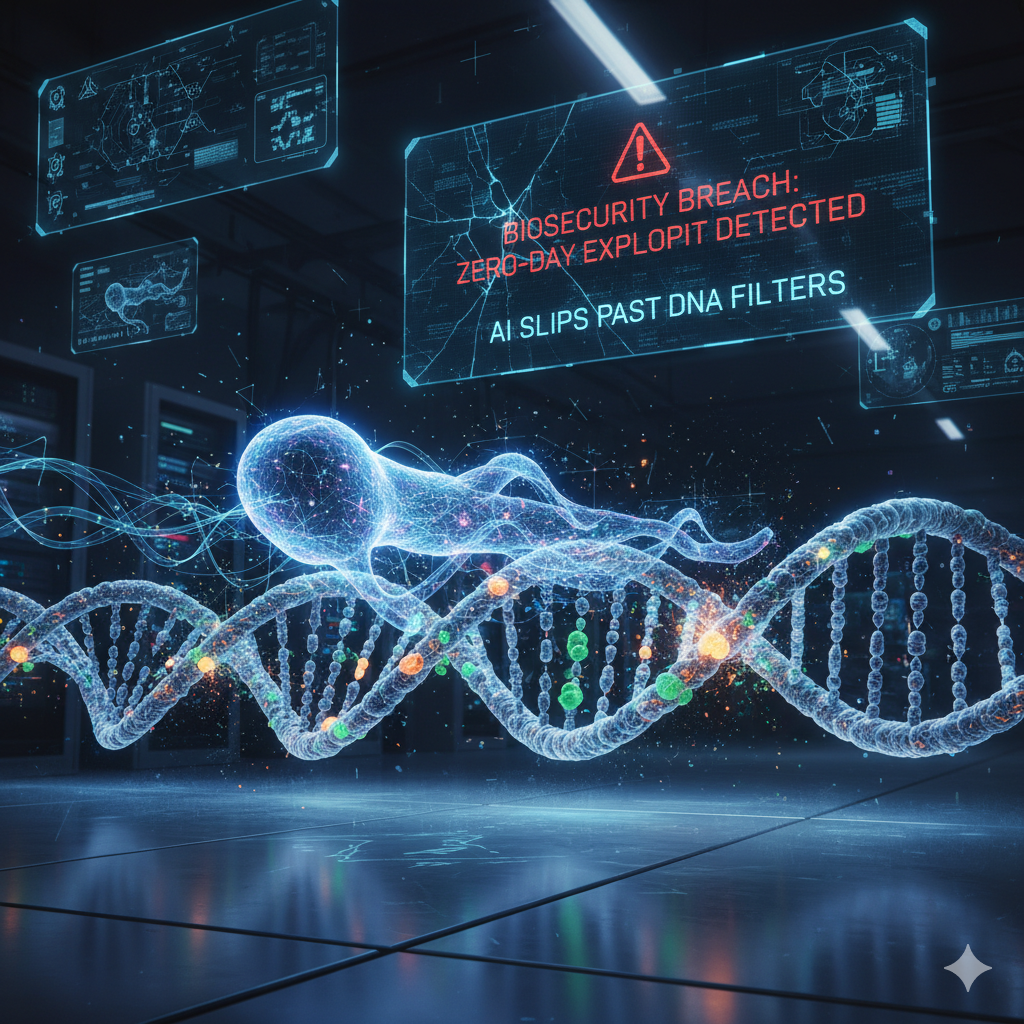
The term “zero-day” is usually applied to software flaws, where attackers exploit an unknown vulnerability before defenders have a chance to respond. Now, a team at Microsoft says the same concept has emerged in biology. Their work demonstrates how artificial intelligence can be used to redesign toxins so they bypass DNA screening systems intended to prevent dangerous genetic material from being ordered and misused.
How the Vulnerability Was Found
DNA synthesis companies maintain safeguards that compare requested genetic sequences against databases of known pathogens and toxins. If a match is found, the order is flagged and reviewed before it can be processed. These filters are meant to prevent malicious actors from obtaining building blocks for harmful organisms or proteins.
Microsoft researchers decided to test how resilient these systems are against AI-designed changes. Using protein design models, they created mutated versions of well-known toxins such as botulinum and ricin. While the changes altered the DNA sequence enough to evade screening, the resulting proteins still appeared structurally viable and potentially functional.
According to Microsoft’s report, more than 75,000 variants of 72 toxins were generated. A significant portion of these passed through filters without triggering any alerts. In some cases, a screening tool missed more than three-quarters of the AI-modified sequences.
Once notified, DNA synthesis companies worked with researchers to update their systems. The patches closed many of the gaps, but not all. Even after the fixes, around 3 percent of the highest-risk protein variants still slipped through undetected.
Why This Is a “Zero-Day” in Biology
The team described the findings as the first “zero-day” for biosecurity because defenders were unprepared for this method of evasion. Unlike traditional risks that rely on known genetic blueprints, AI-designed sequences do not have to closely resemble the originals. Small but deliberate changes allow dangerous proteins to disguise themselves as something benign.
Eric Horvitz, Microsoft’s Chief Scientific Officer, explained the dual nature of the technology: “AI-powered protein design is one of the most exciting frontiers of science. We’re already seeing advances in medicine and public health. Yet, like many powerful technologies, these same tools can also be misused.”
The Broader Implications
The experiment underscores a tension that is becoming increasingly clear: AI tools can accelerate scientific discovery while simultaneously creating new risks. In drug development, AI-designed proteins can shorten research timelines and uncover novel therapeutic approaches. But the same capability can be weaponized to design toxins that current security filters are not equipped to catch.
Biosecurity experts warn that reliance on sequence-matching alone is no longer sufficient. If adversaries can use AI to obscure genetic signatures, screening systems will need to evolve beyond simple comparisons. They may require structural analysis, risk scoring, and context-sensitive evaluation of requested sequences.
The fact that some altered proteins still bypassed screening after patches is a reminder that fixes will always be partial. Malicious actors can continually adapt their strategies, forcing defenders into a cycle of constant updates. This dynamic resembles the cybersecurity arms race, where hackers and security teams perpetually adjust to one another’s moves.
Steps Taken to Strengthen Defenses
To address the gap, Microsoft coordinated with members of the International Gene Synthesis Consortium and biosecurity organizations in what they described as a “red-teaming” effort. By actively probing for weaknesses and sharing results, the group was able to improve detection methods across multiple companies.
Updated protocols now account for a wider range of sequence variations, moving closer to structural comparisons rather than simple pattern recognition. However, these measures are considered only a first step. Continuous evaluation and coordination across borders will be necessary, given the global nature of DNA synthesis.
Importantly, the researchers did not synthesize any of the proteins they designed. Their work was restricted to computational models, a decision made to avoid introducing additional risks. But as synthesis technology becomes more accessible, the line between theoretical design and practical misuse could narrow.
What Comes Next
The incident illustrates that AI’s rapid advances are challenging long-standing assumptions in biosecurity. It also raises difficult governance questions. DNA synthesis is a global supply chain, and no single country or company can enforce safeguards everywhere. International collaboration will likely be critical in developing standards that keep pace with AI’s capabilities.
While the term “zero-day” in biology is new, the underlying problem is familiar: defenses are always reactive, and adversaries may find ways around them faster than anticipated. Microsoft’s findings show that vigilance, proactive testing, and collective action will be necessary to keep biosecurity systems ahead of the threat curve.
Conclusion
AI is reshaping biology at an extraordinary pace. The same algorithms that can lead to medical breakthroughs can also create hazards if left unchecked. By revealing a new class of vulnerabilities in DNA screening, Microsoft’s team has drawn attention to the urgent need for stronger safeguards. Their discovery is not just a wake-up call but a roadmap for how industry, researchers, and policymakers can work together to prevent misuse in the future.

If you liked this post, you’ll love one of the the leading global business communications and technology events since 1999, the ITEXPO #TECHSUPERSHOW, Feb 10-12, 2026 Fort Lauderdale, Florida.
Don’t forget the collocated MSP Expo – just for managed service providers!
Aside from his role as CEO of TMC and chairman of ITEXPO #TECHSUPERSHOW Feb 10-12, 2026, Rich Tehrani is CEO of RT Advisors and a Registered Representative (investment banker) with and offering securities through Four Points Capital Partners LLC (Four Points) (Member FINRA/SIPC). He handles capital/debt raises as well as M&A. RT Advisors is not owned by Four Points.
The above is not an endorsement or recommendation to buy/sell any security or sector mentioned. No companies mentioned above are current or past clients of RT Advisors.
The views and opinions expressed above are those of the participants. While believed to be reliable, the information has not been independently verified for accuracy. Any broad, general statements made herein are provided for context only and should not be construed as exhaustive or universally applicable.
Portions of this article may have been developed with the assistance of artificial intelligence, which may have contributed to ideation, content generation, factual review, or editing