Key Takeaways:
- AI can deliver measurable benefits in healthcare, education, finance, and more—but usefulness alone doesn’t guarantee ethical outcomes.
- Ethical AI depends on design choices, oversight, data integrity, and accountability throughout development and deployment.
- Transparency, fairness, and human oversight are essential to balancing AI’s utility with societal trust.
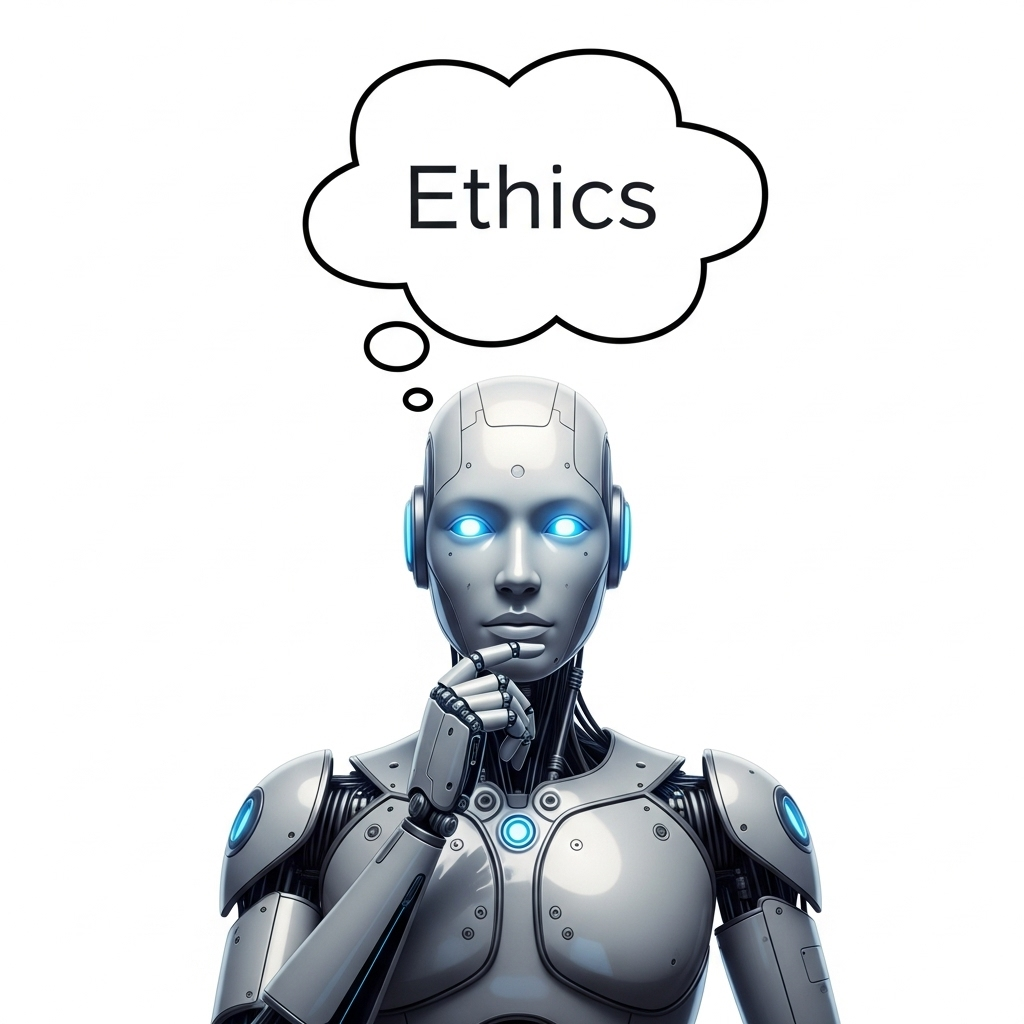
The rise of artificial intelligence has raised a pressing question: Can something as powerful and scalable as AI be both useful and ethical?
The short answer is yes—but it’s not automatic. The usefulness of AI is now widely understood. It powers fraud detection systems in banking, assists radiologists in catching early signs of cancer, optimizes logistics in supply chains, and supports language translation for global communication. But usefulness alone doesn’t mean the technology is ethically sound. In fact, some of the most impactful AI systems—such as facial recognition or predictive policing—are also the most ethically contested.
The question isn’t whether AI can be both useful and ethical—it’s whether companies and institutions are willing to do the hard work required to make it so.
The Case for AI Usefulness
AI is already delivering material value across many domains:
- Healthcare: AI tools help identify anomalies in medical imaging, optimize operating room schedules, and predict patient deterioration.
- Finance: Machine learning improves credit risk scoring, detects fraudulent transactions in real time, and supports more personalized financial planning.
- Education: Adaptive learning systems tailor lessons to student needs and offer accessible tutoring at scale.
- Customer Service: AI agents handle routine questions, speed up issue resolution, and allow human reps to focus on complex cases.
These applications reduce inefficiencies, support better decision-making, and in many cases expand access to services. In that sense, AI can be considered broadly beneficial. But that doesn’t make it ethical by default.
Defining Ethical AI
Ethical AI is not about a single framework. It involves a combination of principles, processes, and outcomes that ensure systems operate in a way that is:
- Fair: Avoids discrimination or bias against any group
- Transparent: Makes decisions that are explainable and traceable
- Accountable: Has clear lines of responsibility and the ability to correct errors
- Respectful of Privacy: Handles data with consent and protection
- Human-Centric: Keeps humans in the loop, especially in high-stakes scenarios
If these conditions aren’t met, AI systems—however useful—can cause real harm. For example, a recruiting algorithm that “efficiently” filters resumes but is trained on biased data may amplify workplace inequality. A crime prediction tool may speed up policing efforts but unjustly target certain communities if historical data is flawed.
Where Ethics Break Down
The biggest risk isn’t that AI is unethical by design—it’s that ethical considerations are overlooked due to time, scale, or competitive pressure. Some common issues include:
- Training on biased or incomplete datasets
- Lack of clarity on how decisions are made (the “black box” problem)
- Overreliance on AI without adequate human oversight
- Using AI in opaque systems with little recourse for affected individuals
These are not technical inevitabilities—they’re design choices. And while regulation is beginning to catch up, many companies still self-regulate, which introduces wide variability in how these issues are addressed.
Balancing Innovation with Guardrails
There is a growing recognition that ethical AI is not an obstacle to progress—it’s a prerequisite for trust and long-term viability. Consider:
- Google, Microsoft, and OpenAI have published responsible AI principles and built internal review boards to assess risk.
- The EU’s AI Act is set to classify AI use cases by risk level and require additional scrutiny for high-impact applications.
- Healthcare and financial services already apply compliance frameworks that could serve as models for AI governance more broadly.
Embedding ethical review in the development process doesn’t need to slow innovation—it can help organizations avoid reputational risk, regulatory penalties, and systemic failures.
Practical Steps Toward Ethical AI
For companies and institutions looking to build or adopt AI systems, ethical AI isn’t a philosophical ideal—it’s a business requirement. Steps that can help bridge the gap between usefulness and ethics include:
- Bias audits to test for demographic disparities in outputs
- Model explainability tools to make decisions transparent to users and regulators
- Cross-functional review boards that include legal, technical, and ethical stakeholders
- Clear documentation of data sources, assumptions, and update procedures
- Feedback loops that allow users to report issues and trigger corrections
These don’t eliminate all risks—but they represent a commitment to minimizing harm while maximizing value.
Conclusion
AI can absolutely be both useful and ethical—but it won’t happen by accident. The same technology that improves cancer detection or language access can also deepen inequality or erode privacy if built without care.
The future of AI is not just a technical question—it’s a societal one. Ethics in AI isn’t about saying “no” to innovation. It’s about asking the right questions, making intentional choices, and ensuring that as machines grow more capable, the people behind them remain responsible.
The most enduring AI systems will be those designed not just to work—but to work in ways people can understand, trust, and align with.
Learn how AI Agents can supercharge your company’s profits and productivity at TMC’s AI Agent Event in Sept 29-30, 2025 in DC.

Rich Tehrani serves as CEO of TMC and chairman of ITEXPO #TECHSUPERSHOW Feb 10-12, 2026 and is CEO of RT Advisors and is a Registered Representative (investment banker) with and offering securities through Four Points Capital Partners LLC (Four Points) (Member FINRA/SIPC). He handles capital/debt raises as well as M&A. RT Advisors is not owned by Four Points.
The above is not an endorsement or recommendation to buy/sell any security or sector mentioned. No companies mentioned above are current or past clients of RT Advisors.
The views and opinions expressed above are those of the participants. While believed to be reliable, the information has not been independently verified for accuracy. Any broad, general statements made herein are provided for context only and should not be construed as exhaustive or universally applicable.
Portions of this article may have been developed with the assistance of artificial intelligence, which may have contributed to ideation, content generation, factual review, or editing.