Key Takeaways:
- GM plans to launch an “eyes-off” driver-assistance system by 2028, allowing drivers to look away from the road while the car handles highway driving.
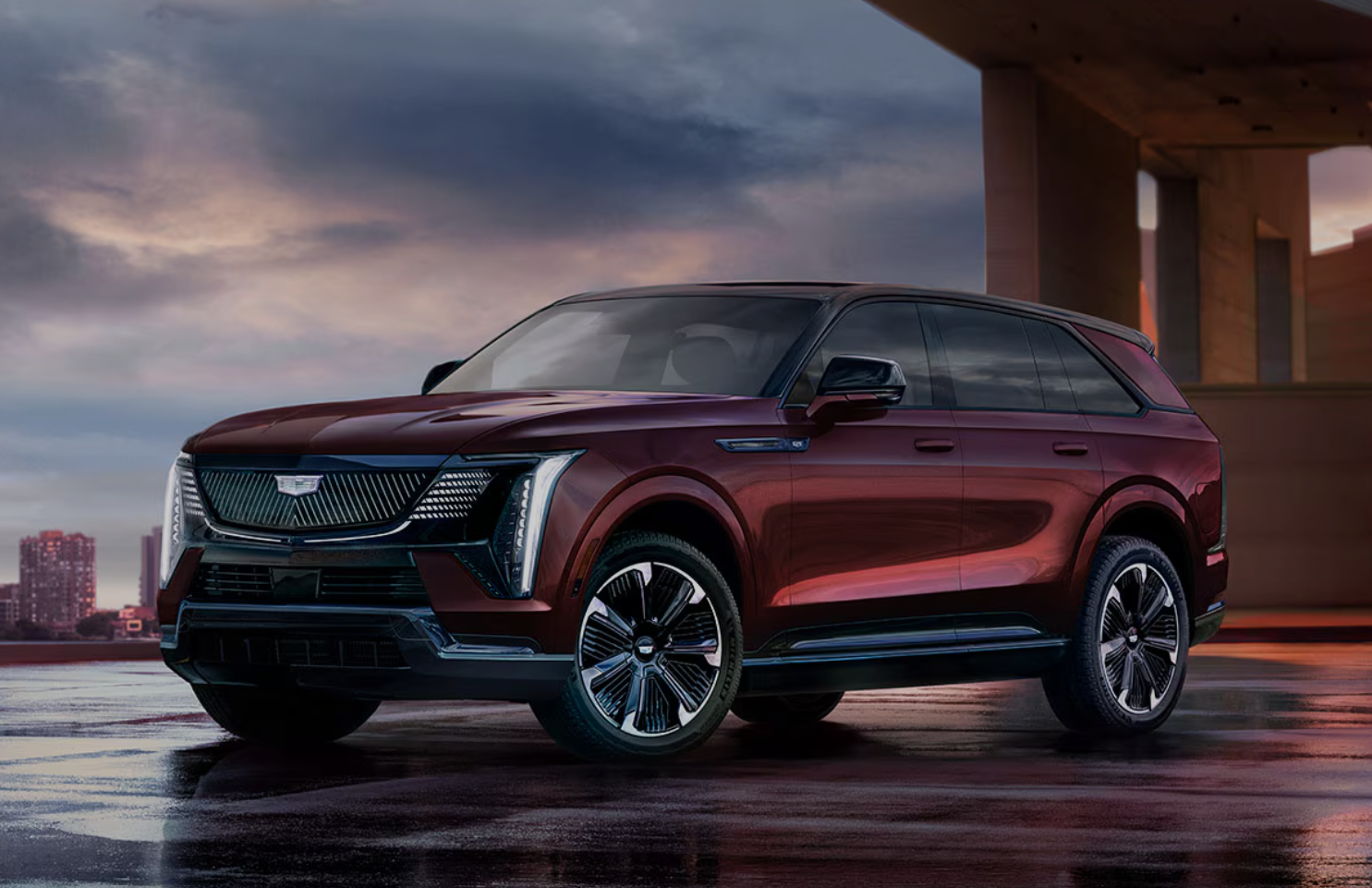
- The first model to feature this technology will be the all-electric Cadillac Escalade IQ.
- The system uses LiDAR, radar, and cameras, marking a different approach from Tesla’s vision-only system.
- GM also plans to integrate conversational AI powered by Google Gemini across vehicles as early as next year.
- GM’s troubled history with its Cruise self-driving division highlights the risks involved.
- Tesla remains far ahead in data collection and real-world experience, though it faces regulatory scrutiny.
- The question remains whether GM is closing the gap or chasing a dream that remains out of reach.
GM is making a bold promise: by 2028, its customers may be able to sit back, relax, and take their eyes off the road while the car drives itself down the highway. This capability, first expected in the Cadillac Escalade IQ, represents the next evolution of the company’s Super Cruise technology. It builds on GM’s existing hands-free driving system by allowing drivers to divert their attention entirely — for instance, to read a text — while the vehicle maintains control.
The technology behind this vision is rooted in sensor redundancy. GM’s system uses LiDAR, radar, and cameras to create a detailed picture of the environment. This contrasts with Tesla’s approach, which has phased out radar and relies almost entirely on camera-based perception. GM says this combination of sensors allows for safer operation, but it also adds complexity and cost.
GM has also announced that starting next year, its vehicles will begin featuring conversational AI built on Google Gemini. This will allow drivers to ask questions, plan routes, and interact with the car naturally. By 2028, the company plans to move to its own AI platform running on a centralized computing system designed specifically for autonomous functions and in-car intelligence.
For GM, this represents both a fresh start and a high-stakes gamble. While Tesla, Waymo, and others have spent years training systems on billions of miles of data, GM is entering a field where experience is as important as hardware. Tesla, for instance, claims that its vehicles have logged hundreds of millions of miles in Autopilot and Full Self-Driving mode. That scale of real-world exposure has given it a massive edge in refining its algorithms and identifying edge cases.
By comparison, GM’s data comes mostly from its Super Cruise fleet, which is limited to mapped highways. Expanding to “eyes-off” driving will require the company to capture and validate vastly more data. That means years of testing and coordination with regulators, who will want to see clear evidence of safety before approving such a system for public use.
GM’s timing is also interesting given the shadow of Cruise, its autonomous driving subsidiary. Cruise had been GM’s moonshot in self-driving technology until a series of incidents and regulatory setbacks nearly derailed it. The most damaging event came when one of Cruise’s robotaxis struck and dragged a pedestrian in San Francisco, prompting the California DMV to suspend its operating permit. The company’s credibility took a major hit, and GM was forced to halt funding for new robotaxi programs.
After that experience, GM appears to be shifting its focus away from robotaxis and toward driver-assistance features it can sell directly to consumers. That move could be pragmatic — a way to generate revenue and regain trust without the massive regulatory hurdles that come with fully autonomous vehicles. It also keeps GM in a competitive position while giving it time to rebuild technical expertise.
But the path ahead remains steep. Even under controlled highway conditions, enabling true “eyes-off” driving is no small feat. The system will need to handle merging traffic, erratic drivers, weather changes, and lane obstructions while maintaining constant awareness of its environment. Engineers must also ensure seamless transitions when the driver needs to take back control.
There’s also the matter of public trust. Consumers may be intrigued by the convenience of taking their eyes off the road, but GM will need to convince them — and regulators — that it’s safe. Tesla’s frequent controversies over driver inattentiveness and the branding of its “Full Self-Driving” feature have shown how fragile confidence in these systems can be.
Financially, GM faces the same challenge that has plagued many traditional automakers: balancing the cost of new technology with profitability. LiDAR and radar systems are still expensive, and adding them across vehicle lines could strain margins. Tesla, in contrast, has reduced hardware complexity by leaning on cameras and neural networks, though critics say that decision sacrifices redundancy.
The introduction of conversational AI through Google Gemini could give GM a consumer-friendly angle that others lack. By turning vehicles into interactive assistants, the company could make its cars feel more intelligent and responsive — an advantage in the growing market for connected, AI-driven experiences. It also helps GM align with broader industry trends, where software and user experience are becoming as important as horsepower.
Still, the announcement raises a fundamental question: is GM truly catching up, or is it chasing a vision that remains years away? Tesla’s head start in data, Waymo’s operational robotaxi programs, and the technological leaps from players like Mercedes and BMW all suggest that GM is entering a race already well underway. Yet history shows that in the automotive world, scale and persistence matter as much as early innovation.
If GM can leverage its manufacturing strength, refine its AI roadmap, and deliver a system that genuinely improves safety and convenience, it could emerge as a serious competitor in the next generation of autonomous driving. The shift from Cruise’s high-risk robotaxi strategy to a consumer-focused “eyes-off” system may prove to be the company’s most realistic path forward.
Ultimately, GM’s 2028 goal is both ambitious and uncertain. It marks a clear acknowledgment that cars are evolving into computers on wheels — devices defined as much by their software as by their engines. Whether GM can deliver on that promise will depend on how well it manages safety validation, regulatory approval, and public trust.
It’s easy to view this as an attempt to catch up to Tesla’s momentum, but the differences in approach matter. Tesla relies on real-world data volume and simplicity. GM is betting on sensor fusion, collaboration with tech giants, and layered redundancy. If it succeeds, GM might not lead the self-driving race, but it could reestablish itself as a serious technology player — a reputation the automaker hasn’t enjoyed in decades.

If you liked this post, you’ll love one of the the leading global business communications and technology events since 1999, the ITEXPO #TECHSUPERSHOW, Feb 10-12, 2026 Fort Lauderdale, Florida.
Don’t forget the collocated MSP Expo – just for managed service providers!
Aside from his role as CEO of TMC and chairman of ITEXPO #TECHSUPERSHOW Feb 10-12, 2026, Rich Tehrani is CEO of RT Advisors and a Registered Representative (investment banker) with and offering securities through Four Points Capital Partners LLC (Four Points) (Member FINRA/SIPC). He handles capital/debt raises as well as M&A. RT Advisors is not owned by Four Points.
The above is not an endorsement or recommendation to buy/sell any security or sector mentioned. No companies mentioned above are current or past clients of RT Advisors.
The views and opinions expressed above are those of the participants. While believed to be reliable, the information has not been independently verified for accuracy. Any broad, general statements made herein are provided for context only and should not be construed as exhaustive or universally applicable.
Portions of this article may have been developed with the assistance of artificial intelligence, which may have contributed to ideation, content generation, factual review, or editing