Key Takeaways
• AI agents are emerging as collaborative digital workers capable of managing complex tasks and coordinating with humans and other agents
• Google Cloud’s OCTO team offers a framework for building agent systems that are safe, scalable, and purpose-driven
• Human oversight, data preparedness, and small-scope pilot testing are essential to responsible deployment
• The Agent Development Kit (ADK) is Google’s toolset for orchestrating multi-agent networks and integrating with real-world systems
• Use cases include personalized assistants, data aggregation agents, and modular teams of agents that divide work across task domains
Google Cloud’s Office of the CTO (OCTO) recently addressed the growing demand for clarity on what AI agents are, how they work, and where they can deliver real business value. In a rapidly evolving market where “agent” is being used in a variety of contexts—from customer support bots to complex decision-making engines—the OCTO team offered a grounded, enterprise-focused definition.

According to John Abel, Managing Director at Google Cloud OCTO, AI agents are best thought of not as products, but as “an architectural pattern for problem solving.” Abel explained that, rather than asking a monolithic model to handle everything, “you’re designing workflows and breaking them into steps. These steps are handled by different types of agents that may include task delegators, validators, or data processors.”
This modular approach enables agent systems to manage more context, perform diverse tasks in parallel, and incorporate real-time adjustments more easily than single large language model (LLM) queries.
What Makes an AI Agent?
The OCTO team defines agents as autonomous software systems that perform tasks on behalf of users or systems. Key characteristics include the ability to interpret context, act toward a goal, access tools or APIs, collaborate with other agents or humans, and evolve based on feedback.
Antonio Gulli, Director of Applied Science in Google Cloud’s OCTO group, added that agents introduce a new way of thinking about AI architecture. “Agents have memory. They’re not just answering questions; they’re part of a continuous reasoning process. And when multiple agents work together, they function more like a team than a tool,” Gulli said.
By focusing on distributed intelligence and delegation, agents provide a way to scale AI that mimics organizational structure—breaking down work, assigning it to the right ‘digital worker,’ and validating it along the way.
Five Design Principles for Agent Systems
To help organizations make sense of where to begin, the OCTO team laid out five principles that guide agent adoption:
1. Clarify the Purpose
John Abel emphasized that agent projects should start with a strong sense of purpose. “A lot of organizations are jumping into agents because it’s new. But the ones that are successful know exactly what business outcome they’re targeting,” he said. This means avoiding vague ambitions and focusing instead on repeatable, automatable problems.
2. Start Small, Show Value
Pilot programs should be simple, measurable, and low-risk. “You can start with something like a personalized assistant that summarizes documents or drafts email responses,” said Abel. These quick wins not only build internal confidence but also generate usable feedback that improves the next iteration.
3. Combine Agents with Human Review
Human-in-the-loop checkpoints are essential for governance, especially when agents are deployed in workflows that touch customers, systems of record, or compliance-sensitive data. “You don’t want agents making irreversible decisions in isolation. You want to be able to say, ‘Pause here and let someone approve this,’” Abel explained.
4. Prepare Your Data Infrastructure
Antonio Gulli highlighted the importance of reliable inputs. “Agents need structured, accessible, and high-quality data to be effective,” he said. Poor data can mislead agents, especially when tasks rely on context or multi-step reasoning. Organizations should ensure that relevant databases, APIs, and permissions are agent-ready before scaling.
5. Adopt a Learning Mindset
Abel stressed the need for iteration. “This is not about launching a perfect agent day one. It’s about evolving it, seeing where it adds value, and adjusting as you go,” he said. Agents can improve over time through retraining, role redefinition, or adjusting how they interact with tools and users.
Inside Google’s Agent Development Kit
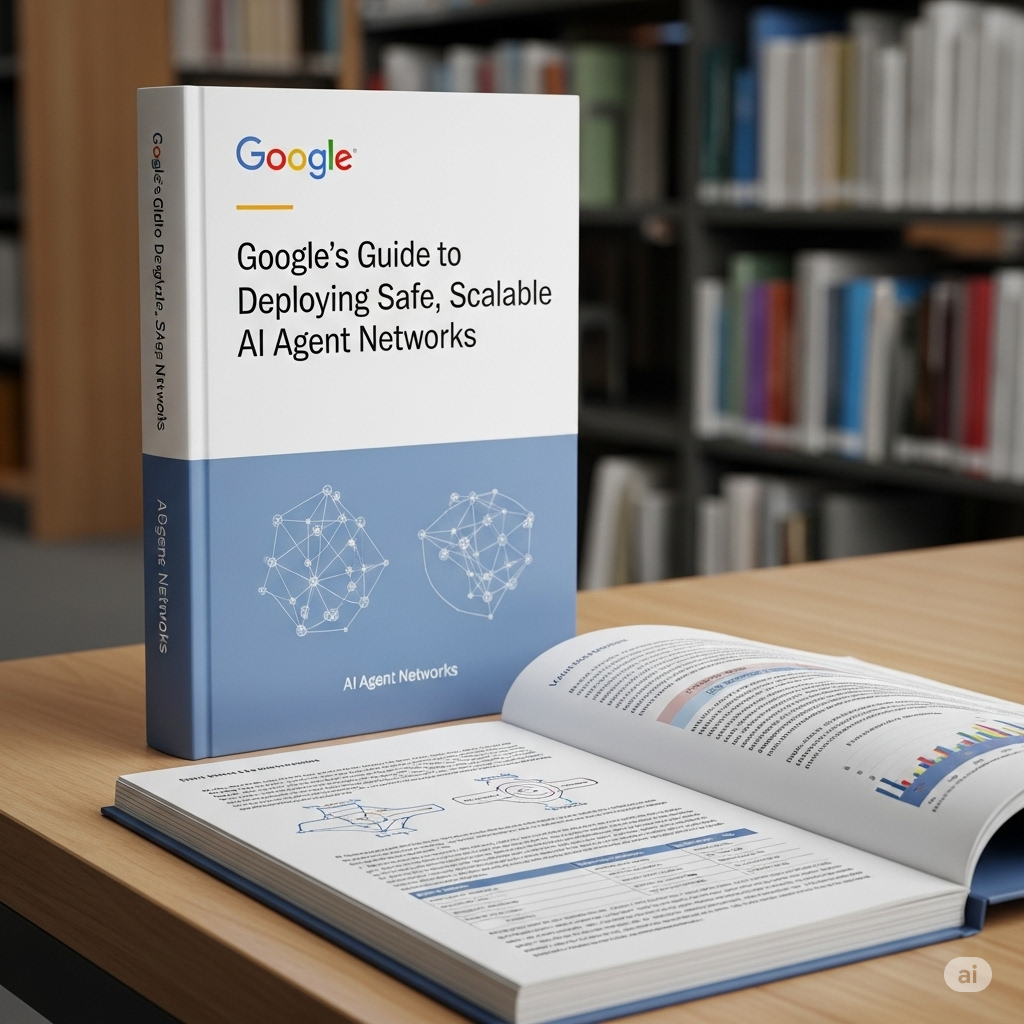
To support developers and enterprises building with agents, Google introduced the Agent Development Kit (ADK), a set of tools and architectural templates that make it easier to design, deploy, and manage multi-agent systems.
The ADK includes components for:
• Orchestrating task-specific agents and routing tasks based on context
• Integrating third-party APIs, internal tools, or search systems as callable services
• Providing agents with memory so they can track prior interactions or decisions
• Defining execution flows, retry logic, or escalation paths when confidence is low
• Monitoring and evaluating agent performance using structured telemetry
According to Gulli, the ADK helps teams move beyond experimentation into robust engineering. “We built ADK to support real use cases—not just demos. It gives developers the scaffolding they need to build safe and scalable agent systems,” he said.
The kit also enables orchestration across teams of agents, including data retrievers, formatters, summarizers, and planners. These teams can be coordinated through a controller agent or set to operate in sequence depending on the complexity of the task.
Real-World Use Cases
At Google I/O earlier this year, Google Cloud showcased working examples of agents in action:
• A personalized meeting assistant that coordinates availability, drafts agendas, and sends follow-ups
• A research agent that reads and synthesizes large volumes of documents to answer high-context technical questions
• A campaign manager agent that monitors marketing campaign performance and recommends optimizations across platforms
Each example involved multiple agents with clear responsibilities, supported by internal business tools and memory systems that kept track of user goals, history, and system state.
Gulli pointed out that this approach allows enterprises to mix reusable modules into various workflows. “You don’t need to rebuild an agent from scratch for each task. With ADK, you can treat components like a toolbox and assign roles dynamically,” he explained.
Coordination and Control: Getting It Right
While the potential is vast, Gulli and Abel both stressed the importance of careful orchestration. “Autonomy is powerful, but without coordination, you just get noise,” said Gulli. He explained that organizations need to define guardrails, including when agents can call APIs, what tasks require approval, and how errors are handled.
One example included an internal project where agents were set up to retrieve data, draft content, and validate responses. The system worked well—until one API failed and the whole chain collapsed. “We learned that each agent needs fallback behavior. If step three fails, the system shouldn’t break—it should recover,” Gulli said.
This lesson highlights the importance of defining how agents interact with tools, what to do if confidence is low, and how to log and audit decisions. Transparency is critical—especially when agents are interfacing with external users or sensitive systems.
Thinking Organizationally About Agents
Google Cloud’s leaders are encouraging CIOs, CTOs, and innovation teams to think about agents the same way they think about functional teams. Instead of hiring 50 new analysts to scan spreadsheets and summarize reports, companies can deploy agent teams that divide the task: one agent ingests and normalizes the data, another agent performs statistical analysis, and a third agent composes the executive summary.
This structure reflects real organizational behavior—specialists working in tandem, each accountable for part of the work, overseen by a manager or lead. “We’re not trying to replace humans,” Abel said. “We’re creating digital collaborators who support teams by offloading repeatable, high-volume tasks.”
He also noted that agent systems should be aligned to business units, not just technical departments. “If marketing owns the workflow, marketing should help define the agent’s goal and measure its impact,” Abel said.
Scaling Responsibly
Both Abel and Gulli emphasized the importance of responsible AI scaling. Before rolling out agent systems broadly, organizations should validate them in isolated domains. These early pilots provide insight into agent behavior, highlight gaps in tooling or data, and allow human reviewers to refine roles and workflows.
Gulli also suggested using agent telemetry—logs, metrics, and audits—to understand behavior over time. “It’s not just about whether the agent completed the task. It’s about how, why, and what data it used,” he said. Monitoring agent output is key to maintaining quality and accountability.
Agents are not immune to errors, hallucinations, or logic gaps. But with proper oversight, logging, and intervention systems, these risks can be managed—and agent performance can improve over time.
Final Thoughts
The conversation around agents is accelerating, but the best implementations are grounded in fundamentals. As Abel summarized, “Don’t build agents because it’s trendy. Build them because there’s a job that needs doing—and you can prove they can do it.”
Google Cloud’s OCTO team has taken a pragmatic, methodical view of what agent-based systems should look like. With the Agent Development Kit and a clear set of design principles, they’re helping enterprises make agent AI not just possible, but practical.
For organizations evaluating their next steps in AI, the message is clear: the future isn’t a single supermodel. It’s a coordinated team of agents—each with a role, a scope, and a purpose—working together to drive business outcomes.
Learn how AI Agents can supercharge your company’s profits and productivity at TMC’s AI Agent Event in Sept 29-30, 2025 in DC.

Rich Tehrani serves as CEO of TMC and chairman of ITEXPO #TECHSUPERSHOW Feb 10-12, 2026 and is CEO of RT Advisors and is a Registered Representative (investment banker) with and offering securities through Four Points Capital Partners LLC (Four Points) (Member FINRA/SIPC). He handles capital/debt raises as well as M&A. RT Advisors is not owned by Four Points.
The above is not an endorsement or recommendation to buy/sell any security or sector mentioned. No companies mentioned above are current or past clients of RT Advisors.
The views and opinions expressed above are those of the participants. While believed to be reliable, the information has not been independently verified for accuracy. Any broad, general statements made herein are provided for context only and should not be construed as exhaustive or universally applicable.
Portions of this article may have been developed with the assistance of artificial intelligence, which may have contributed to ideation, content generation, factual review, or editing.