Key Takeaways:
- NETGEAR has acquired Exium to expand its enterprise networking and security solutions, particularly in the secure access service edge (SASE) category.
- The acquisition is aimed at integrating Exium’s cloud-native, secure networking capabilities into NETGEAR’s enterprise product line.
- This move positions NETGEAR to address enterprise demand for unified, cloud-managed networking and security services as workforces and infrastructures become more decentralized.
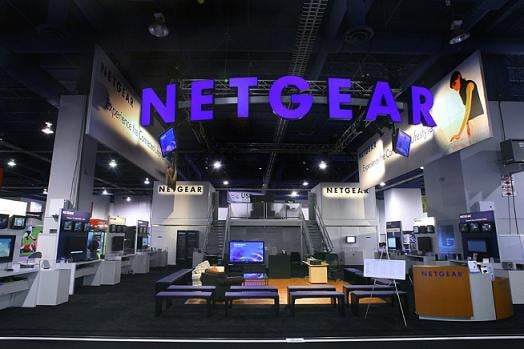
NETGEAR, a long-standing provider of networking hardware, has acquired Exium, a cloud-native security platform known for its secure access service edge (SASE) solutions. The acquisition marks a strategic move by NETGEAR to expand its enterprise footprint by integrating advanced security technologies into its networking portfolio.
The acquisition is part of NETGEAR’s broader strategy to adapt to the rapidly changing enterprise IT environment, where remote work, multi-cloud infrastructure, and growing security risks are reshaping how organizations approach connectivity.
Strategic Rationale
The enterprise IT landscape is becoming increasingly fragmented. Organizations now operate across multiple data centers, SaaS platforms, and hybrid environments. This shift has created demand for integrated systems that blend networking performance with enterprise-grade security. NETGEAR’s acquisition of Exium is intended to address this demand directly.
By acquiring Exium, NETGEAR gains access to a SASE platform built for modern, distributed environments. SASE frameworks merge wide area networking (WAN) capabilities with advanced security controls, including secure web gateways (SWG), cloud access security brokers (CASB), zero trust network access (ZTNA), and firewall-as-a-service (FWaaS). Exium’s platform is designed to deliver all of these capabilities through a unified, cloud-native architecture.
Integrating Exium’s capabilities with NETGEAR’s existing product offerings gives the company a foundation for building end-to-end enterprise solutions that simplify infrastructure deployment and enhance security posture.
Enterprise Context and Market Drivers
According to multiple industry reports, SASE adoption is accelerating across enterprise segments. Organizations are increasingly looking to consolidate vendors while maintaining strong security standards and supporting hybrid workforces.
NETGEAR has historically been more focused on consumer and small business markets, but in recent years, it has expanded its enterprise ambitions. The acquisition of Exium could help the company differentiate itself in a crowded networking and cybersecurity market by offering secure, manageable, and scalable networking stacks designed for distributed teams.
For existing NETGEAR enterprise customers, the integration of Exium technology may present opportunities to simplify their infrastructure while meeting rising expectations for access control, data protection, and traffic optimization.
Product and Integration Roadmap
The companies have not disclosed specific timelines, but NETGEAR confirmed that Exium’s platform will be integrated into its enterprise product suite. In particular, NETGEAR aims to embed SASE capabilities into its cloud management services, enabling IT teams to manage connectivity, security, and user access policies from a centralized dashboard.
This unified interface would allow enterprises to:
- Enforce consistent security policies across branch offices and remote users
- Detect and mitigate threats in real-time
- Streamline network performance for cloud-hosted applications
- Reduce the complexity of managing multi-vendor infrastructures
As hybrid work continues to drive up demand for remote access solutions, NETGEAR’s adoption of Exium’s cloud-native approach may allow for faster customer onboarding and reduced overhead for IT departments.
Leadership Perspective
While financial terms of the acquisition were not disclosed, executives on both sides have described the move as complementary. NETGEAR leadership cited Exium’s engineering focus, cloud-native platform, and flexible deployment models as reasons for the acquisition.
Exium’s team brings deep experience in building scalable security solutions for distributed environments, and some members are expected to join NETGEAR’s enterprise R&D organization.
From a go-to-market perspective, NETGEAR plans to offer Exium’s platform both as a standalone solution and as part of bundled offerings targeting mid-market and enterprise clients.
Market Position and Future Implications
This acquisition comes at a time when traditional networking providers are racing to incorporate security into their portfolios, blurring the lines between connectivity and cybersecurity vendors.
By integrating a purpose-built SASE architecture, NETGEAR could appeal to enterprise buyers looking for an alternative to more complex or fragmented solutions. The move may also help NETGEAR extend its reach into regulated industries such as healthcare, finance, and education—markets where data security and compliance are central to purchasing decisions.
At the same time, the company will face competition from vendors such as Cisco, Palo Alto Networks, Fortinet, and emerging SASE specialists. Success will likely depend on NETGEAR’s ability to deliver ease of use, affordability, and technical reliability in a consolidated offering.
Conclusion
NETGEAR’s acquisition of Exium reflects a growing convergence between networking and security in enterprise IT strategy. With hybrid work and cloud-first infrastructure now the norm, organizations are demanding unified platforms that are scalable, secure, and easy to manage.
By acquiring a SASE-focused company with an established product and engineering foundation, NETGEAR is positioning itself to respond to those demands with integrated solutions that support secure, distributed operations.
The long-term success of the acquisition will hinge on how well NETGEAR can integrate the platform, educate its customer base, and compete in an increasingly crowded enterprise security space—but for now, the move signals a clear intent to evolve with the needs of the modern enterprise.
Learn how AI Agents can supercharge your company’s profits and productivity at TMC’s AI Agent Event, Sept 29-30, 2025 in DC.
If you liked this post, you’ll love one of the the leading global business communications and technology events since 1999, the ITEXPO #TECHSUPERSHOW, Feb 10-12, 2026 Fort Lauderdale, Florida.
Don’t forget the collocated MSP Expo – just for managed service providers!
Rich Tehrani serves as CEO of TMC and chairman of ITEXPO #TECHSUPERSHOW Feb 10-12, 2026 and is CEO of RT Advisors and is a Registered Representative (investment banker) with and offering securities through Four Points Capital Partners LLC (Four Points) (Member FINRA/SIPC). He handles capital/debt raises as well as M&A. RT Advisors is not owned by Four Points.
The above is not an endorsement or recommendation to buy/sell any security or sector mentioned. No companies mentioned above are current or past clients of RT Advisors.
The views and opinions expressed above are those of the participants. While believed to be reliable, the information has not been independently verified for accuracy. Any broad, general statements made herein are provided for context only and should not be construed as exhaustive or universally applicable.
Portions of this article may have been developed with the assistance of artificial intelligence, which may have contributed to ideation, content generation, factual review, or editing