
Key Takeaways:
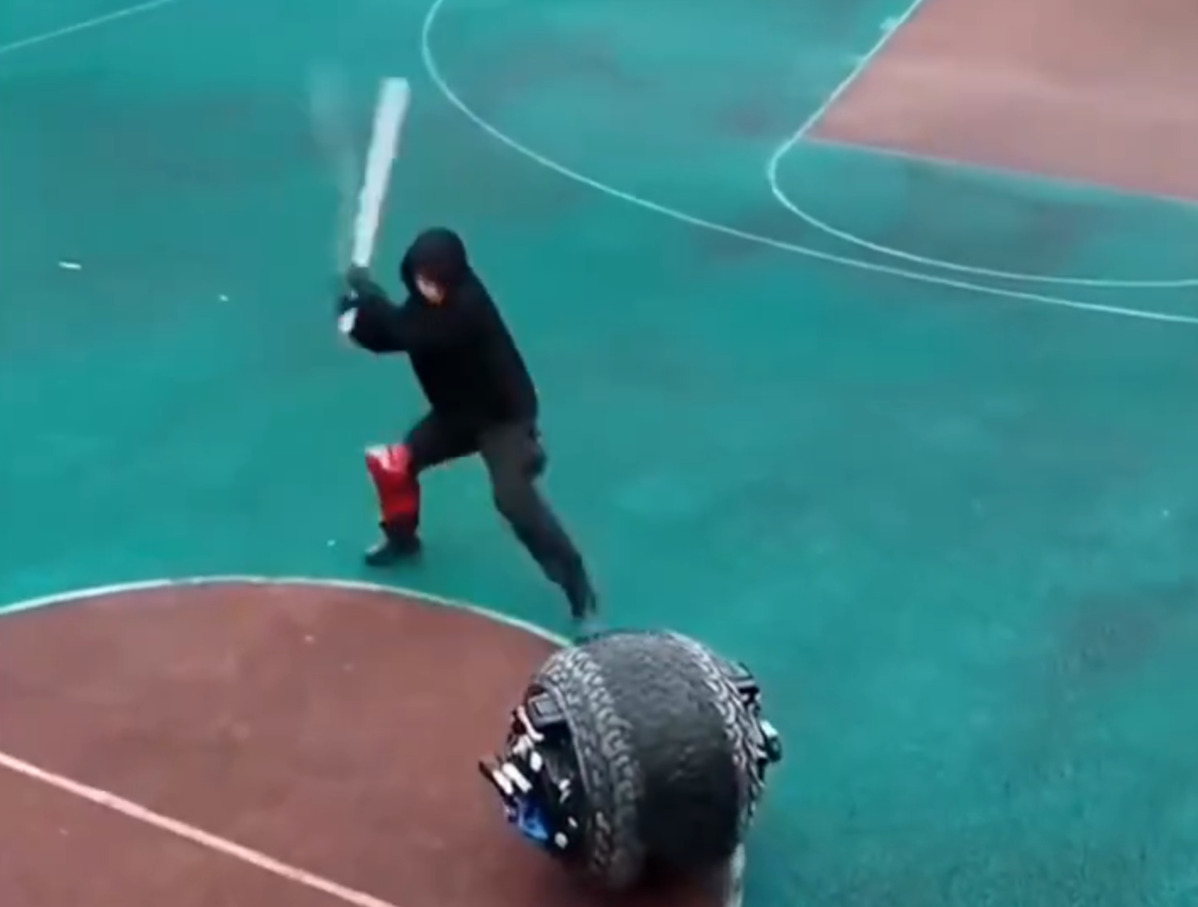
- China is testing high-speed, armored “hamster ball” robots designed for crowd control.
- The spherical units reach speeds of up to 21 mph and are equipped for remote or autonomous operation.
- Their visual design and motion evoke strong comparisons to science fiction franchises like Star Wars.
- Ethical and regulatory concerns are rising as robotic enforcement replaces human presence.
- This development signals a broader shift toward AI-driven public order technologies worldwide.
Crowd control may never look the same again. In a scene more reminiscent of a sci-fi blockbuster than a public square, China has reportedly begun deploying robotic “hamster balls”—armored, rolling units capable of navigating crowded environments at speeds up to 21 miles per hour. With no visible windows or operators, these spherical machines feel like a mashup of Robocop and the Star Wars universe brought to life.
Footage and reports suggest the devices can operate autonomously or be piloted remotely. Their applications range from urban riot response to stadium security, offering a fast, physical presence that can maneuver through large groups with surprising agility. While the exact manufacturers or internal capabilities remain undisclosed, their presence alone—gliding silently across pavement in full metallic armor—has sparked international attention.
Observers have quickly drawn parallels to the enforcer droids and rolling probes from Star Wars. The resemblance isn’t just aesthetic. These machines represent a philosophical shift in how order might be maintained: minimal human interaction, maximal control, and a visual deterrent meant to suppress unrest before it starts.
Unlike traditional riot police or static surveillance tools, these robotic spheres introduce motion as a form of power. Their ability to reposition rapidly allows for dynamic control zones, making it harder for crowds to regroup or organize resistance. This mobility also hints at future integration with AI-powered vision systems and crowd behavior prediction, suggesting an escalation in how governments can respond to—and preempt—civil unrest.
But such innovation brings complexity. Rights advocates warn that robotic crowd control systems raise critical questions about transparency, proportional use of force, and error accountability. If a rolling unit injures someone, who’s responsible? What oversight governs its deployment? These questions become even more pressing if AI systems are making real-time decisions without human intervention.
At the same time, the arms race has already begun. Other countries may follow suit, testing their own versions of robotic enforcers with varying degrees of autonomy and aggression. For governments, the appeal is clear: reduce personnel risk, increase control, and project futuristic authority. For the public, the reaction may not be so enthusiastic.
The machines may look sleek, but their symbolism is heavy. They represent not just progress, but a future where technology dictates order and the line between safety and surveillance becomes increasingly blurred.
Learn how AI Agents can supercharge your company’s profits and productivity at TMC’s AI Agent Event in Sept 29-30, 2025 in DC.

Rich Tehrani serves as CEO of TMC and chairman of ITEXPO #TECHSUPERSHOW Feb 10-12, 2026 and is CEO of RT Advisors and is a Registered Representative (investment banker) with and offering securities through Four Points Capital Partners LLC (Four Points) (Member FINRA/SIPC). He handles capital/debt raises as well as M&A. RT Advisors is not owned by Four Points.
The above is not an endorsement or recommendation to buy/sell any security or sector mentioned. No companies mentioned above are current or past clients of RT Advisors.
The views and opinions expressed above are those of the participants. While believed to be reliable, the information has not been independently verified for accuracy. Any broad, general statements made herein are provided for context only and should not be construed as exhaustive or universally applicable.
Portions of this article may have been developed with the assistance of artificial intelligence, which may have contributed to ideation, content generation, factual review, or editing.