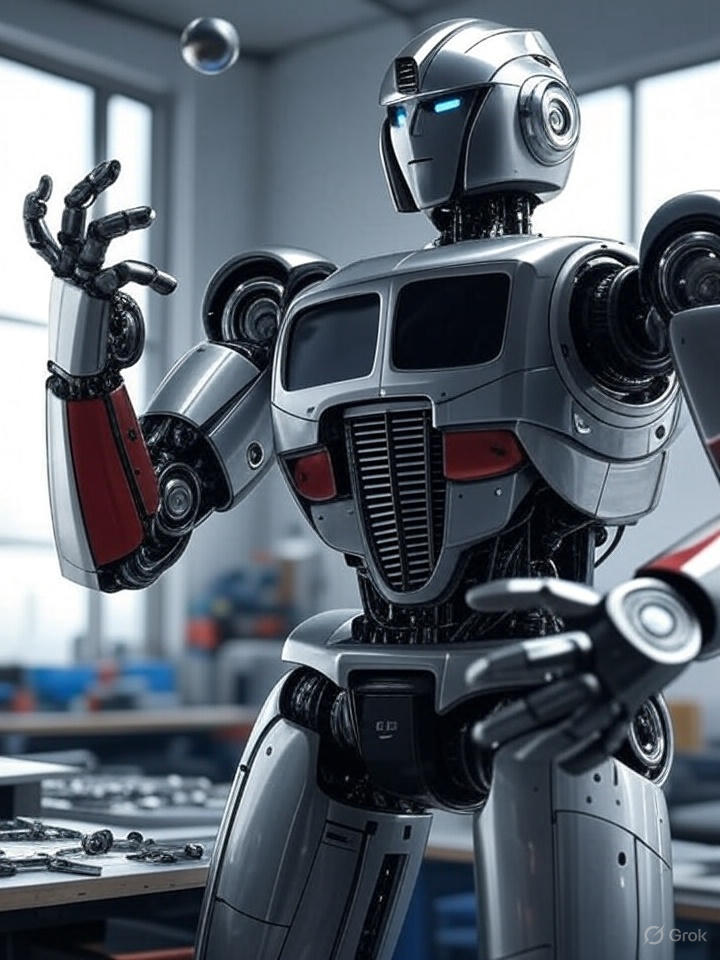
Image above not representative
Key Takeaways:
- Tesla’s first consumer Optimus units will not use the current Gen 2 design
- A redesigned Version 3 (V3) will be the production model
- Elon Musk calls the V3 design “exquisite” and better suited for manufacturing
- Gen 2 was lighter and more capable than V1 but not intended for wide release
- No launch date yet, but V3 is expected to offer higher dexterity and manufacturability
Tesla has confirmed that the production version of its humanoid robot, Optimus, will ship with a redesigned form—markedly different from the Gen 2 prototypes shown in recent demos.
Speaking during Tesla’s Q2 2025 earnings call, CEO Elon Musk said, “We are not going to make the Gen 2 design. We’re going to make the Version 3 design.” He described the updated form factor as “exquisite” and emphasized its practicality for mass production, suggesting that Tesla has made meaningful engineering refinements to improve manufacturability.
This announcement clarifies growing speculation in the robotics community after months of Gen 2 performance clips circulated online. Although Gen 2 showcased faster walking speeds, a 10 kg weight reduction, and improved hands with 11 degrees of freedom, Tesla was reportedly still working through reliability concerns, including overheating joints and transmission durability issues.
Optimus V3 is expected to address those concerns while delivering higher dexterity—potentially doubling the degrees of freedom in the robot’s hands. Reports from engineers inside Tesla suggest the new version may include up to 22 degrees of freedom per hand, allowing for more complex, human-like interactions.
The company has also faced questions about the pace of development. Earlier this year, Tesla set a goal of producing 10,000 Optimus units in 2025. But internal delays and supply chain limitations have reportedly slowed that timetable. Some industry sources claim Tesla has paused production to retool around the new V3 configuration.
In addition to physical changes, Optimus is also expected to feature improvements in its AI control systems. Tesla has previously demonstrated robots performing tasks like folding laundry, handing off objects, and even serving food in limited trials. However, many of these applications still rely partially on teleoperation or scripted movements, with Musk stating full autonomy will evolve over time through training.
Tesla’s robotics roadmap continues to draw attention, especially as other players like Figure AI and Sanctuary AI race to commercialize similar platforms. But by confirming that Optimus will launch in a completely new design, Tesla is signaling that its robot isn’t just a research showcase—it’s being shaped for the demands of real-world users.
No specific date has been given for when Optimus V3 will enter production or ship to customers. But with design changes now public and manufacturing being adjusted, it’s clear that Tesla is committed to refining the product before scaling output.
Whether Tesla can meet its previously stated goals remains uncertain. Still, this shift to Version 3 reinforces the company’s focus on delivering a robot that’s more than a prototype—it’s meant to be practical, durable, and adaptable to a wide range of tasks.