
Key Takeaways
- Researchers used CRISPR-Cas9 to remove the extra chromosome 21 in Down syndrome cell cultures.
- Edited cells showed restored gene expression to typical levels.
- The findings are limited to lab-grown stem cells and fibroblasts, not yet tested in animals or humans.
- Scientists caution that the work is an early proof of concept, not a therapy.
- Ethical considerations and broader implications for genetics remain central to the discussion.
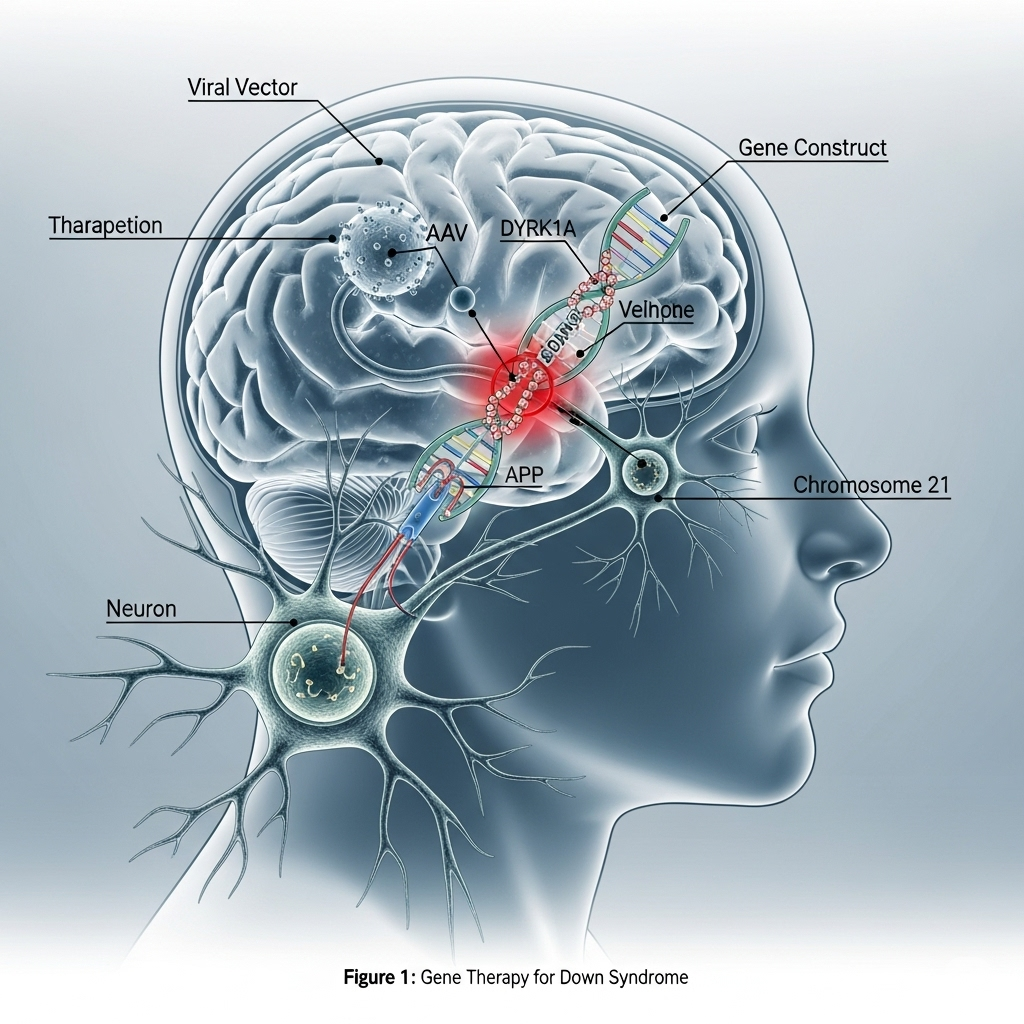
Scientists have demonstrated a striking laboratory result: removing the extra chromosome 21 from cells with Down syndrome using CRISPR-Cas9. The study, published in PNAS Nexus, reported that edited cells regained normal patterns of gene expression after the extra copy of chromosome 21 was successfully eliminated. While the discovery is generating excitement, it represents an early stage of research that is far from being applied as a treatment in people.
Down syndrome, or trisomy 21, occurs when an individual has three copies of chromosome 21 instead of the usual two. This extra genetic material alters development and is associated with intellectual disability and distinctive health challenges. Researchers at Peking University and partner institutions used CRISPR-Cas9, a gene-editing technology that has transformed biomedical science over the past decade, to target the additional chromosome in human pluripotent stem cells and fibroblasts. By selectively removing it, the cells were left with the standard two-copy structure.
According to the study, gene expression profiles in the edited cells shifted back toward typical patterns, suggesting that eliminating the third chromosome corrected the imbalance. This finding offers a proof of principle that gene editing might eventually be used to counteract the biological effects of trisomy. Reports from outlets such as SciTechDaily emphasized that this is one of the first demonstrations of reducing a full chromosomal trisomy in human-derived cells.
The research team underscored, however, that the achievement should not be interpreted as a ready-made therapy. The experiments were confined to cultured cells, which are much simpler than living organisms. The next stages—replicating results in animal models, studying effects in neurons and brain tissues, and evaluating long-term safety—are far more complex. Even if those steps prove successful, the leap to clinical applications in humans would require years of testing, extensive ethical review, and regulatory approval.
There are also technical challenges. CRISPR-Cas9 is known for its precision in targeting specific genetic sequences, but off-target effects can occur, introducing unintended edits elsewhere in the genome. Ensuring that whole chromosomes can be removed without harmful side effects is a critical hurdle. Additionally, editing chromosomes in mature tissues poses much greater obstacles than in cell cultures, raising questions about feasibility in real-world medical contexts.
Beyond science, the findings raise ethical considerations. Down syndrome is not only a medical condition but also part of a broader social and cultural identity. Advocacy groups often emphasize acceptance and support rather than framing the condition strictly in terms of cure. Research that aims to remove or reverse the extra chromosome may therefore prompt debate about its goals and implications. Balancing scientific exploration with sensitivity to these perspectives is an important part of the conversation.
Nevertheless, the study provides a potential roadmap for addressing chromosomal disorders more generally. Trisomies, such as those underlying Edwards syndrome (trisomy 18) or Patau syndrome (trisomy 13), often have severe outcomes. If techniques to reduce or eliminate extra chromosomes can be refined, they may eventually open avenues for mitigating these conditions. At the same time, researchers and clinicians caution that hopes must be measured. What works in a Petri dish rarely translates quickly to effective human therapies.
Scientists unaffiliated with the study echoed both the promise and the caution. Many described the results as a technical breakthrough worth following, while reminding the public that it is preliminary. The field of gene editing has often seen early laboratory successes spark attention, only for the challenges of complexity, delivery, and ethics to slow the path to real-world application. As with CRISPR-based therapies for single-gene diseases, moving from concept to treatment is a lengthy and uncertain process.
The work also adds to an ongoing discussion about how far genetic editing should go. While efforts are already underway to develop therapies for conditions like sickle cell disease using CRISPR, editing entire chromosomes presents a new frontier. It involves not just correcting single mutations but re-engineering the genome at a much larger scale. Regulatory bodies and bioethics panels will likely pay close attention to how such research evolves.
What is clear is that the scientific community continues to probe the boundaries of what gene editing can achieve. As one researcher noted in coverage of the study, the capacity to restore balance in gene expression by reducing chromosomal duplication highlights the flexibility of CRISPR as a tool. Still, until tests move beyond cell cultures, the implications remain largely theoretical.
The study represents an important milestone in the lab. It shows that removing an extra chromosome and normalizing gene activity is possible in a controlled environment. Whether that concept can eventually be translated into therapy for people with Down syndrome or other trisomies is a question that will take years, if not decades, to answer.
Learn how AI Agents can supercharge your company’s profits and productivity at TMC’s AI Agent Event Sept 29-30, 2025 in DC.

Rich Tehrani serves as CEO of TMC and chairman of ITEXPO #TECHSUPERSHOW Feb 10-12, 2026 and is CEO of RT Advisors and is a Registered Representative (investment banker) with and offering securities through Four Points Capital Partners LLC (Four Points) (Member FINRA/SIPC). He handles capital/debt raises as well as M&A. RT Advisors is not owned by Four Points.
The above is not an endorsement or recommendation to buy/sell any security or sector mentioned. No companies mentioned above are current or past clients of RT Advisors.
The views and opinions expressed above are those of the participants. While believed to be reliable, the information has not been independently verified for accuracy. Any broad, general statements made herein are provided for context only and should not be construed as exhaustive or universally applicable.
Portions of this article may have been developed with the assistance of artificial intelligence, which may have contributed to ideation, content generation, factual review, or editing.