Key Takeaways:
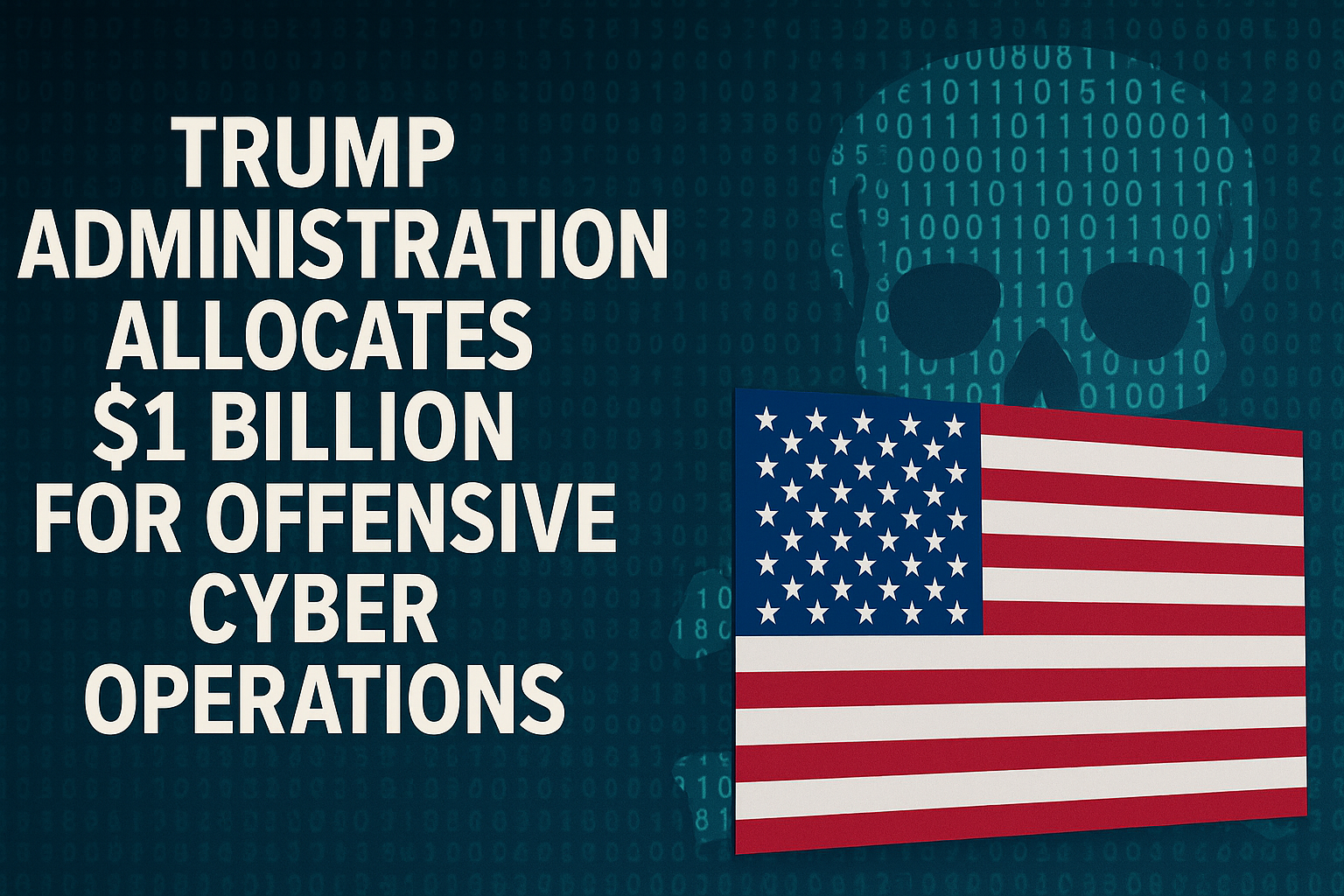
- The Department of Defense will receive $1 billion over four years to expand offensive cyber operations, particularly for Indo-Pacific Command.
- The funding increase coincides with a $1 billion cut to defensive cybersecurity efforts, including resources for CISA.
- Critics warn that bolstering offense while weakening defense could increase risks to domestic infrastructure and private entities.
- Offensive operations may involve zero-day exploits and spyware, though details remain classified.
- The strategy reflects a shift toward more aggressive cyber posturing in high-stakes geopolitical regions.

The Trump administration’s latest budget outlines a significant shift in U.S. cyber policy: a planned $1 billion investment in offensive cyber capabilities over the next four years. The majority of this funding will support the Department of Defense’s Indo-Pacific Command, signaling a clear focus on strengthening the country’s posture in Asia.
This investment in cyber offense is being made in parallel with steep cuts to the nation’s cyber defense infrastructure. The budget reduces funding to several programs, including the Cybersecurity and Infrastructure Security Agency, one of the country’s primary lines of defense against cyber threats targeting federal and private systems.
Critics, including lawmakers and cybersecurity experts, have expressed concern that this rebalancing leaves U.S. systems exposed. With fewer resources devoted to defense, adversaries may find it easier to exploit vulnerabilities in critical infrastructure, including hospitals, municipalities, and corporate networks.
The offensive cyber operations supported by the new budget could include the use of undisclosed zero-day exploits, digital espionage tools, and other forms of active network penetration. The specific tools and targets were not detailed in the legislation, but the emphasis on Indo-Pacific operations suggests a strategic focus on countering Chinese cyber activity.
While some officials argue this approach strengthens national security through deterrence and preemptive capabilities, others believe the risk of retaliation is too high, especially with reduced investment in domestic cyber resilience. The fear is that by weakening its own defenses, the U.S. could become more vulnerable to cyberattacks triggered by its own actions abroad.
The administration’s push for offensive cyber normalization follows statements made earlier this year by National Security Council officials advocating for more regular use of hacking tools in foreign policy. At the same time, reports have surfaced of staff reductions at agencies like CISA, indicating a broader reshaping of cybersecurity priorities.
The result is a cyber strategy that leans heavily toward proactive engagement overseas, with less emphasis on internal protection. As the offensive budget climbs, and the agencies responsible for securing U.S. systems are scaled back, questions remain about the long-term security implications for both the public and private sectors.
In reality, history has shown us almost all systems are vulnerable, meaning adversaries will always find a way in and will be capable of crippling U.S. infrastructure. As a result, overwhelming offensive capabilities may ensure a mutually assured destruction deterrence factor.
Learn how AI Agents can supercharge your company’s profits and productivity at TMC’s AI Agent Event, Sept 29-30, 2025 in DC.

If you liked this post, you’ll love one of the the leading global business communications and technology events since 1999, the ITEXPO #TECHSUPERSHOW, Feb 10-12, 2026 Fort Lauderdale, Florida.
Don’t forget the collocated MSP Expo – just for managed service providers!
Aside from his role as CEO of TMC and chairman of ITEXPO #TECHSUPERSHOW Feb 10-12, 2026, Rich Tehrani is CEO of RT Advisors and a Registered Representative (investment banker) with and offering securities through Four Points Capital Partners LLC (Four Points) (Member FINRA/SIPC). He handles capital/debt raises as well as M&A. RT Advisors is not owned by Four Points.
The above is not an endorsement or recommendation to buy/sell any security or sector mentioned. No companies mentioned above are current or past clients of RT Advisors.
The views and opinions expressed above are those of the participants. While believed to be reliable, the information has not been independently verified for accuracy. Any broad, general statements made herein are provided for context only and should not be construed as exhaustive or universally applicable.
Portions of this article may have been developed with the assistance of artificial intelligence, which may have contributed to ideation, content generation, factual review, or editing