
Takeaways
- Andreessen Horowitz co-founder Marc Andreessen contacted the UK Prime Minister’s office to criticize the Online Safety Act and call for the reprimand of Technology Secretary Peter Kyle over remarks about opponents of the law.
- The Act mandates age verification for content potentially harmful to children, prompting widespread adoption of tools like VPNs to bypass restrictions.
- Critics warn the legislation risks overreach, privacy breaches, and unintended censorship, while the UK government argues it protects children from harmful online material.
- The dispute has become a flashpoint between big tech advocates of free expression and regulators pursuing stricter content controls.
Article
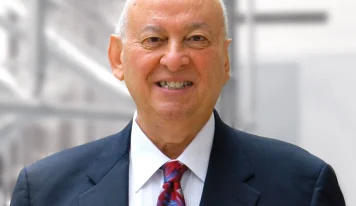
Marc Andreessen, one of Silicon Valley’s most influential venture capitalists, has escalated criticism of the United Kingdom’s Online Safety Act, contacting Downing Street directly to express concerns over the sweeping new law. According to reports, Andreessen also urged Prime Minister Sir Keir Starmer to reprimand Technology Secretary Peter Kyle after Kyle suggested opponents of the legislation were on the “side” of sex offenders.
The intervention comes as the UK becomes one of the first democratic nations to impose strict content controls requiring online platforms to verify users’ ages before allowing access to potentially harmful material. The Act targets content that could be deemed violent or sexually explicit, with the aim of protecting children from exposure.
Platforms including Google, X, Facebook, Reddit, OnlyFans, and numerous adult content sites have introduced measures such as photo ID submission, facial age estimation, credit card verification, and email-based checks. While these steps fulfill the law’s requirements, they have also driven a surge in the use of virtual private networks (VPNs), which allow users to bypass domestic restrictions by masking their location.
Government officials reportedly underestimated the scale of VPN adoption. Ministers have asked the communications regulator Ofcom for detailed data on how and when VPNs are being downloaded and used in the UK, particularly by minors. While Kyle has stated publicly that banning VPNs is not on the table, officials remain keen to understand their role in undermining the Act’s enforcement.
Supporters of the Online Safety Act frame it as a necessary response to years of inaction by major tech companies on harmful content. By linking compliance to steep penalties—up to £18 million or 10 percent of global turnover—the UK hopes to set a precedent for child protection in digital spaces. However, the rollout has been accompanied by significant backlash from multiple fronts.
Critics, including free speech advocates and privacy campaigners, argue the legislation overreaches and creates new risks. Platforms have sometimes applied age restrictions to non-sensitive content, prompting accusations of “monstrous censorship” from political parties such as Reform UK. More than 500,000 people have signed a petition to repeal the law entirely.
Andreessen, who serves on Meta’s board, has aligned with figures like Elon Musk in opposing the restrictions, warning that they undermine open access to information. In some cases, age limits have been imposed on content in services like Reddit or Spotify that was not overtly harmful, sparking further controversy.
Privacy experts warn that the age verification industry itself poses a risk. David Frautschy of the Internet Society cautioned that building large databases of personal data for age checks “will act as a honeypot for hackers and malicious actors,” arguing that this is not a path to greater online safety.
The government is also aware of overzealous enforcement by some companies. One senior official noted that certain platforms were introducing restrictions beyond what Ofcom’s guidance requires, potentially in an effort to undermine the credibility of the law. The official emphasized that the Online Safety Act still contains obligations to uphold freedom of expression and that platforms could face fines if they unnecessarily restrict lawful speech.
Another senior government source characterized Andreessen’s move as “sabre-rattling from big tech,” suggesting it stems partly from frustration over the regulator’s ability to levy substantial fines and from a broader libertarian resistance to perceived censorship.
Analysts are split on the long-term impact of this dispute. Neil Ross of the consultancy Public First described the backlash as a “flash in the pan,” pointing to polling that shows broad public support for child-protection measures. However, some Whitehall insiders warn that perceptions of overreach could damage the law’s legitimacy, particularly if legal challenges emerge over misapplication or excessive restrictions.
The UK’s experiment with mandatory age verification will be closely watched by other countries considering similar measures. Whether the Online Safety Act ultimately serves as a model for balancing child safety with digital rights—or becomes a cautionary tale of regulatory overreach—will depend on how the government, tech companies, and civil society navigate the coming months.
Learn how AI Agents can supercharge your company’s profits and productivity at TMC’s AI Agent Event in Sept 29-30, 2025 in DC.

Rich Tehrani serves as CEO of TMC and chairman of ITEXPO #TECHSUPERSHOW Feb 10-12, 2026 and is CEO of RT Advisors and is a Registered Representative (investment banker) with and offering securities through Four Points Capital Partners LLC (Four Points) (Member FINRA/SIPC). He handles capital/debt raises as well as M&A. RT Advisors is not owned by Four Points.
The above is not an endorsement or recommendation to buy/sell any security or sector mentioned. No companies mentioned above are current or past clients of RT Advisors.
The views and opinions expressed above are those of the participants. While believed to be reliable, the information has not been independently verified for accuracy. Any broad, general statements made herein are provided for context only and should not be construed as exhaustive or universally applicable.
Portions of this article may have been developed with the assistance of artificial intelligence, which may have contributed to ideation, content generation, factual review, or editing.