Key Takeaways:
- United Airlines experienced a widespread outage caused by a failure in its Unimatic system, which manages flight planning and dispatch operations.
- The issue triggered a temporary ground stop at major airports including O’Hare, Newark, Houston, Denver, and San Francisco.
- More than 1,000 United flights were delayed and roughly 6–7% were canceled across the network.
- The airline stated the problem was not cybersecurity-related and emphasized ongoing recovery and customer support efforts.
- While the system was restored the same day, residual delays continued into the following morning as operations normalized.
United Airlines suffered a significant operational disruption this week after a technology failure in its internal dispatch system led to a wave of delays and cancellations across the U.S. The glitch, traced to United’s Unimatic system—a platform used by crews to access flight schedules, aircraft assignments, and weight-and-balance data—triggered a ground stop at multiple major airports and threw much of the airline’s network into temporary disarray.
The outage began Wednesday afternoon, halting United departures at major U.S. hubs such as Chicago O’Hare, Newark Liberty, Houston Intercontinental, Denver International, and San Francisco International. The Federal Aviation Administration confirmed it had issued a ground stop for United flights at several locations following the disruption, which made critical systems inaccessible to flight crews.
In a statement, United clarified that the issue was isolated to its own technology and not linked to cybersecurity. The airline emphasized that it took immediate steps to investigate and resolve the problem and assured the public that flight safety was never at risk during the interruption.
By the time United restored system functionality later in the day, the ripple effects had already impacted a large portion of its schedule. More than 1,000 United flights—or approximately 35% of its network—experienced delays. Additionally, 6% to 7% of its scheduled flights were canceled, according to data from flight-tracking site FlightAware.
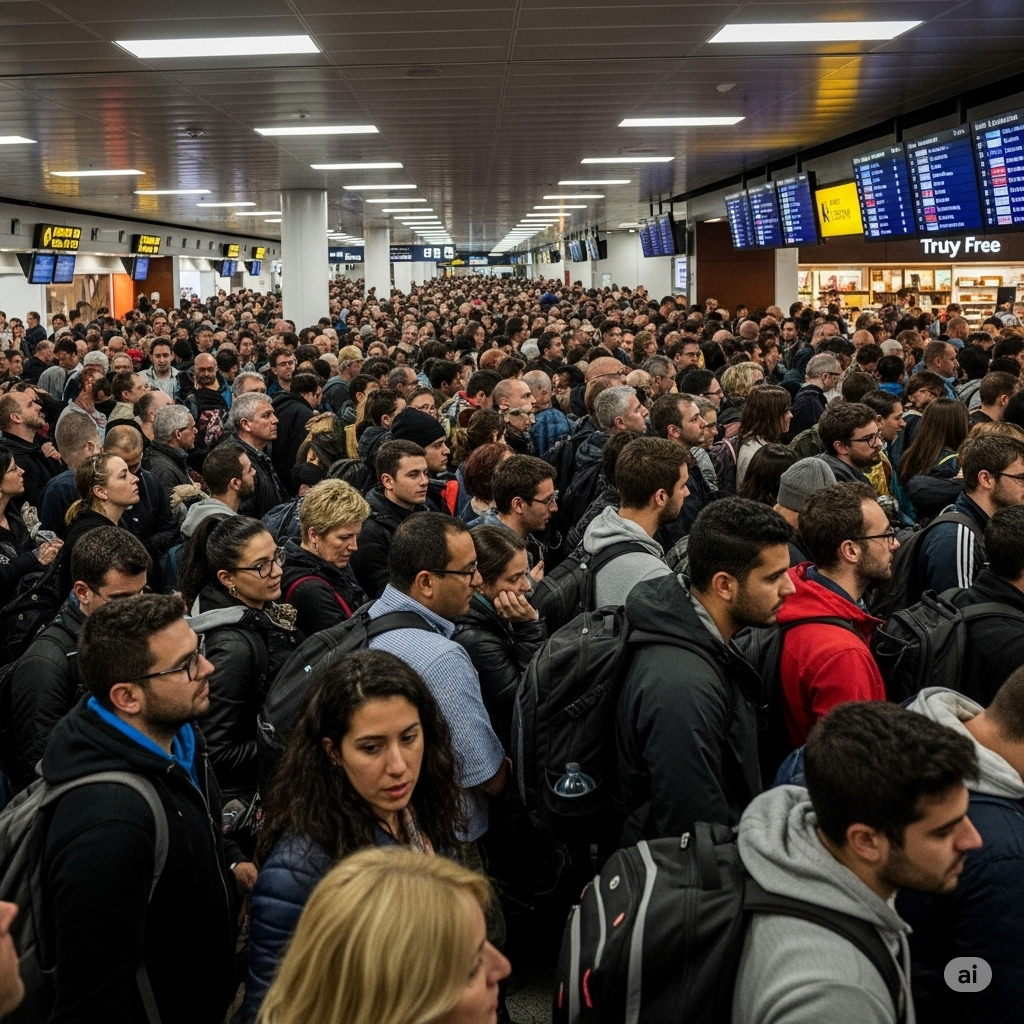
Travelers reported long lines, inconsistent communication, and gate changes as United staff worked manually to reconfigure flight operations in the absence of digital coordination tools. Some passengers were stranded overnight, and others missed connections as the backlog created cascading scheduling challenges.
United issued public apologies on social media platforms and through its press office. A spokesperson reiterated that customer service teams were actively working to rebook affected passengers and provide accommodations where needed. The airline urged travelers to check flight status updates and app notifications as operations resumed.
This disruption highlighted the heavy reliance airlines have on legacy systems like Unimatic, which was developed decades ago but remains deeply embedded in flight operations. While newer platforms exist, transitioning away from legacy infrastructure can be costly and operationally complex—particularly for airlines with global operations and tightly integrated scheduling systems.
While the specific root cause of the outage wasn’t disclosed, analysts noted that this is not the first time a legacy airline system has disrupted service at scale. Similar outages have affected major carriers in the past, including those related to scheduling tools, reservation systems, and air traffic control integrations.
The FAA lifted the ground stop after United notified the agency that its internal systems had stabilized. However, the lingering impact of hundreds of delayed aircraft led to residual delays on Thursday, particularly at the busiest United hubs. At Chicago O’Hare, for example, dozens of departures were still listed as delayed into the late morning, though airport officials said operations were steadily returning to normal.
Airline observers pointed out that while ground stops are a routine tool used to manage air traffic and prevent runway congestion, their usage on a carrier-specific basis is relatively rare and generally signals a major systems failure. The FAA’s involvement underscored the scale of the disruption and the importance of clear communication between carriers and federal aviation authorities.
Customer frustration was evident on social media, with many travelers posting photos of crowded terminals and long waits for information. Others shared screenshots of app alerts showing sudden cancellations or reassignments. United’s response teams were active on platforms like X and Facebook, directing customers to rebooking tools and offering apology messages.
In the airline’s formal statement, a spokesperson said: “Earlier today, a technology issue impacted our operations system. We identified the root cause and have restored functionality. We’re working with impacted customers to get them to their destinations as soon as possible.”
The airline also said it would conduct a thorough internal review to determine what went wrong and how to prevent similar outages in the future. The FAA indicated that it would remain in contact with United to evaluate incident reporting protocols and ensure systems meet reliability standards.
Operational technology at major airlines is often composed of layered systems—some decades old—that handle everything from crew scheduling to fuel distribution and aircraft routing. Outages in any one of these layers can cascade quickly, especially during peak travel hours, as was the case here.
The incident follows a broader industry trend of reevaluating digital infrastructure across transportation sectors. In recent months, transportation agencies and logistics providers have been prioritizing investments in automation, backup systems, and cloud-based redundancy. Airlines, in particular, face pressure to modernize without disrupting their tightly scheduled global networks.
For United, the event will likely prompt further assessment of its IT resilience and recovery protocols. While the immediate cause was reportedly identified and addressed, stakeholders—including regulators and passengers—are likely to scrutinize how long-term system improvements are prioritized going forward.
As of Thursday afternoon, United said that while most routes were operating normally, isolated disruptions might continue throughout the day. The airline encouraged all passengers with upcoming flights to monitor updates closely and remain flexible as staff continued working to resolve the residual issues.
Learn how AI Agents can supercharge your company’s profits and productivity at TMC’s AI Agent Event, Sept 29-30, 2025 in DC.

If you liked this post, you’ll love one of the the leading global business communications and technology events since 1999, the ITEXPO #TECHSUPERSHOW, Feb 10-12, 2026 Fort Lauderdale, Florida.
Don’t forget the collocated MSP Expo – just for managed service providers!
Aside from his role as CEO of TMC and chairman of ITEXPO #TECHSUPERSHOW Feb 10-12, 2026, Rich Tehrani is CEO of RT Advisors and a Registered Representative (investment banker) with and offering securities through Four Points Capital Partners LLC (Four Points) (Member FINRA/SIPC). He handles capital/debt raises as well as M&A. RT Advisors is not owned by Four Points.
The above is not an endorsement or recommendation to buy/sell any security or sector mentioned. No companies mentioned above are current or past clients of RT Advisors.
The views and opinions expressed above are those of the participants. While believed to be reliable, the information has not been independently verified for accuracy. Any broad, general statements made herein are provided for context only and should not be construed as exhaustive or universally applicable.
Portions of this article may have been developed with the assistance of artificial intelligence, which may have contributed to ideation, content generation, factual review, or editing