Key Takeaways:
• Vibe coding emphasizes spontaneity, but skipping version control, structure, and planning often leads to brittle, abandoned projects
• Common pitfalls include ignoring errors, copying code blindly, and failing to define a clear outcome
• Developers can avoid these traps by adding minimal structure—like using Git, documenting setup steps, and setting basic goals
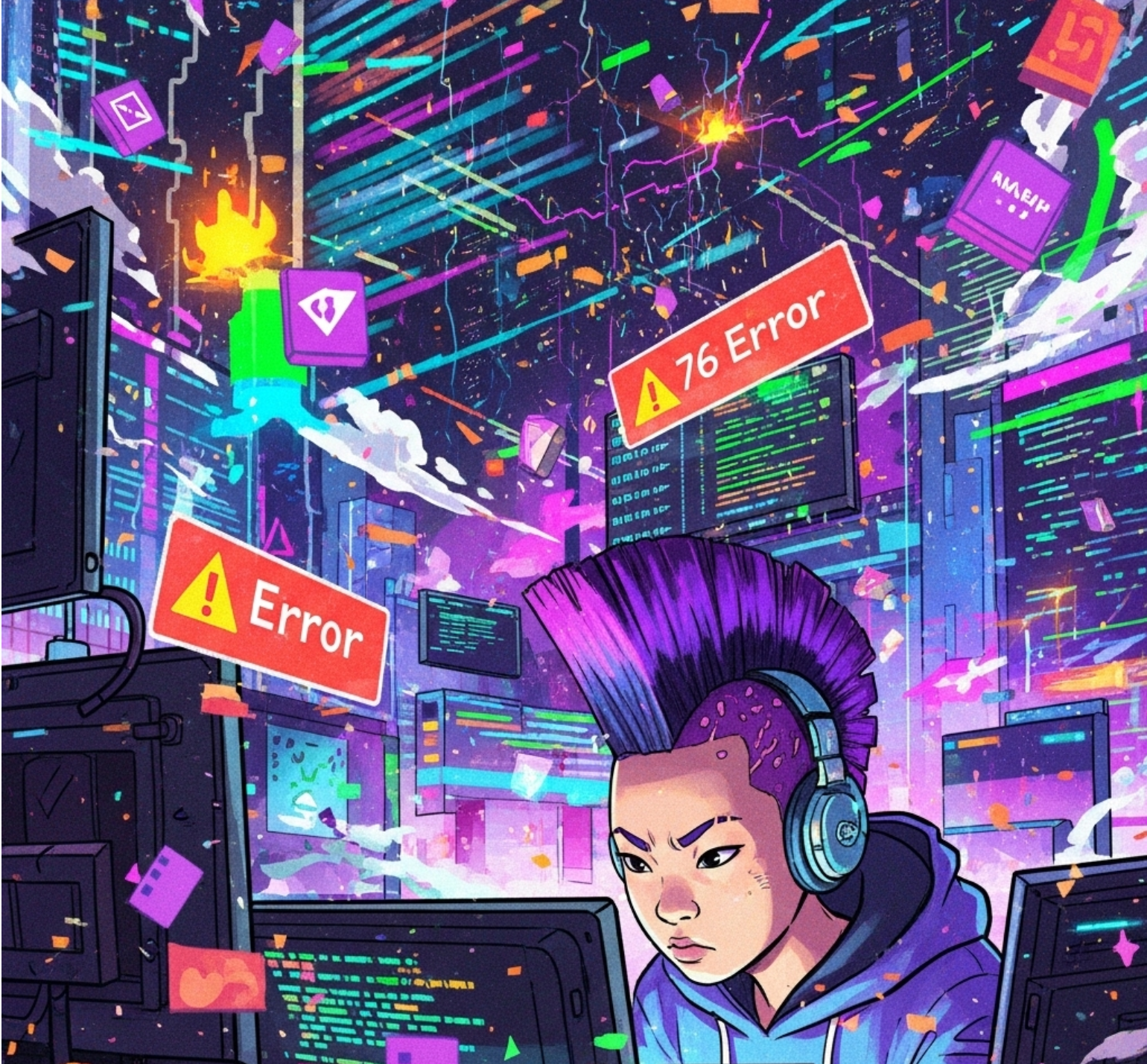
Vibe coding—when developers dive into a project based on inspiration rather than a plan—can be an energizing way to build. It’s fast, unfiltered, and often fun. But while it can produce creative breakthroughs, it can also lead to messes that are hard to debug, maintain, or even finish.
Across developer forums, project postmortems, and community platforms like Reddit and Dev.to, many experienced coders agree: vibe coding is great for getting started, but it comes with common and avoidable pitfalls. Here are the most frequent mistakes—and how to fix them.
1. Skipping Version Control Completely
Many vibe coders avoid Git because it feels like overkill or slows them down. But without it, one bad save or deletion can wipe out hours of work. There’s also no way to roll back, experiment safely, or collaborate.
Fix: Run git init from the beginning. Make regular commits. Push to GitHub or GitLab—even if the project is just for you.
2. Improvising Structure Until It’s Too Late
Starting in a single file is fine. But when the project grows and there’s no organization, your functions, assets, and components become a tangled mess. That makes debugging harder and onboarding others nearly impossible.
Fix: Separate your logic early (e.g., keep data, UI, and routing in different folders). If you’re using a framework like React or Flask, follow its project structure conventions from day one.
3. Not Defining a Clear Finish Line
Vibe coding is often directionless. You start building a fun feature, add more, and eventually lose steam because there was never a clear idea of what “done” looked like.
Fix: Before you write a line of code, jot down a one-sentence goal and 3–5 features that define a complete version. You can always add more later—but this keeps you on track.
4. Ignoring Errors and Console Warnings
When you’re in the zone, it’s tempting to ignore warnings or errors and just keep building. But many vibe projects crash because those warnings become blockers down the road.
Fix: Pay attention to what your terminal or browser console is telling you. At minimum, log critical issues and revisit them during a cleanup pass.
5. Writing No Tests at All
Tests feel like the opposite of vibe. But even a few basic unit tests can make your life easier—especially when you refactor or expand your project.
Fix: Add lightweight tests using tools like Jest (JavaScript), Pytest (Python), or Vitest (Vite). Test core logic—anything that transforms or validates data.
6. Copy-Pasting Without Understanding
Copying code from Stack Overflow or ChatGPT can save time—but if you don’t understand what it does, you risk importing security flaws, breaking other parts of your project, or introducing untraceable bugs.
Fix: Read the snippet. Understand the function. Check documentation. Never paste blindly—especially into production code.
7. Forgetting to Document Dependencies and Setup
You might finish a vibe project and want to revisit it later—or share it with a friend—only to realize you forgot which packages you used or how to run it.
Fix: Add a simple README.md and a requirements.txt or package.json. Include install steps, commands to run the app, and any environment variables.
8. Building UIs Without Planning State
You throw together a slick interface, then realize the logic for user input, loading states, or dynamic views is completely broken—or handled in five contradictory ways.
Fix: Use a state manager from the start. For frontend work, React’s useState and useReducer are great entry points. On the backend, map out state flows on paper or a whiteboard.
Conclusion
Vibe coding can be a great creative outlet and a fast way to start learning or prototyping. But without minimal structure, many projects fall apart before they ship. The solution isn’t to stop vibe coding—it’s to combine flow with lightweight discipline.
By using Git, defining basic goals, documenting as you go, and writing just enough tests, you keep the good parts of vibe coding—momentum, creativity, exploration—while reducing chaos and burnout. With a few guardrails, your best ideas have a much better chance of becoming finished products, not just folders lost in your desktop’s graveyard.
Learn how AI Agents can supercharge your company’s profits and productivity at TMC’s AI Agent Event, Sept 29-30, 2025 in DC.

If you liked this post, you’ll love one of the the leading global business communications and technology events since 1999, the ITEXPO #TECHSUPERSHOW, Feb 10-12, 2026 Fort Lauderdale, Florida.
Don’t forget the collocated MSP Expo – just for managed service providers!
Aside from his role as CEO of TMC and chairman of ITEXPO #TECHSUPERSHOW Feb 10-12, 2026, Rich Tehrani is CEO of RT Advisors and a Registered Representative (investment banker) with and offering securities through Four Points Capital Partners LLC (Four Points) (Member FINRA/SIPC). He handles capital/debt raises as well as M&A. RT Advisors is not owned by Four Points.
The above is not an endorsement or recommendation to buy/sell any security or sector mentioned. No companies mentioned above are current or past clients of RT Advisors.
The views and opinions expressed above are those of the participants. While believed to be reliable, the information has not been independently verified for accuracy. Any broad, general statements made herein are provided for context only and should not be construed as exhaustive or universally applicable.
Portions of this article may have been developed with the assistance of artificial intelligence, which may have contributed to ideation, content generation, factual review, or editing