Key Takeaways:
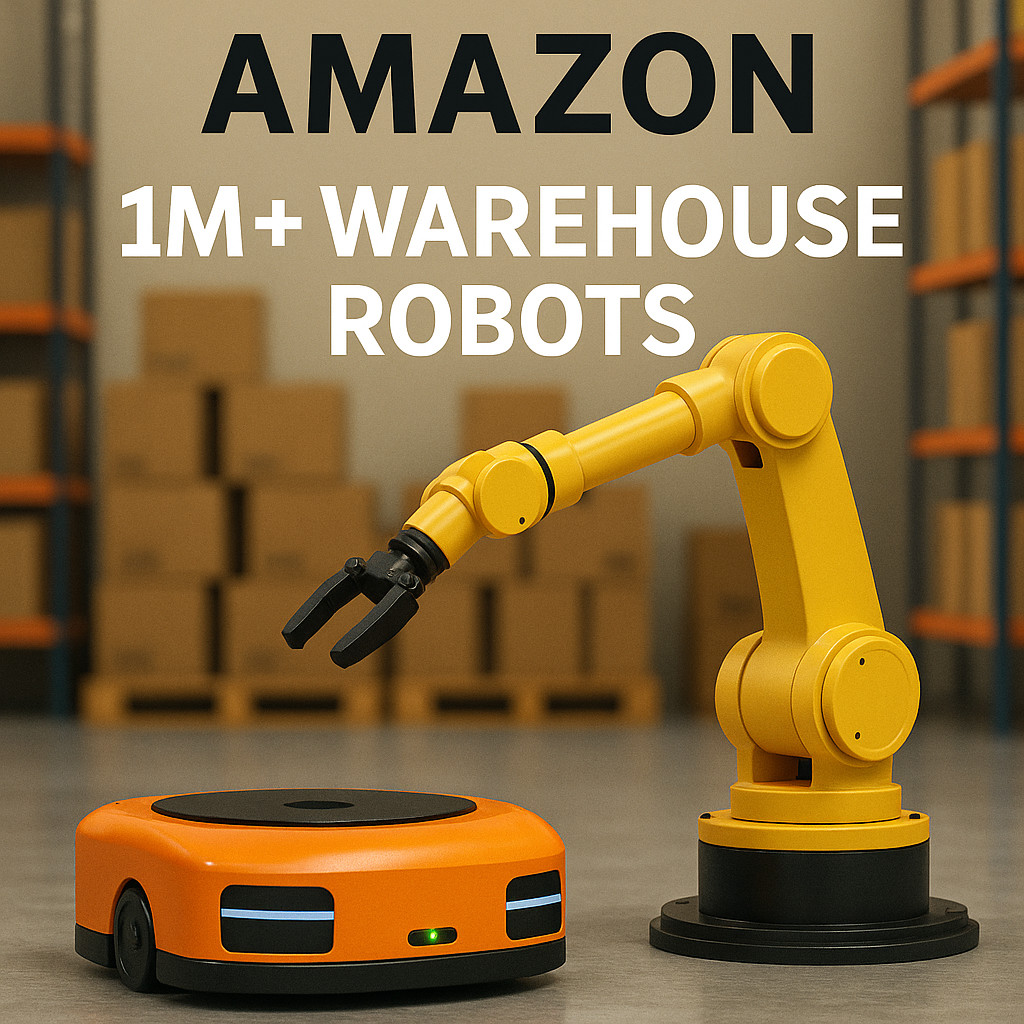
- Amazon operates over 1 million robots across its warehouse network
- Robotics support 75% of global deliveries, boosting productivity
- Workforce per facility has dropped to its lowest in 16 years
- Human employees now oversee and collaborate with automated systems
- Amazon projects long-term savings and faster delivery through automation
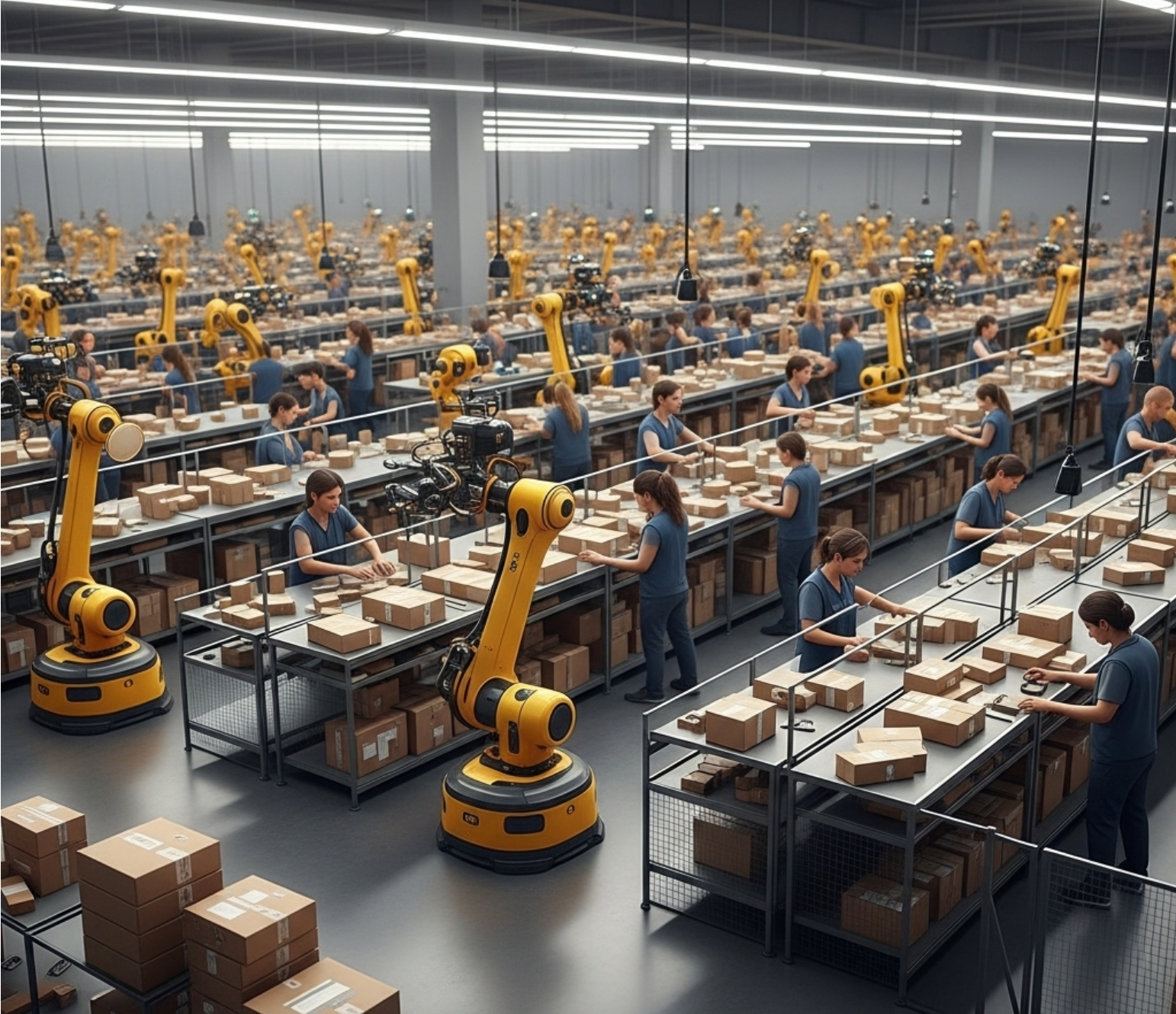
Amazon is approaching a milestone that underscores its evolving logistics strategy: it now has over 1 million robots working alongside—or in some cases instead of—its human workforce. With a headcount of approximately 1.56 million employees globally, the company’s use of robotics is nearing parity with its human labor force. While full replacement isn’t on the immediate horizon, the balance is shifting.
Robots currently help fulfill about 75% of Amazon orders worldwide. The newest generation includes advanced models like “Vulcan,” which use cameras and pressure sensors to handle delicate items. Other systems help transport inventory, scan packages, and in some cases collaborate with humans through voice commands. Amazon is even testing humanoid machines capable of walking and manipulating physical environments in ways closer to human motion.
Amazon insists the goal isn’t to eliminate human jobs but to reduce physical strain and improve efficiency. “Automation helps eliminate walking, lifting, and repetitive tasks, so employees can focus on more complex work,” said Scott Dresser, VP of Amazon Robotics. However, data shows the average number of workers per facility has fallen to about 670—its lowest level since at least 2008. While that decline may reflect improved workflows, it also underscores the growing role of automation in shaping labor needs.
Some workers, like Neisha Cruz in Arizona, have transitioned from physically demanding warehouse roles to overseeing robot fleets—a job that pays 2.5 times more than her previous role. These transitions reflect Amazon’s broader upskilling initiatives, which the company says have reached over 700,000 employees in the past few years.
From a financial perspective, automation is becoming a core part of Amazon’s strategy to cut costs and maintain its delivery edge. CEO Andy Jassy has signaled tighter headcount controls and major capital expenditures focused on AI and robotics infrastructure. Industry analysts estimate Amazon could save $10 billion annually by 2030 if automation continues to scale at its current pace.
That said, some tasks remain out of reach for today’s machines. Handling irregularly shaped, fragile, or unlabeled items often still requires a human touch. For now, automation is a tool for speed and scale—not full replacement.
As Amazon continues to scale its robotics capabilities, it may set the tone for automation in logistics and manufacturing industries more broadly. The company’s dual strategy—improving human efficiency while pushing the limits of automation—presents a case study in balancing technological ambition with labor realities. The question for others in the industry is how far, and how fast, to follow.
Learn how AI Agents can supercharge your company’s profits and productivity at TMC’s AI Agent Event in Sept 29-30, 2025 in DC.

Rich Tehrani serves as CEO of TMC and chairman of ITEXPO #TECHSUPERSHOW Feb 10-12, 2026 and is CEO of RT Advisors and is a Registered Representative (investment banker) with and offering securities through Four Points Capital Partners LLC (Four Points) (Member FINRA/SIPC). He handles capital/debt raises as well as M&A. RT Advisors is not owned by Four Points.
The above is not an endorsement or recommendation to buy/sell any security or sector mentioned. No companies mentioned above are current or past clients of RT Advisors.
The views and opinions expressed above are those of the participants. While believed to be reliable, the information has not been independently verified for accuracy. Any broad, general statements made herein are provided for context only and should not be construed as exhaustive or universally applicable.
Portions of this article may have been developed with the assistance of artificial intelligence, which may have contributed to ideation, content generation, factual review, or editing.