
Key Takeaways:
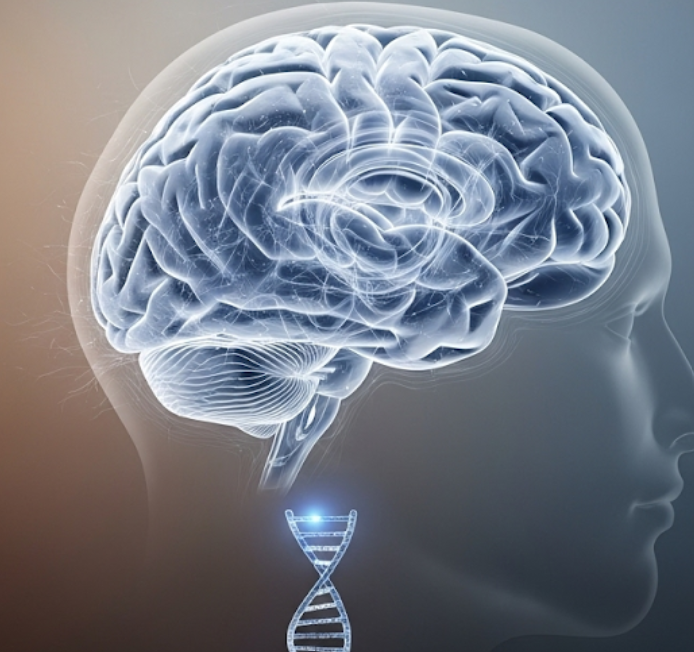
- Scientists have identified a 442-letter DNA sequence that may have contributed to human brain evolution.
- The sequence appears to influence neuron growth and the balance of different brain cell types.
- Researchers believe this genetic code could be linked to cognitive flexibility, a key trait in humans.
- The study highlights how small genetic variations can shape brain development.
- Further research is needed to understand the full function and implications of this DNA sequence.
Researchers have uncovered a small but potentially important piece of the genetic puzzle behind human brain evolution. A recent study described by StudyFinds points to a DNA sequence just 442 nucleotides in length that appears to play a role in how neurons grow and how brain cells are balanced during development. Although compact compared to the vastness of the genome, this segment may have helped shape the human brain’s distinctiveness.
A Closer Look at the Discovery
The human brain is often described as the most complex organ in the natural world. Scientists have long searched for the genetic changes that might explain why our cognitive abilities diverged so significantly from those of other primates. This study focuses on a small DNA sequence that could act as a regulatory element, influencing when and how neurons form. The discovery suggests that even minute alterations in genetic code can have large-scale effects on brain development.
The sequence under examination is thought to regulate gene expression in ways that may encourage cognitive flexibility. That term refers to the ability to switch between ideas, adapt to new information, and change strategies when necessary—capabilities that are central to human problem-solving and decision-making.
Why This Matters
The finding illustrates how subtle genetic changes can be as influential as large structural ones. While scientists have previously studied broad mutations or gene duplications that may have affected brain size, this work points to the importance of small regulatory elements. According to the researchers, the 442-letter code may act like a switch, guiding the brain to balance different types of neurons during growth. That balance could help explain why humans developed unique patterns of thinking.
One researcher involved in the project noted that “the size of a genetic sequence does not necessarily predict its importance.” In other words, it is not always the big mutations that matter most. Sometimes, smaller elements can trigger cascades of developmental changes that lead to profound differences in function.
The Evolutionary Angle
Comparisons with primate DNA suggest that this sequence is either absent or functions differently in our closest relatives. If this proves correct, it could mark one of the subtle divergences that gave rise to modern human cognition. The study adds to a growing body of evidence that brain evolution was not driven by one single change, but by a patchwork of adjustments in gene expression, neural connectivity, and environmental adaptation.
The discovery also highlights the importance of noncoding DNA—stretches of the genome that do not directly create proteins but instead influence how genes are used. For years, noncoding DNA was dismissed as “junk.” Today, scientists increasingly see these elements as crucial regulators of biology, especially in complex systems like the brain.
What Is Still Unknown
Although the sequence appears promising, the research is still in its early stages. Scientists have yet to determine the exact mechanisms by which it influences neuron development. It is also unclear whether variations in this sequence among individuals might affect cognitive traits or neurological disorders.
Future research could involve experiments that modify the sequence in animal or cellular models to observe the effects on brain development. Such work might also explore whether the code interacts with other parts of the genome, creating broader patterns of regulation.
Implications for Neuroscience
If confirmed, this discovery could inform studies on neurodevelopmental conditions. For example, understanding how neurons balance and mature may offer insights into disorders where brain wiring goes awry. At the same time, the researchers caution against jumping to conclusions. This sequence is only one piece of an extremely complex picture. The human brain is shaped by thousands of interacting factors, both genetic and environmental.
Nevertheless, the study is an example of how detailed genomic research can reveal the hidden architecture of human biology. By identifying specific sequences that may have influenced evolution, scientists get closer to understanding not just where we came from, but how our brains continue to function today.
Looking Ahead
The next steps will likely involve more comparative studies across species, as well as deeper analysis of how the sequence works in practice. Advances in CRISPR and other gene-editing tools may make it possible to test its effects in controlled experiments. Over time, this line of research may also intersect with medical genetics, especially if links emerge between the sequence and neurological health.
For now, the findings underscore a central theme in modern biology: small changes can have large consequences. A 442-letter DNA code may not sound like much in a genome of three billion base pairs, but its influence could have shaped some of the qualities that make humans distinct.
Learn how AI Agents can supercharge your company’s profits and productivity at TMC’s AI Agent Event Sept 29-30, 2025 in DC.

Rich Tehrani serves as CEO of TMC and chairman of ITEXPO #TECHSUPERSHOW Feb 10-12, 2026 and is CEO of RT Advisors and is a Registered Representative (investment banker) with and offering securities through Four Points Capital Partners LLC (Four Points) (Member FINRA/SIPC). He handles capital/debt raises as well as M&A. RT Advisors is not owned by Four Points.
The above is not an endorsement or recommendation to buy/sell any security or sector mentioned. No companies mentioned above are current or past clients of RT Advisors.
The views and opinions expressed above are those of the participants. While believed to be reliable, the information has not been independently verified for accuracy. Any broad, general statements made herein are provided for context only and should not be construed as exhaustive or universally applicable.
Portions of this article may have been developed with the assistance of artificial intelligence, which may have contributed to ideation, content generation, factual review, or editing.