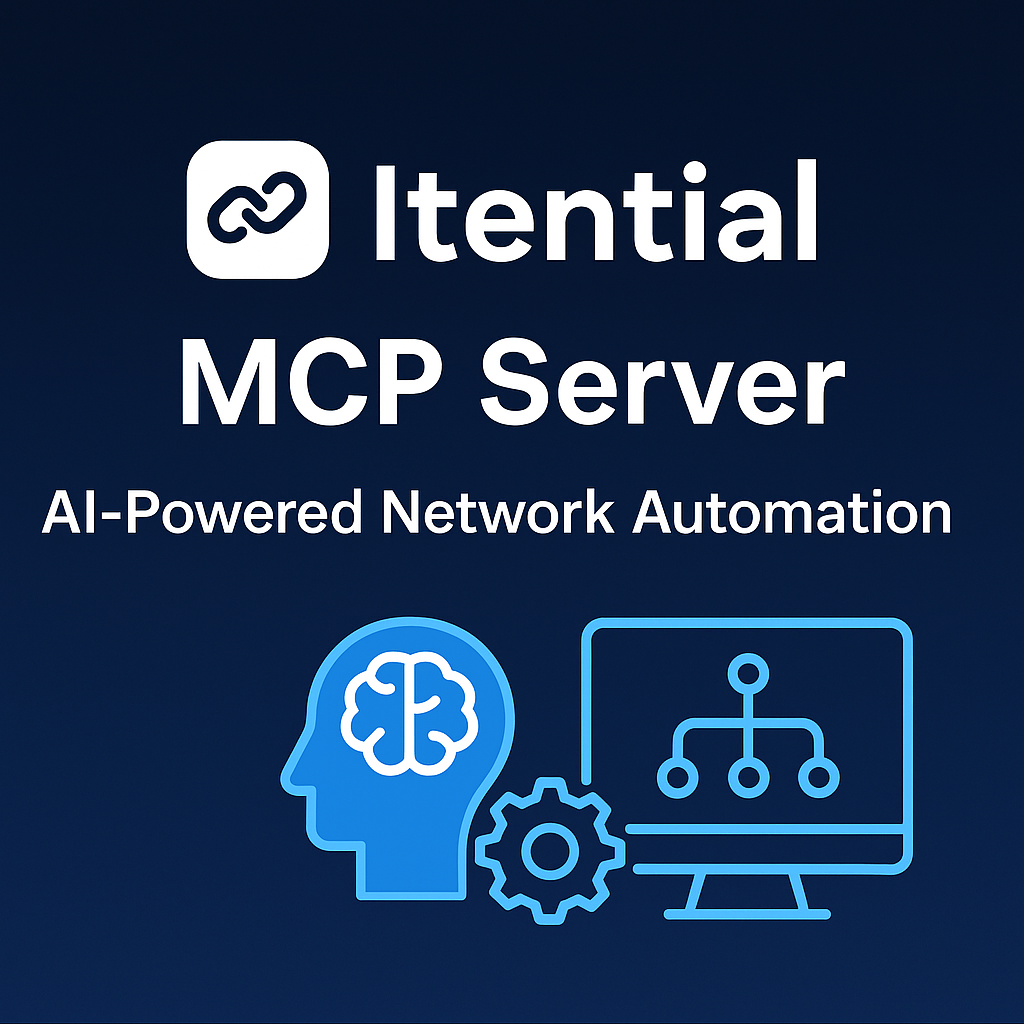
As IT infrastructure becomes more complex and real-time demands increase, network teams are under pressure to automate more—without sacrificing control. A new solution is stepping into that gap: Itential’s MCP Server. It’s designed to connect AI-generated insights to actual changes in network systems, offering a way to turn data into action while preserving compliance, security, and operational oversight.
The move signals a broader shift in how enterprises approach automation. Instead of simply integrating tools, companies are now seeking orchestration layers that enable AI to operate with real-world impact—safely and at scale.
3 Key Takeaways
- AI-generated insights can now trigger automated infrastructure changes directly, reducing manual intervention and improving response times.
- The MCP Server adds governance and policy enforcement to AI operations, ensuring safe and compliant automation.
- Integration with observability tools creates a closed-loop system where issues are detected and resolved autonomously.

Chief Architect ‐ Itential
A while back, I started tinkering with LLMs in my home lab, feeding them network configs to see what they’d spit out. The results were wild — one prompt, and I had a Python script for VLAN provisioning that almost worked. Another, and I got a decent root cause analysis for a flaky BGP session. But here’s the catch: as exciting as it was, it felt like playing with a wildfire. No guardrails, no audit trail, just raw AI power loose on my network.
That’s when it hit me: AI’s transforming automation faster than anything I’ve seen since the DevOps wave at Red Hat, but without security and enterprise-grade control, it’s a recipe for chaos.
Peter Sprygada,
Chief Architect ‐ Itential
What MCP Server Does Differently
The MCP Server uses a framework based on the Model Context Protocol (MCP), an emerging open standard designed to let AI agents securely interact with IT systems. It allows AI to request, validate, and execute infrastructure tasks—such as closing support tickets, adjusting configurations, or restarting services—within a controlled environment.
Unlike traditional automation tools, which rely on predefined scripts, the MCP Server introduces a layer of intelligence. AI doesn’t just follow a playbook—it makes decisions, but within boundaries set by enterprise IT teams. This gives organizations the benefit of speed without surrendering oversight.
Closing the Loop with Observability
One of the most promising aspects of the MCP Server is its integration with observability platforms like Selector AI. These platforms identify anomalies, performance degradations, or unusual patterns in system behavior. Once an issue is flagged, the MCP Server can take over, triggering a remediation workflow that’s already been approved.
This allows for a closed-loop automation process—detect, decide, act. In practice, this can reduce downtime, shrink response windows, and improve service reliability without requiring human intervention at every step.

Why This Matters for Enterprises
Automation in network operations has always been a balancing act. IT leaders want speed, but not at the cost of control. They want efficiency, but they also need accountability. The MCP Server appears to offer a middle path—autonomous, but auditable.
For large enterprises, this means:
- Faster resolution of network issues, especially during off-hours or high-volume events
- Less time spent on routine manual tasks by network and support teams
- More consistent policy enforcement and reduced risk of human error
- Increased ability to scale operations without scaling headcount
It also aligns well with existing infrastructure by acting as an overlay—not a rip-and-replace solution—making it easier to adopt incrementally.
Itential’s MCP Server is similar to MLOps in that both aim to operationalize AI through automation, governance, and feedback.
MLOps manages the machine learning lifecycle—training, deployment, and monitoring—while MCP Server applies AI to infrastructure, triggering actions like config changes or ticket closures.
Both enforce governance: MLOps through version control and reproducibility, MCP Server through policy-based guardrails.
Each supports closed-loop automation—MLOps retrains models based on data drift; MCP Server auto-remediates based on real-time network conditions.
Ultimately, both help teams scale AI safely and collaboratively, turning insight into controlled, real-world action.
Looking Ahead
The introduction of platforms like the MCP Server suggests a shift in how enterprises think about AI’s role in IT. It’s no longer just about dashboards or insights. The focus is now on what AI can actually do—and how to make that action safe, repeatable, and policy-aware.
As companies continue to digitize and automate, the value of orchestrated AI workflows will likely grow. Tools that give enterprises the confidence to let AI act—without creating new vulnerabilities—may soon become standard in the modern IT stack.
Let me know if you’d like headlines or a custom graphic to go with this.
Learn how AI Agents can supercharge your company’s profits and productivity at TMC’s AI Agent Event, Sept 29-30, 2025 in DC.

If you liked this post, you’ll love one of the the leading global business communications and technology events since 1999, the ITEXPO #TECHSUPERSHOW, Feb 10-12, 2026 Fort Lauderdale, Florida.
Don’t forget the collocated MSP Expo – just for managed service providers!
Aside from his role as CEO of TMC and chairman of ITEXPO #TECHSUPERSHOW Feb 10-12, 2026, Rich Tehrani is CEO of RT Advisors and a Registered Representative (investment banker) with and offering securities through Four Points Capital Partners LLC (Four Points) (Member FINRA/SIPC). He handles capital/debt raises as well as M&A. RT Advisors is not owned by Four Points.
The above is not an endorsement or recommendation to buy/sell any security or sector mentioned. No companies mentioned above are current or past clients of RT Advisors.
The views and opinions expressed above are those of the participants. While believed to be reliable, the information has not been independently verified for accuracy. Any broad, general statements made herein are provided for context only and should not be construed as exhaustive or universally applicable.
Portions of this article may have been developed with the assistance of artificial intelligence, which may have contributed to ideation, content generation, factual review, or editing