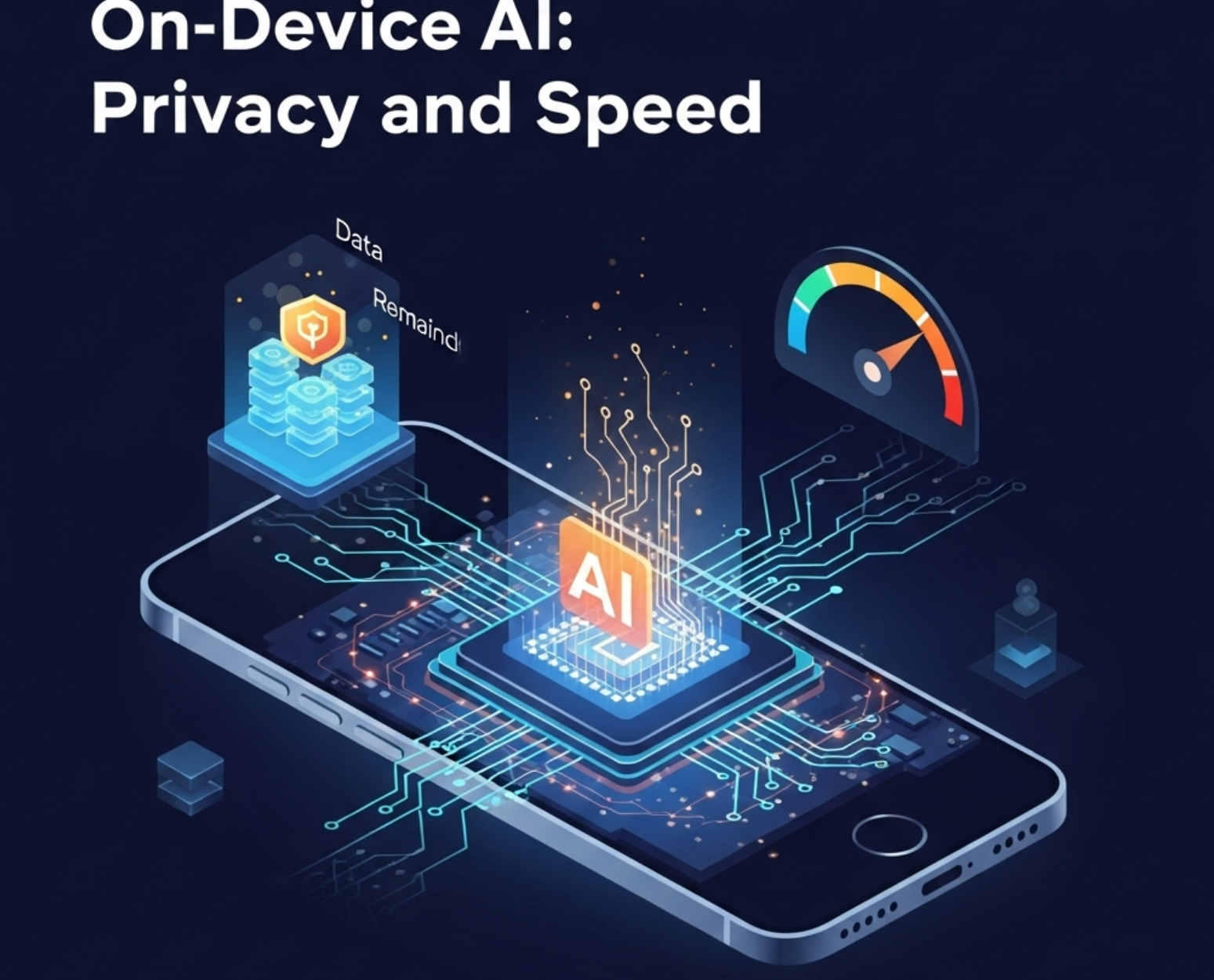
Google has introduced the AI Edge Gallery, an experimental platform showcasing a collection of on-device artificial intelligence applications. This initiative provides a glimpse into the potential of running AI models directly on user devices, offering benefits such as enhanced privacy, lower latency, and the ability to function offline.
For corporations where workers are limited to outdated or infrequently updated models that are approved by IT, this could be a way to explore more leading edge AI while not running afoul of privacy guidelines which could expose PII or other information to cloud based LLMs.
The AI Edge Gallery features applications developed by Google and potentially external collaborators. These applications are designed to demonstrate various capabilities enabled by on-device AI, including areas like image recognition, natural language processing, and contextual awareness.
Potential Advantages of On-Device AI:
- Enhanced Privacy: Processing data locally on the device can reduce the need to transmit sensitive information to remote servers, potentially improving user privacy.
- Reduced Latency: Executing AI models directly on the device can lead to faster response times as data doesn’t need to travel to and from a server for processing. This can be particularly beneficial for real-time applications.
- Offline Functionality: On-device AI can enable applications to function even without an active internet connection, increasing reliability and accessibility in areas with limited or no connectivity.
- Lower Bandwidth Consumption: By processing data locally, on-device AI can decrease the amount of data transmitted over networks, potentially saving bandwidth and reducing data costs.
- Increased Responsiveness: Applications leveraging on-device AI may feel more responsive and seamless as they don’t rely on network conditions for processing.
Focus on Experimentation:
It’s important to note that the AI Edge Gallery is presented as an experimental platform. The applications featured are likely intended to explore the possibilities and limitations of current on-device AI technologies. Their availability and functionality may be subject to change as Google continues its research and development in this area.
Potential Applications Demonstrated:
While specific details of all applications in the gallery may evolve, such platforms often showcase potential use cases such as:
- Advanced Image Recognition: Identifying objects, scenes, or text within images directly on the device.
- Real-time Language Translation: Translating spoken or written language without requiring an internet connection.
- Smart Text Input: Enhancing keyboard functionality with context-aware suggestions and corrections.
- Personalized Experiences: Tailoring application behavior and content based on on-device analysis of user interactions.
- Accessibility Features: Enabling new accessibility options through on-device processing of audio and visual information.
Implications for Users and Developers:
The development of robust on-device AI capabilities could have several implications:
- For Users: Potentially leading to more private, faster, and more reliable mobile experiences with enhanced features.
- For Developers: Offering new opportunities to create innovative applications that leverage the power of AI directly on user devices, without constant reliance on cloud infrastructure.
Conclusion:
Google’s AI Edge Gallery appears to be an initiative focused on exploring and demonstrating the potential of on-device artificial intelligence. By showcasing experimental applications, Google provides insights into the future of mobile AI and the potential benefits of processing data locally on user devices. This exploration could pave the way for new features and functionalities in future applications, emphasizing privacy, speed, and offline capabilities. As the platform is experimental, the specific applications and their features may evolve over time as Google continues its research in edge AI technologies.
Learn how AI Agents can supercharge your company’s profits and productivity at TMC’s AI Agent Event in Sept 29-30, 2025 in DC.

Aside from his role as CEO of TMC and chairman of ITEXPO #TECHSUPERSHOW Feb 10-12, 2026, Rich Tehrani is CEO of RT Advisors and a Registered Representative (investment banker) with and offering securities through Four Points Capital Partners LLC (Four Points) (Member FINRA/SIPC). He handles capital/debt raises as well as M&A. RT Advisors is not owned by Four Points.
The above is not an endorsement or recommendation to buy/sell any security or sector mentioned. No companies mentioned above are current or past clients of RT Advisors.
The views and opinions expressed above are those of the participants. While believed to be reliable, the information has not been independently verified for accuracy. Any broad, general statements made herein are provided for context only and should not be construed as exhaustive or universally applicable.
Portions of this article may have been developed with the assistance of artificial intelligence, which may have contributed to ideation, content generation, factual review, or editing.