Key Takeaways:
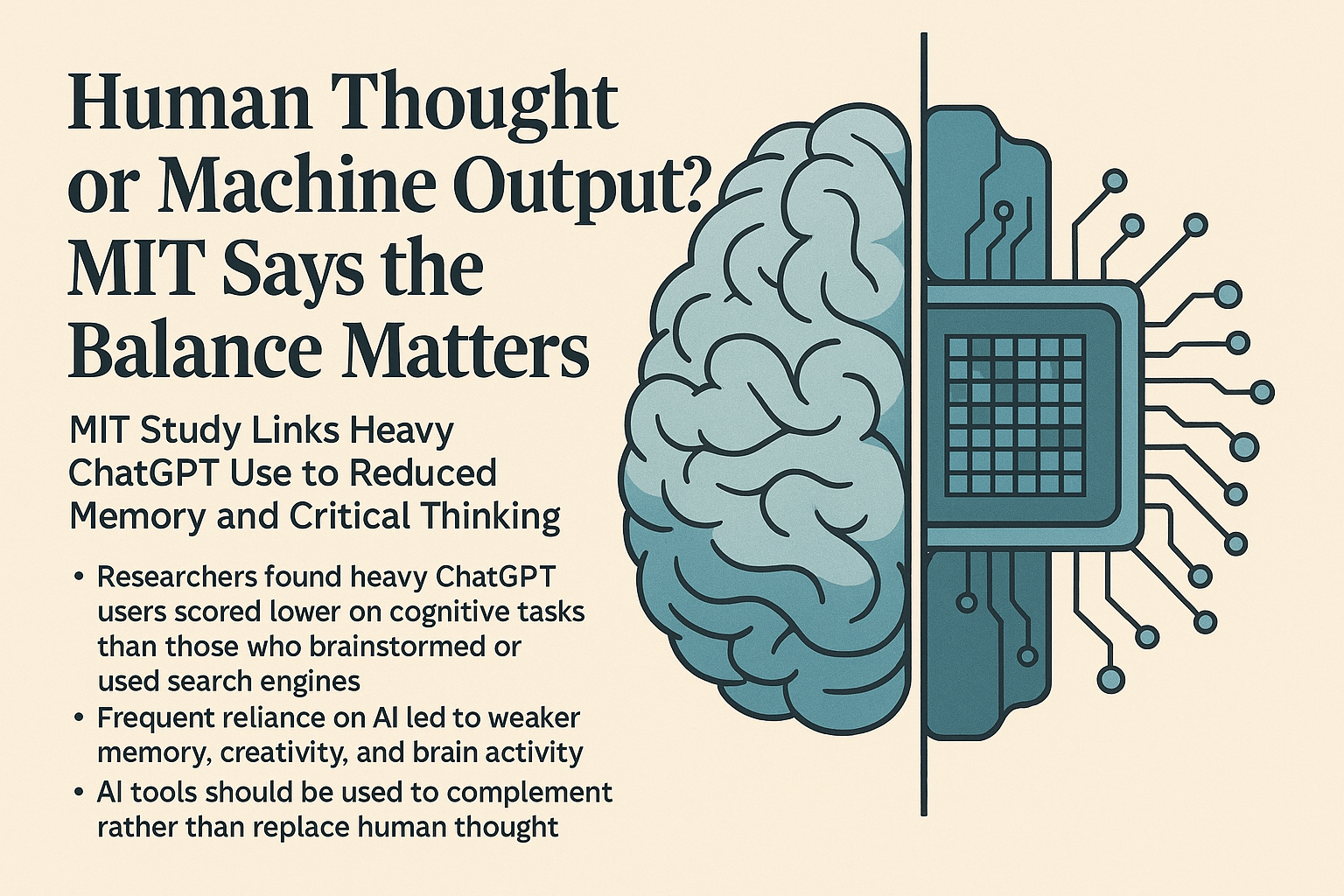
- Researchers at MIT’s Media Lab found that consistent reliance on ChatGPT can lead to lower memory retention, reduced creativity, and diminished critical thinking.
- Participants using ChatGPT demonstrated weaker brain activity and scored lower on writing tasks compared to those using search engines or writing unaided.
- The findings suggest AI tools should be used to supplement, not replace, cognitive engagement.
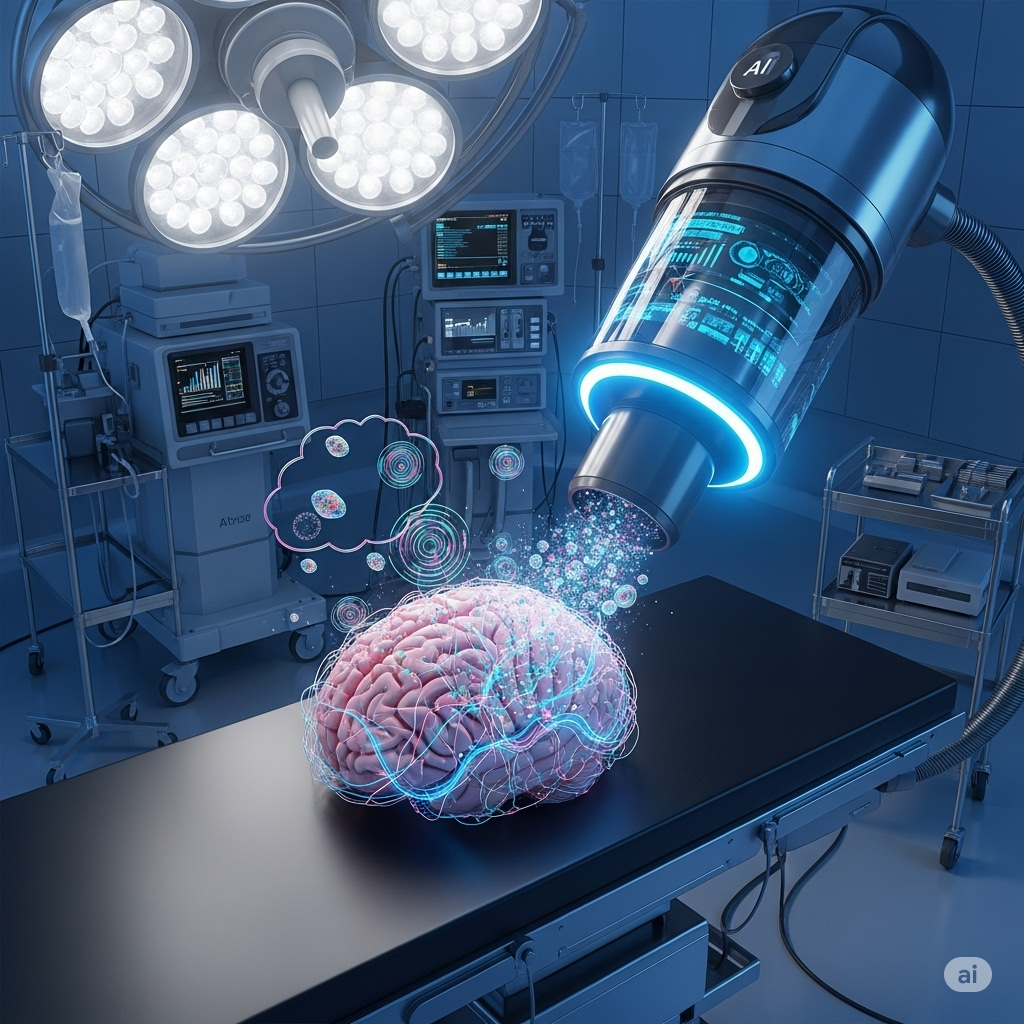
A recent study from MIT’s Media Lab has raised new questions about the long-term cognitive impact of relying heavily on AI writing tools. The research, which involved monitoring brain activity during writing tasks, showed that users who depended solely on ChatGPT for idea generation and composition exhibited reduced neural activity in areas linked to memory and creative reasoning.
In the study, 54 participants aged 18 to 39 were asked to complete SAT-style essays over multiple sessions. Each person was randomly assigned to one of three groups: those writing purely from memory, those allowed to use internet search, and those using ChatGPT.
The results showed a consistent pattern:
- ChatGPT users produced lower-quality writing, demonstrated weaker cognitive engagement on EEG scans, and retained little of what they had written—83 percent of those in the group could not recall even one sentence of their own output minutes later.
- Search engine users performed moderately well, showing better memory retention and more active neural pathways compared to the AI group.
- Brain-only writers, those who wrote without external aids, showed the strongest brain activity, particularly in regions associated with long-term memory and linguistic creativity.
Crucially, the study also tested participants who used ChatGPT only after first brainstorming or outlining ideas on their own. In those cases, participants maintained much higher neural engagement and demonstrated better writing outcomes—suggesting that combining initial human effort with later AI support might preserve cognitive benefits.
According to the researchers, the study doesn’t advocate against AI use but urges people to engage with these tools more deliberately.
The lead researchers emphasized that “cognitive offloading”—the practice of delegating thinking to an external system—has known effects across many technologies. When overused, it can lead to what they call “skill atrophy,” particularly in areas like memory, problem-solving, and creative ideation.
The study comes as AI use accelerates across workplaces and schools. While generative tools like ChatGPT have the potential to boost efficiency, the researchers caution against using them as a default for all mental tasks. They recommend a more intentional approach: use AI as a complement, not a crutch.
Learn how AI Agents can supercharge your company’s profits and productivity at TMC’s AI Agent Event in Sept 29-30, 2025 in DC.

Rich Tehrani serves as CEO of TMC and chairman of ITEXPO #TECHSUPERSHOW Feb 10-12, 2026 and is CEO of RT Advisors and is a Registered Representative (investment banker) with and offering securities through Four Points Capital Partners LLC (Four Points) (Member FINRA/SIPC). He handles capital/debt raises as well as M&A. RT Advisors is not owned by Four Points.
The above is not an endorsement or recommendation to buy/sell any security or sector mentioned. No companies mentioned above are current or past clients of RT Advisors.
The views and opinions expressed above are those of the participants. While believed to be reliable, the information has not been independently verified for accuracy. Any broad, general statements made herein are provided for context only and should not be construed as exhaustive or universally applicable.
Portions of this article may have been developed with the assistance of artificial intelligence, which may have contributed to ideation, content generation, factual review, or editing.