Key Takeaways:
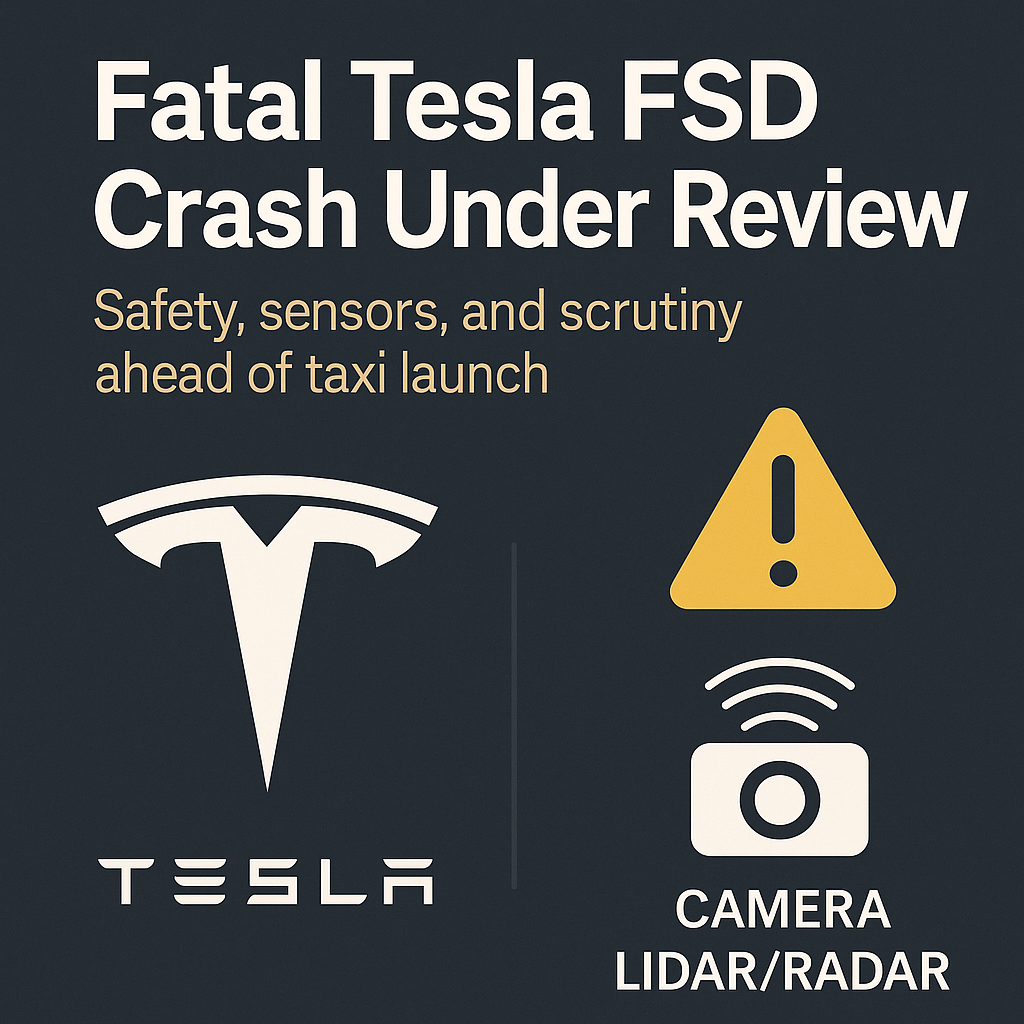
- A 2023 Arizona pedestrian fatality involving Tesla’s Full Self-Driving (FSD) software has become the first publicly known FSD-linked pedestrian death and is under federal investigation.
- The incident occurred just months ahead of Tesla’s planned launch of a driverless taxi service, increasing scrutiny on the readiness and safety of the system.
- Industry experts and regulators continue to question Tesla’s reliance on vision-only autonomous driving, as other companies move toward multi-sensor approaches combining lidar, radar, and AI.
—
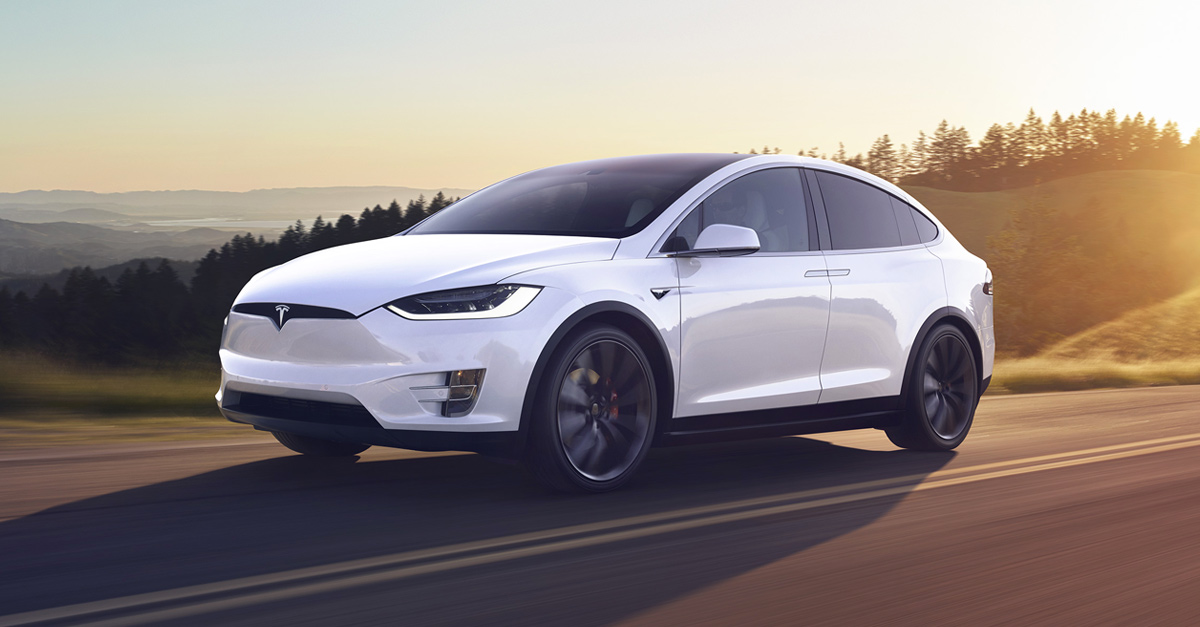
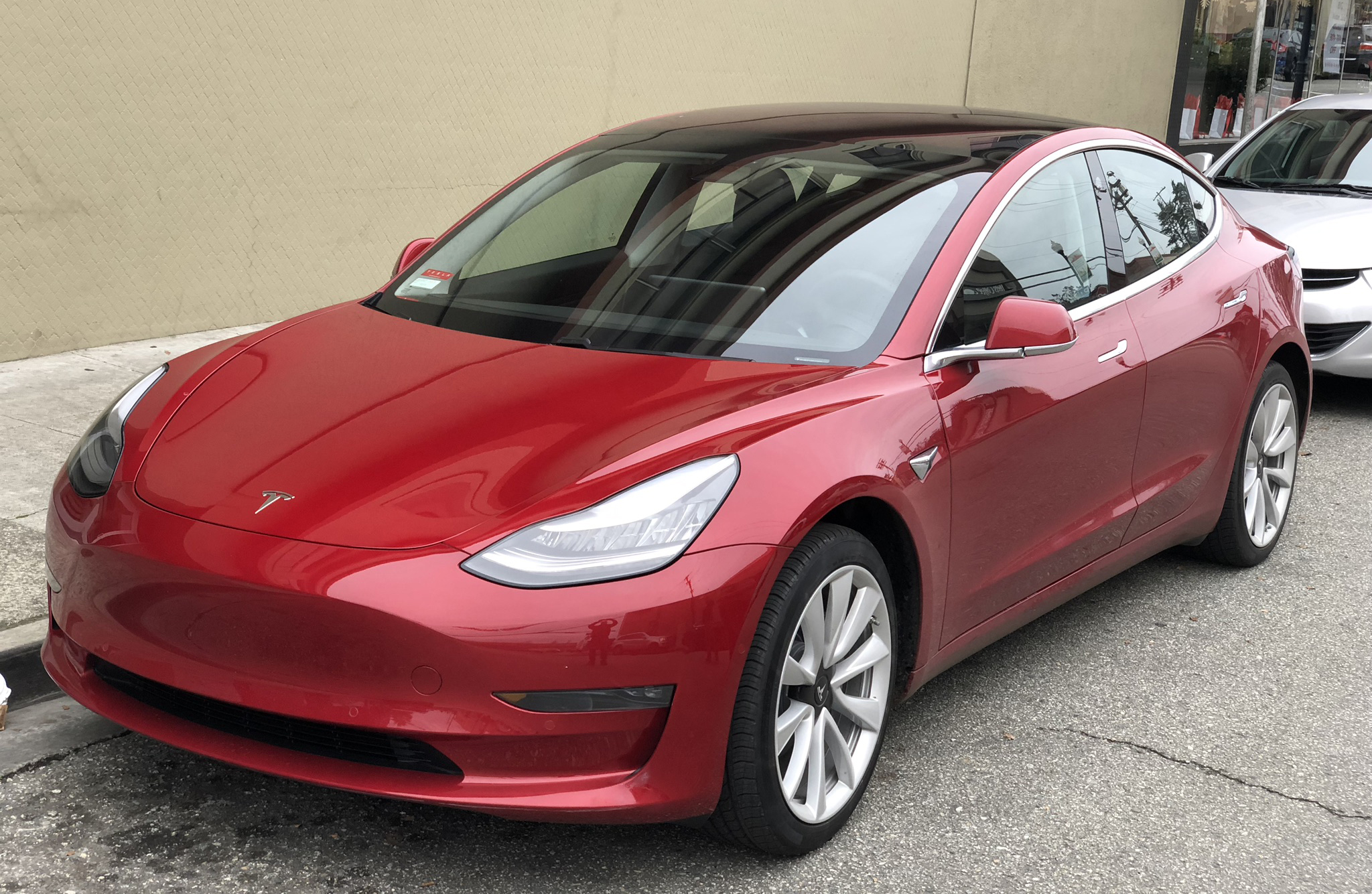
A November 2023 crash involving Tesla’s Full Self-Driving software claimed the life of Johna Story, a 71-year-old grandmother who was struck while assisting at the scene of a separate accident. The Model Y that hit her was in FSD mode, operating under the supervision of Karl Stock, a Tesla enthusiast who had previously posted videos of the software’s performance. The vehicle did not slow for stopped traffic on the interstate, failed to detect Story in the roadway, and continued past multiple hazards without applying the brakes.
Video footage captured by the car’s internal cameras, which Tesla frequently uses to train and refine its AI model, has become central to a federal investigation by the National Highway Traffic Safety Administration (NHTSA). The crash marks the first pedestrian death definitively linked to Tesla’s FSD, a beta-level driver-assist product sold to over 400,000 U.S. customers.
—
Why It’s a Flashpoint Moment
Tesla is preparing to launch its first driverless ride-hailing service in Austin, Texas, scheduled for June 12, 2025. According to Elon Musk, the service will use a newer iteration of FSD that the company claims is capable of full autonomy, without the need for constant driver supervision. The fatal Arizona crash—where the software appears to have misread both environmental signals and the human presence—casts fresh doubt on the system’s maturity.
The Bloomberg report reveals that Tesla was aware of the crash and had access to all related telemetry, yet has not publicly addressed the incident. Meanwhile, NHTSA has an open investigation into several fatal crashes involving Tesla’s Autopilot and FSD systems, focusing on how they handle edge cases like stopped vehicles, emergency responders, and extreme lighting conditions.
—
A Broader Debate on Sensor Strategy
Tesla remains the only major autonomous vehicle developer to eschew lidar and radar in favor of a vision-only approach. While companies like Waymo and Cruise use layered sensing stacks to improve object detection in unpredictable environments, Tesla insists that real-world vision training via massive data collection is a better path toward general autonomy.
Critics argue that this strategy is ill-suited for edge cases, especially those involving unpredictable human behavior or visibility issues. In the Arizona incident, sun glare was cited as a likely contributor—an example of a condition where radar or lidar might have filled a gap left by cameras.
Philip Koopman, a Carnegie Mellon professor and expert in autonomous vehicle safety, told Bloomberg that while the software’s training model has improved, “There are still scenarios where it’s clear the system doesn’t perform at a level that meets human driving standards.”
—
Regulatory Outlook
Federal regulators are under mounting pressure to define clearer rules around driver-assist systems marketed as “autonomous.” Tesla’s branding of “Full Self-Driving” has drawn criticism for years, as the system is not classified by SAE standards as Level 4 or 5 autonomy and requires human oversight.
NHTSA has not disclosed whether it will recommend penalties or regulatory changes based on the Arizona crash, but this latest incident adds urgency to calls for tighter oversight. In 2023, the agency required Tesla to recall and patch over two million vehicles via an over-the-air update after identifying risks related to driver disengagement.
In Congress, there is renewed interest in revisiting the SELF DRIVE Act, which stalled in previous sessions. Lawmakers are now weighing how to enforce clearer safety benchmarks for both driver-assist systems and true autonomous vehicles.
—
Implications for Tesla’s Business Model
Tesla’s autonomous ambitions are central to its long-term strategy. Elon Musk has repeatedly stated that the value of each Tesla vehicle will dramatically increase once it can operate as a robo-taxi. In 2020, Musk told investors, “It’s basically financial insanity to buy any other car than a Tesla.”
If FSD fails to gain regulatory approval for unsupervised operation—or if more high-profile failures surface—Tesla could face both reputational damage and potential financial headwinds, particularly if customers begin to doubt the roadmap to autonomy.
Meanwhile, competitors like Waymo and Zoox are moving cautiously but steadily, emphasizing safety validation and structured rollouts. Tesla’s decision to lead with mass-market deployment has put it under heavier public scrutiny—and higher stakes when errors occur. Companies such as Guident specialize in teleoperations – a technology allowing humans to remotely monitor and control autonomous devices and may see increased interest as a result of high profile autonomous accidents such as this.
Learn how AI Agents can supercharge your company’s profits and productivity at TMC’s AI Agent Event, Sept 29-30, 2025 in DC.
If you liked this post, you’ll love one of the the leading global business communications and technology events since 1999, the ITEXPO #TECHSUPERSHOW, Feb 10-12, 2026 Fort Lauderdale, Florida.
Don’t forget the collocated MSP Expo – just for managed service providers!
Rich Tehrani serves as CEO of TMC and chairman of ITEXPO #TECHSUPERSHOW Feb 10-12, 2026 and is CEO of RT Advisors and is a Registered Representative (investment banker) with and offering securities through Four Points Capital Partners LLC (Four Points) (Member FINRA/SIPC). He handles capital/debt raises as well as M&A. RT Advisors is not owned by Four Points.
The above is not an endorsement or recommendation to buy/sell any security or sector mentioned. Aside from Guident, no companies mentioned above are current or past clients of RT Advisors.
The views and opinions expressed above are those of the participants. While believed to be reliable, the information has not been independently verified for accuracy. Any broad, general statements made herein are provided for context only and should not be construed as exhaustive or universally applicable.
Portions of this article may have been developed with the assistance of artificial intelligence, which may have contributed to ideation, content generation, factual review, or editing