Key Takeaways:
- Yobi is focusing on integration-first AI agent design to solve growing fragmentation in enterprise automation efforts.
- Disconnected agents often result in duplicate work, inconsistent data, and missed ROI, making integration a critical success factor.
- Enterprise adoption of AI agents has accelerated rapidly—68% of large companies are now deploying agentic systems, but many remain siloed.
- Yobi’s platform emphasizes embedded workflows, human-AI teaming, and change management as essential components of scalable adoption.
- Founder Ahmed Reza says Yobi was built to “help companies manage complexity rather than adding more disconnected solutions.”
As the race to adopt AI agents accelerates in the enterprise, one fundamental barrier has come into sharper focus: integration. While adoption is rising fast—especially among large companies—many implementations remain fragmented and underperform due to disconnected systems and poor orchestration.

Yobi, a U.S.-based AI platform founded in 2018 by serial entrepreneur Ahmed Reza, is tackling that challenge head-on with an integration-first approach to agent design. Its product philosophy focuses not just on performance or model quality, but on making sure its AI agents work in sync with existing enterprise systems, workflows, and organizational structures.
Reza explained the vision this way: “We built Yobi on the belief that AI could transform how organizations operate. The focus has always been on creating tools that work together, helping companies manage complexity rather than adding more disconnected solutions.”
That message is resonating as companies move from early pilots to enterprise-scale deployments. According to recent data from eMarketer, 68% of large organizations—defined as having more than 1,000 employees—have deployed at least one AI agent as of mid-2025. That’s up from 33% just six months earlier, reflecting explosive growth driven by advancements in natural language models, rising labor costs, and pressure to improve service delivery.
Yet many of those deployments are hitting friction points. CIOs and technology leaders say disconnected agents frequently introduce operational inefficiencies. Without seamless integration into platforms like CRMs, ERPs, helpdesks, email systems, and knowledge bases, agents often duplicate tasks or misfire due to lack of access to contextually relevant data. As a result, businesses fail to see meaningful ROI—and users lose trust in automation.
Yobi’s approach starts with the assumption that AI agents need to act like any other member of a business team: aware of their environment, able to collaborate, and mindful of how their actions affect downstream processes. That means building agents that plug into existing workflows—not reinvent them.
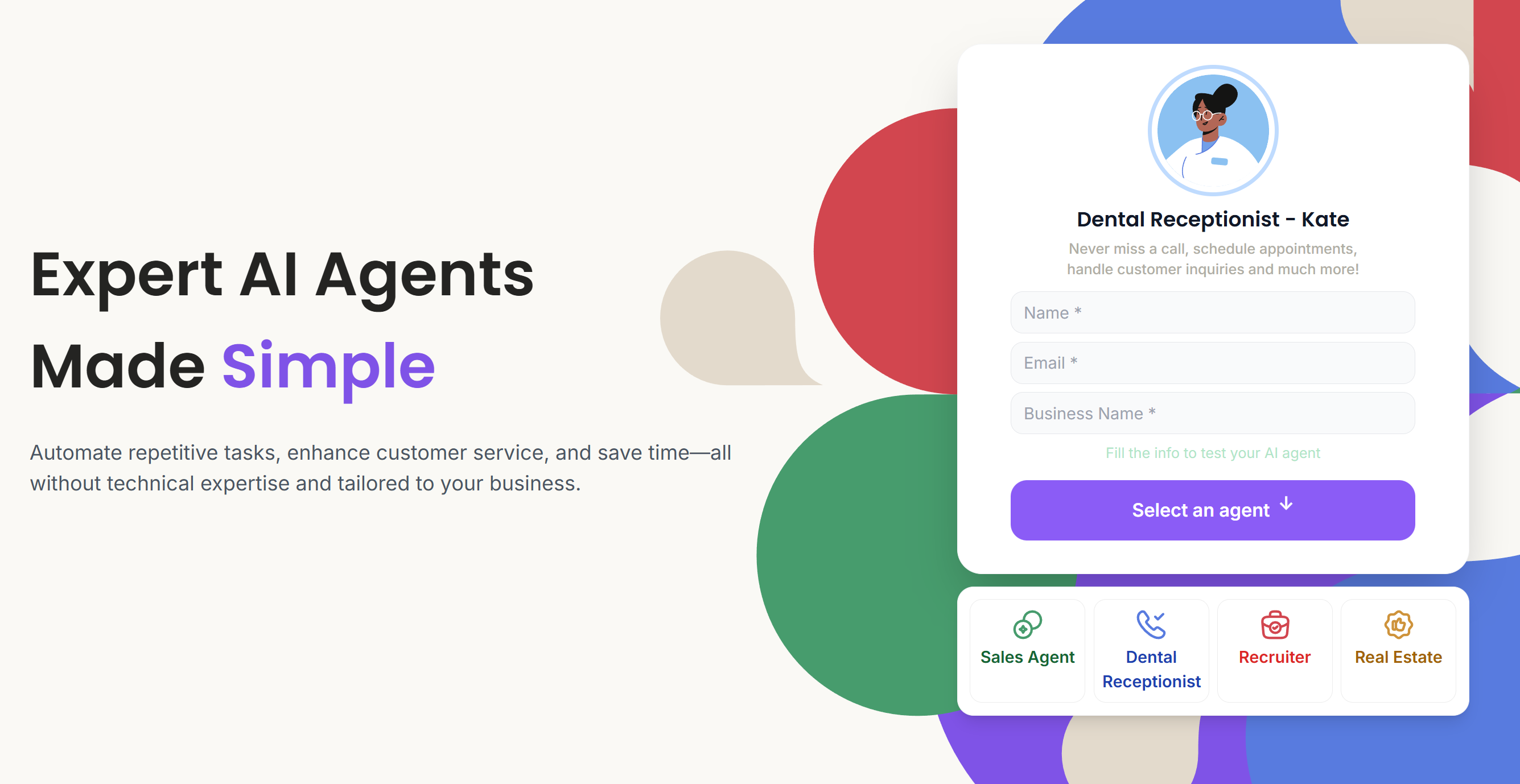
In practical terms, Yobi’s platform provides pre-built connectors and APIs to integrate its agents with enterprise applications ranging from Salesforce to Microsoft Teams to Zendesk. Once embedded, Yobi’s agents can perform tasks such as scheduling meetings, triaging tickets, generating reports, retrieving documents, and escalating issues—while coordinating with both humans and other agents.
Just as important is the company’s focus on organizational design. Reza and his team believe that deploying AI agents isn’t just a technical decision—it’s an operational and cultural one. Without thoughtful change management, even the best-designed agents can become digital bottlenecks.
That’s why Yobi provides frameworks to help businesses redesign workflows, clarify accountability, and define human-AI teaming strategies. This includes role definition, approval checkpoints, escalation paths, and observability tools so that agents don’t become black boxes. The goal is not to remove people from the process, but to elevate their role by automating routine interactions and enabling faster, more informed decisions.
Industry observers say this kind of systems thinking is essential for AI agents to deliver lasting value. Research from consulting firms like McKinsey and BCG shows that companies realizing the biggest productivity gains from AI don’t just install software—they rethink how work is done. That includes aligning data flows, optimizing handoffs, and providing training to frontline teams so they understand when and how to collaborate with digital agents.
In that sense, Yobi is positioning itself as a platform for agentic orchestration—not just a provider of task-specific bots. Its agents are built to understand context, respond in real-time, and share information fluidly. And its system design emphasizes resilience, allowing agents to work effectively even in complex, distributed enterprise environments.
This approach may give Yobi an edge as the market matures. While the initial wave of AI adoption has been dominated by standalone copilots and interface-driven assistants, enterprises are now seeking deeper automation that goes beyond simple tasks. They want agents that can collaborate, adapt, and execute across departments—and that requires infrastructure that supports integration, security, and explainability.
For example, in customer service, a disconnected AI might resolve a ticket but fail to log it correctly, leading to downstream confusion. Yobi’s integrated model ensures that the action is not just completed, but also documented, shared, and analyzed. In sales, an agent might prep a lead for follow-up while triggering workflow updates in CRM, calendar, and finance systems. These kinds of end-to-end interactions create measurable time savings and reduce errors.
Yobi’s leadership believes the time is right to move past experimentation. As Reza put it: “We’re past the chatbot phase. The question now is: how do you make AI agents work in the real world, with real people and real systems? Integration is the answer.”
With enterprise demand growing and buyer expectations rising, Yobi is focused on scaling both its product and support. The company is investing in expanding its connector library, strengthening partnerships with enterprise vendors, and building advisory services to help clients implement its solutions effectively.
If the current trajectory holds, Yobi may find itself at the center of a new class of enterprise platforms—those designed not just to deploy AI, but to orchestrate it across the fabric of the organization.
Learn how AI Agents can supercharge your company’s profits and productivity at TMC’s AI Agent Event in Sept 29-30, 2025 in DC.
Rich Tehrani serves as CEO of TMC and chairman of ITEXPO #TECHSUPERSHOW Feb 10-12, 2026 and is CEO of RT Advisors and is a Registered Representative (investment banker) with and offering securities through Four Points Capital Partners LLC (Four Points) (Member FINRA/SIPC). He handles capital/debt raises as well as M&A. RT Advisors is not owned by Four Points.
The above is not an endorsement or recommendation to buy/sell any security or sector mentioned. No companies mentioned above are current or past clients of RT Advisors.
The views and opinions expressed above are those of the participants. While believed to be reliable, the information has not been independently verified for accuracy. Any broad, general statements made herein are provided for context only and should not be construed as exhaustive or universally applicable.
Portions of this article may have been developed with the assistance of artificial intelligence, which may have contributed to ideation, content generation, factual review, or editing.