Key Takeaways:
- Employers are placing more value on adaptability, critical thinking, and interpersonal communication than on technical credentials.
- Instead of triggering mass layoffs, AI is prompting companies to redefine job roles and reskill their existing workforce.
- Companies are retooling recruitment strategies to prioritize human strengths that AI lacks, such as empathy and creative judgment.
- Roles in leadership, client-facing services, and complex decision-making are becoming more critical across industries.
- The adoption of AI varies across sectors, which complicates talent planning and contributes to growing demand for flexible skillsets.
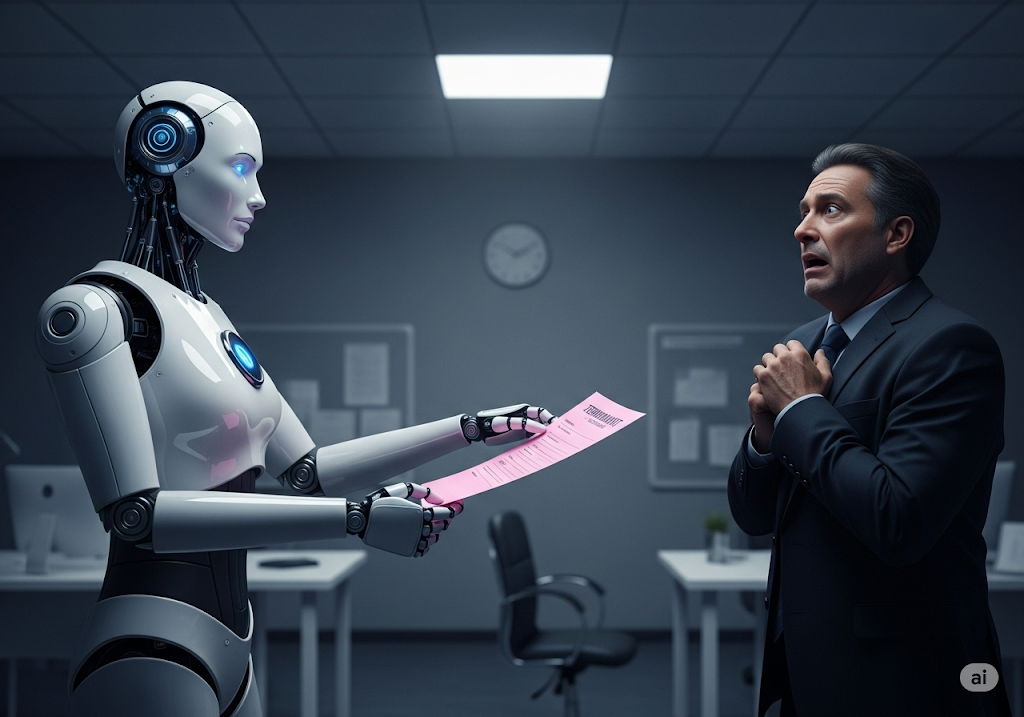
Artificial intelligence is actively changing the way companies hire, train, and think about talent. Yet the changes it’s driving don’t align with the doomsday scenarios often associated with automation. Instead of replacing large swaths of the workforce, AI is reshaping what businesses look for in employees—and what workers must do to stay competitive.
Less About Degrees, More About Agility
Employers are shifting away from rigid job requirements and traditional signals like degrees or specific tool certifications. Instead, they’re focusing on whether candidates can learn quickly, adapt to change, and bring strategic value in an increasingly automated environment.
The article published by Barron’s highlights that many organizations now see adaptability and problem-solving as core competencies. These traits are considered more durable than knowledge of any specific platform or software—particularly as tools evolve rapidly and AI systems increasingly handle standardized tasks.
This shift has led to changes in hiring practices. Employers are broadening their searches and reconsidering candidate pools that may have been overlooked in the past. For example, someone without a college degree but with a demonstrated ability to upskill and work across teams might now be more competitive than a credentialed candidate with a narrow focus.
Reskilling Over Replacement
Rather than using AI as a reason to reduce headcount, many companies are using it as a catalyst for reskilling. Workers in roles adjacent to automation—such as data entry, claims processing, or customer support—are being given opportunities to move into more analytical, strategic, or client-facing positions.
This approach is driven both by cost-efficiency and competitive necessity. Hiring externally for newly emerging roles can be expensive and time-consuming. Internal training initiatives, by contrast, allow organizations to fill critical gaps more quickly while retaining institutional knowledge.
These efforts often focus on teaching employees how to interpret AI outputs, how to use AI tools responsibly, and how to augment automated insights with human context. As AI systems become more central to decision-making, workers who can act as interpreters or validators of machine output are proving especially valuable.
Human Strengths Are the Differentiator
Even in highly automated sectors, demand is rising for workers who excel in areas AI can’t touch—at least not yet. These include relationship building, ethical reasoning, and navigating ambiguity in real-world scenarios.
Roles that require high degrees of emotional intelligence, such as project leadership, strategic consulting, and conflict resolution, are gaining new importance. These positions rely heavily on qualities like empathy, context awareness, and persuasion—skills that current AI models do not possess and cannot easily emulate.
Hiring managers are also placing greater emphasis on communication skills. In hybrid work environments especially, the ability to collaborate across geographies and functions has become essential. Workers who can synthesize technical information and explain it clearly to non-technical stakeholders are in particularly high demand.
Not One AI Transition—But Many
AI adoption is not happening uniformly across industries or companies. Some large enterprises, especially in tech and financial services, are moving quickly to embed AI into everything from customer support to compliance. Others, particularly in healthcare, manufacturing, or small business sectors, are proceeding more cautiously due to regulatory constraints or cost concerns.
This uneven pace of adoption adds another layer of complexity to talent planning. Some businesses are hiring aggressively for AI-adjacent roles, while others are just beginning to consider how AI might affect their workforce in the years to come.
What’s consistent across most industries, however, is the need for people who can operate effectively in environments where automation is part of the workflow, not the whole solution. That includes AI project managers, human-in-the-loop reviewers, prompt engineers, and other hybrid roles that didn’t exist five years ago.
A Long-Term Shift in Workforce Strategy
This isn’t just a momentary adaptation—it’s a long-term recalibration of how companies define value in their workforce. The combination of AI’s expanding capabilities and economic pressure is pushing employers to rethink job design, performance metrics, and the structure of internal teams.
The Barron’s report underscores that job descriptions are evolving rapidly, often emphasizing skills-based competencies over lists of technical requirements. Some organizations are even abandoning traditional resumes in favor of blind assessments or project-based evaluations that better reflect how a candidate might perform in a dynamic, AI-enabled workplace.
For workers, the implications are clear: building a career in the age of AI requires more than just learning how to use the latest tools. It requires cultivating the kinds of skills that technology can support, but not replace—judgment, adaptability, ethical reasoning, and human insight.
We often hear, “You won’t get replaced by AI, you will get replaced by someone who knows AI better than you,” and the statement seems more accurate than ever.
Learn how AI Agents can supercharge your company’s profits and productivity at TMC’s AI Agent Event in Sept 29-30, 2025 in DC.

Rich Tehrani serves as CEO of TMC and chairman of ITEXPO #TECHSUPERSHOW Feb 10-12, 2026 and is CEO of RT Advisors and is a Registered Representative (investment banker) with and offering securities through Four Points Capital Partners LLC (Four Points) (Member FINRA/SIPC). He handles capital/debt raises as well as M&A. RT Advisors is not owned by Four Points.
The above is not an endorsement or recommendation to buy/sell any security or sector mentioned. No companies mentioned above are current or past clients of RT Advisors.
The views and opinions expressed above are those of the participants. While believed to be reliable, the information has not been independently verified for accuracy. Any broad, general statements made herein are provided for context only and should not be construed as exhaustive or universally applicable.
Portions of this article may have been developed with the assistance of artificial intelligence, which may have contributed to ideation, content generation, factual review, or editing.