Key Takeaways
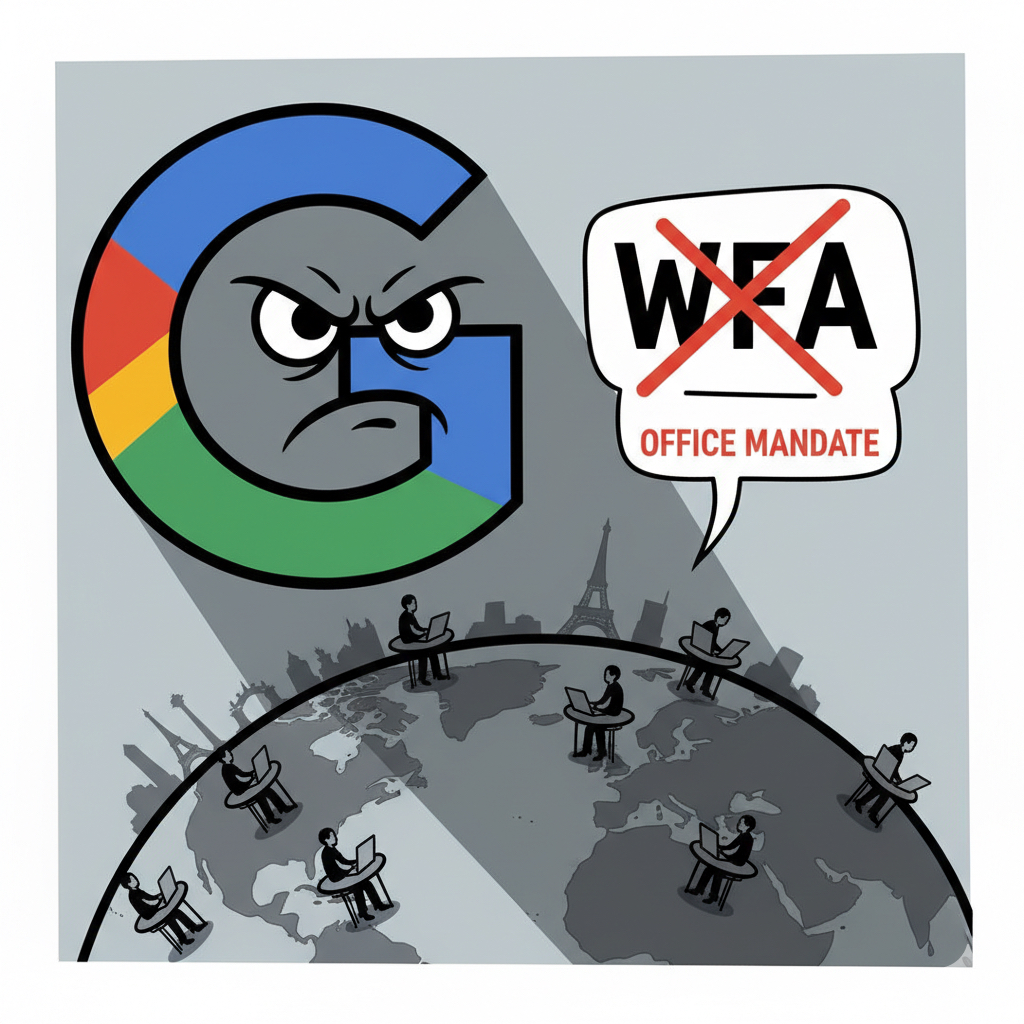
- Google is revising its Work From Anywhere (WFA) policy such that even a single day spent working remotely outside one’s home or office will now count as an entire WFA week.
- The WFA policy is distinct from Google’s hybrid approach (which allows two work-from-home days per week). Under the new rules, WFA can’t be used for “WFH” (working from home or local locations).
- Google says the change reflects the original intent of WFA as a benefit for extended travel or remote-location work — not for casual remote days. “Whether you log 1 WFA day or 5 WFA days in a given standard work week, 1 WFA week will be deducted from your WFA weekly balance,” according to the policy document.
- The updated constraints may include stricter limits on cross-border or out-of-state remote work, given legal, tax, and compliance complexities.
- The changes reflect a broader trend among tech firms toward reclaiming in-office structure, even as many employees continue to seek flexibility.
What’s Changing — and Why
When COVID-era flexibility was in full swing, many companies—including Google—rolled out policies that let employees work remotely from pretty much anywhere for extended stretches. For Google, that translated into the WFA policy, which allowed employees to spend up to four weeks per year working from locations outside their assigned office or home base.
Under the new revisions, the policy now treats a single remote day (outside home/office) as a full WFA week. That means if someone works remotely one day in a given “standard work week,” Google deducts one week from that person’s annual WFA allowance. The company frames this as clarifying what was always intended: WFA was never supposed to replace regular work-from-home flexibility.
John Casey, Google’s vice president of performance and rewards, has said WFA was always meant to be taken in week-long units, not day by day. Furthermore, the policy now explicitly prohibits using WFA to cover home-based work or casual local flexibility.
In addition, there are signs Google is tightening cross-jurisdictional remote work rules (e.g. working from another state or country), likely to manage tax, labor law, and legal exposure.
These moves come amid wider reversal trends in the tech industry: Microsoft has said employees need to be in the office three days per week, Amazon has pushed for full on-site presence in many roles, and other firms are similarly recalibrating hybrid or remote policies.
What This Means for Employees
Flexibility takes a hit. Employees who relied on occasional remote days under WFA may see less practical opportunity — even one day now carries the full “cost” of a WFA week.
Planning gets harder. Workers will need to be more strategic about when and how they use WFA days (for example, bundling them into full-week blocks), lest they exhaust their allotment too quickly.
Blurred boundaries. The distinction between WFA and WFH (work-from-home) becomes sharper. WFA is now explicitly for remote work in non-home locations; it no longer overlaps with home or local remote work.
Potential morale risk. The change might frustrate employees who see it as diminishing flexibility or being overly punitive for rare remote days. One commenter on a Reddit thread quipped:
“The new policy is not removing WFA. It’s actually making people take more WFA.”
Such responses suggest some employees see the shift as forcing more concentrated planning rather than supporting organic flexibility.
Broader Implications & Trends
Google’s move is likely driven in part by pressures to control remote-work boundaries, manage legal exposure (tax, labor laws across states/countries), and reinforce office-based collaboration. Over time, these tighter rules may affect how employees view their total compensation package, especially if flexibility was a key perk.
For industry watchers, it’s a reminder that remote-work policies can’t stay static — they evolve based on balancing employee expectations, operational control, and regulatory risk.
It also sets a marker: even companies that once embraced broad remote work are now curtailing it, suggesting that a “remote-first” future may face increasing structural pushback.