Key Takeaways:
• Major Chinese electric vehicle (EV) companies are investing heavily in humanoid robots as a natural extension of their factory automation capabilities
• China’s humanoid models are emerging with lower price points and faster production timelines than many Western rivals
• State support, public demonstrations, and real-world pilot projects are accelerating dev
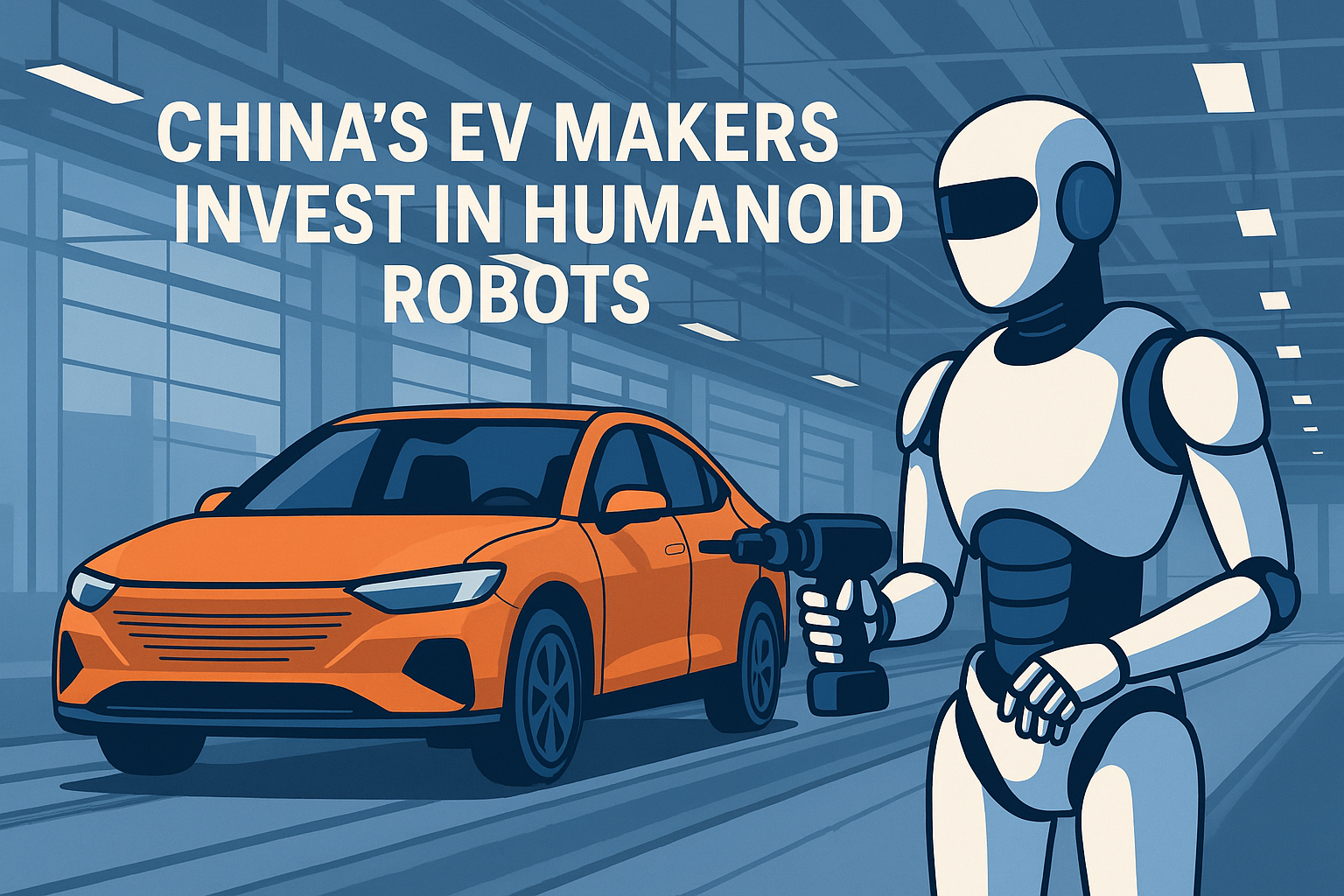
China’s electric vehicle giants are making a calculated leap from autonomous cars to humanoid robots. Companies like BYD, XPeng, NIO, and GAC are channeling their expertise in smart manufacturing and industrial automation toward building bipedal robots capable of operating in real-world production environments.
This move is more than a flashy tech experiment. It reflects a broader industrial strategy—one that pairs China’s dominance in electric vehicle manufacturing with its ambition to lead in robotics.
From Smart Factories to Smart Robots
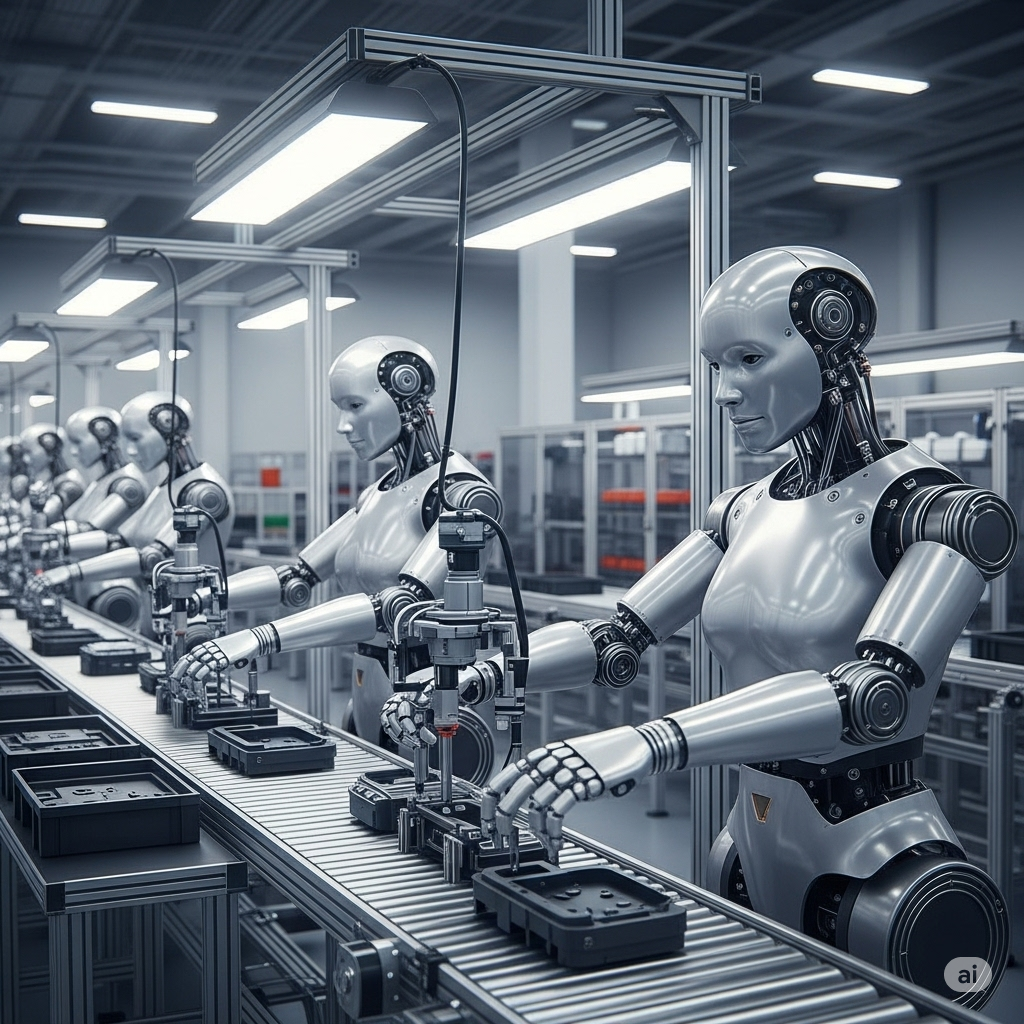
Chinese EV production lines are already some of the most automated in the world. Adding humanoid robots to the equation isn’t just a cost-saving measure—it’s about closing the final loop in fully autonomous production. These robots are being designed to handle logistics, parts assembly, and other tasks that have traditionally been too complex for conventional robotics.
The skills needed to develop such systems—motion control, battery efficiency, real-time sensing—are already core competencies among EV manufacturers. By reusing these capabilities, automakers can accelerate robot development and integration without starting from scratch.
While U.S. firms like Tesla, Figure, and Agility Robotics are also pursuing humanoid robot development, many are focused on software-heavy, high-cost systems and are moving more cautiously toward mass deployment. China’s focus, by contrast, is grounded in building physical, affordable machines that can operate at scale—starting in its own industrial backbone.
Price Advantage and Production Scale
Chinese robotics firms are focusing on affordability. Some are targeting price points under $20,000—significantly below estimates for comparable U.S. or European humanoid models. That pricing strategy isn’t just about selling robots; it’s about enabling mass deployment in factories, warehouses, and potentially public infrastructure.
Because these robots are being produced on top of existing EV supply chains, companies benefit from scale, logistics networks, and access to components that would take other industries years to assemble.
Public Displays and Real-World Use
Several humanoid robots have already made appearances at national events and expos, and others are being tested in EV factories for tasks like packaging and materials handling. XPeng has invested heavily in its “Iron” robot line. Unitree’s latest model—H1—is being piloted in both industrial and research settings. UBTech’s Walker S has been demonstrated performing domestic and commercial assistance tasks.
This dual-track approach—pairing hype with hands-on testing—helps refine functionality while building public interest and investor confidence.
Policy and Market Tailwinds
State funding and regulatory backing are giving Chinese robotics companies an edge in rolling out their solutions. Unlike the more fragmented innovation ecosystem in the U.S., China’s robotics sector benefits from direct alignment with national technology priorities, government-supported trials, and streamlined export pathways.
That support doesn’t just move things faster—it lowers the perceived risk for manufacturers, which can lead to broader adoption.
What’s Next
While U.S. firms like Tesla, Figure, and Agility Robotics are also pursuing humanoid robot development, many are focused on software-heavy, high-cost systems and are moving more cautiously toward mass deployment. China’s focus, by contrast, is grounded in building physical, affordable machines that can operate at scale—starting in its own industrial backbone.
This divergence reflects broader strategic differences. The U.S. is betting on general-purpose agents with advanced autonomy and multi-modal AI. China is betting on hard tech, logistics, and fast commercialization.
The real test will be whether these humanoid robots can move from controlled factory floors to dynamic, unpredictable environments like elder care, urban delivery, or consumer service. If they can, China might not just dominate EVs—it could shape the future of human-machine collaboration.
Learn how AI Agents can supercharge your company’s profits and productivity at TMC’s AI Agent Event in Sept 29-30, 2025 in DC.

Rich Tehrani serves as CEO of TMC and chairman of ITEXPO #TECHSUPERSHOW Feb 10-12, 2026 and is CEO of RT Advisors and is a Registered Representative (investment banker) with and offering securities through Four Points Capital Partners LLC (Four Points) (Member FINRA/SIPC). He handles capital/debt raises as well as M&A. RT Advisors is not owned by Four Points.
The above is not an endorsement or recommendation to buy/sell any security or sector mentioned. No companies mentioned above are current or past clients of RT Advisors.
The views and opinions expressed above are those of the participants. While believed to be reliable, the information has not been independently verified for accuracy. Any broad, general statements made herein are provided for context only and should not be construed as exhaustive or universally applicable.
Portions of this article may have been developed with the assistance of artificial intelligence, which may have contributed to ideation, content generation, factual review, or editing.